
Filter Post Type
NewsVideoProductEventLink
Sort:
Most Recent
1–10 of 10

January 26, 2026

This cork stopper adapts to standard bottles and combines practicality with sustainability, preserving all the advantages of cork. Amorim Cork relaunches Helix, the ergonomically disruptive natural cork closure that combines the convenience of twist opening with the authenticity, ritual, and sustainability of traditional cork. First introduced in 2013, Helix has surpassed 50 million units sold globally and is now available in an updated version compatible with all bottles featuring an 18.5mm neck (CETIE model), expanding its versatility across markets and wine styles. Helix was developed to address evolving consumer behavior while preserving the elements that define the wine experience. The closure opens without a corkscrew, yet retains the unmistakable “pop” of natural cork—maintaining the opening ritual consumers associate with quality and celebration. Its twist-and-pop design allows bottles to be easily reclosed, supporting fractional consumption and helping preserv
00


Afternoon Brief: Wine Sales Are Falling. A Momentary Blip? Or a Structural Problem?
Professor Simone Loose from Geisenheim University and Rafael del Rey from the Spanish Observatory of Wine Markets have launched their latest report, State of the International Wine Markets in 2023. Here are their most important findings...
Organic Wines South AfricaLanguedocMaison TelmontBerry Bros. & RuddVinitaly USAVineyard TeamWine Road Sonoma CountyWine & Spirit Competitions ManagementChateau Ste. MichelleAlma Rosa WinerySchramsberg VineyardsTopNest DesignsLallemand OenologyM. A. Silva USAvinSUITEDelightful Up North vineyardMurray’s CheeseIntegrated Beverage GroupFiresteed CellarsChampagne Barons de Rothschild
00

November 20, 2023
Lula Cellars 2020 Rescue Block Pinot Noir Takes Top Honors November 17, 2023 — Winners have been announced in the 2023 Harvest Challenge Wine Competition. After two spirited days of judging, Lula Cellars 2020 Rescue Block Pinot Noir took the top prize. It was also awarded Best Red Wine and Best of Anderson Valley AVA (Mendocino County, Calif.). Coming in at 98 points, judges praised the wine as “rich, ripe” and for its “Bing cherry,” and “hint of orange peel.” Lula Cellars is a boutique winery located in California’s Anderson Valley. Its focus is on world-class Pinot Noirs both from its estate and across Anderson Valley, as well as other single-vineyard offerings from the greater Mendocino County. When preparing to plant their own vines, Lula owners discovered some-1,000 old vines “literally lying down, as if waiting to be rescued.” Lots of TLC later, these mystery Pinot Noir grapes have thrived. There’s no in
00

September 12, 2023

Gabriele Del Torchio Confirmed Chairman Milan, 12th September 2023 – Guala Closures S.p.A. (“Guala Closures” or the “Group”), a global leading producer of closures for spirits, wines, water and beverages, today announces that Gabriele Del Torchio, currently Chairman and CEO, will remain as Chairman with effect in September 2023 and Mauro Caneschi will join as Chief Executive Officer. Gabriele Del Torchio was appointed Chairman and CEO of Guala Closures in April 2021 when the Group was acquired by an investment company of Investindustrial VII L.P., a leading independent European investment group. During this period, he has led the Group’s successful growth and strong business performance. This includes: - Improved operational efficiencies and expansion of its international manufacturing facilities; - A strong focus on R&D differentiating its products, and product expansion focusing on the “premiumisation” trend;
00

Another month of limited buying activity has passed by on the world’s bulk wine markets, with the traditional lull during the Northern Hemisphere summer holiday season now exacerbating the quietness. Pockets of activity exist – for example, on Chile and Australia’s 2023 varietal whites, Italy’s Prosecco and Pinot Grigio, South Africa’s generic red for domestic market consumption – but these feel like exceptions in an altogether quiet landscape. The Northern Hemisphere’s 2023 crop picture appears mixed, but any uncertainty about coming volumes has failed to stimulate much buying activity. With vineyard development running 2-4 weeks behind in California, and mildew pressure high, it remains too early to make an educated guesstimate of the crop size there. Mildew has also been a significant issue in Bordeaux and in central and southern Italy, contributing to expectations of shorter crops; the French crop size otherwise appears good, ditto no
00
Bulk wine pricing around the world is generally in a stable to softening trend as a number of downward pressures on prices offset the upward pressure from elevated input costs: the stop-start nature of buying activity in most markets; some large inventory levels – primarily of reds – in Argentina, Australia, California and France; lower 2023 grape prices in Chile versus 2022; a larger than expected 2023 crop in New Zealand; Rand weakness in South Africa. It should be underlined that buying activity continues, but much of it is for short-term needs, with buyers seeking smaller volumes for quicker loading. The slow nature of most consumer sales channels in most countries has disincentivised the opportunistic buyers who might normally – especially with freight costs greatly reduced and logistics efficiency markedly improved versus a year ago – come into a long market and get creative with new brands. Instead, winery focus is on inventory adjustment, assessing
00

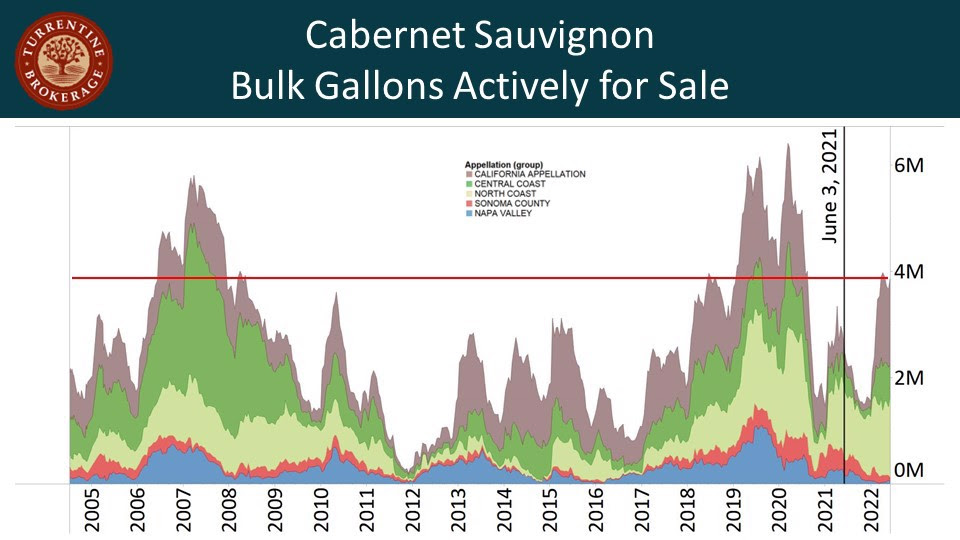
Decision-making on the sourcing of bulk wine and grapes continues to get more complex and difficult. April frosts in the Lodi/Delta, and in other regions of California to a lesser extent, added another challenging variable to the year. As of now, it appears the reduction in supply due to the frost affected Chardonnay and Pinot Noir in these regions the most. Time will provide a clearer picture of the 2022 crop size. In fact, recent crop projections are generally more positive than the initial forecasts after the frosts, but there is still uncertainty as to the extent of the damage. In the North Coast and other parts of California, the frost will likely have less of an impact. Bulk markets have slowed, returning to a more typical seasonal pace following 18 months of heightened demand, but still remain active. The typical spring slowdown is due to wineries assessing crop size and projected sales trends to inventories. It is more complicated this year for a few reasons. The first variable
00

May 23, 2022
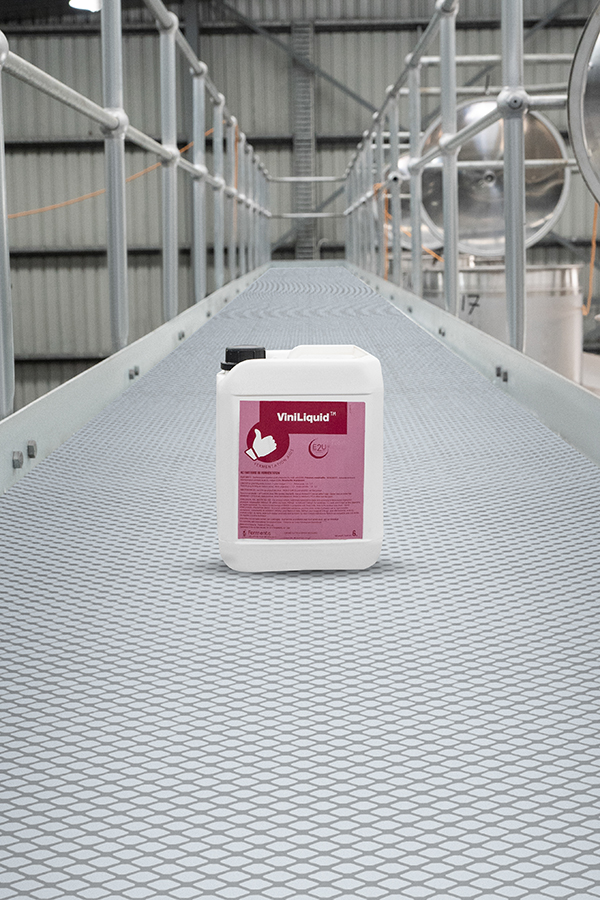
Winemakers have long recognized that careful yeast management and nutrition programs are central to the success or failure of the fermentations and resulting wines crafted under their care. Thanks to scientific and technological advancements, problems with “sluggish” or “stuck” fermentation or off-flavor development due to vitamin or specific amino acid deficiency can be addressed using dedicated, targeted yeast-derived nutrients. These products can provide a balanced source of macro and micronutrients to the yeast. They can also help to develop fermentative aromas, varietal aromas, and mouthfeel in all wines. “What is good for the yeast is actually in the yeast, but not all products on the market are equal,” says Anne Flesch, Fermentis Technical Sales Support Manager for the Americas . “Their fermentative power can be significantly different depending on their composition. We’ve seen that the form of the product can modulate its p
00
The Northern Hemisphere harvests are in their closing stages and all have experienced shortfalls to varying extents. France is the headline-maker, suffering a shortfall large enough to hand over its rank as the world’s secondlargest wine producer to Spain. The assumption is that the crop in southern France was down 40% versus the average and as much as 50-70% down on the white varietals. The shortfalls elsewhere are not so stark: Italy expects a 9% drop from its 2020 figure, with some September rains helping late maturation in Veneto, Puglia and other regions; Sicily’s crop was in fact up versus the prior year. The La Mancha region of Spain, meanwhile, could see a drop from the multi–year average of approximately 20%. Bulk prices have risen significantly in France, enabling Spanish pricing to move up behind. Spain’s aggressive 2020 vintage pricing is now especially unsustainable for suppliers given recent big increases in dry-good prices and energy bills.&
10
As the new year begins, we at Ciatti wish all of our friends, clients and business associates a very happy and prosperous year ahead. Thank you for your continued support. 2020 is the first year of a new decade and – as designated by the United Nations – the International Year of Plant Health. Winegrape growers in Argentina, Chile, Australia, New Zealand and South Africa will be hoping their vines feel the good vibes and offer up high-quality yields in the coming weeks, with the Western Cape in particular hoping for a healthy-sized crop after two harvests short enough to send bulk wine buyers looking elsewhere. The respective harvest pictures in the Southern Hemisphere will be clearer in February. Until then, we review the year just gone and look ahead to what 2020 could bring. The abiding characteristic of 2019 was a relative market calmness brought about by what the OIV called “very high” 2018 yields which markedly increased the global supply of wine just at a
00