
Filter Post Type
NewsVideoProductEventLink
Sort:
Most Recent
1–10 of 22

March 16, 2026

Radoux USA is pleased to announce that April Moulton has joined the company as Regional Sales Manager, further strengthening Radoux USA’s presence across key U.S. wine regions. April brings more than 10 years of experience in the cooperage industry and a strong customer‑focused approach to her new role. She will be supporting National Sales Manager Craig Holme in Napa Valley, while taking the lead for the Central Coast and Oregon, working closely with the Radoux USA team to ensure consistent, high‑quality service for customers. “April brings professionalism, energy, and a deep understanding of our industry,” said Craig Holme, National Sales Manager, Radoux USA. “She is a valuable addition to our team and a strong partner for our clients.” April’s appointment reflects Radoux USA’s continued investment in long‑term relationships and dedicated regional support. The Radoux group, based in the Cognac region of France, is a leading manufacturer of Fr
00

Maintaining wine balance in a changing climate Climate change is reshaping the wine industry. In many wine regions, each year seems to set new records for the hottest or driest growing season, followed by the earliest harvest dates yet. Such accelerated ripening is disrupting grape physiology; phenolic and aromatic development fall out of sync, sugar levels soar, and acidity drops away (1). So how can we adapt and build a more resilient wine sector? The answer to this question is multifaceted. In the vineyards, grape growers are rethinking their management practices, adjusting canopy architecture, introducing shading or optimising irrigation (1,2). Some are reaching for higher altitudes or moving further from the equator in search of cooler conditions (1). Others are trialling alternative heat- and drought-tolerant varieties, from long-forgotten cultivars to newly bred plant material. In the cellars, winemakers may turn to pragmatic solutions such as dilution or blending strategi
00
December 9, 2025
Radoux USA is proud to announce the addition of wine industry veteran Mark Evich to our sales team as Business Development Manager. Mark brings extensive experience to the role, having started his career in wine production in Sonoma County and Oregon’s Willamette Valley. For more than a decade, he has specialized in barrels and oak products, helping winemakers elevate their craft. “I’m thrilled to join Radoux USA and look forward to partnering with winemakers to deliver exceptional oak solutions that enhance the art of winemaking,” said Mark Evich. The Radoux group, based in the Cognac region of France, is a leading manufacturer of French, American, and Hungarian oak barrels, puncheons, oak tanks, and casks. Additionally, our portfolio includes Pronektar: American and French oak granulates, chips, blocks, barrel inserts, and tank staves—available in a range of toasts and tannin content for both wine and spirit brands. It’s no secret that oak enriche
00

To Butter or Not to Butter... One notable byproduct of malolactic bacteria (other than lactic acid!) is diacetyl, a compound that imparts buttery or popcorn-like aromas. While some aim to promote this character in their wines, others may prefer to minimize it. Read on to learn more about winemaking decisions that influence diacetyl production. Tips for Managing Diacetyl Strain Selection Some ML strains like PN4™and BETA™ produce more diacetyl, while strains like VP41™, O-MEGA™, and ML PRIME™ produce less. Inoculation Timing Co-inoculation of yeast and bacteria minimizes diacetyl, since yeast consumes it as bacteria produce it. Lees Contact Yeast and bacteria in the lees aren't necessarily dead; they can remain alive for months. Lees contact allows for the consumption of diacetyl, decreasing the total amount in the wine. SO2 Management Adding SOâ‚‚ just after MLF protects diacetyl. SOâ‚‚ binds to diacetyl in a reversible reaction. Initiall
00

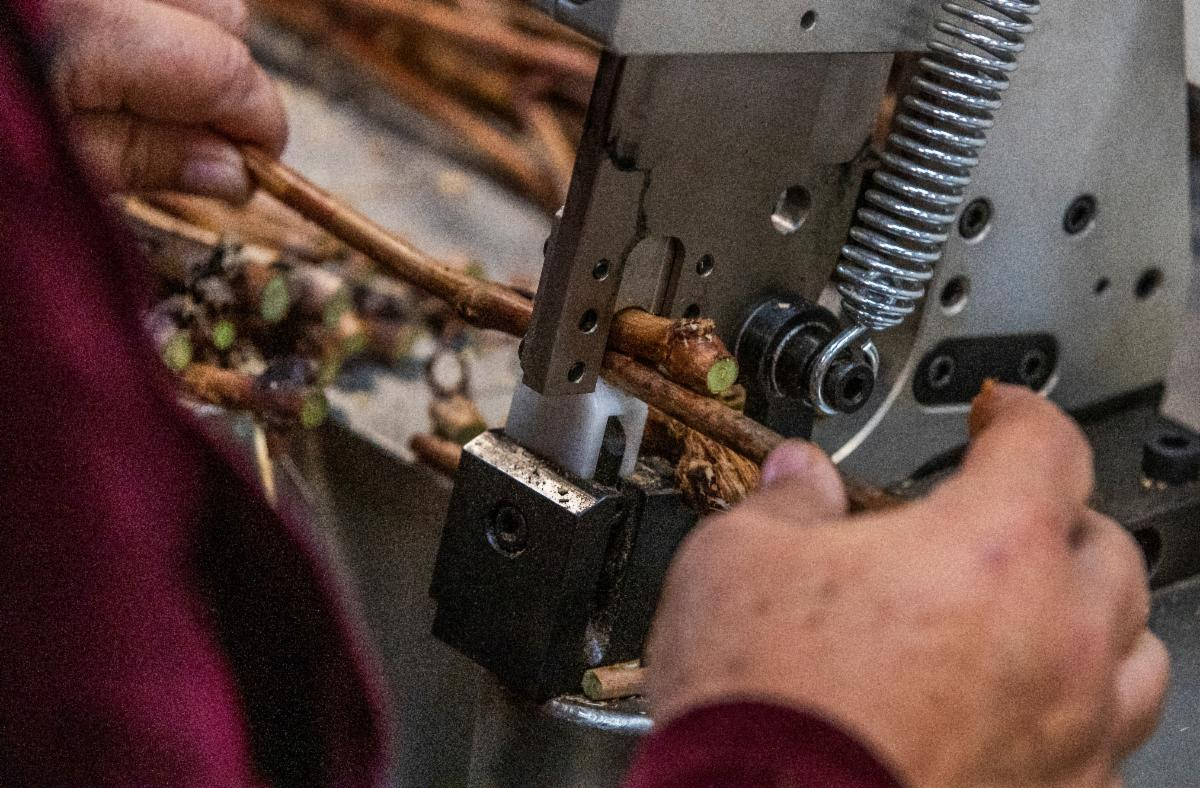
Welcome to part two of our vine production outline! We are thrilled to have you on this journey through the fascinating world of grapevine propagation! We trust that our last e-blast was not just informative but also sparked some interest for what comes next. As we dive into the stage of grafting, we want to remind you there is still time to contact us to secure your 2025 potted greenvine / 2026 dormant bareroot orders! We are in the midst of grafting and have just begun producing custom orders for 2026. Contact our dedicated sales team today to ensure we can fulfill your requests and provide support tailored to your specific needs. Part 2 Following disbudding, the rootstock and scionwood for the grafted order is then sent to soak in a custom quaternary ammonium salt disinfectant for 4 hours, as a second method for sanitation. Prior to grafting, the rootstock is given a fresh cut to the bottom of the vine to stimulate root growth. The scionwood is either cut manually or by our F
00
October 25, 2024

Malolactic Fermentation Feasibility: Factors Affecting Ease of MLF There are several factors that influence malolactic fermentation (MLF). This includes obvious factors like alcohol, pH, and SO2 but also includes less obvious factors like alcoholic fermentation difficulty, yeast nutritional requirements, etc. Read on to learn more about some of these less frequently considered factors. READ THE FULL ARTICLE Beyond the Basics Temperature Most cellars are actually too cold and inhibitory to malolactic bacteria. The ideal temperature range for MLF is between 18-22°C (64-72°F). If you consistently see sluggish or stuck MLFs, consider conducting MLF in tank or in a warmer space. Yeast Nutrient Need Bacteria require nutrients. Certain yeast strains have high nutrient demands and may leave the wine depleted of nutrtients (see yeast product description). In these cases we recommend using a malolactic fermentation nutrient. Malic Acid Level Very low malic acid concentrations (&l
00
February 27, 2024

The Wine Business Institute (WBI) at Sonoma State University (SSU) announced the 2023-2024 scholarship recipients of the Wine Industry Scholars Program (WISP) and the Wine Business Institute Inclusive Excellence Scholarship Program February 26. Recipients are recognized for having outstanding commitment to advancing their knowledge and expertise in the wine business. The Wine Industry Scholars Program (WISP) supports the access, retention, and graduation of students who are first-generation college students and children of families working in the wine industry. WISP awards approximately $150,000 in scholarships annually. The Wine Business Institute Inclusive Excellence Scholarship Program aims to foster a more diverse and inclusive wine industry by supporting a broad range of scholars, including women, individuals from underrepresented racial and ethnic backgrounds and those requiring financial support for their education. “This year’s recipients went through a rigorous sel
00
Discover Zymaflore omega, a non-Saccharomyces yeast (Lachancea thermotolerans) for the BIOAcidification of wine - oenology - winemaking - alcoholic fermentation
00

February 24, 2023

Afternoon Brief, February 24th
Beckstoffer To Kalon and the Mystery Bottle: An intriguing lawsuit pits an opportunistic wine company against a Napa heavyweight. We know which side our money is on...
00
February 21, 2023

Afternoon Brief, February 21st
Alpha Omega Collective Wineries Merge, Unveil New Napa and Paso Robles Tasting Rooms: Alpha Omega winery in Napa Valley, Tolosa winery in the San Luis Obispo Coast and Perinet winery in Spain’s Priorat announced their official merger today, strengthening the three brands to formally create the Alpha Omega Collective...
Alpha Omega CollectiveWine & Spirits Wholesalers of AmericaGary’s Wine & MarketplaceNapa Valley GrapegrowersFerrari-Carano WineryCalifornia Association of Winegrape Growers FoundationTemecula Valley Winegrowers AssociationCaymus VineyardsSevenfiftyVinepairSte. MichelleOld World WineryAtlas Vineyard ManagementUnited Sommeliers FoundationBevZeroCD & PowerGroup VicardLawrence Wine EstatesVino VinyasaVinexposium
00