
Filter Post Type
NewsVideoProductEventLink
Sort:
Most Recent
1–10 of 67

January 23, 2026
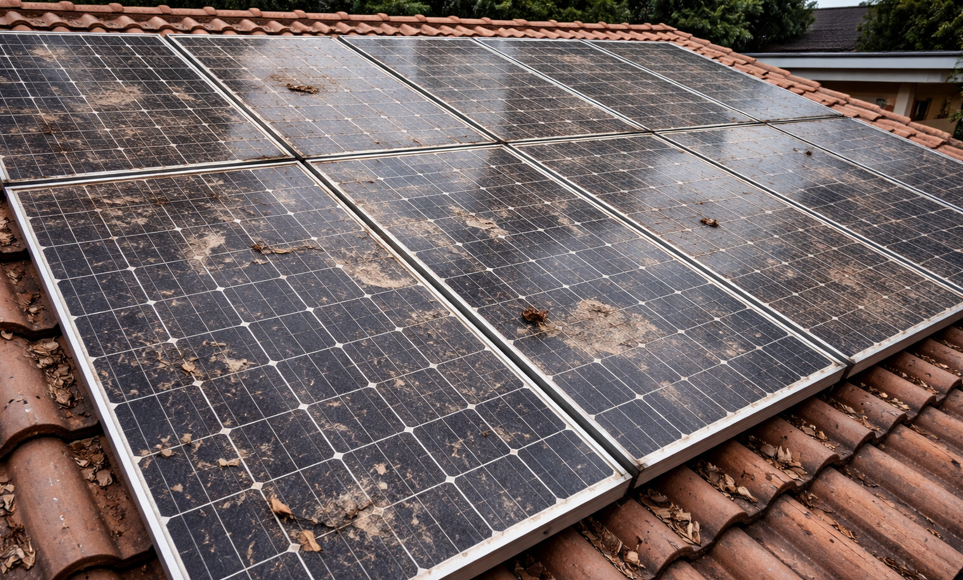
Key Takeaways Regular solar panel cleaning helps maintain energy output by removing dirt, salt residue, and debris that block sunlight and reduce efficiency. Most homeowners should clean solar panels once or twice per year, with coastal and high-dust areas often needing more frequent service. Professional solar panel cleaning protects your investment by safely removing buildup without damaging surfaces, wiring, or warranties. Solar panels are designed to be low maintenance, but that does not mean they are maintenance-free. Over time, dirt, dust, pollen, bird droppings, and coastal salt can reduce how much sunlight reaches your panels. When that happens, your system produces less energy, and your savings take a hit. Here on California’s Central Coast, solar panel cleaning plays a bigger role than many homeowners realize. This guide explains how often solar panels should really be cleaned, what affects cleaning frequency, and how proper maintenance protects your investment. Our par
00

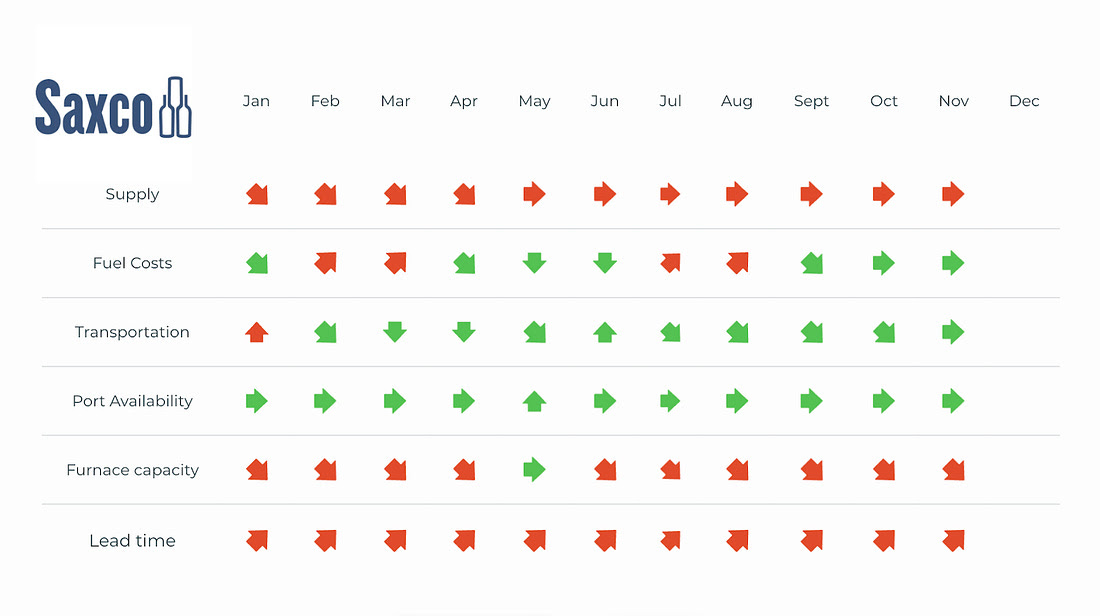
A pause in the fever dream of instability October arrived not with fanfare but with something rarer: Quiet. After a year of collective anticipation for more and more problems, what occurred was a respite. The tariffs are stalled, and the early indications from the Supreme Court suggest they are still in flux and will be a topic for discussion on a future date. Fuel costs have stabilized, as have ocean freight rates. There is a peculiar quality to this pause. It is that in-between moment that makes it hard to understand if wineries should keep their guard up or, finally, tentatively lower their shoulders. The glass half empty, half full The supply chain in October was like a strange dance. Everything remained unchanged – neither improving dramatically nor deteriorating. Just... holding. Diesel slipped from $3.748 to $3.679 per gallon, a decline so modest it barely registers as movement. But after months of upward pressure, even sideways feels like progress. Ocean rates hit bottom
00

What makes Enolytics different from any other reporting platform? It’s a fair enough question, and we’re always glad to respond. Lately we’ve been starting with this graphic, of what’s above and below the surface when it comes to wine data. It’s like an iceberg in the ocean. The “tip of the iceberg,” above the surface of the water, is what most wineries see and use when it comes to data: dashboards, reporting, and benchmarking. But these elements, while essential, merely scratch the surface of what data can reveal about a wine business’ health and growth. Those things report, yes, but on sales that have already happened in the past. Notice the penguin at the top of the graphic! Which is appropriate enough: they’re comfortable and familiar there, but hardly adventurous or trail-blazing. It’s what lies beneath the surface — the deeper insights — that are vast and transformative. Growth-oriented, and forwar
00
November 18, 2025
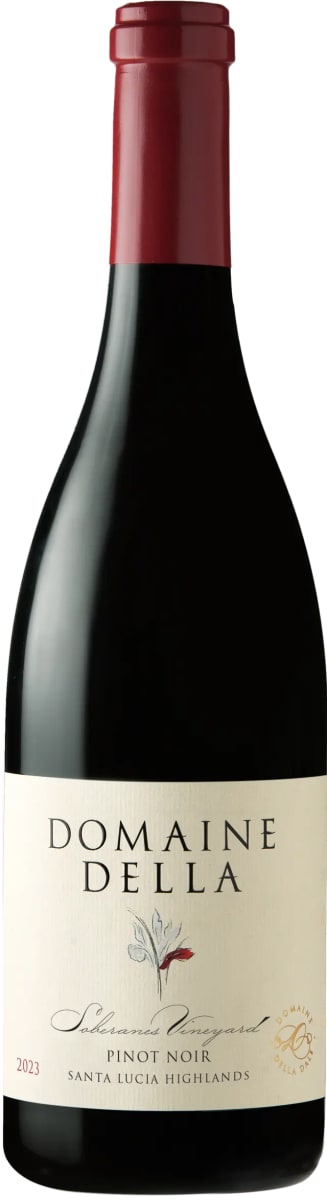
Domaine Della 2023 Soberanes Vineyard Santa Lucia Highlands Pinot Noir Takes Top Prize November 18, 2025 — Winners have been announced in the 2025 Harvest Challenge Wine Competition. After two spirited days of judging, Domaine Della 2023 Soberanes Vineyard Santa Lucia Highlands Pinot Noir took the top prize. It was also awarded Best of Show Red Wine and Best of Monterey County AVA. Coming in at 98 points, judges praised the wine as “warm and spicy” with “fig and nutmeg.” Other descriptors included “meaty,” “prosciutto,” and “dried rose petal.” With entries from across the globe, the Harvest Challenge bases judging on a group of vineyards (or even vines) from the same region, belonging to a specific appellation and sharing the same type of soil, weather conditions and grapes that combine to give personality to the wine. In other competitions, this terroir is ignored. At the Harvest Challen
00

October 30, 2025
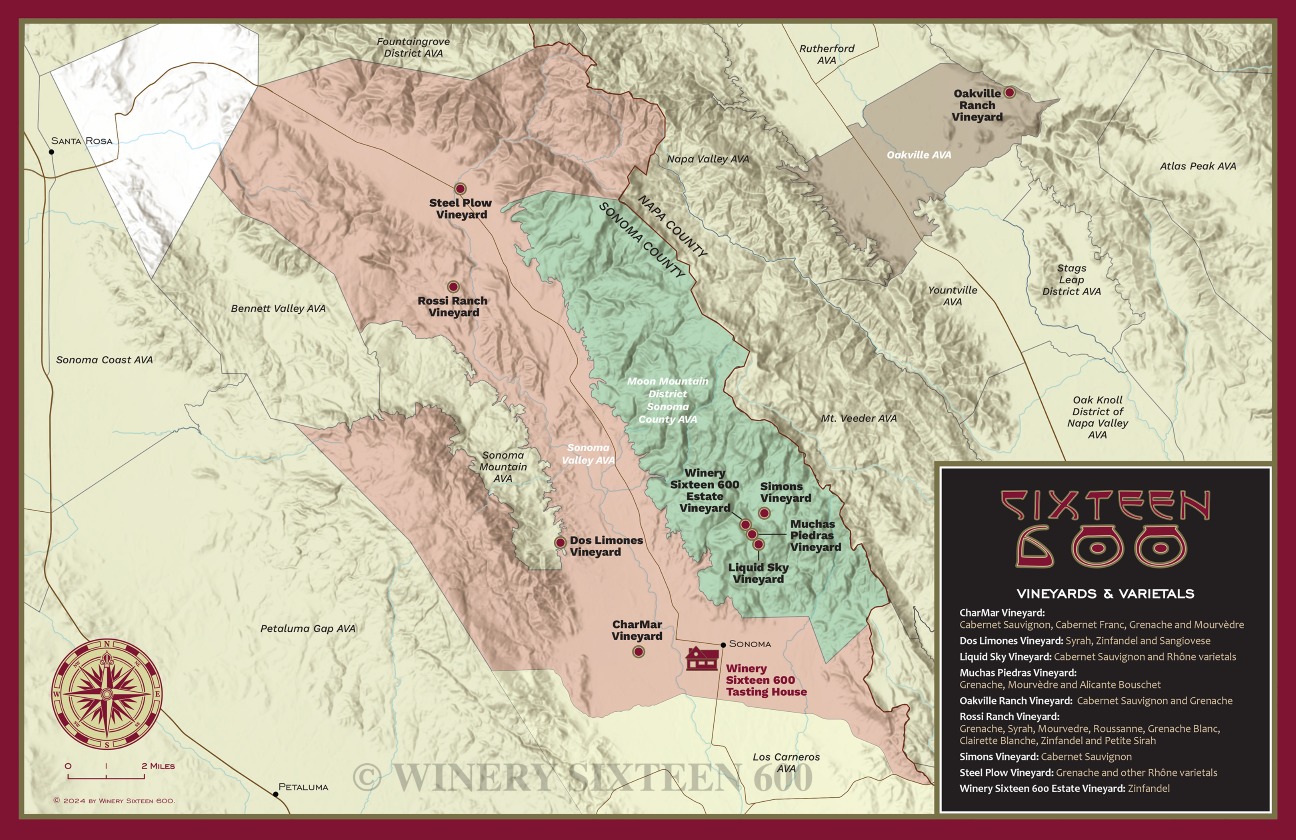
Tasting room guests aren't looking for just a pour – they're craving understanding and a deeper connection to your brand. Your guests want to know why your Pinot Noir vineyard is in a completely different location than your Cabernet Sauvignon vineyard. They want to grasp the unique ways that hills, valleys, and ocean proximity create the perfect conditions for each of your wines. Your tasting room team members can explain these reasons but without a visual aid guests struggle to truly envision and understand the multiple factors that differentiate each of your wines. The Missing Visual Link When your visitor has trouble picturing the reasons why location matters for your wines – especially out-of-town visitors - a custom-designed and branded map of your vineyards provides the visual connection they're missing. Your map becomes a powerful educational tool that works 24/7 – showcasing your vineyards in the various AVAs or highlighting blocks on your Estate
00
October 27, 2025

Walk into any cellar this season and you’ll see barrels in every stage of life — new, neutral, recoopered, or quietly leaking in the corner. The challenge isn’t just keeping up with what you have; it’s knowing which barrels are still earning their place. In a softer market, where margins are thin and cellar space is tight, every barrel decision carries more financial weight than it used to. Replacing by habit no longer makes sense. Instead, wineries are learning to treat barrels like what they really are — long-term assets that deserve the same attention and strategy as any other part of production. The Barrel ROI Framework: Knowing When It’s Time Every barrel has a life cycle — and like any asset, there’s a point where the cost of keeping it outweighs its return. Instead of guessing, wineries can look at the decision through a simple ROI equation: Barrel ROI = (Years in Use × Oak Value) – Maintenance Cost – Risk of Loss
00

October 21, 2025
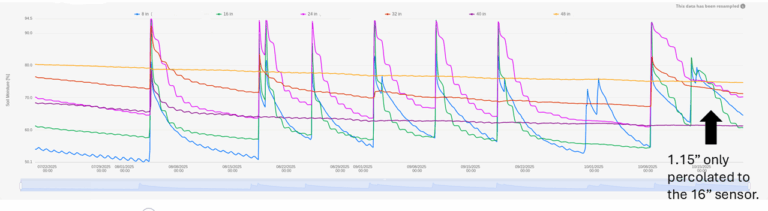
Hear me out Up and down the California Coast, we got some rain last week. Up North, places got around 1.3” with up to 2” closer to the ocean. Down south in Paso Robles, we’re looking similar numbers of between 1.5” and 2”. So, one would naturally think that if we were irrigating post-harvest (as we highly recommend), we can stop now. As you may have suspected by the title of this article, that may or may not be the case. Profile Picture Here at AV, we love looking at soil moisture charts. However, in the case of rainfall, it can be misleading. Looking at the graph below, you can see that irrigations produce a clear spike indicating how deeply water percolated and how long it took to be completely depleted by plant roots. Rain doesn’t deliver the same concentrated volume you’re used to getting with a drip emitter. Therefore it doesn’t infiltrate the soil in the same way. You may see shallower percolation from the inch plus of rain we got
00
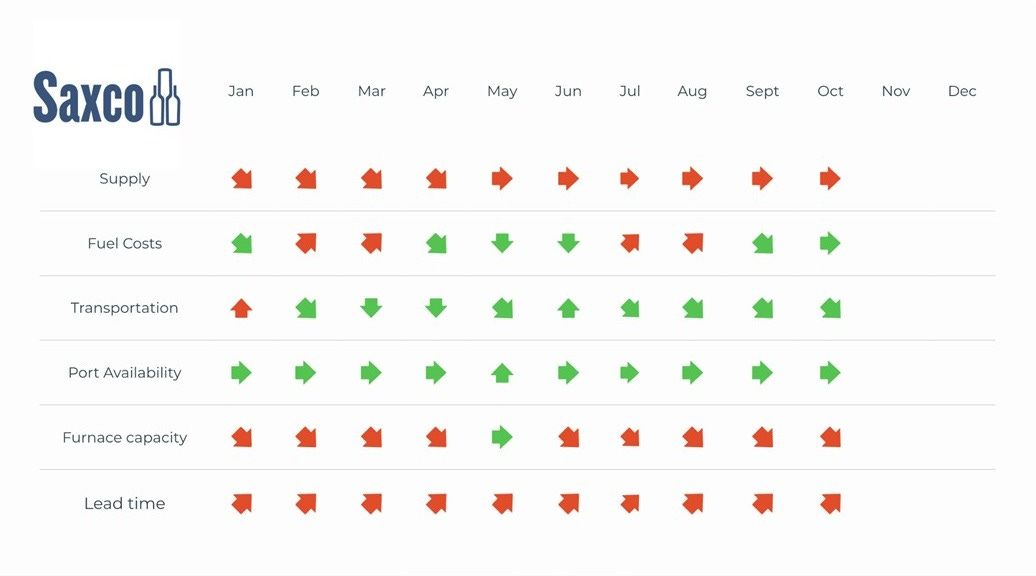
This month: Soft seas, more questions, and a consumer that’s anxious and cautious about tomorrow. October’s here, and the supply chain feels eerily quiet. Not calm exactly – just slow. There is movement, but it’s more drift than direction. Freight rates are down, not because we have gotten more efficient, but because demand is low. Fuel is holding steady, but only because the broader economy seems reluctant to surge. There are no logjams at the ports, yet there is not much urgency, either. Glass remains tight. Lead times are still creeping. And while retail shelves are being reset for the holiday sprint, the pace feels tentative. Brands are pushing forward, but many are doing so with a wary eye on cost, conversion, and the uncertain mood of the American shopper. The story of October is about the tension between the inertia of supply and the jitteriness of demand. Between short-term calm and long-term concern. Market overview Fuel costs rose imperceptibly from $3
00
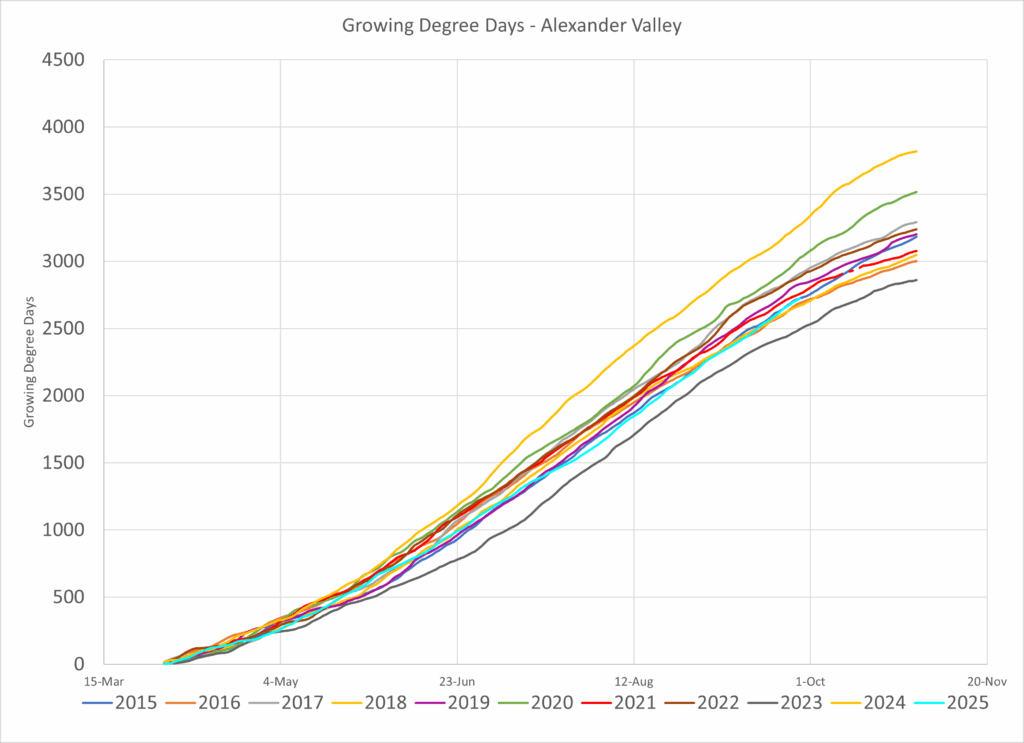
If this year is defined by a singular emotion, it’s anxiety. That’s nothing new in farming, however I’m talking about anxiety over the abysmal grape market rather than any natural phenomenon. Many of us were so busy scrambling for buyers, we may have forgotten to notice just how great the weather has been. Why wouldn’t we get handed a great year when most of us can’t sell any grapes? Let’s look at some numbers My gut feeling was that 2025 was similar to 2023 with a few big differences. 2023 saw some record high rainfall in the winter and early spring throughout California. Even the Paso Robles area got around 21” of rain from July 1st 2022 to July 1st 2023, up from a whopping 6.5” the year prior. That amounted to lots of nice canopy development early in the year and some good yield potential, provided you didn’t get shatter during the chilly springtime. This year however, the Central Coast was back to a measly <7” of rain w
00
July 17, 2025
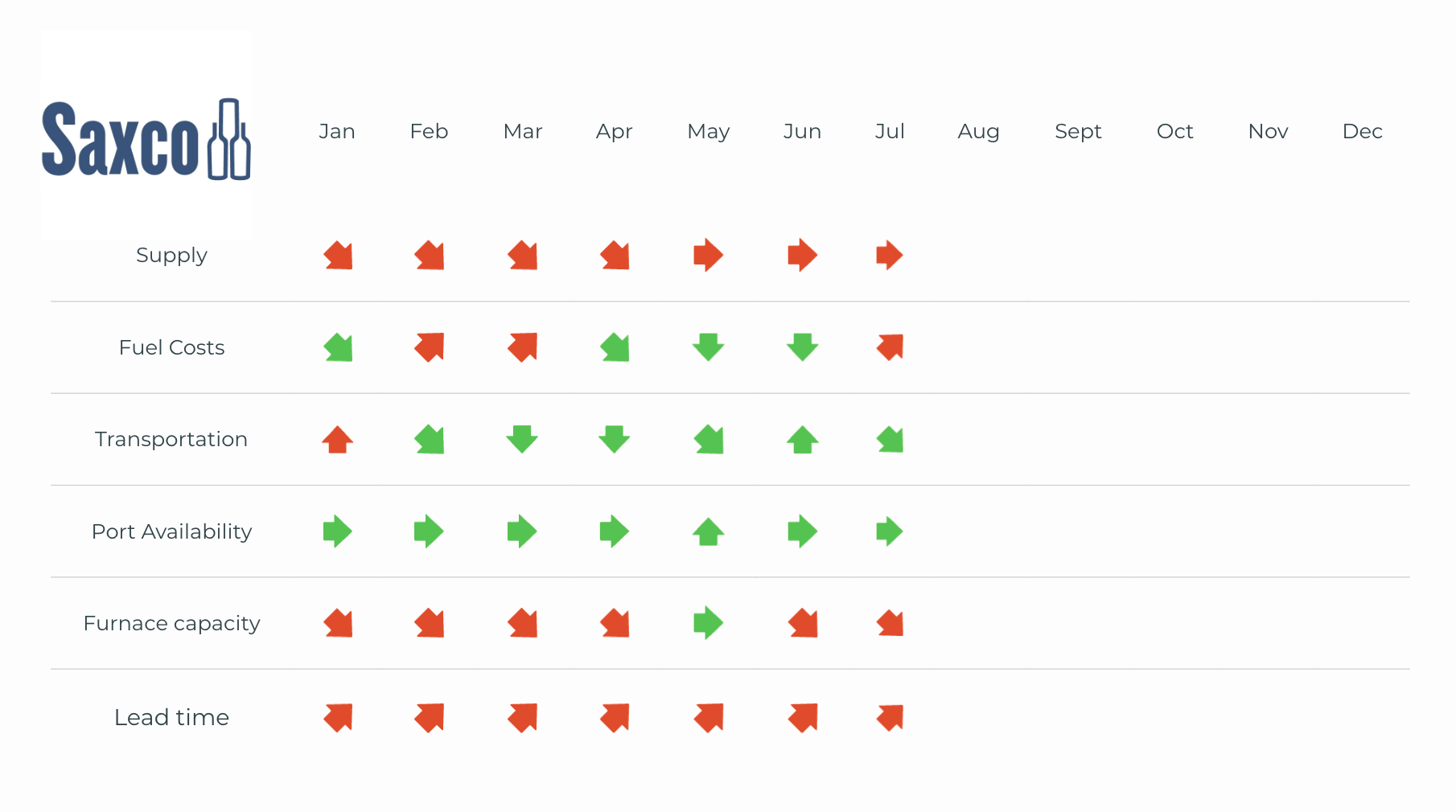
Packaging supply stable, but uneasy While June ushered in a more stable rhythm after May’s tariff-driven frenzy, underlying uncertainty continues to shape planning, procurement, and pricing across the packaging and logistics landscape. Supply remains steady across most categories, but stability doesn’t mean simplicity. US glass manufacturers, in particular, are contending with a mismatch between output and demand. Inventories have piled up amid sluggish ordering, especially from wine producers still reeling from compressed consumer spending and slowing DTC velocity. With tanks and warehouses more full than empty, some domestic furnaces are now eyeing Q3/Q4 production pauses as a measure to rebalance. After a brief reprieve in May, diesel prices rose again in June, increasing from $3.499 to $3.599 per gallon, a continued reflection of the volatile energy market. According to the latest Deloitte economic outlook, while core inflation is showing signs of moderation, ener
00