
Filter Post Type
NewsVideoProductEventLink
Sort:
Most Recent
1–10 of 13
Sampling is in full swing on the Southern Hemisphere’s 2025 vintage and quality has been rated very positively. The great majority of sampling activity is being carried out by longstanding customers with established programmes and tenders; new buyers, and new programmes, are few. Only Chile and New Zealand experienced non-average crop sizes but in contrasting ways – Chile’s was as much as 25% short, New Zealand’s is expected to have been “very large” despite fruit going unpicked in response to generous carryover stocks. The shortness of Chile’s crop triggered brisk early sampling by international buyers and the securing of batches by domestic buyers. Even in this context, however, the lack of new international business has been noticeable. In the Northern Hemisphere, meanwhile, bulk wine markets have been proceeding steadily, with activity largely consisting of incremental demand for small volumes on a just-in-time basis. The persi
00
Sampling is in full swing on the Southern Hemisphere’s 2025 vintage and quality has been rated very positively. The great majority of sampling activity is being carried out by longstanding customers with established programmes and tenders; new buyers, and new programmes, are few. Only Chile and New Zealand experienced non-average crop sizes but in contrasting ways – Chile’s was as much as 25% short, New Zealand’s is expected to have been “very large” despite fruit going unpicked in response to generous carryover stocks. The shortness of Chile’s crop triggered brisk early sampling by international buyers and the securing of batches by domestic buyers. Even in this context, however, the lack of new international business has been noticeable. In the Northern Hemisphere, meanwhile, bulk wine markets have been proceeding steadily, with activity largely consisting of incremental demand for small volumes on a just-in-time basis. The persi
00
The 2025 harvests in the Southern Hemisphere are now in full swing and the picture – so far – is mixed: white grape tonnages have been exceeding expectations in Australia and bunches are large and heavy in New Zealand, but Argentina and South Africa’s crops appear to be – at best – on course for their downwardly-adjusted long-term averages, while Chile’s crush could come in significantly short due to a hotter-than-normal growing season reducing yields. Globally speaking, the bulk market can be characterised as slow and steady since mid-February, with the Southern Hemisphere focused on harvest and demand in the Northern Hemisphere dampened by flat or declining retail sales and, in Spain, some elevated pricing on those wines most needed in Europe: generics, and especially generic white. Outside of generic white, few if any wines are making bulk-market waves as need is not pressing. Pockets of activity have arisen: domestic demand in Chile
00
As the end of 2024 approaches, we are able to look back over a year on the global bulk market that was, despite common perception, different from its predecessor. December 2023’s Global Report began: “A year of flat or declining wine sales owing to consumer pessimism draws to a close with bulk markets exhibiting the same slowness they have done throughout the previous eleven months.” But the bulk market of 2024 has reassumed something of its traditional character, i.e., with activity levels differing between supplier countries, very crudely summarised as follows: short and active (Chile, Italy), long and less active (California, France), elevated in price therefore less active (Spain, Argentina), steady (Australia), and very low on stock (South Africa). The main cause of any activity upswings and/or elevated prices has not been increases in retailer/distributor demand – which has remained patchy – but two consecutive years of lighter crops: the OIV&
00

Back by popular demand, this year's Sustainable Ag Expo online courses* invite you to learn from top researchers and experts at your convenience. Explore topics like: Advances and Challenges of Breeding Powdery Mildew-Resistant Grape Cultivars Using Tremology to Monitor and Manage Insect Pests Unraveling Climate-Specific Outcomes of Pierce's Disease of Grapevines + 10 more! Approved CE hours: 10 DPR (Other); 12 CCA *2-day ticket holders have access to online courses October 14-November 29, 2024. --- When you attend the Sustainable Ag Expo, you will: Get up to date on the latest grower-tested practices Earn up to 20+ Continuing Education (CE) hours Attend two days of in-person seminars Watch 10+ hours of online courses* Gain actionable tips from 40+ top experts and experienced growers Welcome Event November 11, 2024, 5:00-7:00 pm at Center of Effort Winery Trade Show & Seminars November 12 & 13, 2024, 7:30 am-5:00 pm at Madonna Inn Expo Center
00

GLENWOOD, Minn. & TORONTO--(BUSINESS WIRE)--AgCode, a leading provider of farm management solutions for the Specialty Crop industry, has been acquired from corporate owner Wilbur-Ellis by Arcadea Group, a growth-focused, long-hold investor in vertical market SaaS. The acquisition will empower AgCode to accelerate its product development and global footprint while maintaining its exceptional customer support and long-term commitment to the industry. Since its founding in 2002, AgCode has become one of the leading farm management solutions in the specialty crops industry, providing a comprehensive suite of applications and functionality, including Season Planning, Labor Management, Pesticide Applications, Equipment Maintenance, Field Scouting, Payroll, and Billing. AgCode recently rewrote its platform to deliver a cutting-edge, comprehensive solution designed to provide clear insights into the complex operations that growers face every day. Daniel Eisen, Co-Founder and Managing Direc
00

December 20, 2023

New Zealand Sauvignon Blanc Receives 92 Point Score from Wine Spectator
Duck Hunter Wines, a 100 Percent Sustainable and Accredited Wine Showcases the Best of the Marlborough Region and Is Named a Top New Zealand Brand. Los Angeles, CA – December […]
00

December 14, 2023

Sonoma County, CA, Dec. 14, 2023 – Lumo, a Smart Agtech company that supports growers and tackles water challenges head-on, is proud to announce a trial of its state-of-the-art irrigation technology with Treasury Americas, a division of the global premium and luxury wine company, Treasury Wine Estates (TWE), in Napa. Lumo aims to help growers revolutionize the way they manage water in their vineyards, empowering them to automate and closely monitor irrigation activities. Currently, 24 of Lumo’s smart irrigation valves are being utilized by TWE, allowing the company to efficiently manage irrigation on 90 acres of Napa vineyard land and setting an industry example for sustainable viticulture practices. The trial with TWE should provide concrete evidence of how Lumo’s advanced water technology can help to improve operational efficiencies while aiding in substantial water conservation. “Efficient irrigation is paramount in bridging the gap between water u
00
October has arrived but the usual clarity it gives the Northern Hemisphere harvest picture is lacking this year due to diverse fortunes in Europe – sometimes between even neighbouring vineyards – and, in California, a lag in the growing season by up to four weeks. It has been a year of noticeably unusual and unpredictable weather and while the subject of “climate change” comes freighted with politics, it certainly does feel like the weather is currently out of kilter in both hemispheres. Take the freak midwinter heatwaves in Argentina and Chile this year, now echoed by the unseasonably warm autumns in northern Europe. It seems that winters are generally drier, springs wetter, summers hotter (sometimes alternating between heatwaves and deluges) and autumns milder. All this can take a toll on vines and grapes, and protecting them requires investment, not something that comes easy for growers and wineries in the current oversupply and slow sales environment w
00

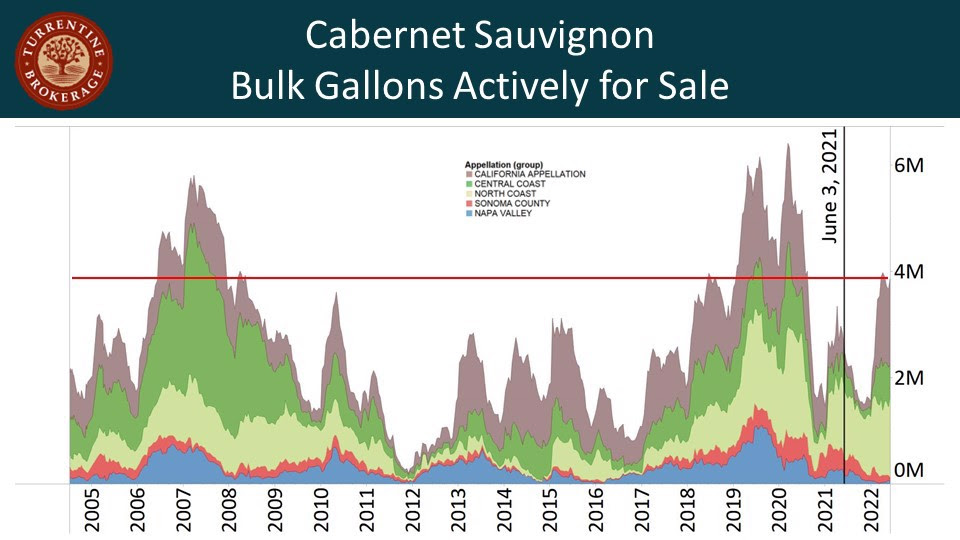
Decision-making on the sourcing of bulk wine and grapes continues to get more complex and difficult. April frosts in the Lodi/Delta, and in other regions of California to a lesser extent, added another challenging variable to the year. As of now, it appears the reduction in supply due to the frost affected Chardonnay and Pinot Noir in these regions the most. Time will provide a clearer picture of the 2022 crop size. In fact, recent crop projections are generally more positive than the initial forecasts after the frosts, but there is still uncertainty as to the extent of the damage. In the North Coast and other parts of California, the frost will likely have less of an impact. Bulk markets have slowed, returning to a more typical seasonal pace following 18 months of heightened demand, but still remain active. The typical spring slowdown is due to wineries assessing crop size and projected sales trends to inventories. It is more complicated this year for a few reasons. The first variable
00