
Filter Post Type
NewsVideoProductEventLink
Sort:
Most Recent
Tagged:Malolactic Bacteria
1–7 of 7

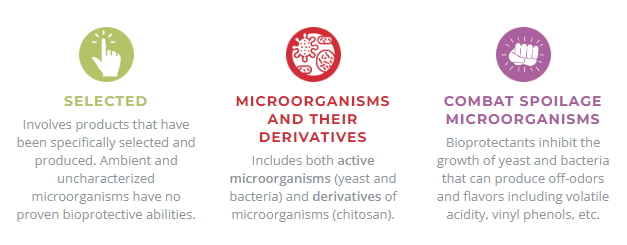
You've Heard "Bioprotection", But What Does it Really Mean? Bioprotection has become an industry buzzword over the past couple years. But what is it really? Is it just Non-Saccharomyces yeast? We think bioprotection deserves a closer look and a more practical and actionable definition. Bioprotection is using selected microorganisms and their derivatives to combat spoilage microorganisms.Our Bioprotection Portfolio LEVEL2 INITIA PRE-FERMENTATION Non-Saccharomyces yeast that outcompetes spoilage organisms by rapidly depleting juice of oxygen. GAIA PRE-FERMENTATION Non-Saccharomyces yeast that outcompetes spoilage organisms by microbial crowding. SACCHAROMYCES YEAST & MALOLACTIC BACTERIA DURING FERMENTATION Commercial strains of yeast and bacteria are selected for their ability to implant quickly and outcompete spoilage microorganisms. This leaves spoilage organisms with less time and ability to produce off-flavor
00


CHR. HANSEN WEBINAR: THE USE OF NON-SACCHAROMYCES YEASTS IN WINEMAKING Explore the yeast landscape – Saccharomyces cerevisiae and beyond How, when, and why to apply non-Saccharomyces yeast How non-Saccharomyces yeast can provide a positive sensory impact and be used as a tool against spoilage Selecting the proper Viniflora yeast strain for your wine Using pre-fermentative yeast to protect the must by preventing the growth of unwanted yeast and bacteria Differentiating your wine by aroma intensification, acid production, and mouthfeel perception through biological means CHR. HANSEN WEBINAR: MASTERING MALOLACTIC FERMENTATION Differences between various O. Oenococcus oeni strains Process of testing antibiotic resistance and biogenic amine production of bacteria How to select the proper Viniflora® bacteria strain for your wine The magic number of cells needed to start converting malic acid to lactic acid Best practices for troubleshooting stuck malolactic ferme
00

Gusmer Wine Webinars www.GusmerWine.com
00
September 28, 2022
Chr. Hansen Viniflora® cultures are the most widely used malolactic cultures. Reliable and predictable, Viniflora bacteria cultures are trusted by more winemakers worldwide to get their wines through malolactic fermentation on time and with desirable organoleptic outcomes. However, not all strains of Oenococcus oeni are the same, nor are all malolactic bacterial preparations. Some strains are more tolerant to environmental parameters such as pH, temperature, sulfur dioxide and alcohol. To help you choose the right strain for your wine, view the chart below and watch the videos for more tips. Can't decide which strain to use? We're here to help, contact your local Gusmer Technical Rep today. PRODUCT SPOTLIGHT CH16 - 90 SEC OVERVIEW PRODUCT SPOTLIGHT CH35 - 90 SEC OVERVIEW
00
🎤 Today, we give the floor to Robert Smith, winemaker from Quixote Winery in the Stags Leap district of Napa Valley. 🍇 Robert has been using Lallemand Oenology products through Scott Laboratories for about 10 years to produce wines from his 27 acres of grapevines. 🎬 He shares his experience with VP41 and SILKA, our natural selected wine bacteria with us. More information on each product: - VP41: Click here - SILKA:Click here Thank you Robert! Your browser does not support HTML5 video.
00

Chr. Hansen Viniflora® cultures are the most widely used malolactic cultures. Reliable and predictable, Viniflora bacteria cultures are trusted by more winemakers worldwide to get their wines through malolactic fermentation on time and with desirable organoleptic outcomes. However, not all strains of Oenococcus oeni are the same, nor are all malolactic bacterial preparations. Some strains are more tolerant to environmental parameters such as pH, temperature, sulfur dioxide and alcohol. To help you choose the right strain for your wine, view the chart below and watch the videos for more tips. Can't decide which strain to use? We're here to help, contact your local Gusmer Technical Rep today. Customer Testimonial - Ancient Peaks Winery
00
Presentation Topics include:
The main stress factors for Oenococcus oeniin wine
MLF Inoculation Protocols: Direct Inoculation, Co-inoculation, and Spontaneous
Magic number (of cells) for successful malolactic fermentation
Nutritional considerations for Oenococcus oeni
For any questions regarding this webinar or Chr. Hansen products, please contact us at gusmerwine@gusmerenterprises.com.
00