
Filter Post Type
NewsVideoProductEventLink
Sort:
Most Recent
1–10 of 13

Sustainability in winemaking comes down to operational decisions. The right equipment can reduce refrigeration demand, lower water use, cut product loss, and simplify production flow without compromising wine quality. That is where BevZero’s equipment portfolio stands out: it addresses the day-to-day constraints wineries actually face during
beverage product development
, from cold stabilization and insulation to dealcoholization and wastewater management.
Key Takeaways
Wineries improve sustainability through systems, not one-off fixes.
BevZero distributes equipment that targets major production pain points, including energy-intensive refrigeration, water waste, and process inefficiency.
ClearAlc supports lower-impact dealcoholization.
The system uses a single-pass vacuum distillation process designed for high energy efficiency, low operating temperatures, and minimal water use.
Tank-level efficien
00

The wine and spirits industry is standing on the precipice of a major design evolution. For years, “premium” was defined by weight, excess, and tradition. For 2026, a new definition of luxury is emerging; one that values intelligence over mass, and tactile storytelling over simple visual appeal. For brand owners and procurement leaders, staying ahead of these glass packaging trends in 2026 is no longer just about aesthetics; it is a matter of strategic survival. From the rise of “quiet luxury” and right-weighted glass to the complex pressures of global supply chains, the packaging decisions made today will define brand resilience tomorrow. In this forecast, we explore how sustainable luxury, ergonomic innovation, and smart supply chain strategies are reshaping the premium landscape, and how Global Package provides the specialized glass solutions needed to help you navigate this future. The State of Glass Packaging for Wine & Spirits At Global Package, we&r
00

November 25, 2025
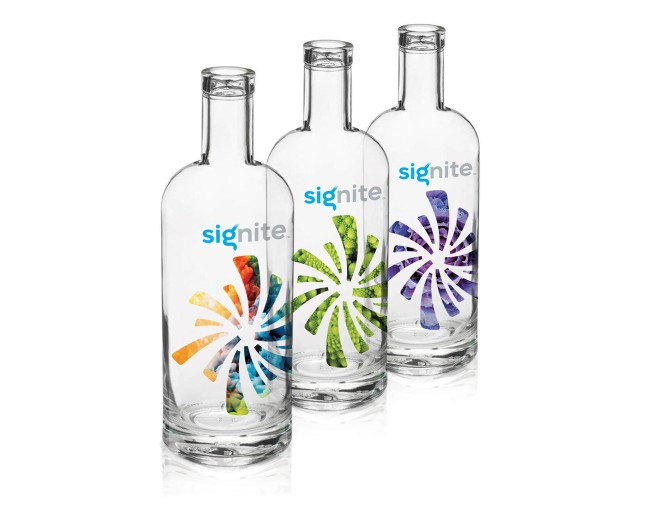
When it comes to packaging, a label is more than an identifier. It is a statement of brand quality and a reflection of a company’s values. That is why Signite, the innovative decorating solution from Actega, is attracting so much attention. And now, through Makro Labeling systems, this technology is available to producers in North America, exclusively through Prospero Equipment Corp. What Makes Signite Different Signite represents a new category of labeling. Unlike typical pressure-sensitive labels or direct-to-container printing, Signite combines a unique low-waste printing process with advanced application machinery. The result is decoration that is both beautiful and environmentally responsible. The benefits are clear: Lower waste throughout the production process Greater design freedom compared to traditional methods Improved recyclability and container reuse A premium look and feel that elevates brand presentation Highly Cost-competitive, and less expensive than many popul
00

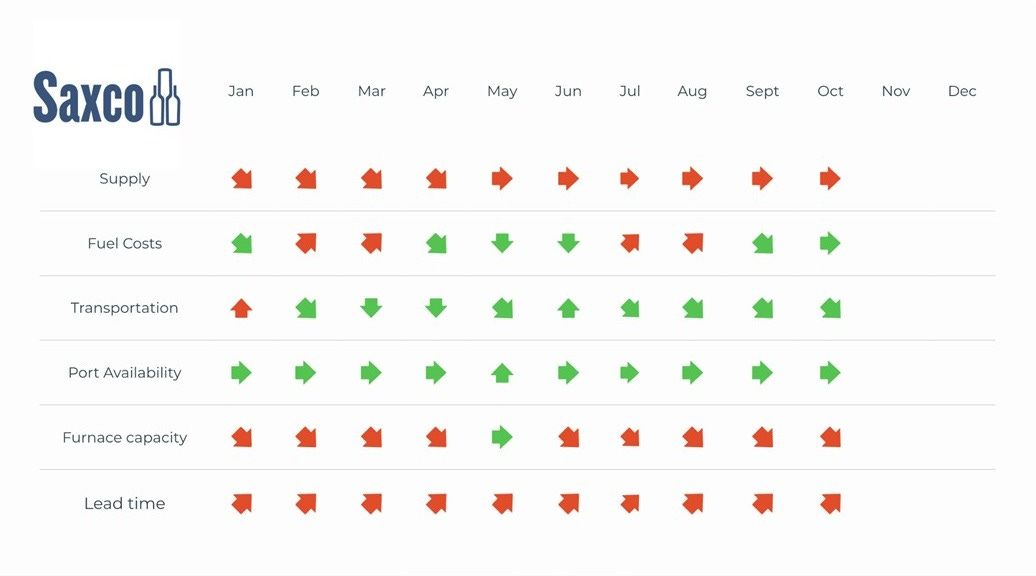
This month: Soft seas, more questions, and a consumer that’s anxious and cautious about tomorrow. October’s here, and the supply chain feels eerily quiet. Not calm exactly – just slow. There is movement, but it’s more drift than direction. Freight rates are down, not because we have gotten more efficient, but because demand is low. Fuel is holding steady, but only because the broader economy seems reluctant to surge. There are no logjams at the ports, yet there is not much urgency, either. Glass remains tight. Lead times are still creeping. And while retail shelves are being reset for the holiday sprint, the pace feels tentative. Brands are pushing forward, but many are doing so with a wary eye on cost, conversion, and the uncertain mood of the American shopper. The story of October is about the tension between the inertia of supply and the jitteriness of demand. Between short-term calm and long-term concern. Market overview Fuel costs rose imperceptibly from $3
00


You Love Data, Not Dust: LibDib is digital-first. Your dashboard is your new best friend. If you love seeing your orders, Buyers, and analytics in one sleek place instead of chasing paper POs, welcome home. You Know How to Tell Your Brand Story: You’ve got a compelling brand, and you want to share it with the world (or at least with California, New York, and beyond). LibDib gives you the tools to upload beautiful content, pricing, and sell sheets. You give Buyers that “reason to buy.” You Believe in Demand Before Distribution: You know that selling comes before shipping. You understand that LibDib doesn’t buy truckloads of inventory upfront—we fulfill when there’s real Buyer interest. You hustle, create demand, and LibDib makes sure it gets delivered legally and compliantly. You’re Cool with Being a Modern Maker: You get that times have changed. E-commerce is here, the cloud is your friend, and AI can help write y
00

We’ve all been in those workplace meetings, the ones that go in circles, drag on too long, or end without any clear decisions. When teams face conflict, big decisions, or strategic planning, leaders often wonder: Should we just handle this ourselves, or bring in a professional facilitator? At The Personnel Perspective, we’ve seen both approaches. And while tackling things internally might seem easier, professional facilitation services Sonoma County often makes the difference between a meeting that drains energy and one that sparks real progress. Let’s break down what it looks like with, and without, a facilitator. Staying Neutral When tough topics come up, neutrality can make or break the conversation: Without a Facilitator When someone inside the company leads a tough conversation, neutrality can get tricky. If the “facilitator” is also a manager or HR rep, people might hold back their real opinions or feel the need to alter what they say. Nobody wa
00
September 18, 2025
The wine industry is facing unprecedented challenges. With many wineries and related businesses feeling the pressure from rising costs and declining sales, it might seem like the only option is to cut back or even shutter operations. But as history shows, downturns are often the perfect time to make strategic investments that secure your future. At TMC Financing, we believe that smart financing isn’t just for booming markets—it’s the tool that can help you survive and ultimately thrive when the market turns around. Invest in Stability During Uncertain Times When the winds of economic uncertainty blow, companies that stand firm are the ones that take proactive steps rather than reactive measures. SBA 504 loans from TMC Financing offer a pathway to stability with: Low Down Payments: With as little as 10% down for established businesses, you keep your cash flowing for critical operations and future growth. Fixed, Long-Term Interest Rates: Enjoy predicta
00

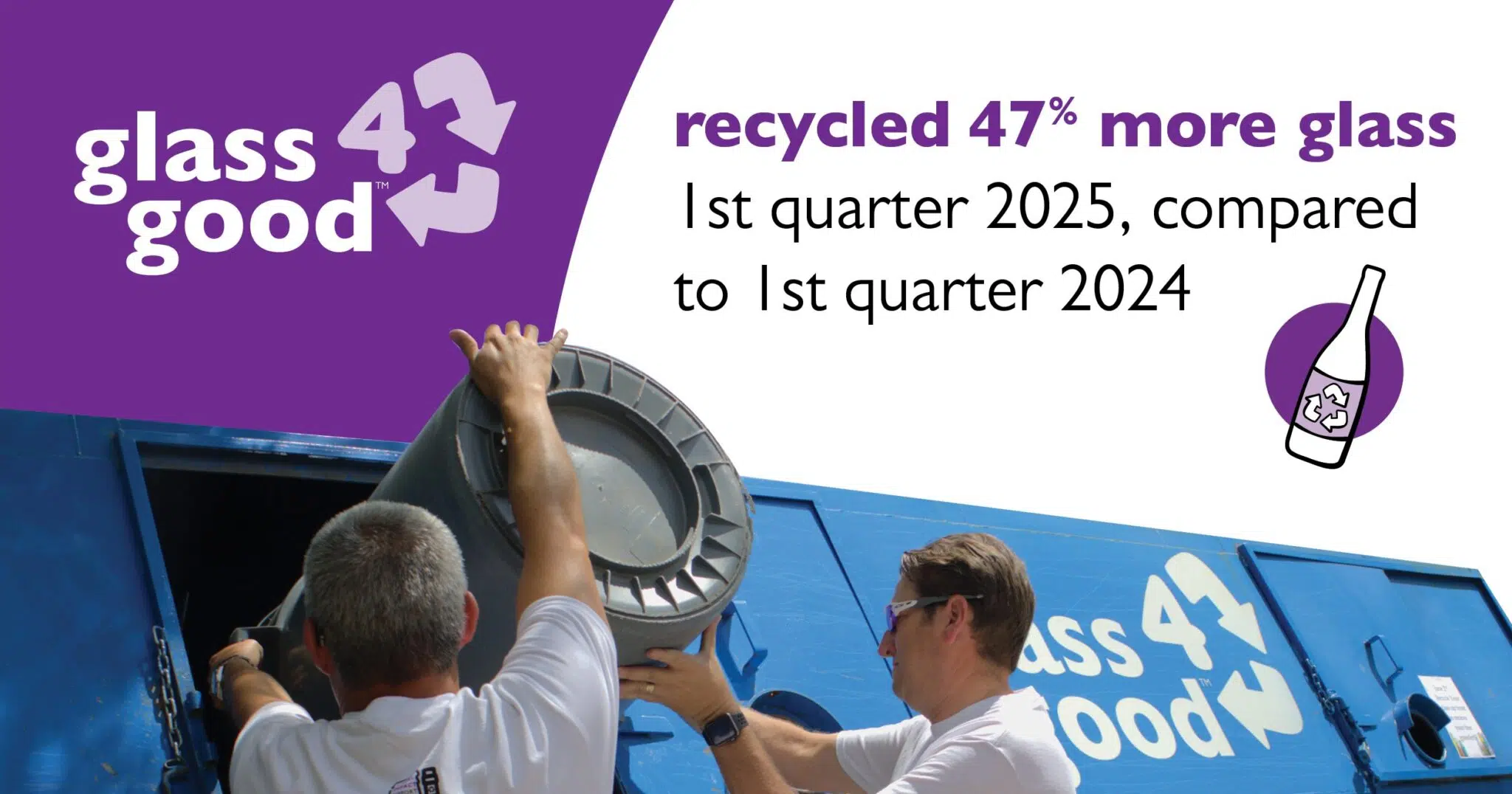
What a difference a few years can make! In 2020, O-I launched our first community glass recycling program in Perrysburg, Ohio, home to our Global Headquarters. Since then, our efforts have expanded and we now operate more than 20 glass recycling programs throughout the United States. These initiatives have sparked the enthusiasm and passion of communities and residents for glass recycling, leading to rapid growth in many of our programs. This growth couldn’t be more timely, as O-I recently announced a bold new target: achieving an average of 60% recycled content in our packaging globally by 2030. Our community programs are a crucial part of our strategy to reach this ambitious goal. These creative and effective community recycling ecosystems not only increase the availability of recycled glass (cullet) for manufacturing but also keep glass out of the landfills. With the support of our dedicated partners across the value chain, we are transforming the landscape of glass recycling
00

March 7, 2025
G&D Expands its ‘Elite 290’ Propane Chillers with NEW Microseries March 7, 2025 – Junction City, Ore. – G&D Chillers, known for producing the most reliable premium chillers used in commercial brewing, wine, cannabis, food processing, biogas and other manufacturing industries for more than 30 years, is pleased to announce its latest innovation as part of its trailblazing Elite 290 line of propane chillers introduced earlier this year. The Elite 290 Microseries features a compact design that makes it easier to put the chiller in tight spaces. The new design leverages efficient variable speed fans that allow for stable operation in all weather conditions (especially cold weather) and increases fan efficiency. The fans on the Microseries chillers vent vertically as opposed to horizontally, making them ideal for compact conditions. The Elite 290 Microseries also eliminates the need for mechanical switches, reducing “wear and tear&rdqu
00


According to Technopedia, “Future proof” describes a product, service or technological system that will not need to be significantly updated as technology advances. Purchasing a Future Proof Palletizer A palletizer purchased today must be as future-proof as possible because it will likely be in operation until 2034, or perhaps as far into the future as 2044. With a life expectancy of one to two decades, a palletizer built today must be engineered with machine control and layer configuration software, electro-mechanical parts, sensors, robots (for some applications), and other components that will perform efficiently and reliably as the machine ages. The manufacturer of the selected palletizer must also be a long-term partner able to provide after-market service and support capabilities that increase the likelihood of maintaining, and when needed, updating or modifying the palletizer to maximize machine life. Basic Considerations There are basic considerations that must
00