
Filter Post Type
NewsVideoProductEventLink
Sort:
Most Recent
1–10 of 35

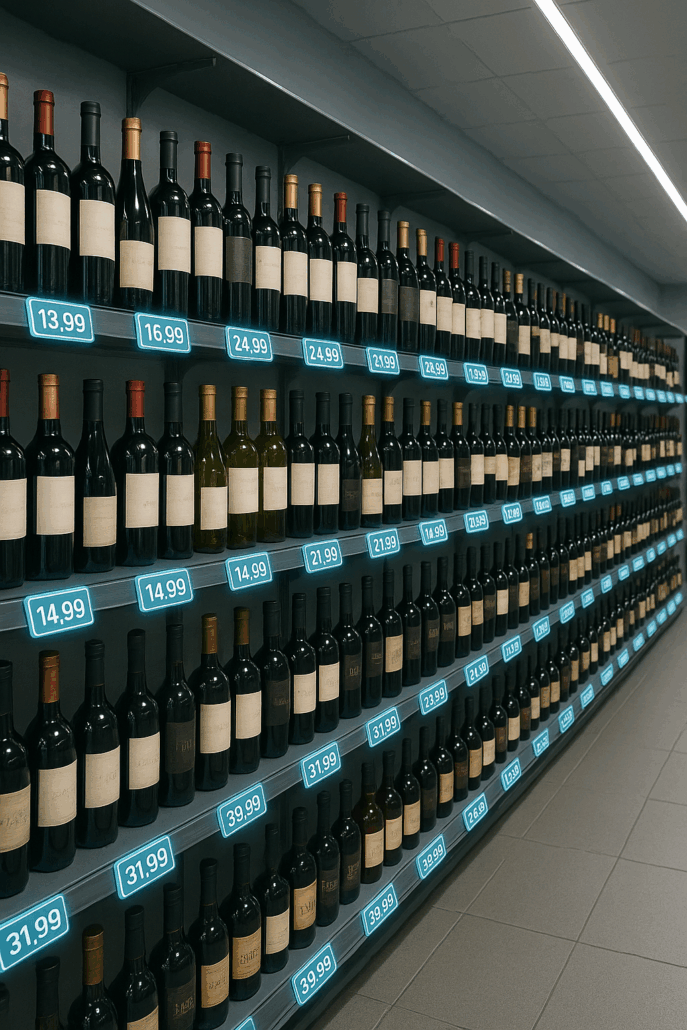
Why It’s Time to Take Control of Chain Retail Pricing In the wine & spirits business, the difference between a best-seller and a case that never sees the shelf often comes down to something so mundane, it’s almost embarrassing to say out loud: Pricing. Not the actual price point — the accuracy of it. There are already plenty of reasons your product might not make it to the shelf — a buyer reorg, a freight delay, the seasonal shuffle, or simply the chaos of modern retail. So when you’ve beaten the odds and secured a coveted placement with one of the nation’s top chain retailers, the last thing that should kill the momentum is a clerical error. And yet, that’s exactly what happens when the price on the invoice doesn’t match the price in the retailer’s system. One mismatch, and the product gets refused at the dock — benched before it ever had a shot. No match = no receiving. No receiving = no shelf placement. No pl
00
March 2, 2026
Fruitful Innovation Can Lead to Tax Benefits Napa has never had the luxury of standing still. This valley adapts. When the weather shifts, growers adjust. When consumer preferences change, winemakers experiment. New rootstock. New clones. Different planting locations. New production techniques. Reinvention here is not a trend. It is how we survive. That is innovation. And in many cases, it is also research. We are not talking about changing a label design or launching a new club tier. We're talking about the real technical questions you wrestle with in the vineyard and the cellar: Can this new grape clone handle higher temperatures? Will adjusting canopy management reduce sunburn without sacrificing ripeness? Can we modify fermentation to improve stability or manage alcohol levels? Is there a way to produce a non-alcohol option that still feels like wine? When you do not know the answer and you run trials to find it, you are eliminating uncertainty. You are experimenting. You are
00
We’re not debating calories or whether that charcuterie board counts as an appetizer or dinner. We're talking about the IRS tightening the rules for deductible meals. Starting January 1, 2026, some winery meals that have historically been deductible will become completely nondeductible. Same harvest crew. Same pizza. Different tax result. Here is what changes and what does not. 1. Harvest Meals on Winery Premises Zero Deduction Beginning in 2026 If you provide meals at the winery so employees can keep working, those meals will no longer be deductible starting in 2026. That includes: Crush pad dinners Bottling day lunches Late night production meals served on site For years these were deductible. Beginning in 2026, they are not. If harvest meals are a routine part of your operations, this is worth budgeting for now. 2. Occasional Overtime Meal Reimbursements Possibly Still 50 Percent Deductible If an employee unexpectedly works late and you reimburse them for dinner, tha
00


Trying to run an effective and efficient business without strong leadership is a practice in futility, but spotting leadership qualities isn’t exactly easy either. Even with lots of on-paper qualifications and potential experience, at the end of the day it’s the actions, mindset, and impact they leave that determines a leader. If you’re a business owner or manager, you might be wondering: How do I know if someone on my team has what it takes to lead? Well, that’s exactly what we’ll cover here! At The Personnel Perspective, we’ve spent decades helping companies build confident, effective leaders through coaching and leadership development training in Sonoma County. Here’s what to look for when identifying the people who could shape your organization’s future. They’ve Got People Skills, Not Just Job Skills Being good at a job is important, but leadership requires something more: emotional intelligence. The best leaders know how t
00


Vineyard irrigation has a familiar frustration. You can do everything right and still end the day wondering whether each set actually ran the way you intended. A stuck valve, a pressure issue, a line break, or a simple timing miss can quietly turn into wasted water, uneven blocks, and unnecessary stress. In many vineyards, the only reliable way to catch those problems is still the old way. Drive out, walk the line, and check. At a time when the wine industry is navigating declining demand and tightening margins, lowering operational costs matters more than ever. Growers are looking for ways to cut labor, reduce water waste, and get more certainty from every dollar invested in the vineyard because the broader wine market continues to face headwinds. Global wine consumption has seen persistent downward pressure in recent years, and many regions are adjusting acreage and operations in response to weaker demand. Visit Verdi at Unified Verdi will be exhibiting at the 2026 Unified Wine &
00

January 9, 2026

Agriculture is a tough business and the rigorous demands of viticulture management requires durable, precision-engineered vehicles capable of traversing diverse landscapes, coping with unpredictable weather and efficiently managing structured vineyard layouts. Can-Am, an iconic brand of BRP Inc., is at the forefront of innovation for the agricultural industry with their new lineup of all-terrain vehicles (ATVs) and side-by-sides (SSVs) designed specifically for 2026. These vehicles are not merely recreational—they are essential tools for the winemaking process. Introducing the revolutionary 2026 Can-Am Defender HD11, a tough, clever and capable utility SSV designed for peak performance with a powerful 999cc inline three-cylinder Rotax ACE engine that outputs an impressive 95 horsepower and 70 lb-ft of torque. Featuring industry-best payload capacities of 2,500 lbs for towing and up to 600 lbs in the cargo bed, this vehicle is built to tackle the toughest tasks. The Defender
00
January 5, 2026

For wineries, year-end is not simply an accounting exercise. It is the point at which financial discipline either shows up or years of small compromises finally catch up. Too many wineries treat year-end close as a compliance task: get the books to the tax preparer, have them file the returns, move on. That mindset is increasingly risky, given that you are operating in a challenging market. Margins are under pressure, inventory is expensive to carry, cash flow is tight, and lenders and partners expect better visibility than ever before. A clean, accurate year-end close is no longer optional. It is the foundation for survival and strategic decision-making in today’s wine market. Start Where Most Problems Begin: The Balance Sheet If your balance sheet is not clean, nothing else matters. At year-end, every winery should have: Fully reconciled bank and credit card accounts A realistic assessment of accounts receivable (what will actually be collected) Accounts payable that reflect
00
December 26, 2025
Before you dive into the details, here are the nine questions every winery owner should be asking. These will help you focus on key issues and quickly determine if you are getting the information you need to make timely decisions about your winery. The Questions Are we capitalizing the right costs into inventory? Are we using the correct method for tax and book inventory? Are we taking advantage of all the tax benefits available to wineries? Do we understand our gross margin by sales channel? How are we tracking wine losses and blends? When are we recognizing revenue and expenses? Does our chart of accounts reflect how a winery operates? Do our systems support accurate, timely reporting? Are we showing this year’s vintage costs on the P&L without overstating expenses? Full Article Winery accounting is different, some might even say complicated (or worse.) If your internal team or outside CPA is treating your winery like a typical product business, you could be missing c
00


The global shift toward sustainability is palpable across nearly every sector. Within the wine and spirits industries, this movement has gained remarkable traction, driven by consumers’ increasing demand for environmentally responsible products. More pressure for industry to put sustainability at the center of all operations but also provides opportunities for businesses to flourish by staying ahead of the trends in innovative and sustainable advancements. Here are four sustainability trends to keep an eye on: Regenerative practices for wine and spirits Recent years have seen a boom in conscious agricultural practices through the philosophy that all aspects of agriculture are connected. This philosophy emphasizes the careful utilization of land management to restore and regenerate the ecosystems and land we use, leaving it in better health for future generations. Regenerative principles are a push back against traditional industrial agriculture practices which are respons
00

November 4, 2025

Meta Ads, Miracle Results If your holiday Meta ads felt like lighting money on fire in a festive candle, that’s not because social is dead. It’s because your targeting and flighting were built for wishful thinking, not gifting intent. The fix isn’t magic. It’s method. You can absolutely turn Meta into a gift-selling machine between Thanksgiving and New Year—if you understand what actually drives intent and how to spend wisely when every other brand on earth is screaming for attention. What follows is a ruthless, winery-specific playbook for the six-week window between Thanksgiving and New Year that prioritizes intent, protects margin, and leans on real benchmarks instead of folklore. First, reality: volume is there, but it clusters Holiday ecommerce keeps breaking records, with online spend hitting roughly $241.4B from Nov 1 to Dec 31 and mobile responsible for the majority of transactions. (Adobe Newsroom) Translation: your customers are buying on their
00