
Filter Post Type
NewsVideoProductEventLink
Sort:
Most Recent
1–10 of 39

Why Wineries Need Influencer Marketing Now Here's a number that should reshape how you think about marketing: 69% of consumers trust influencer recommendations more than information coming directly from a brand That's not a slight edge. That's a fundamental shift in how people decide what to buy. For wineries, this matters more than it does for most industries. Wine is a considered purchase wrapped in uncertainty. Your potential customer is standing in a tasting room or scrolling through an online store, wondering: Will I like this? Is it worth the price? Am I making the right choice? Influencer content answers those questions in ways traditional marketing cannot. When a trusted voice says "I tried this Pinot and it's incredible with grilled salmon," that carries weight. It's a peer recommendation disguised as content. Instagram and TikTok now drive wine discovery among younger audiences, and 87% of Gen Z consumers say they're willing to buy products
00

February 24, 2026

The word “brand” is notoriously difficult to define in marketing. If we were talking about a ranch brand—the kind seared onto livestock to signify ownership—that’s easy to understand. But in marketing, a brand is not a physical thing. It’s a symbolic construct. It’s not the label on the bottle or the winery’s logo or even the product itself. Rather, it’s the entire perception a consumer holds in their mind about your company, your wine, your people, and everything you collectively represent. A brand is a conceptual identity that differentiates you from your competitors. It can be shaped by your name, your origin story, the design of your label, the personalities involved in your winery, your tasting room experience, your packaging, your email tone, your partnerships, or even how you respond to a customer complaint. All these elements come together to form the intangible yet powerful idea of your brand. It is, quite literally, eve
00

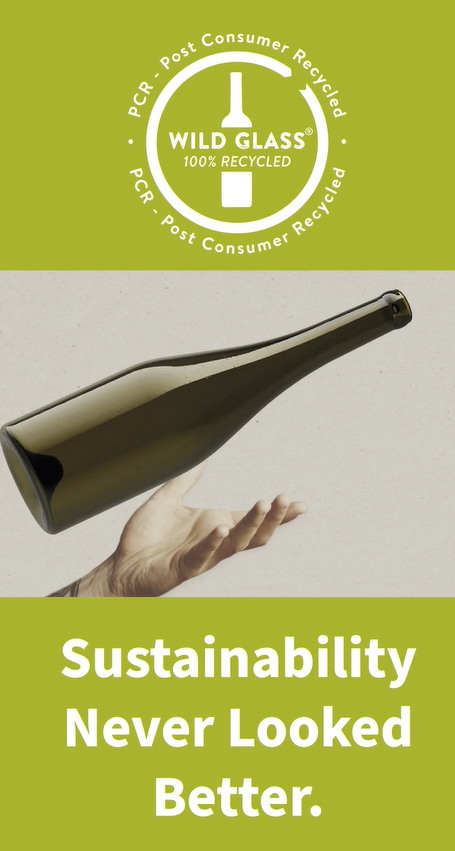
Sustainability has become a core focus across every industry sector lately, but, as lovers of the traditional, the wine and spirit industries are behind the curve on implementing sustainable glass packaging. According to the IWSR, 48% of American alcohol drinkers say that a company’s sustainability or environmental initiatives positively influences their purchasing decisions. Furthermore, according to a report by the global decision intelligence company, Morning Consult, 7 in 10 American adults would consider purchasing from a food and beverage brand that prioritizes sustainability, the highest share across all industries. In the face of ongoing environmental concerns, a growing number of media stories have cited the need for our industry to find a more sustainable package solution. And the call is validated by consumer demands. We are seeing the emergence of a new category of wine consumer: the environmentally-conscious consumer, who is choosing wines and spirits based on the s
00

The global shift toward sustainability is palpable across nearly every sector. Within the wine and spirits industries, this movement has gained remarkable traction, driven by consumers’ increasing demand for environmentally responsible products. More pressure for industry to put sustainability at the center of all operations but also provides opportunities for businesses to flourish by staying ahead of the trends in innovative and sustainable advancements. Here are four sustainability trends to keep an eye on: Regenerative practices for wine and spirits Recent years have seen a boom in conscious agricultural practices through the philosophy that all aspects of agriculture are connected. This philosophy emphasizes the careful utilization of land management to restore and regenerate the ecosystems and land we use, leaving it in better health for future generations. Regenerative principles are a push back against traditional industrial agriculture practices which are respons
00
April 23, 2025
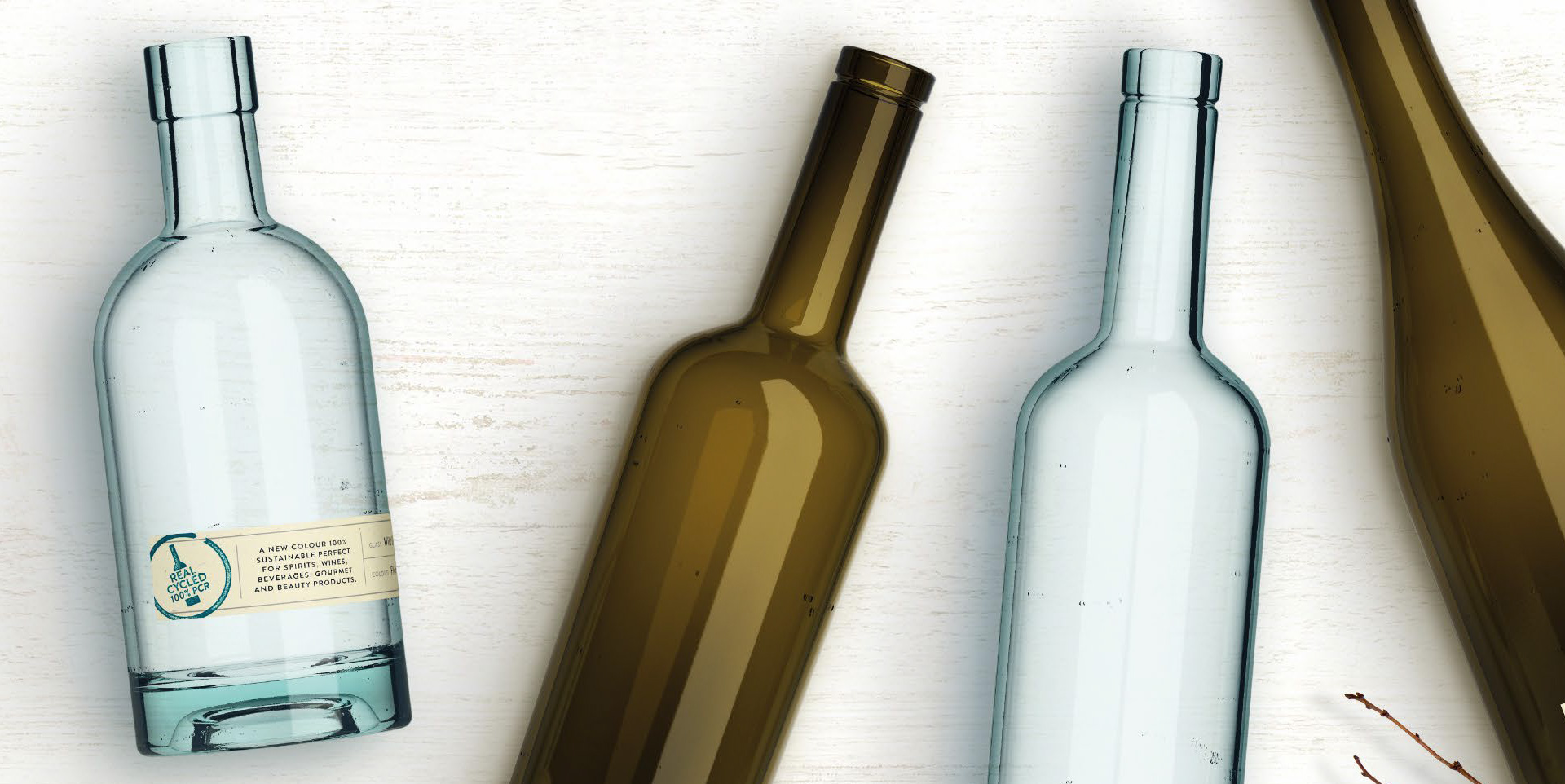
Study after study has proved that consumers prefer glass over other packaging materials for several reasons: Because it is aesthetically pleasing, is virtually inert and doesn’t interact with the food or beverage it holds, and because it is recyclable. Global Package has a long tradition of promoting glass in the wine and spirits industries for these very reasons. Our latest collection of Wild Glass, produced by Estal Packaging, is 100% sustainable “real cycled” and boasts a production process that is both efficient and ecologically sustainable. It utilizes only post-consumer recycled glass collected from municipalities and its production method uses lower fuel consumption, resulting in a reduction of CO2 as well as less extraction of virgin material. Importantly, glass addresses the sustainability issue that today’s consumers are demanding. According to an article in Chemical & Engineering News: “Glass can be recycled endlessly by crushing, blending
00


It's not for the faint of heart Going no-till certainly has been picking up steam in recent years, and overall it’s a good thing. When I first got involved in viticulture back in 2010 I was living in Italy. Like a lot of Mediterranean viticultural areas, there was a tendency to disc everything all the time. If you didn’t have a barren wasteland with vines poking out of it, you weren’t a good farmer. Anything you couldn’t get to with a tractor you sprayed with herbicide. One of my first vineyard jobs in Italy was spraying glyphosate out of a backpack sprayer all spring. I felt like I was in the final scene of the Godfather! Minus the dying part. Herbicide: the new four-letter word Mentalities have shifted since then both in Europe and here in the states. All in all it’s a good shift. We’ve all seen places that have gone on for years and years using herbicide to a point where you don’t even need to spray it anymore because that soil is so d
00


With no and low-alcohol categories on the rise and the sober-curious boogeyman around every corner, we needn’t wait for rock bottom to take a hard look at our sales strategy and make a change today. While much of the wine & spirits industry points the finger at Gen Z & Millennials, the World Health Organization or the Surgeon General, the truth is there’s only one entity responsible for the trajectory of our revenue. According to Navy SEALs Jocko Willink and Leif Babin in Extreme Ownership, when “problems feel overwhelming and insurmountable . . . it’s our human nature to shift blame, find excuses, and avoid consequences. But taking ownership over what went wrong and accepting the reality of the situation gives you complete control over how you can solve these challenges.” Trying to sell alcohol in 2025 is tough. Plain and simple, no way around it. With that acknowledged, let’s explore what we can do about it. A Sign of
00

Take a look at any number of Tasting Room Associate job ads, and it becomes apparent we need to hire unicorns – rare, mystical, and never seen in the wild except by a chosen few. We are seeking that blend of hospitality heart, wine knowledge, and hopefully sales skills. Every new opportunity to hire is the chance to go searching for unicorns, and luckily, there is a strategy to help find them! First, let’s define what a successful DTC candidate needs to have. Hospitality Heart. A Hospitality Heart, which is impossible to train for, is something the candidate either has or not. It is the rarest quality, hidden, and can be bluffed if needed. WISE calls this Service Heart. In our Mystery Shopping, we are looking for Service Heart – the deep seeded desire of that teammate to be helpful, kind, and truly wanting to be of service, and not just there to punch a time clock and collect a paycheck. At the Union Square Hospitality Group, Danny Meyer has taken great care to d
10
November 6, 2024

In a groundbreaking development towards sustainability in the wine and spirits industry, the world’s largest wind-powered cargo ship, Anemos, has successfully completed its first transatlantic journey, transporting premium wines, champagnes, and cognacs from France to New York. This innovative approach to shipping is expected to revolutionize sustainable transportation practices within wine and spirit supply chains, presenting a compelling opportunity for brands to minimize their carbon footprint while satisfying consumers’ increasing demand for environmentally conscious solutions. The Future of Eco-Friendly Shipping in the Wine and Spirits Industry Designed by the French startup TOWT (TransOceanic Wind Transport), Anemos represents a shift back to sailing vessels for commercial transport, leveraging the abundant and renewable resource of wind power. With significantly larger sails made from lightweight carbon fiber, Anemos can harness more wind than traditional vess
00
Glass packaging trends in the wine industry are always changing, but remain grounded in tradition. As leaders of the US domestic market in glass packaging, and decades of experience in the industry, Global Package have been creating these trends as much as utilizing them. Global Package has strategic alliances with innovative suppliers, designers and marketing collaborators both domestically and internationally. These strategic alliances allow us to keep up to date with trends globally from various spheres including material, design, market behavior, and digital behavior. As they allow our business to evolve, we are able to develop exciting new lines to assist our clients (you) launch and market your brands to a continually developing audience as your business evolves along with it. In this article, we’ve collected and compiled a breakdown of current trends and traditional conventions to assist in your choice of glass packaging for your wine label. Global Package wil
00