
Filter Post Type
NewsVideoProductEventLink
Sort:
Most Recent
1–10 of 21
August 5, 2025
If you employ full-time staff, seasonal crews, or part-time help in Oregon’s wine industry, there’s a new law that could change how you approach labor planning and workplace disputes—especially during your busiest seasons. Oregon Senate Bill 916 (SB 916) makes Oregon the first state in the country to offer unemployment insurance (UI) benefits to both public and private sector employees who are engaged in a labor strike. Why Provide Unemployment Benefits to a Striking Workforce? Lawmakers behind the bill say it’s about fairness. Their argument is that workers who are lawfully on strike shouldn’t be forced to choose between standing up for better conditions and being able to pay their bills. They point out that most strikes in Oregon don’t last long—about eight or nine weeks on average—and believe a short-term safety net could lead to more productive negotiations. But not everyone agrees. Many employers, especially in agriculture and manufa
00
August 4, 2025
Starting January 1, 2026, a new Oregon law will significantly reshape how liability works in private construction projects. Under Senate Bill 426 (SB 426), property owners and general contractors can now be held liable for wage theft committed by subcontractors, even those buried deep in the contracting chain. Oregon Gov. Tina Kotek signed SB 426 into law on June 9, 2025. It’s a landmark move—and one that raises the stakes for compliance. Here’s what Oregon businesses need to know, and how they can start preparing now. What’s the Big Change Under SB 426? If you’re a property owner or GC in Oregon, SB 426 brings a shift in risk you can’t afford to ignore. The law says you are jointly and severally liable for unpaid wages, penalties, and benefits owed by any subcontractor working under your contract—even if you weren’t directly involved and had no knowledge of the issue. In short, it’s no longer enough to say, “That wasn’t
00

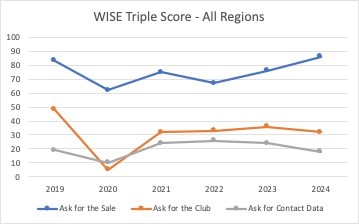
Hard to believe, we are a quarter of the way through 2025! It seems like just yesterday we were starting 2025, but here we are, 90 days in to the "new" year. Here are a few things you may have missed, things that caught our eye (or ear), and a few actionable ideas for the next quarter. 2024 Annual Report Card - WISE Mystery Shopping Triple Score In early 2025, we released our Annual Triple Score Report Card. While Mystery Shopping covers over 75 criteria points, these three are perhaps the most important. How often are our Mystery Shoppers asked buy wine, how often are they warmly invited to join the wine club, and how often are they asked to keep in touch via joining the mailing list? In 2024, we saw a dramatic decline in Triple Score averages. In particular, data collection is critically low at just 18%—meaning we’re only asking fewer than one in five guests to keep the conversation going. Wine clubs work because people DO like to be part of them (did you know
00

October 22, 2024
Understanding Terroir How is your wine represented? Entry Deadline is Friday, 10/25 2024 Harvest Challenge A win in the Harvest Challenge as the BEST WINE in your AVA can put your wine into a whole new sales category. Terroir is a French term that refers to the environmental factors that impact wine production, and it can affect many aspects of wine, including: Flavor profile: The soil type, climate, and topography of a region all contribute to the flavor profile of the wine. For example, sandy soil tends to produce drier wines, while clay-based soils produce bolder wines. Texture and mouthfeel: The soil type and topography of a region can impact the texture and mouthfeel of the wine. For example, chalky soils can give wine a mineral flavor and a chalky texture. Balance and acidity: The climate, particularly the amount of sunshine, temperature variations, and rainfall patterns, can impact the balance of sugars and acids in the grapes. Wine
00
September 13, 2024
Effective July 1, 2024, a new California law requires most employers to have a written Workplace Violence Prevention Plan (WVPP). This law applies to all employers with workplaces that are accessible to the public (with few exceptions). Key components to a Workplace Violence Prevention Plan include: Assessment of workplace violence risks at the workplace; Directives on how to report incidents, threats or concerns and how they will be investigated; Initial training and annual trainings thereafter; Maintenance of violent incident log (5 year retention); and No retaliation for reporting violence. Cal/OSHA published both an employer and employee fact sheet which provides guidance on new responsibilities under the law. Employers that haven’t already done so should take steps now to create a WVPP tailored to their workplace, including adapting it to different facilities and work sites. Once employers have a WVPP established, they should take steps to train employees as soon as possible
00
Happy New Year! It is time to dust off the employee handbook, review your policies and procedures, and make sure they comply with all the new laws, regulations, and interpretations that have either already gone into effect or will in early 2024. Below, we have identified our “top 10(ish)” changes. Please keep in mind there were hundreds of laws, regulations, and changes implemented at the local, state, and federal levels throughout 2023. So, if you need a handbook/policy review or have any questions, please call. 1. California and Local Minimum Wage Raised – In addition to the gradual increase to minimum wage by the state, several Sonoma County cities have increased minimum wage beyond that required by the state. Below is a table that describes the state and local city requirements: Locality Effective Date All Employers California 1/1/2024 $16.00 Santa Rosa 1/1/
00
The 30th Anniversary of the FMLA Brings Some Important Clarifications Wondering if the Family and Medical Leave Act (“FMLA”) applies to your remote workers? Not sure exactly what you should do when handling an FMLA request? Your questions are now answered with new information available on FMLA requirements. As a California employer, you may be focused on complying with the California Family Rights Act (“CFRA”), California’s version of the FMLA. This is true because CFRA applies to smaller employers and is more generous (generally speaking) than the FMLA. However, as described below, FMLA may be applicable to your non-California employees, and luckily now the Department of Labor (DOL) has issued enhanced guidance for employers. The FMLA applies to employers with 50 or more employees. This includes all employees world-wide. If the FMLA applies to your company, then your employees may take up to 12 weeks of job-protected time off
00
With the start of the new year, it is time to dust off the employee handbook, review your policies and procedures, and make sure they comply with all the new laws, regulations, and interpretations that have either already gone into effect or will in early 2023. Below, we have identified our “top 10” changes. Please keep in mind there were hundreds of laws, regulations, and changes implemented at the local, state, and federal levels throughout 2022. So, if you need a handbook/COVID-19 policy review or have any questions, please call. 1. California and Local Minimum Wage Raised – In addition to the gradual increase to minimum wage that has been in effect under California law, several Sonoma County cities have increased minimum wage beyond that required by the state. Below is a table that describes the state and local city requirements: Locality Effective Date Employers With 26 Or More Employees Employers With Less Than 26 Employees California 1/1/2023 $15.5
00
In advance of our traditional list of relevant employment law updates issued every January, we would like to bring your attention to some changes that will require edits to your hiring practices and edits to your handbooks. I. Pay Scale and Data Reporting Effective January 1, 2023: All employers must provide pay scales to any employee or applicant asking for one. All employers must keep pay history for every employee for the duration of their employment, and three years after the employment ends. Employers with 15+ employees must post a pay scale along with any new job advertisement. Employers with 100+ employees must submit detailed pay data reports to the state Civil Rights Department (formerly the Department of Fair Employment and Housing) in addition to the pay data reports to the federal EEOC. Last year, employers were permitted to submit a copy of their EEO-1 report to the CRD, but now the CRD has created its own list of required information. These reports are due by
00


In the latest Real Talk interview series featuring wine industry thought leaders, Ashley, InnoVint's CEO, dives in with Margit Svenningsen, CEO of Admeo, to understand her unique background and career path from chemist to wine entrepreneur. Margit got her start as a quality control chemist AG segment before spending the next plus 30+ years with leading laboratory equipment companies, first FOSS, then Anton Paar, and most recently her own company, Admeo. Read More
00