
Filter Post Type
NewsVideoProductEventLink
Sort:
Most Recent
1–10 of 192

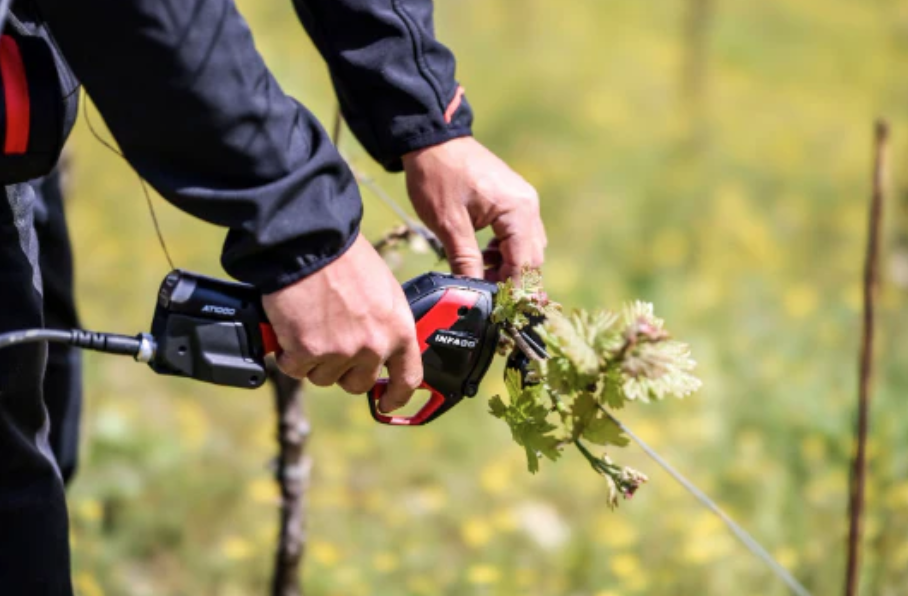
Training young vines is one of the most delicate tasks in viticulture. Get it right, and you set the foundation for decades of healthy growth and high yields. Get it wrong, and you risk snapped shoots, poor airflow, and lower fruit quality. That’s why choosing the right tool for trellising is critical—especially during the first two years of a vine’s life. Enter the INFACO AT1000, a battery-powered tying tool that pairs with the F3020 platform to offer fast, consistent, and gentle ties—without damaging tender shoots. In this article, we’ll explore how the AT1000 can transform how you train your vineyard, reduce labor time, and preserve plant health from the ground up. Tying without breaking growth: why gentleness matters Young shoots = fragile structure First- and second-year vine shoots are highly flexible but prone to: Splitting at the base Crushing when tied too tightly Drying or choking if ties aren’t breathable Traditional methods like twist ties or hand-knotted twine often re
00


Winemakers are no strangers to natural challenges but now faced with a unique combination of climactic and economic pressures, they’re on the hunt to expand and evolve their toolkits. In response, the team at LAFFORT brought key results from more than 70 trials conducted in the last year to winemakers and industry professionals along the West Coast. The 2026 Rendezvous commenced in Paso Robles, Calif. on April 28 before heading north to Santa Rosa, Calif. and Newberg, Ore., in the same week. Event organizer Lisa Strid shared that the program for this year’s Rendezvous was designed to directly address the top challenges facing winemakers today—costs, efficiencies, and combatting unexpected weather—and deliver information that was immediately applicable in the winery. LAFFORT, in addition to supplying yeast, tannins, enzymes and other fermentation products, expanded into oak and barrel alternatives with Nobile, aromatic and flavor enhancements with Essencia, and laboratory equipmen
00
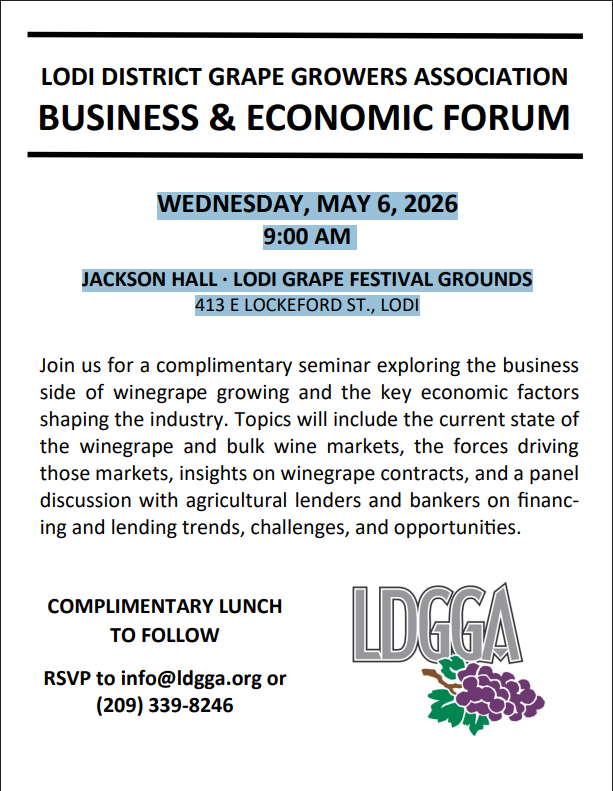
Spring is an active time in the vineyard, and in the market. As the 2026 growing season takes shape, the Turrentine team is looking forward to connecting with growers, vintners, and industry partners across key regions. We’re excited to share insights, listen, and engage in meaningful conversations around today’s grape market and the challenges shaping our industry.
Here are three upcoming opportunities to connect with Turrentine Brokerage:
Lodi Grape Day
Mike Needham will be speaking at this year’s Lodi Grape Day, offering a timely update on the Central Valley grape market. His presentation will cover current pricing dynamics, supply trends, and what growers can expect heading into harvest. Lodi continues to play a critical role in the California wine landscape, and this event is always a valuable forum and well attended.
Wednesday, May 6, 2026 at 9:00 am
Jackson Hell - Lodi Grape FEstival Grounds, 413 E Lockeford St,, Lodi
Three Valleys Growers Tal
00
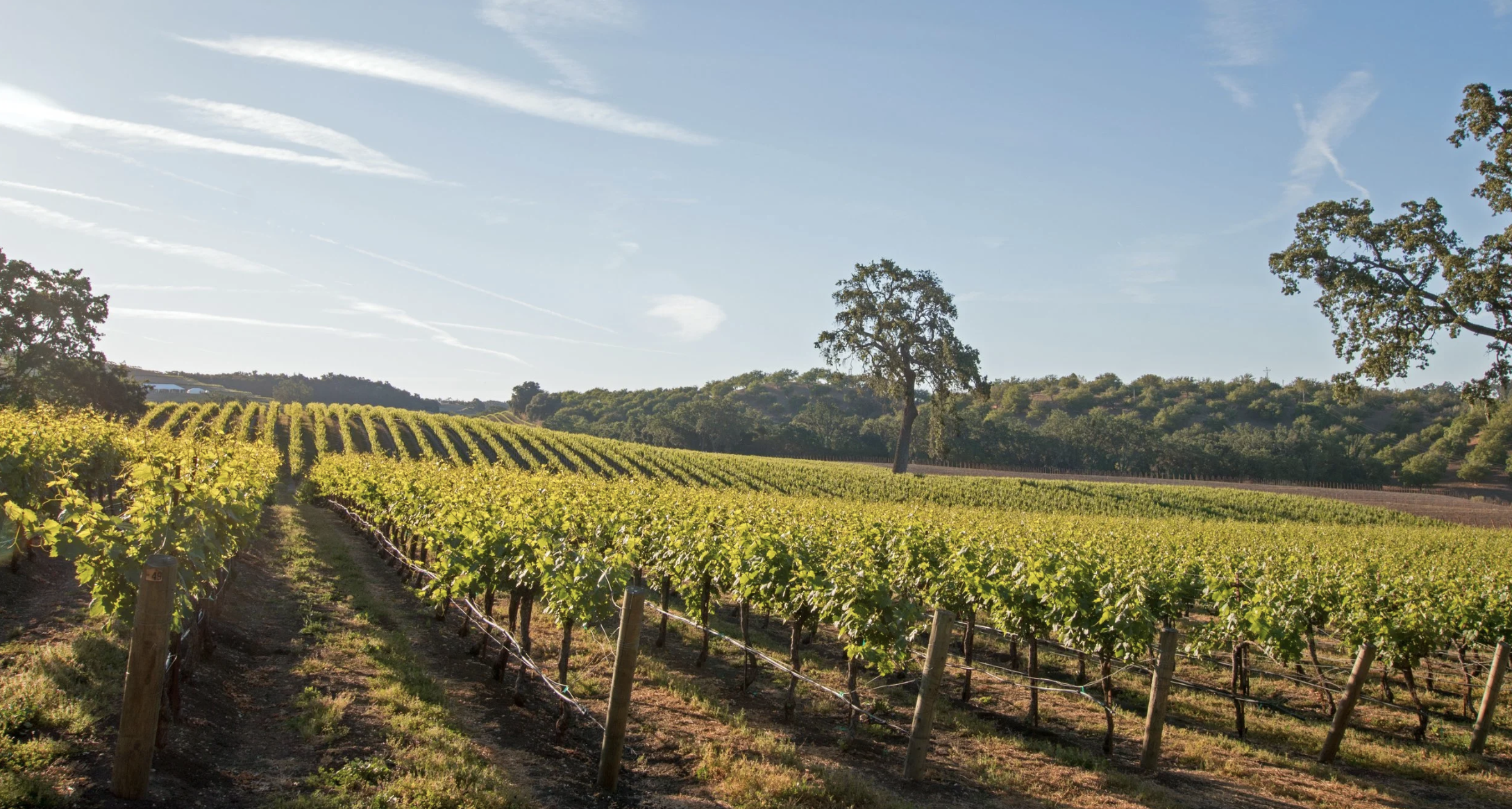
Your next customer will see your winery before they ever taste your wine. They'll see it on Instagram while planning a weekend trip. They'll see it on your website while deciding whether to book a reservation. They'll see it in an email while considering whether your wine club is worth joining. And in every one of those moments, they're making a decision based on what your visuals tell them about who you are. This isn't a trend. It's how people buy now. According to a 2023 study by Cloudinary and Harris Poll, 75% of online shoppers say product photos are the most influential factor in their purchase decisions. That number holds across categories, and it holds in wine. The difference is that wineries aren't just selling a product. They're selling an experience, a place, a feeling. Which means your visual content has to do more work than a product shot on a white background. It has to make someone want to be there. Most wineries know this on some level. Fe
00

2.62: A Historic Reset by Steve Fredricks The release of the preliminary 2025 California Crush Report confirms an evolutionary shift in the state’s wine landscape. With the total crop recorded at 2.62 million tons, the industry has hit its lowest production level since 1999. This marks the second consecutive small harvest, resulting in a staggering one-million-ton decrease in tons harvested compared to just two years ago. For the consumer market, this translates to roughly 73 million fewer cases available between the 2023 and 2025 vintages, reflecting a deliberate, industry-wide effort to bring wine production back into balance with current demand. The impact of this contraction was felt most acutely in California’s interior regions. While coastal areas saw a 51,000-ton decrease compared to 2024, the interior experienced a much sharper drop of 170,000 tons. This disparity highlights a significant trend: acreage is being removed from production at a higher rate
00
March 16, 2026

The supply chain behind a bottle of wine is more intricate than most consumers realize. Between harvest and delivery, wineries juggle transportation, storage, labeling, compliance, and customer fulfillment—each step carrying its own risk to quality, timing, and brand perception. For many, these processes are spread across multiple vendors, systems, and touchpoints, making consistency hard to maintain and visibility even harder to find. Yandell Companies takes a different approach. As a fully integrated logistics provider with deep roots in the wine industry, Yandell brings transportation, warehousing, value-added services, and DTC fulfillment together in one connected system—built to match the pace and complexity of modern winemaking. From Raw Materials to Your Customer’s Doorstep Unlike most third-party logistics providers (3PLs), Yandell owns and operates the full infrastructure. That means: A dedicated fleet of dry vans, tankers, and specialty trailers for tra
00
March 16, 2026
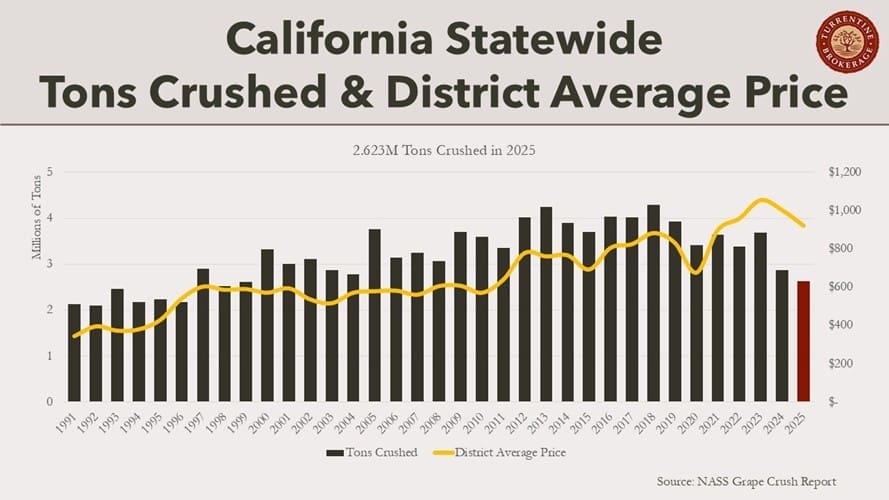
March 13, 2026 (Novato, CA) — Following the release of the Preliminary 2025 California Grape Crush Report, Turrentine Brokerage, the largest California grape and bulk wine brokerage company, has issued a market assessment characterizing the 2025 vintage as one of the most challenging for the wine industry since Prohibition. According to the new state data, the total tons crushed came in at 2.62 million tons, a figure that is above initial projections and well above what was felt by the industry. This statewide volume is 8% below 2024 and 23% below the 5-year average. Total red wine production declined by 9% and white wine production declined by 6%. “The decrease in tons is still very positive news for the industry overall,” said Steve Fredricks, President at Turrentine Brokerage. “The 2025 vintage highlights the industry’s directional shift of declining production and an overall restructure of the industry. 2025 represented continued challenges for grower
00
February 12, 2026

On April 7-8, 2026, a collection of esteemed wine professionals will gather in Santa Rosa, Calif., to evaluate entries in the 2026 Press Democrat North Coast Wine Challenge. Competition managers are now accepting entries for the 14th annual NCWC, considered among the most prestigious wine challenges in the United States. This regional competition rates wines exclusively produced and bottled in Northern California’s premier winegrowing region to determine which wines are considered the Best of the Best. Eligible wines must be made from fruit sourced in the North Coast AVAs of Lake, Mendocino, Napa, Sonoma, Marin and parts of Solano counties. This includes any bottled wine labeled with these AVAs as their main source of grapes and whose winery is in California. “The Press Democrat North Coast Wine Challenge is unique in that only wines made from grapes grown in the six North Coast counties are allowed to enter,” says Daryl Groom, chief judge of NCWC. “With that, t
00
Wineries today are navigating tighter margins, fluctuating production volumes, and increasing pressure to stay operationally agile. From harvest spikes to storage and logistics challenges, having the right equipment—without overextending capital—has become a strategic priority. That’s where Container Logic fits into the conversation. Container Logic specializes in stainless steel containers and tanks designed for beverage and food manufacturers, with solutions that align especially well with the realities of wine production. Their offerings support key winery needs including fermentation, storage, blending, and transport—while giving producers flexibility in how they access that equipment. Built from high-quality stainless steel, Container Logic’s tanks are engineered to protect product integrity and withstand the demands of commercial production. Options include single-wall, jacketed, and insulated vessels in a range of sizes, allowing wineries to match
00

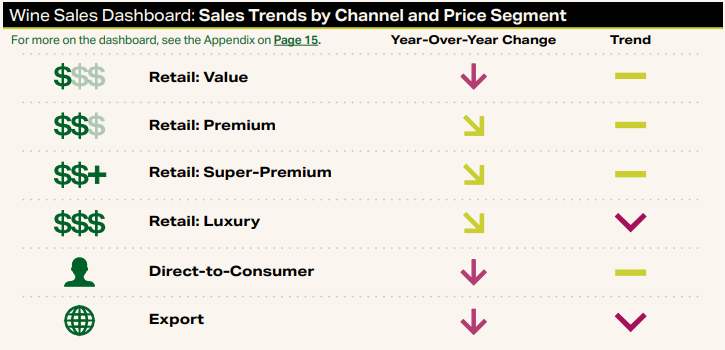
An exceptionally small 2025 grape harvest would help balance wine inventories and potentially stimulate grape demand next year There wasn’t much change in the complexion of the wine market in the third quarter. Sales continued to decline across channels and price points, though at varying rates. Some segments improved while others worsened. Wine exports continued to flag because of provincial bans in Canada. I continue to believe the slump is mainly structural, particularly at the lower end of the market (see Page 3). But I also believe economic factors such as inflation and depressed consumer sentiment have played a role, and I expect wine sales to firm up once the economic backdrop improves. Unfortunately, we aren’t expecting much change in the economy, for better or worse, in the months ahead, so the wine market isn’t likely to see much improvement either. 2025 was a painful year for California grape growers. Weather was an issue, but the grape market p
00