
Filter Post Type
NewsVideoProductEventLink
Sort:
Most Recent
Tagged:HR
1–10 of 12
The One Big Beautiful Bill Act (OBBBA) introduces changes and new requirements for reporting overtime pay in 2026. The changes are required to enable employees to claim certain overtime deductions on their personal tax return. The new tax deduction applies only to the ‘Qualified Overtime Compensation’ portion of overtime pay. The Qualified Overtime Compensation is the premium portion of overtime pay, or that extra “half” portion of “time-and-a-half” compensation. For example, if an employee earns $20/hour and works overtime, the overtime pay is $30/hour. Of the $30/hour, in this example the $10/hour is the Qualified Overtime Compensation that may be deductible under the new rule. Not all overtime will qualify for the deduction by employees. Only overtime pay required by the Federal law Fair Labor Standards Act (FLSA) is eligible. Overtime Pay required by California regulations will not be included in the tax deduction. This means the California
00
October 2, 2025
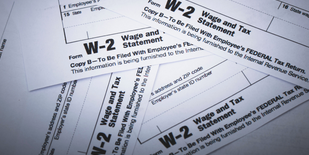
The One Big Beautiful Bill Act (OBBBA) requires changes to tax reporting on overtime and tips. However, the IRS announced that, as part of the phased implementation of the OBBBA, there will be no changes to tax returns or federal withholding tables for Tax Year 2025. The IRS will not be making adjustments for 2025 related to the OBBBA, and forms will remain the same. Specifically, Forms W-2, existing Forms 1099, Form 941, and other payroll forms will not change for 2025. Federal income tax withholding tables will continue as they are. Employers should continue using current reporting and withholding procedures until 2026. The IRS explained that delaying changes until 2026 is meant to reduce confusion during the upcoming tax filing season and give businesses and tax professionals more time to prepare for implementation. “These decisions are intended to avoid disruptions during the tax filing season and to give the IRS, business, and tax professionals enough time to implement the c
00

California’s minimum wage will be increasing in 2026. For hours worked on or after January 1, 2026, the new California minimum wage will be $16.90/hour, a 2.49% increase from the current rate of $16.50/hour. This new rate applies to all employers, regardless of size. The wage increases also apply to full-time exempt employees, whose minimum salaries will increase to $70,304/year ($1,352/week), also an increase of 2.49% from the current salary minimum of $68,640/year ($1,320/week) To view the certified letter from the California Department of Finance (DOF) regarding these new minimum wages, click here: https://dof.ca.gov/wp-content/uploads/sites/352/2025/08/Minimum-Wage-Increase-Notification-Governor-and-Legislative-Letter.pdf For a current listing of the California City & State Minimum Wages, view our page here: https://californiapayroll.com/california-minimum-wage/ Don’t forget, the required Labor Law Posters will also need to be updated. Contact us if
00
Even the best manager or supervisor sometimes struggles with the question of when and how to provide feedback to employees, especially when things are not going well. However, our teams perform best when we provide employees with the feedback they need to succeed and when accomplishments are regularly recognized. Frequent and regular interactions between supervisors and employees build stronger relationships as well as the manager’s credibility when a more difficult discussion becomes necessary. When in need of professional advice on HR-related matters, consider contacting The Personnel Perspective, one of the leading HR Consulting Firms Sonoma County, for expert guidance and vital support. 1. How does an employee succeed if they don’t know what is expected? Beginning with a good job description sets the tone and expectations of the employee’s performance. An annual review of the job description is recommended. Discuss what has changed, the employee’s achievemen
00
January 3, 2024
Along with New York and the U.S. Virgin Islands, California is facing a reduction in Federal Unemployment Tax Act (FUTA) credit for 2023, which means employers in California pay higher FUTA taxes retroactively in January 2024 for wages paid in 2023 due to the state’s outstanding federal loans. Many states, including California, experienced a FUTA Credit Reduction of 0.3% for 2022, and will be subject to an additional 0.3% credit reduction for 2023. What Is the Federal Unemployment Tax Act (FUTA)? The Federal Unemployment Tax Act (FUTA), passed in 1939, established a federal payroll tax to help fund and insure state unemployment benefits across the United States. This base federal payroll tax is 6% on the first $7,000 each employee makes in a year, which the employer is responsible for paying. Employers in most states are provided a Credit of 5.4% to this 6% FUTA rate. The results in a rate of 0.6%. State governments are also responsible for collecting unemployment taxes from
00

The deadline to switch to the new 08/01/23 edition of Form I-9 is fast approaching. Recently, the US Citizenship and Immigration Services (USCIS) published a revised version of Form I-9, Employment Eligibility Verification with several key changes to reflect the end of temporary COVID-19 flexibilities. Starting on November 1, 2023, this new edition will be the only version of Form I-9 that will be accepted by the federal government. What happens if you use the old Form I-9? From November 1st onward, employers who fail to use the new 08/01/23 edition of Form I-9 may be subject to all applicable penalties under Section 274A of the INA, 8 U.S.C. 1324a, as enforced by Immigration and Customs Enforcement (ICE). How to switch to the new Form I-9 You can download the new edition of Form I-9 on the USCIS website, in addition to learning more about the revisions that have been made. If you’re still using paper for your Onboarding process, contact us to streamline and improve you
00
January 27, 2023
Two Little Magic Words - How the little things go a long way
In this article, we will discuss how the most important things often go overlooked, gratitude and appreciation for those whom you work with. To learn more about organizational effectivenenss, call (707) 576-7653.
00

A recent article published by the North Bay Business provided insights to the reasons employees are make a mass exodus from the workplace. https://www.northbaybiz.com/2022/01/30/the-great-resignation/ What can you do? Set clear goals and objectives Give Praise and RecognitionAvoid micromanaging employees; it only leads to frustration and Empower employees with more responsibility and authority Allow remote work options or flexibility in their work schedule Encourage Creativity and Idea SharingSolicit ideas from your employees on process, product, and/or service improvements Reward employees on ideas the company implements Nurture creative expression and innovative thinking Support Job-Related EducationHigh-performing individuals tend to be life-long learners encourage Offer training and development opportunities to provide skills and tools Reimburse job-related courses taken by employees Summary A company’s success is largely dependent on their workforce. Employees exp
00
September 17, 2021
State and Federal COVID-19 Leave Laws Are Set to Expire on September 30, 2021 As of the date of this article, both the federal and the California COVID-19 leave laws are set to expire on September 30, 2021 and it does not appear that either the State or Federal legislatures will be extending these provisions. The California law, SB-95, requires employers with 26 or more employees to provide up to 80 hours of supplemental paid sick leave for COVID-19 reasons from January 1 to September 30, 2021. The American Rescue Plan Act, which was passed by Congress earlier this year, extended the ability of employers to take a tax credit against their payroll taxes for offering leave to employees for COVID-19 reasons through September 30, 2021. Additionally, the optional COVID-19 related leaves under the federal law, Emergency Paid Sick Leave and Emergency FMLA, both expire on September 30. After September 30, 2021, employers with 26 or more employees will no longer be required to provide the COVID
00

These past 12 months have been like no other. With vaccination rates increasing by the day and declining COVID-19 numbers (that we hope will continue) we look ahead to a brighter, more stable, stronger economic future for our businesses. Here, we summarize a brand new law for California employers as well as share trends in performance management in 2021. Topics covered in this newsletter: Senate Bill 95 | Trends in Performance Management and Reviews | Senate Bill 95 - California COVID-19 Supplemental Paid Sick Leave On March 19, 2021, SB 95 was signed into law by Governor Newsom. This new California law provides supplemental paid sick leave (SPSL) to employees for defined COVID-19-related reasons. Below are the highlights of SB 95. SB 95 is effective March 29, is retroactive to January 1, and expires on September 30, 2021. The law applies to employers with 26 or more employees. The law provides up to 80 hours of SPSL to full-time employees (pro-rated to the average amount of hours a p
10