
Filter Post Type
NewsVideoProductEventLink
Sort:
Most Recent
1–3 of 3

GOvent: Measures Alcohol in your Fermenting Wine Measure Progress of the Fermentation. Whether the fermentation is “stuck”, complete, or progressing normally. Uses Mass Flow Gas Sensors to Measure CO2. Accurately measures total evolved CO2. Ethanol was estimated automatically in real-time from the CO2 data and is shown above. The orange line is the estimated ethanol concentration. Samples were taken and assayed daily using a Foss OenoFoss FTIR instrument. These measurements are shown as blue dots. The predicted values are within +/- 0.25 %v/v proving the utility of the GOvent estimation system. Learn more about the alcohol estimator
00
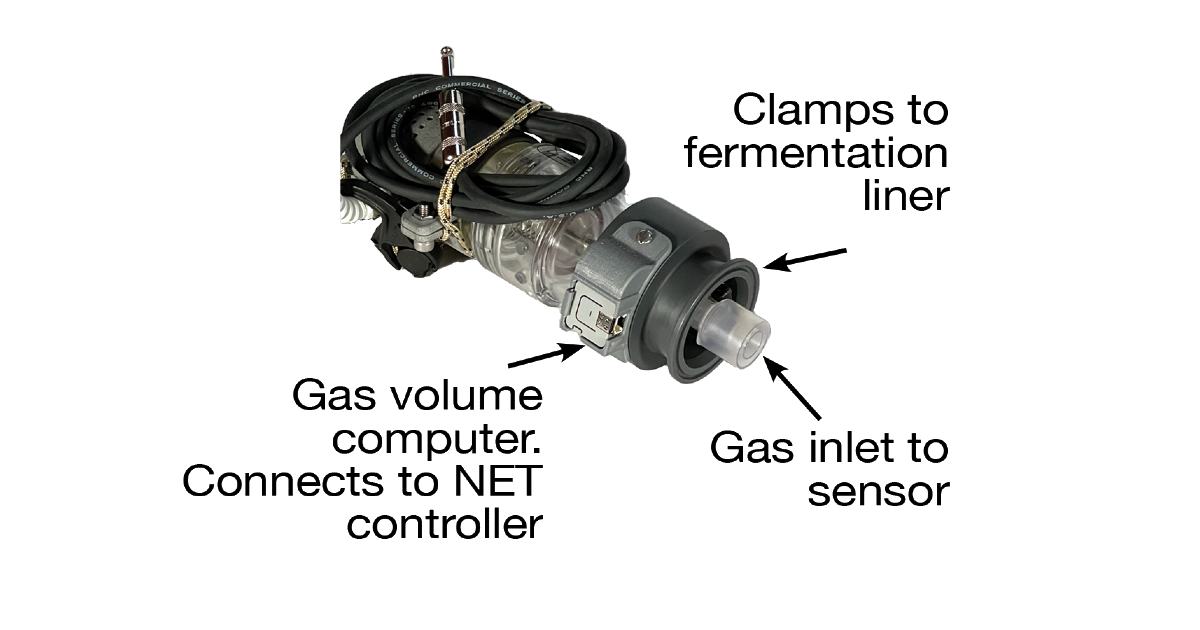
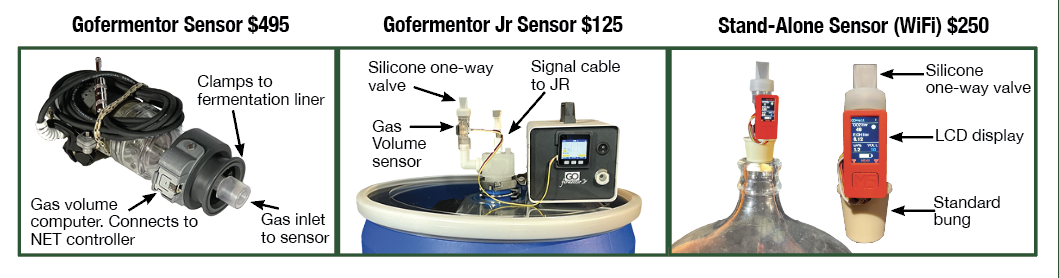
Use the Alcohol Estimator with GOFermentor NET, JR, or stand-alone version for carboys/small tanks. Determining alcohol concentration in fermenting wine is the holy grail of the winemaker. In addition to determining when the sugar is depleted, knowing the rate of ethanol production can provide insight into whether the fermentation is “stuck”, complete, or progressing normally. While ethanol can be measured – all methods require removing a sample and performing an analysis. Refractive index measurement is inexpensive, but requires careful compensation. Other offline methods include tedious enzymatic methods, distillation, ebulliometry, or expensive FTIR instruments. The new GOvent device From GOfermentor uses mass flow gas sensors to measure gas flowrate. In the past, these devices were too expensive for winemaking use, but the COVID pandemic led to development of inexpensive sensors for ventilator monitoring. We have adapted these devices to reliably, and inexpensivel
00
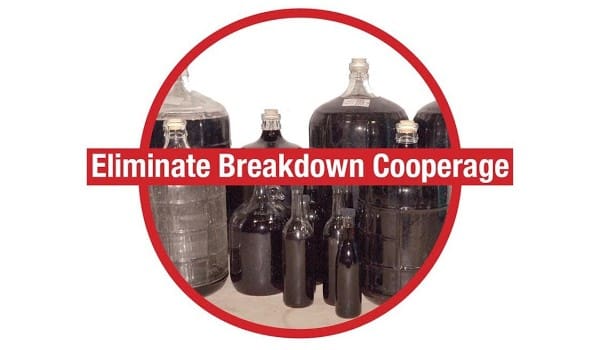
Storing wine safely has been a problem for centuries. Oxygen and microbial contamination can quickly ruin wine. Many solutions have been attempted – from sealed amphora to rubber bladders. Modern wine storage practice employ mainly barrels and metal tanks. All these devices have a critical weakness – they are rigid containers – so there is headspace. Wine loss due to leakage, evaporation, and removal causes air to enter the container creating headspace. The air in the headspace oxidizes the wine. The only remedy is to top-off the containers periodically. This is labor intensive and introduces air into the container. It also greatly increases the risk of microbial contamination. Some techniques such floating head tanks or argon blanketing are used, but these are expensive and prone to failure. “With conventional barrels, there’s always evaporation and the barrel must be topped off,” notes Dr. Vijay Singh. “At Sky Acres Winery, we go from one li
00