
Filter Post Type
NewsVideoProductEventLink
Sort:
Most Recent
Tagged:Employment Law
1–10 of 12
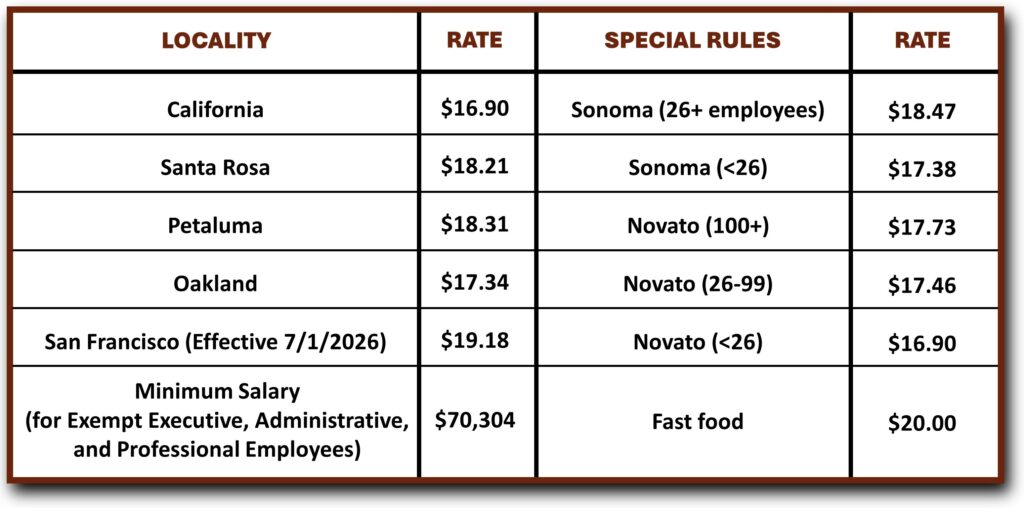
It is time to dust off the employee handbook, review your policies and procedures, and make sure they comply with all the new laws, regulations, and interpretations that went into effect during 2025, became effective in late 2025, or January 1, 2026. Below, we have identified our “top 10” changes. Please keep in mind there were hundreds of laws, regulations, and changes implemented at the local, state, and federal levels throughout 2025. This summary highlights selected changes most likely to impact California employers and is not intended to be exhaustive. So, if you need a handbook/policy review or have any questions, please call us! 1 – Minimum Wage Update: Updates happen every year. It’s best to put a calendar reminder in November, to make sure your payroll is ready! Action: Review your payroll to ensure all employees are being paid the new minimum wage, send written notice of the wage change to affected hourly employees, and be sure your salari
00
November 25, 2025
Event Type: Seminar
Location: Rohnert Park, CA + Zoom
Date: 1/13/2026
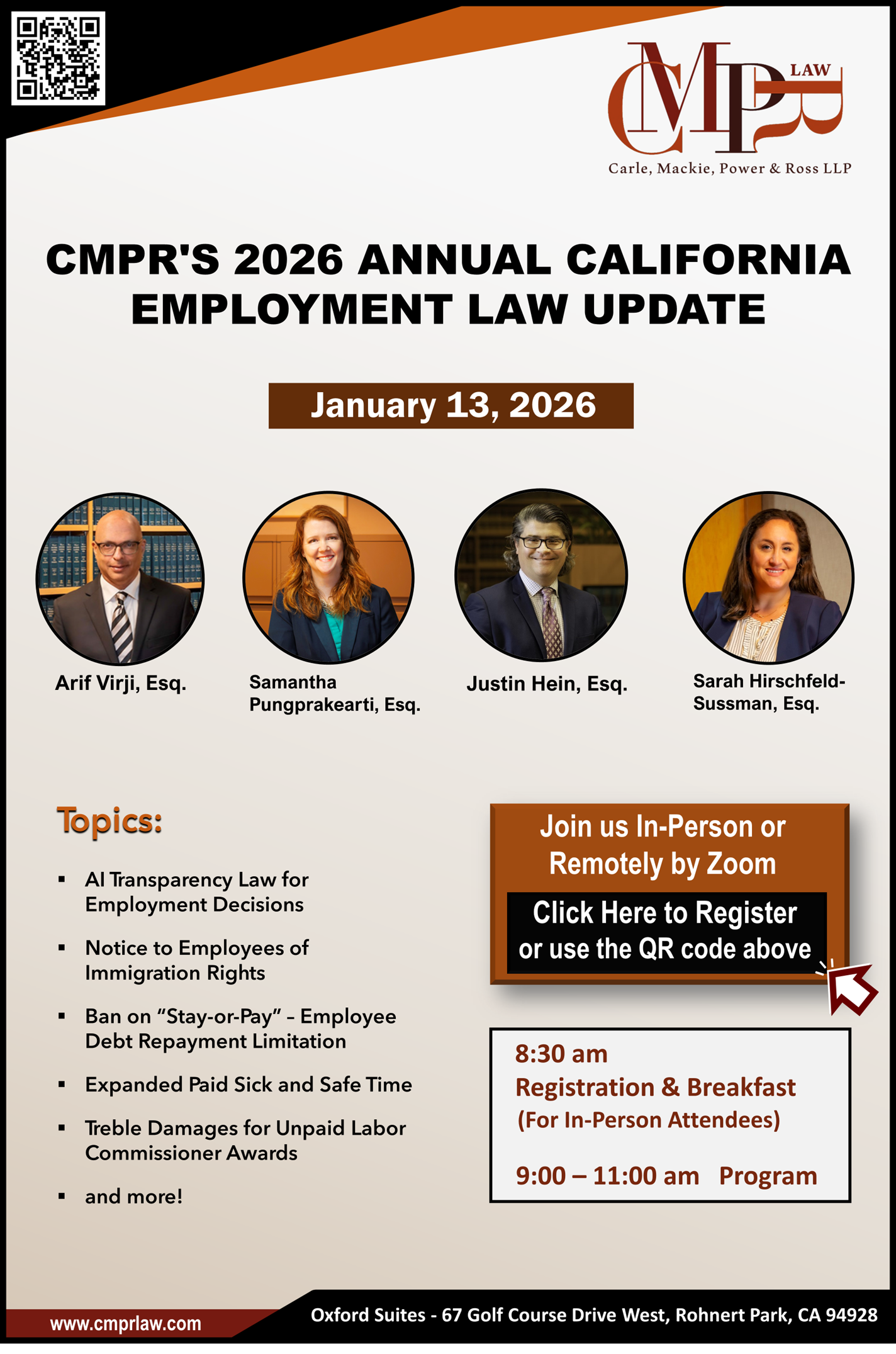
Join us In-Person or Remotely by Zoom. Topics: AI Transparency Law for Employment Decisions Notice to Employees of Immigration Rights Ban on "Stay-or-Pay" Employee Debt Repayment Limitation Expanded Paid Sick and Safe Time Treble Damages for Unpaid Labor Commissioner Awards and more! Schedule 8:30 am Registration & Breakfast (For In-Person Attendees) 9:00 – 11:00 am Program Register Now Oxford Suites - 67 Golf Course Drive West, Rohnert Park, CA 94928
00
November 20, 2025
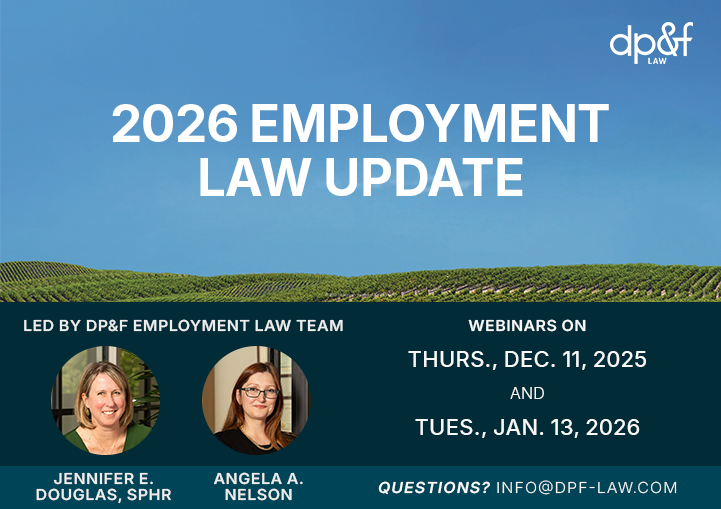
DP&F partner Jennifer E. Douglas, and employment law attorney Angela A. Nelson, will be presenting two 2026 Employment Law Update webinars this winter, sharing updates for California employers on December 11th, 2025 and January 13th, 2026. Each session will feature a legal update for changes to employment law in 2026, including updates to employer pay data requirements, minimum wage increases, tip theft laws and new stay-or-pay contracts. Jennifer and Angela will also address ongoing employment law requirements that continue to cause employers difficulty. There are two dates to choose from, one on Thursday, December 11th, and one on Tuesday, January 13th. The topics covered will be the same for both sessions, and registration links are below. Webinar Registration December 11, 2025 | January 13, 2026
00
November 19, 2025
Event Type: Webinar
Date: 1/13/2026
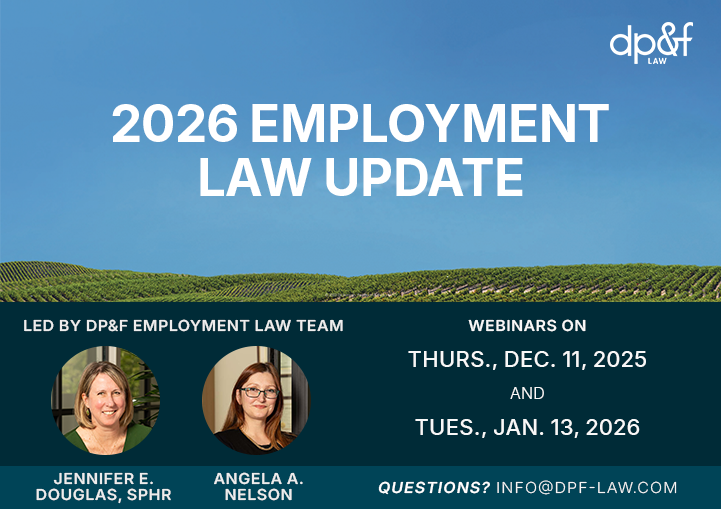
DP&F partner Jennifer E. Douglas, and employment law attorney Angela A. Nelson, will be presenting 2026 Employment Law Updates, sharing updates for California employers on December 11th, 2025 and January 13th, 2026. Each session will feature a legal update for changes to employment law in 2026, including updates to employer pay data requirements, minimum wage increases, tip theft laws and new stay-or-pay contracts. Jennifer and Angela will also address ongoing employment law requirements that continue to cause employers difficulty. There are two dates to choose from, one on Thursday, December 11th, and one on Tuesday, January 13th. The topics covered will be the same for both sessions, and registration links are below. Webinar Registration December 11, 2025 | January 13, 2026
00
November 19, 2025
Event Type: Webinar
Date: 12/11/2025
DP&F partner Jennifer E. Douglas, and employment law attorney Angela A. Nelson, will be presenting 2026 Employment Law Updates, sharing updates for California employers on December 11th, 2025 and January 13th, 2026. Each session will feature a legal update for changes to employment law in 2026, including updates to employer pay data requirements, minimum wage increases, tip theft laws and new stay-or-pay contracts. Jennifer and Angela will also address ongoing employment law requirements that continue to cause employers difficulty. There are two dates to choose from, one on Thursday, December 11th, and one on Tuesday, January 13th. The topics covered will be the same for both sessions, and registration links are below. Webinar Registration December 11, 2025 | January 13, 2026
00
May 20, 2024
Beginning July 1, 2024, SB 478 will go into effect, which means businesses will no longer be allowed to add a service fee, or any other hidden fees, to a customer’s bill, except for government taxes and fees and reasonable shipping costs. The “Honest Pricing Law” or “Hidden Fees Statute” is intended to allow the customer to see the true price of an item or service they are purchasing and aims to prevent “drip pricing,” which is when businesses advertise a lower price than what customers actually pay. The Attorney General (“AG”) issued a FAQ statement clarifying many of the issues facing businesses attempting to comply with the new Honest Pricing Law. Below are the key items from the FAQ that businesses may find helpful. The full FAQ can be found here. The law will apply to all businesses selling or advertising to a consumer, not just online ticket sellers, including restaurants, tasting rooms, event centers and hotels. Al
00
February 12, 2024
Employment laws in California are always changing, and it is important for employers in California to keep up with these changes to ensure their policies and practices are compliant. This blog post provides key updates to the California employment laws that all employers should know for this year. Minimum Wage Increase Beginning January 1, 2024, the state minimum wage for all employers has been increased to $16.00 per hour. This rate reflects a 3.5% increase from this year’s minimum wage based on the law’s provision that allows this increase if the national Consumer Price Index (“CPI”) is over 7%. All employers must post the current minimum wage rate in a common area where employees can easily view it. With this new rate of $16.00/hour, the minimum salary for exempt employees in 2024 has also increased to $66,560.00/year. Note that the minimum salary is tied to the state minimum wage rate, not individual municipalities. Employers should also check if there
00
On January 9, 2024, the California Department of Health (CDPH) issued an order changing COVID-19 related definitions. These revisions apply to the Cal/OSHA Non-Emergency Regulations, which are still in place until February 3, 2025 and must be followed by all employers in California. The questions and answers below reflect the updated rules and definitions that currently apply in the workplace. You can read more about the changes on Cal/OSHA’s FAQ page here, which is updated regularly. COVID-19 Updates for California Employers as of January 2024 What is the current definition of the “infectious period” for employees who test positive for COVID-19? For COVID-19 cases with symptoms, the “infectious period” is a minimum of 24 hours from the day of symptom onset. Under the current regulations, there is no infectious period for COVID-19 cases with no symptoms. If an employee tests positive, are they required to be excluded from the workplace? If an employ
00
January 9, 2023
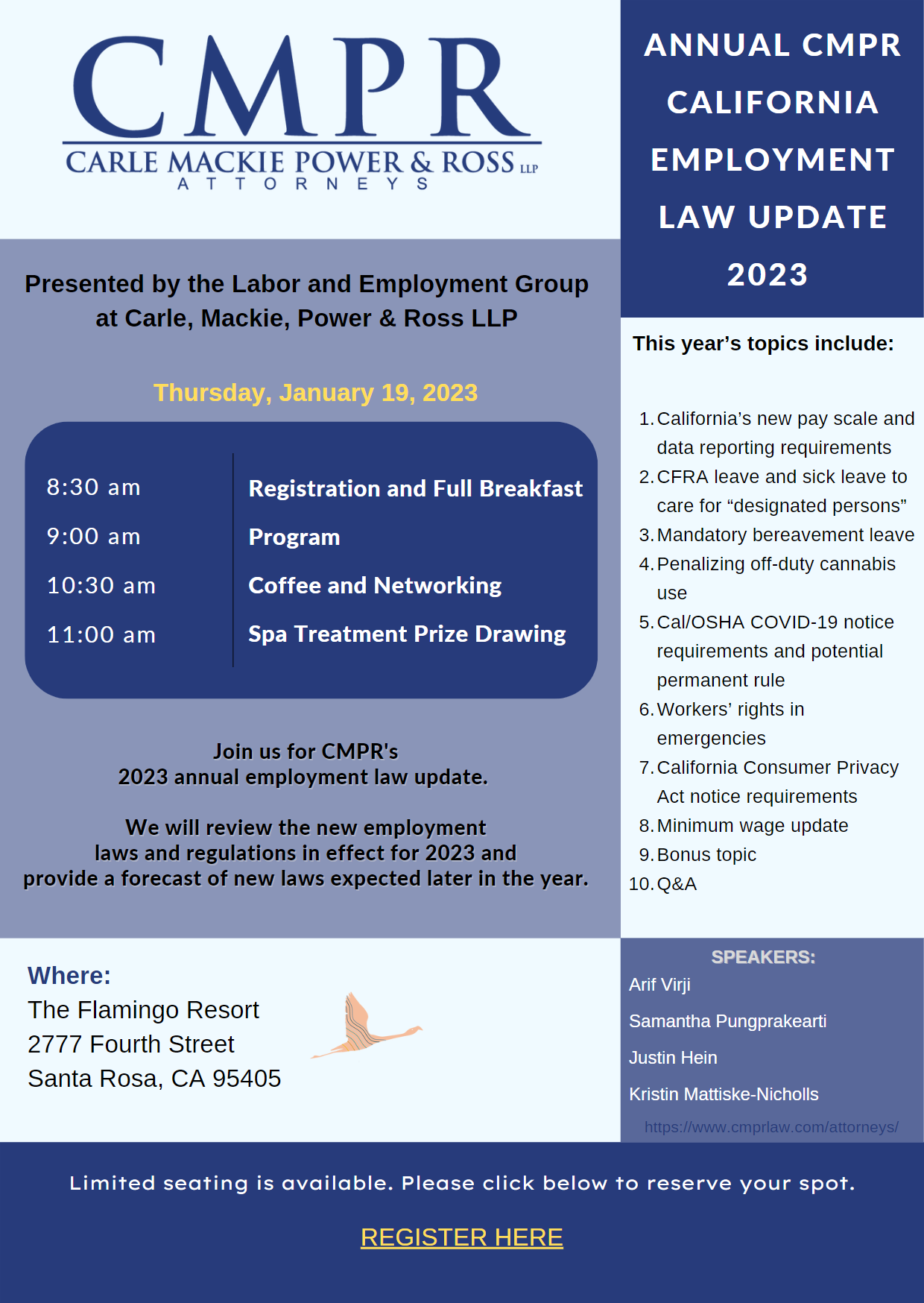
Sign up for your seat today! - Last Chance to Register You can get registered here: https://forms.gle/LT2VvhsRuNaqahhEA Employment Law Updates 2023.pdf
00
October 31, 2022
The Ninth Circuit Court of Appeals issued a decision earlier this week holding that employees who worked at a call center were entitled to compensation for the time spent booting up their computers at the start of the work day prior to clocking in. The call center employees conducted the majority of their jobs using their computers, thus the Court determined that turning on and booting up the computers was “integral and indispensable” to the workers’ duties. Under the FLSA, duties that are “integral and indispensable” are considered principal activities and must be compensated. For employers in California, this is another sign that both state and federal courts are moving towards requiring employers to compensate employees for time spent prior to clocking in where employees are completing tasks that are required by the employer or indispensable for their jobs. Some examples include: booting up computers, cleaning and preparing tools, and putting on a unifo
00