
Filter Post Type
NewsVideoProductEventLink
Sort:
Most Recent
Tagged:Employment
1–5 of 5

March 29, 2023

Expert Editorial: Where to Find Your Next High-Performing Employee
High-performing employees are few and far between, and it can be hard to determine whether a person will be high performing from a simple interview. By Neil Solari When you […]
00


In today’s world, employees are looking for more when it comes to work. Not necessarily more money or more benefits (although those are important) but more fulfillment. Employees want to know their work matters—they want to feel valued and like they’re making a difference. Your business can meet those expectations by creating and sustaining a strong company culture. It’s what sets you apart from other employers. How can you ensure a great company culture that has employees (and clients) running your way? Take a look at these five ways to get started. 1. Find your values and stick to them. The first step in building a great company culture is to decide what you want the culture to be. Center your culture around a few core values and then, most importantly, follow through. The only thing worse than a company with no values is a company with hollow, vanity values. Share the things most meaningful to your business with employees, clients and potential co
00
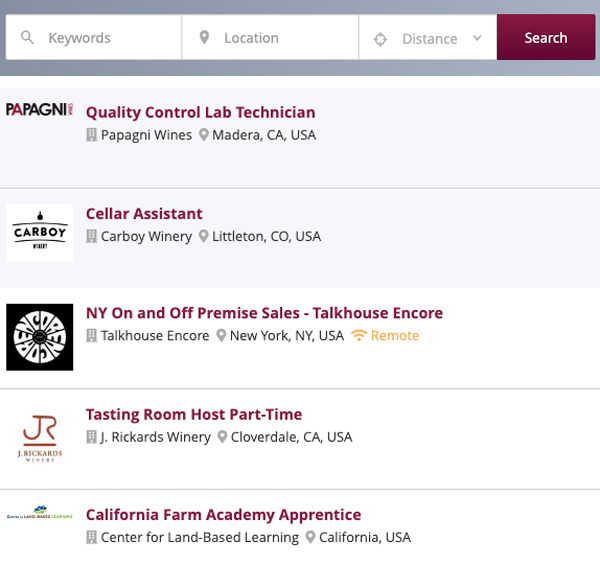
An employment platform focused on attracting & recruiting qualified wine industry professionals. As we move into the New Year, many companies will find it more challenging to attract skilled and qualified candidates in an increasingly competitive talent marketplace. One of the most significant changes in 2023 will be how they attract and hire employees. The demands of the workforce have evolved in the face of events over the last few years, forcing companies to rethink how they approach recruitment and retention to find a more efficient, streamlined and proactive approach. With traditional hiring practices failing to attract top talent, organizations must engage in "marketing" their brands to potential candidates to create awareness, heighten interest and build trust. Many human resource groups are using new techniques to attract a wider variety of candidates, increase hiring success and strengthen retention. Recruitment advertising allows you to do just that—pers
00

The labor market continues to be tight with very low unemployment and steady job growth each month. The ongoing discussion about remote and hybrid work we see everywhere is leaving some employers whose businesses simply cannot support a remote work option wondering how they will compete in the current labor market without being able to offer such flexibility. Many workers have come to value and now demand work flexibility, but employers in the hospitality, construction, agriculture, and manufacturing sectors, to name a few, need employees on-site and available to provide customer service, complete projects, and build products. Working from home is simply not an option some businesses can offer. For workers who never left the work site, there is no discussion regarding transitioning back to on-site work. However, for those being asked to come back on-site every day, an inflation rate that has increased by an astounding 9.1% in a 12-month period and the current cost of gas may be gi
00

The COVID-19 pandemic disrupted lives and livelihoods across industries and countries. Across the globe, hospitality and sales jobs disappeared, and other jobs shifted home to dining room tables and spare rooms. Schools and daycare centers closed, further destabilizing the work-life balance of many. The socially distanced global community shared a dramatic shift that left us frustrated, isolated and searching for a new normal. For many, that meant reevaluating their relationship to their job. The tight labor market loosens “The year 2020 was dead,” says Norm Mitroff, owner of St. Helena, Calif.-based executive search firm Mitroff Consulting & Associates. “Wine industry searches were via Zoom and not in hospitality because it was zero. Now that people have the vaccines, wear masks and understand the virus, things are returning to normal for the senior positions we recruit.” Read the remainder of the article here.
00