
Filter Post Type
NewsVideoProductEventLink
Sort:
Most Recent
1–3 of 3

September 11, 2023

Longtime Oakville Growers Release Inaugural Vintage of Ehrlich Vineyard Cabernet Sauvignon
2021 Oakville Cabernet Sauvignon Crafted by Consulting Winemaker Paul Hobbs OAKVILLE, NAPA VALLEY, Calif. (September 11, 2023) — After twenty-five years as premium winegrape growers, the Ehrlich family is releasing […]
00
September 14, 2021

Wilson Daniels Welcomes Scott Ehrlich and Jerred Wolff in Leadership Roles
September 14, 2021 (New York, NY) – Wilson Daniels is pleased to announce the appointments of Scott Ehrlich as Vice President of Marketing and Jerred Wolff as Senior Vice President and General Manager of Oregon-based Galaxy Wine Company, effective September 13th. Both positions will report directly to Rocco Lombardo, President of Wilson Daniels. Ehrlich was […]
00

March 19, 2021
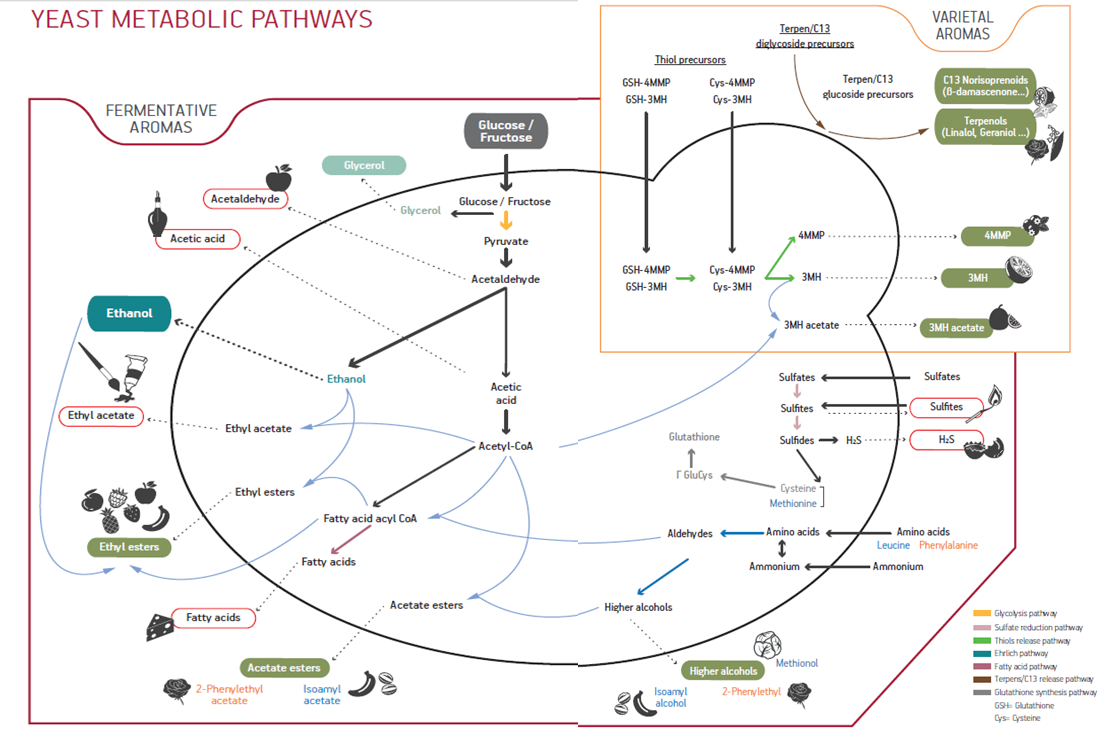
Wine is the result of the fermentative activity of yeasts and bacteria. The microbiota of grape juice fermentation can vary significantly as over 40 genera and 100 different species of yeast have been isolated from grapes or wine. The genus Saccharomyces is the one that interests most winemakers. The S. cerevisiae and S. bayanus species have indeed been found capable of dominating and conducting the alcoholic fermentation with S. cerevisiae being the more prevalent. However, other yeast, collectively known as non-Saccharomyces yeast, and bacteria may also contribute to the aroma and flavor profile of the wine. There are two basic types of wine production practices with respect to management of the microbial populations: indigenous and inoculated (deliberate addition of pure cultures of selected microorganisms). There are two main reasons for the inoculation of selected yeasts: 1. The rapid dominance of the fermentation by a high population of Saccharomyces spp. which minimizes the cont
00