
Filter Post Type
NewsVideoProductEventLink
Sort:
Most Recent
1–9 of 9

A good time to harness some eye-catching bulk wine opportunities Perfectly normal temperatures and precipitation levels for the time of year have allowed the growing cycle across California to adhere to a traditional timetable, if not move slightly ahead. Intermittent 90-100°F heat spells, post-bloom, have also helped ensure no lag; to varying extents, all areas are well ahead of last year’s delayed timing, for example by as much as three weeks in some areas of the Central Coast. Vineyards appear lush, with plenty of canopy growth, given conducive soil moisture levels following the relatively wet winter. Berry sizing is underway and some lighter cluster numbers appear to be offset by larger cluster sizes. Looking ahead, viticultural climatologist Gregory V. Jones is forecasting few dramas: A slightly warmer than average June-August and an equal chance of slightly above or below average precipitation levels. There is still some way to go, but the crop potential currently looks
00
The weather across California was largely normal through April into early May, perhaps exhibiting a tendency to be slightly erratic, with warm spells of sunshine interspersed by cooler temperatures and some rain. Few if any issues were encountered in the vineyards; the frost risk has now all but passed without notable incident, some frost-prone areas perhaps experiencing limited damage. Budbreak and the early stages of flowering have occurred at a normal timing, perhaps up to three weeks ahead of the lateness seen last year. With some warm periods expected through May, the expectation is that the flowering stage will proceed quicker than last year, when it was greatly protracted by unseasonable coolness. It remains too early to read much into cluster count reports, which have been variable. A second-consecutive helpfully wet winter means the growing season opens with good soil moisture levels and water reserves, with reservoirs and Sierra Nevada snowpack at or in excess of 100% o
00
March was wetter and cooler than average across California. Continued rainfall helped keep frost at bay, with no serious damage reported, and Sierria Nevada snowpack was at 110% of normal as of April 1st. As March turned to April, some Coastal vineyards at higher elevations received a sprinkling of snow, near-freezing overnight temperatures were expected in some pockets, and there was some hail, but – for the time of year –vineyards experienced nothing out of the ordinary. The growing cycle appears to be ahead of last year, with bud-break occurring at a more normal time, welcome considering the lateness of the 2023 growing season. According to viticultural climatologist Gregory V. Jones, April has an equal chance of being slightly wetter or drier than average, and an equal chance of being slightly warmer or cooler. While grape growers and buyers wait to see how the month pans out, the grape market continues to be quiet, and unless April brings a significant weather ev
00
The jet stream moved further south in February, bringing steady rainfall to Coastal California and also some precipitation to Lodi and the Interior. Significant snow fell at higher elevations: State-wide snowpack levels rose from 50% of normal as of January 31st to 104% by March 4th. This spring has started similar to last year’s, although not as wet or as late to the same extent. Also in common with last year, some growers have struggled to get into their vineyards to prune. Budbreak is now underway. Temperatures have not dropped low enough for frost to become an issue – in any case, moisture levels have been a defence. The frost risk window will remain open until around the start of May, and some growers may be holding off from pruning until then; others will be assessing whether or not they should prune at all if their vines remain uncontacted. Viticultural climatologist Gregory V. Jones forecasts a continuation of the southerly jet stream through March, making abo
00
September 12, 2023
With the growing season continuing to run approximately two to four weeks behind a normal timetable, the 2023 harvest is fully underway in the southern Central Valley but just getting started or not yet ready to commence in most other areas of the state. According to viticultural climatologist Gregory V. Jones, much of California has received 110-200% of its normal precipitation since the turn of the year: The effect of the cooler and wetter growing season was compounded in mid-August by the arrival of Hurricane Hilary, which brought a few days of torrential rain and humidity to many areas. The mildew problem that has been in evidence all through the season has therefore continued, while botrytis and sour rot have become evident in the southern Valley as grapes have started getting picked. We have heard of significant rejections of fruit, with sour rot the likeliest cause; Zinfandel is the varietal mentioned most in this context, though that may simply be because it is one of the
00
September brought consistently warm temperatures to California but no weather extremes. Most areas are moving into the final stages of harvest earlier than normal, to varying extents, though parts of the Central Coast are noticeably behind – Monterey, for example, is not estimated to finish picking until sometime in the first half of November. Growing areas have been unaffected by wildfire smoke, especially as those parts currently at higher risk of poor air quality have already finished harvesting. For a breakdown of the latest harvest news by area, see the next page. As well as being late, the crops in Monterey and Santa Barbara are – in stark contrast to those in the rest of the state – looking larger than average, and there has been some sizing up in evidence on the late-season varietals in Lodi. Consequently, we feel more confident that the state’s August forecast of 3.6 million tons still holds true. There have been issues around this year’s ha
00

July 26, 2021
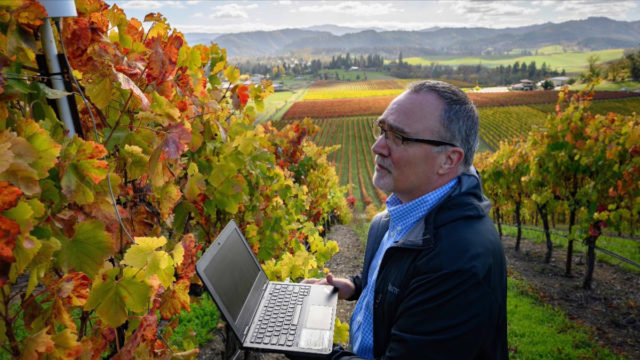
World-Renowned Viticulturist and Educator, Dr. Greg Jones, Becomes CEO at Abacela, His Family Winery in Oregon
Roseburg, Oregon (July 26, 2021) — Founders Earl and Hilda Jones and Abacela’s Board of Directors announce the appointment of Dr. Greg Jones as CEO of Abacela in Oregon’s Umpqua Valley. Dr Greg Jones is the son of Earl and Hilda Jones, and the new role allows the 26-year-old family-owned winery to make the generational […]
00
California’s 2020 crush is underway amid the unique conditions created by COVID-19, with bio-secure protocols being followed in the vineyards and in the wineries. The vineyards appear in excellent condition this year across the state: so far there has been very little disease pressure and few if any climate extremes. The crop size at this early stage looks lighter than average: for a detailed harvest update see below.
The state’s overall bulk wine inventory continues to be steadily utilized (see our updated bulk wine inventory graph), given the growth of sales in the off-premise. Off-premise sales are still running at or around +20% per week in terms of year-onyear dollar sales. Nielsen estimates wine’s off-premise dollar sales were up +26.6% between the start of March – when COVID-19 first hit the US – and July 25th. All the while, the on-premise/tasting room sector remains greatly inhibited by the virus.
A recent Gomberg Fredrikson webinar
00
What it means to winegrapes and what we can do about it
I'm not an expert in climatology, and I’ll bet most of you are not either. That is why I listen to experts on the subject of climate change. I concluded, long ago, that not only is it real, but humankind has played a large part in the most recent and dramatic changes in weather patterns and weather-related events. I’d like to avoid politics in this viticulture column, but I find it painful to hear that deniers are still out there. Sure, there are some scientists that deny anthropogenic causes for climate change, but they represent only a tiny minority of scientists who have seen enough evidence supporting man-made climate change. In fact, many of the scientists being touted by climate change deniers are not climate scientists at all—some are not true scientists at all.
What struck me and made me a believer many years ago, was the dramatic spike in atmospheric CO2 concentration over the last several decades
00