
Filter Post Type
NewsVideoProductEventLink
Sort:
Most Recent
1–10 of 57

Sustainability regulations are accelerating across the U.S., and wineries are increasingly in the spotlight. One of the most significant developments is Extended Producer Responsibility (EPR) - a policy shift that is redefining how packaging waste is managed and who is responsible for it. For many wine businesses, EPR isn’t a future concern, it’s already here. What is EPR? Extended Producer Responsibility (EPR) is an environmental policy that places responsibility for the end-of-life management of packaging materials on the producer. This includes the collection, recycling, and disposal of materials once they’ve been used. In practical terms, that means wineries and beverage brands may now be accountable for: The recyclability of their packaging Reporting and tracking material usage Meeting state-mandated recycling targets Paying fees or penalties if requirements aren’t met With multiple states already implementing EPR legislation—and more on the way—compliance is quickly bec
00

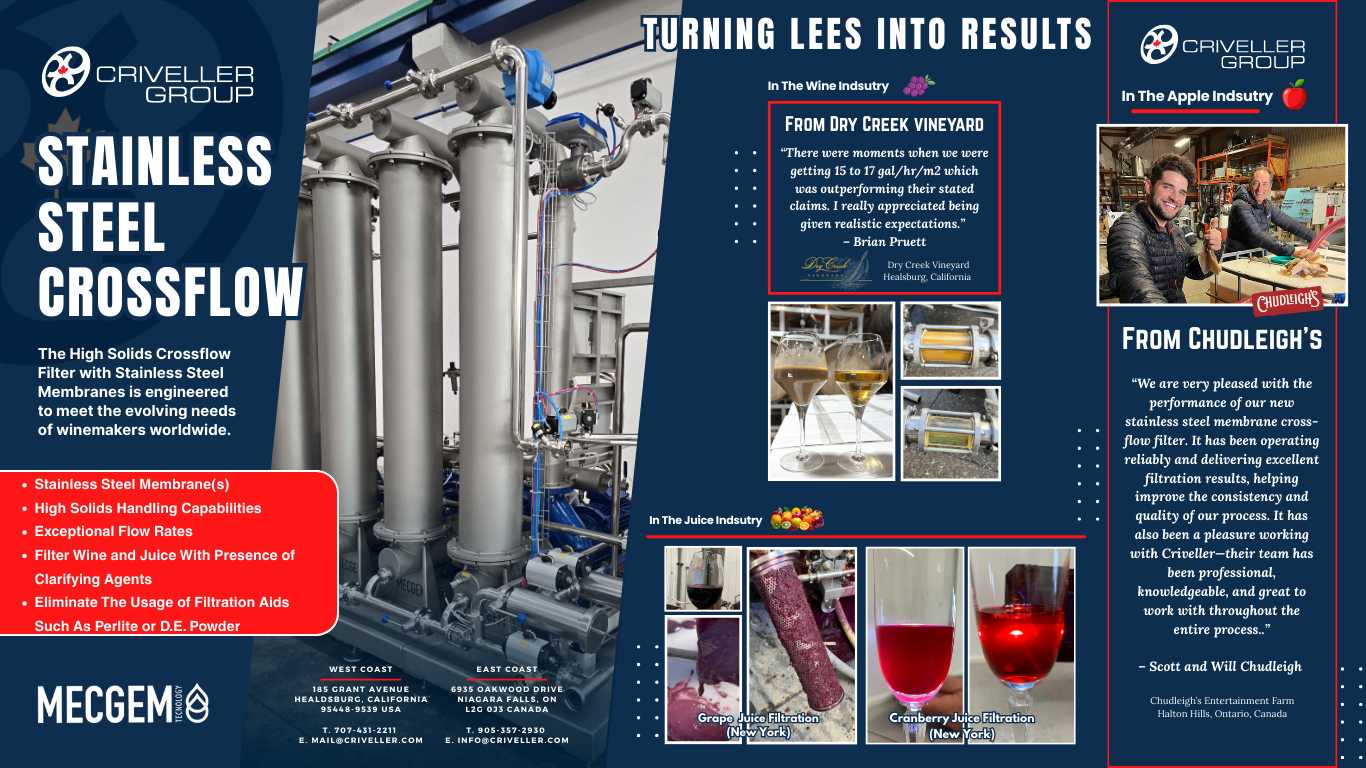
As the wine industry navigates economic pressures and climate challenges, maximizing efficiency, reducing waste, and protecting margins have become critical to long-term success. At Criveller Group, we are committed to delivering innovative solutions that help wineries increase profitability while optimizing production. Our advanced Lees Filtration system is designed to recover high-quality wine from both fresh juice and fermented lees — including “tank bottoms” with or without fining agents such as bentonite or gelatin. Utilizing durable stainless steel membrane technology, the system transforms what was once considered waste into valuable, saleable product, while significantly reducing disposal costs. Developed in partnership with wineries across California, Ontario, and other regions throughout North America over the past two vintages, this proven technology is now available in scalable configurations ranging from 5 m² t
00
January 30, 2026
Carle, Mackie, Power & Ross LLP (“CMPR”), a leading U.S. law firm with a strong focus in the wine and spirits industry, is pleased to announce that it has entered into a strategic alliance with Légi Conseils Bourgogne (“Légi Conseils”), a premier French law firm recognized for its deep experience advising wine, spirits and luxury beverage clients in France and across Europe. The alliance became effective on January 1, 2026 and follows the recent opening of CMPR’s offices in Lake Oswego, Oregon and St. Helena, California. The collaboration establishes a coordinated cross-border platform to jointly market and provide legal services to clients and prospective clients in the wine and spirits sector throughout the United States and Europe. The alliance is designed to enhance the visibility, capabilities, and integrated service offerings of both firms within their respective jurisdictions, while delivering seamless, industry-specific legal supp
00
October 24, 2025
HIGHLIGHTS Continued volume growth in Q3 in a context of declining consumption: revenue was €846 million (-2.8% compared to Q3 2024) due to lower prices and a deterioration in mix. Adjusted EBITDA[1] reached €181 million or a 21.3% margin, compared to €210 million and a 24.1% margin in Q3 2024 Profitability down over 9 months: adjusted EBITDA stood at €531 million in 9M 2025, with a 20.7% margin compared to 24.3% in 9M 2024 as slower glass demand in August and September derailed the strong Q2 momentum Solid free cash flow generation in Q3, continuing the improvement already noted in H1. Net debt ratio was stable compared to June 30 at 2.6x last 12-month adjusted EBITDA Strengthened shareholding structure following BWGI’s tender offer, enabling the Group to continue deploying its long-term strategy Verallia’s Net Zero 2040 trajectory validated by the SBTi, making it the first global producer of food and beverage glass packaging to commit to this tra
00
Recycling & Waste Solutions Tanker Hauling Services Wine Rinsate, Storm Water, Sludge, and other Waste Water products suitable for disposal at waste water disposal and recycling facilities. Our fleet includes tankers and vacuum trucks. Roll-Off Boxes Wood, scrap metal, glass, concrete, dirt, rock, plastic, cardboard, and Construction materials are hauled to recycling facilities Compost Our Super Compost consists of 100% recycled organic materials that is generated and collected from local sources. Our Super Compost is OMRI listed, Certified OIM with CDFA, and STA certified with the US Composting Council. Environmental Solutions and Emergency Response Environmental Waste Disposal Services Our nationwide network of treatment, disposal and recycling facilities offers sustainable, safe and compliant solutions for all hazardous and nonhazardous waste streams including All Pesticides, Herbicides, Insecticides. Lab Pack, Field and Industrial Services Republic Se
00
.png)
August 6, 2025

In warehouses where people and machines operate in close quarters, pedestrian safety is a critical concern. At the recent PMH Forklift Safety event in Seattle, attendees witnessed firsthand how technology is stepping up to protect workers. One standout innovation was the Hyster Pedestrian Awareness Camera System, presented by TJ Ryals of Speedshield Technologies. This wireless forklift system represents a major leap forward in accident prevention with its smarter, more human-aware approach to pedestrian detection. Designed to retrofit easily into existing fleets and requiring only very limited training, the system is positioned to redefine warehouse safety standards throughout the industry. Beyond Object Detection: Smarter Vision for Safer Operations While previous safety systems have focused on detecting all nearby objects, the Pedestrian Awareness Camera System goes further. It’s purpose-built to recognize pedestrians specifically, ignoring inanimate obstacles to minimize
00

For over 30 years, we’ve partnered with wineries of all sizes to provide expert winemaking services tailored to real-world harvest needs. From precision alcohol adjustment and dealcoholization services to fermentation troubleshooting, BevZero is here to take complexity out of the crush season and help you produce your best wine, every time. We don’t just support winemakers, we work alongside them. Our global team of winemakers, food scientists, and beverage technologists are embedded in the industry, bringing first-hand experience and scientific expertise to every solution. Why BevZero? A Partner Rooted in Innovation Founded in 1991, BevZero pioneered vacuum distillation for alcohol reduction in wine, a process that quickly became a standard in the industry. But our commitment to innovation didn’t stop there. Today, BevZero operates globally, offering advanced winemaking support from our facilities in the U.S., Spain, and South Africa. Our services are designed to sol
00
July 30, 2025
Choosing the right closure for wine bottles is a crucial decision for winemakers, as it directly impacts the quality, aging potential, and environmental footprint of the wine. In recent years, alternative closure materials, such as aluminum and plastic, have emerged alongside traditional cork stoppers. In this article, we will compare cork, aluminum, and plastic as materials for wine closures, examining their sealing ability, production resource use, environmental impact, and other relevant aspects. By understanding the characteristics of each material, we can make informed decisions that balance tradition, innovation, and sustainability in the wine industry. Sealing Ability Cork Cork production is a sustainable process that relies on the careful harvesting of cork oak bark, a process that supports the health and longevity of cork oak forests, which act as valuable ecosystems. Harvesting cork does not require cutting down trees, as the bark regenerates naturally. Furthermore, co
00

Reuse and refill systems, materials science and circularity are driving growth and differentiation Sustainability in packaging is no longer “nice-to-have” — it’s a core expectation for businesses and consumers alike. As global regulations tighten, supply chains evolve and consumer preferences shift toward responsible products, brands are under pressure to deliver sustainable solutions without compromising performance or aesthetics. At Berlin Packaging, we’ve made it our mission to help brands navigate this complex landscape. Below are some of the most pressing questions about sustainability in packaging and insights into how we’re driving innovation to meet the challenges of today and tomorrow. Q: What sustainability trends are shaping the future of packaging? Several key trends are redefining the landscape. The rise of reuse and refill systems is prominent, particularly in beauty, personal care, home care and even some food sector
00
At Repsco, sustainability isn’t a trend—it’s built into everything we do. Our plastic slip sheets are made from recycled post-consumer and post-industrial plastic, turning waste into durable, reusable load-handling solutions. 🌍 Here’s how Repsco helps reduce environmental impact: Made from Recycled Materials – We give discarded plastics a second life, reducing landfill waste and conserving resources. Fully Recyclable – When our slip sheets reach the end of their lifecycle, they’re recyclable again—supporting a true circular economy. Energy & Emissions Savings – Lightweight slip sheets mean fewer trucks, lower fuel use, and a smaller carbon footprint. Less Waste, More Efficiency – Unlike wooden pallets, there’s no breakage, disposal, or repair—just long-lasting, clean performance. By switching to Repsco, your business reduces its carbon footprint and adds tremendously to performance and ef
00