
Filter Post Type
NewsVideoProductEventLink
Sort:
Most Recent
1–10 of 131

April 24, 2026

Afternoon Brief: California’s Wine Grape Acreage Drops in 2025 as Industry Struggles Continues
As the California wine industry currently faces a crisis due to oversupply, weak demand and changing consumer habits, a new report released the U.S. Department of Agriculture’s (USDA) National Agricultural Statistics Service and the California Department of Food and Agriculture (CDFA) shows that grape acreage in the state continued to shrink in 2025...
00

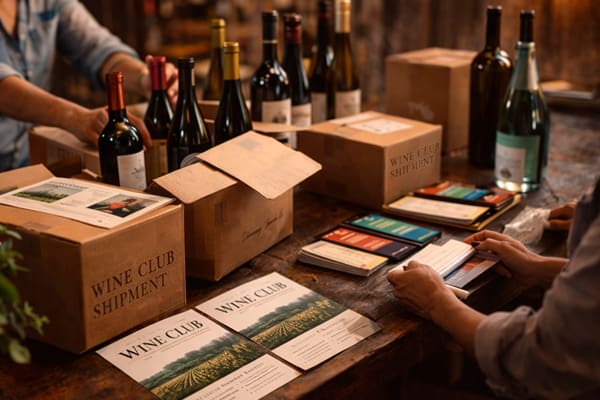
Why Wine Clubs Aren’t Working, And What’s Replacing Them For many wineries, the biggest challenge today isn’t attracting new customers; it’s keeping the ones they already have. Wine clubs once represented the most stable revenue engine for wineries. Members signed up, shipments went out quarterly, and predictable revenue flowed in. It was the foundation of direct-to-consumer success. But that foundation is cracking. Recent industry data reveals a troubling trend: nearly 40% of wine club members cancel within the first year. In a market where customer acquisition costs are climbing, and competition for attention has never been fiercer, losing members at this rate isn’t just a retention problem; it’s a profitability crisis. The math is unforgiving. If acquiring a new club member costs hundreds of dollars in marketing, tasting room labor, and incentives, losing them before they’ve generated meaningful lifetime value means wineries are bleeding money with every signup. And yet, some winer
00
Recent-vintage stocks growing tighter The 2026 harvests in the Southern Hemisphere are in full swing – a number are ahead of a typical schedule, in fact – and this month’s Global Market Report provides the latest on conditions, grape quality, and crop-size expectations. With one exception, the bulk markets of the world have been quiet over the past month. The introduction to our March 2025 report applies again 12 months on: “The bulk market can be characterised as slow and steady since mid-February, with the Southern Hemisphere focused on harvest and demand in the Northern Hemisphere dampened by flat or declining retail sales and, in Spain, some elevated pricing.” Wary buyers are waiting to see how the harvests affect availability and pricing before committing, perhaps using the intervening time to take the industry pulse at shows like Wine Paris (growing in prominence; we review its recent instalment here) and ProWein, and generally try to gain a read on
00

February 24, 2026

The word “brand” is notoriously difficult to define in marketing. If we were talking about a ranch brand—the kind seared onto livestock to signify ownership—that’s easy to understand. But in marketing, a brand is not a physical thing. It’s a symbolic construct. It’s not the label on the bottle or the winery’s logo or even the product itself. Rather, it’s the entire perception a consumer holds in their mind about your company, your wine, your people, and everything you collectively represent. A brand is a conceptual identity that differentiates you from your competitors. It can be shaped by your name, your origin story, the design of your label, the personalities involved in your winery, your tasting room experience, your packaging, your email tone, your partnerships, or even how you respond to a customer complaint. All these elements come together to form the intangible yet powerful idea of your brand. It is, quite literally, eve
00

February 10, 2026

After 30 years of moving up and to the right, the American wine industry hit a wall. Not a temporary slowdown or a soft patch. A structural shift that requires a fundamentally different marketing playbook. 2025 was the reality check. 2026 is the year wineries either adapt or watch their customer base age out beneath them. The data is now unambiguous: wine sales dropped approximately 6% in 2024, marking the steepest decline in decades according to SipSource industry data. More troubling than the headline number is what's driving it. This isn't a recession blip or a bad vintage. It's a fundamental realignment of who drinks wine, how they buy it, and what they expect from the brands they choose. Here are the five trends reshaping the US wine market and what they mean for your brand's survival. The Demographic Disruption The wine industry built its growth on one generation: Baby Boomers. That generation is now aging out. The Wine Market Council's 2025 U.S. Consumer Ben
00

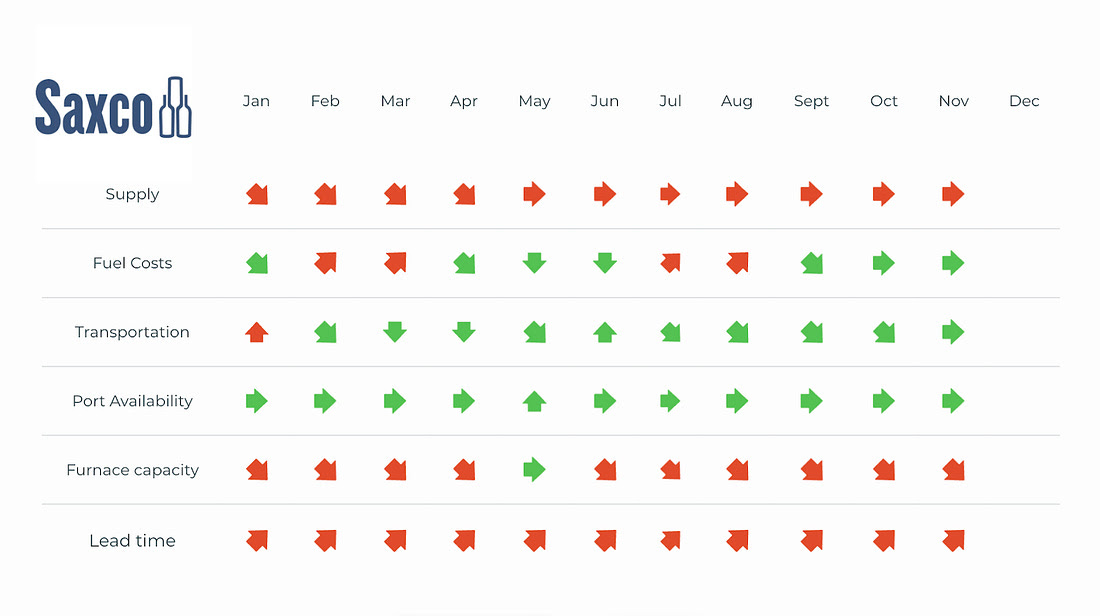
A pause in the fever dream of instability October arrived not with fanfare but with something rarer: Quiet. After a year of collective anticipation for more and more problems, what occurred was a respite. The tariffs are stalled, and the early indications from the Supreme Court suggest they are still in flux and will be a topic for discussion on a future date. Fuel costs have stabilized, as have ocean freight rates. There is a peculiar quality to this pause. It is that in-between moment that makes it hard to understand if wineries should keep their guard up or, finally, tentatively lower their shoulders. The glass half empty, half full The supply chain in October was like a strange dance. Everything remained unchanged – neither improving dramatically nor deteriorating. Just... holding. Diesel slipped from $3.748 to $3.679 per gallon, a decline so modest it barely registers as movement. But after months of upward pressure, even sideways feels like progress. Ocean rates hit bottom
00

Afternoon Brief: Grapes in the Vines, Napa Valley in Crisis. Future? "Less Quantity, More Quality, and Different Wines"
To WineNews, thoughts by landscape historian Gianni Moriani, after the comment by James Suckling about the health status of American wine...
00
November 13, 2025
"In the dark": Wine industry crying out for certainty October rainfall complicated harvest at the end of an already challenging growing season, characterized by cooler-than-normal weather and slower ripening. Growers held on for as long as possible in an attempt to attain requisite Brix levels, and some breakdown of fruit was evident, potentially reducing the final state-wide tonnage figure to the lower end of already modest expectations. The late-season grape market was very quiet, further reducing the picking of grapes in the harvest’s final weeks. This month’s report relays where and on what grapes activity did occur, and looks ahead to what we might expect to see on the 2026 grape-buying campaign. The bulk wine market has been more active, picking up slightly as October turned to November: We report on what wines this activity has occurred, where, and the identity of the buyers. The list of factors hindering market confidence is lengthy: Negative case-good sa
00

September 18, 2025

The wine industry is facing unprecedented challenges. With many wineries and related businesses feeling the pressure from rising costs and declining sales, it might seem like the only option is to cut back or even shutter operations. But as history shows, downturns are often the perfect time to make strategic investments that secure your future. At TMC Financing, we believe that smart financing isn’t just for booming markets—it’s the tool that can help you survive and ultimately thrive when the market turns around. Invest in Stability During Uncertain Times When the winds of economic uncertainty blow, companies that stand firm are the ones that take proactive steps rather than reactive measures. SBA 504 loans from TMC Financing offer a pathway to stability with: Low Down Payments: With as little as 10% down for established businesses, you keep your cash flowing for critical operations and future growth. Fixed, Long-Term Interest Rates: Enjoy predicta
00
September 17, 2025
Shorter harvests fail to stir uncertain bulk market The Northern Hemisphere harvests are in full swing and this month’s report relays the latest news from the vineyards on crop size and grape quality. Only one of California, France, Spain and Italy appears on course for a crop size in line with its five-year average, the others look set to come in short to varying extents, whether due to Mother Nature, vineyard removals/mothballing, or both. But with inventories long and North American and European retail sales of wine continuing to struggle, the bulk market has been largely unmoved. This month’s report identifies the activity that has occurred. Inflation and a cost-of-living squeeze are increasingly cropping up again in industry conversations. While the worst of the post-pandemic inflationary tailwinds are in the past, grocery and energy prices remain significantly elevated versus 3-5 years ago and consumers are reducing their spending on discretionary items accordingly.
00