
Filter Post Type
NewsVideoProductEventLink
Sort:
Most Recent
1–10 of 13
January 8, 2026
Alcohol beverage importers may finally get their answer from the United States Supreme Court this week on the validity of the Trump Administration’s tariffs issued pursuant to the International Emergency Economic Powers Act (IEEPA).[1] Recent news reports suggest that the Court’s answer may come as early as this Friday, when the Court is scheduled to issue opinions on pending cases. Based on the questions posed by both liberal and conservative justices during oral argument, many commentators expect the Court to conclude that the president exceeded his authority by invoking IEEPA to issue those tariffs. There are, however, a lot of open questions beyond just the validity of the tariffs. Most importantly, if the Court finds the tariffs are invalid, will importers that have already paid the tariffs be entitled to refunds and what will the process be for getting those refunds. Questions also remain as to whether the case will be remanded to a lower court to determine the
00

September 3, 2025

Afternoon Brief: Supreme Court Is Next Stop for Wine Importer's Lawsuit Against Trump's Trade War
A federal appeals court agreed with a ruling that the President overstepped when he imposed universal tariffs, but the decision has been stayed pending appeal to the U.S. Supreme Court...
Quilceda Creek WineryWineAmericaCome Over OctoberSommConDAOU VineyardsLinfield UniversityMoon Dancer WineryWine & Spirits Wholesalers of AmericaLondon Wine FairCattrall Brothers VineyardCarlos MartinezWineshippingThe Wonderful CompanyPhytechTrident FencePape Material HandlingVinterActive LLCBillsboro WineryKendall‑JacksonStoller Wine Group
00
Happy New Year! It is time to dust off the employee handbook, review your policies and procedures, and make sure they comply with all the new laws, regulations, and interpretations that have either already gone into effect or will in early 2024. Below, we have identified our “top 10(ish)” changes. Please keep in mind there were hundreds of laws, regulations, and changes implemented at the local, state, and federal levels throughout 2023. So, if you need a handbook/policy review or have any questions, please call. 1. California and Local Minimum Wage Raised – In addition to the gradual increase to minimum wage by the state, several Sonoma County cities have increased minimum wage beyond that required by the state. Below is a table that describes the state and local city requirements: Locality Effective Date All Employers California 1/1/2024 $16.00 Santa Rosa 1/1/
00

The ability to stay on top of current changes and identify challenges facing the wine community early is critical for any business success. We, G3 Enterprises, partner with wineries, growers, suppliers and distributors and move quickly to implement solutions that meet the ever-changing needs of our customers. A recent example is the decision by the U.S. Supreme Court to not hear the California Trucking Association’s challenge to AB 5. While the Court’s decision may come as a surprise by many, G3 had been proactively planning and preparing our operation readiness to undertake this ruling. As a result, we are already moving forward with our mitigation plan to ensure no customers will be impacted by any gap in service. This is also why G3 Enterprises continues to look out for ways to best serve customers and expand our services and offerings throughout the North and Central Coast regions giving our customers the experience, expertise and capabilities they want, when and where
00
What Could be the Impact on Your Business? Is an arbitration agreement that purports to waive the right to bring a Private Attorneys General Act (PAGA) claim unenforceable under California law, as the California Supreme Court held years ago in Iskanian v. CLS Transportation Los Angeles, LLC, 59 Cal.4th 348 (2014); or does the Federal Arbitration Act (FAA), which favors enforcing bilateral arbitration agreements according to their terms, preempt California law, invalidating Iskanian? This is the question posed by Viking River Cruises, Inc. v. Moriana, Case No. 20-1573, which came before the U.S. Supreme Court for oral argument on March 30, 2022. A decision is expected within the next few weeks or about two months from the argument date. Case Analysis The petitioner in Viking River Cruises argued that the Iskanian rule is preempted by the FAA, relying on a line of Supreme Court precedents, most notably AT&T Mobility LLC v. Concepcion, 563 U.S. 333
10
AB 51 Ban on Mandatory Arbitration in Employment is Back (Kind Of, And Probably Not For Long) Ninth Circuit Court Lifts Restraining Order on California Implementing a Ban on Mandatory Arbitration as not Being preempted by the Federal Arbitration Act The Ninth Circuit Court panel surprisingly rules that portions of California Assembly Bill 51 are not preempted by the Federal Arbitration Act, setting up a possible ban on mandatory employment agreements in California. However, the ruling is not retroactive to agreements already in place and extremely likely to be appealed and further stayed until the Supreme Court of the United States weighs in. As such, employers need not make immediate wholesale or radical changes to current practices. Want to see how this might affect your workplace? Click here to learn more about the ruling and what employers should do in response. If you have any legal questions or concerns, please call Dawn Ross, Arif Virji, Samantha Pungprakearti, or Justin H
10
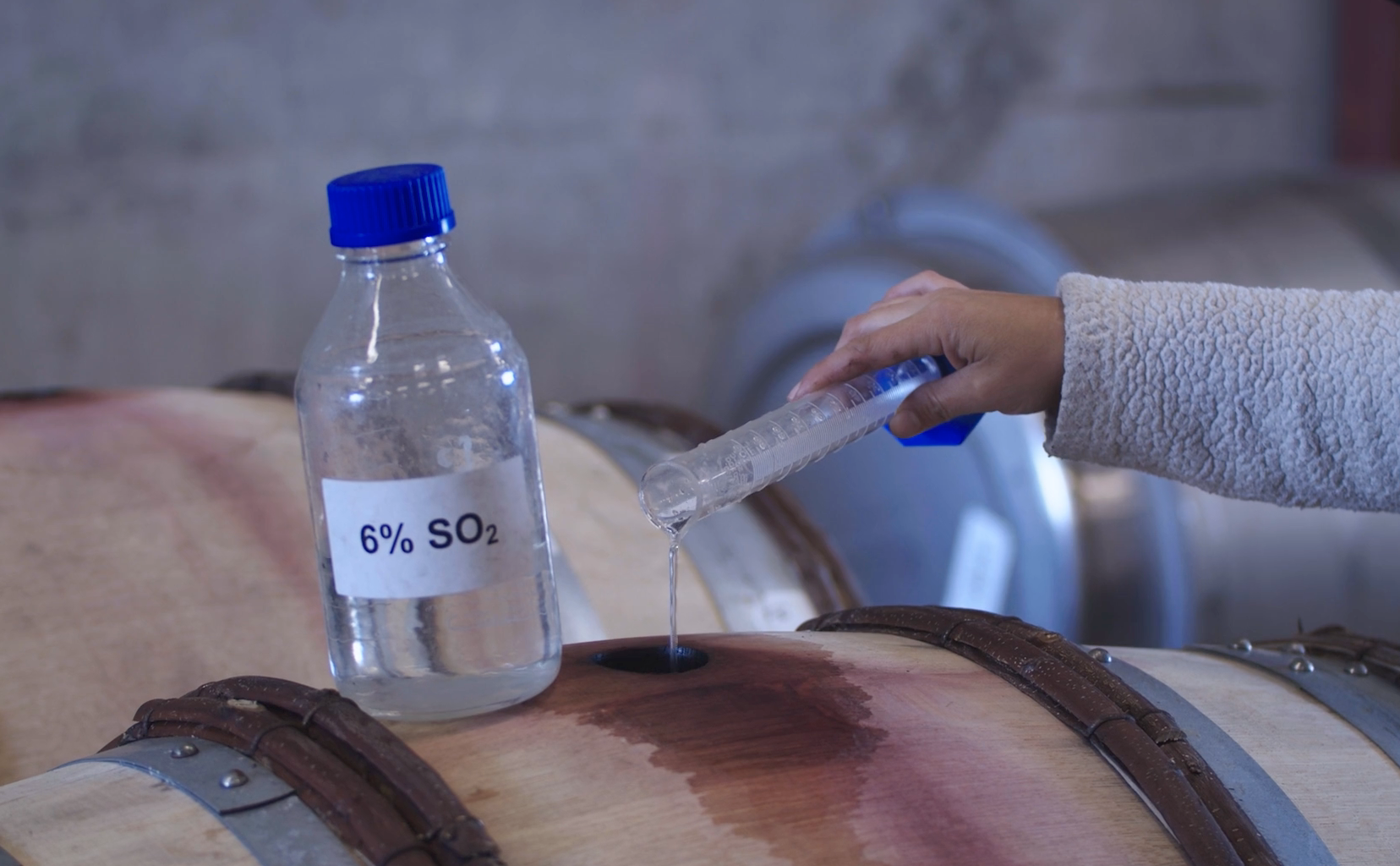
Are Sulfites in Wine Bad for Your Health? With the ominous contains sulfites label that accompanies most wine bottles, consumers have grown wary of sulfur in wine. Despite the recent push for natural and sulfite-free wine, these titles create havoc for winemakers who do not use these descriptors. What most don’t realize is that sulfur is a byproduct of fermentation. Thus, sulfur not only plays a role in maintaining the freshness and flavor of wine, but its presence is a natural part of the winemaking process. The Use of Additives in Wine Throughout the Years While natural wine has become a trendy concept, the product itself isn’t new; wine labels that tout their product as natural merely are referring to the traditional methodology of making wine from unaltered grape juice with no additives, which stands in contrast to other wines found on your local supermarket shelf. Some use many of the 62 government approved additives [CFR 24.246], such as fake
00
August 4, 2021
CALIFORNIA SUPREME COURT ADDS TO COST OF DOING BUSINESS BY REQUIRING EMPLOYERS TO PAY FOR MISSED BREAKS AT A HIGHER RATE OF PAY On July 15, 2021, the California Supreme Court decided in Ferra v. Loews Hollywood Hotel, LLC, that employers must pay premium payments to employees for missed meal, rest, and recovery breaks at the employee’s “regular rate of pay” (used to calculate overtime payments) instead of the employee’s base hourly rate, as most employers have always done. The Court further held that the ruling is retroactive, which will likely result in a new wave of class action suits alleging that employers who have paid meal and rest period premiums over the last four years have done so at the incorrect rate, which in turn will trigger penalties and/or attorney’s fees. This Alert evaluates the nature and extent of the likely liability risk raised by this new decision, outlines proactive steps employers can take to reduce exposure, and explores other ar
10
July 2, 2021
On June 23, the U.S. Supreme Court held that a California regulation allowing union organizers to enter an agricultural employer’s property is unconstitutional. The regulation, on the books since the mid-1970s, requires farms to permit unions to speak with and recruit farmworkers in the hour before and after work and an hour during lunchtime for up to 120 days each year. (Cedar Point Nursery v. Hassid (U.S., June 23, 2021, No. 20-107) 2021 WL 2557070.) In the case, a strawberry plant nursery and a fruit shipment company sued the California Agricultural Labor Relations Board arguing that the regulation gave farmworker unions an easement to enter and conduct business on their land without authorization or compensation. The Court agreed, holding that the regulation took away the agricultural employer’s right to exclude trespassers from its private property, amounting to a “taking” of company property without “just compensation” in violation of the Fifth
10

As the COVID-19 pandemic continues, so does the number of workplace-related lawsuits filed by workers across the country against their employers. The pandemic laid the groundwork for new local, state and federal laws and regulations governing a number of workplace issues, like safety, family and medical leave and remote work. New challenges emerged for employers who were forced to close operations, lay off and furlough workers, and organize new work arrangements. Two law firms that track workplace litigation report that there were more than 1,000 COVID-19-related lawsuits filed by workers against their employers in 2020. Employees filed 1,452 lawsuits in state and federal court in 2020 according to Littler Mendelson in San Francisco. Meanwhile, Seyfarth Shaw put the number at 1,005 for all of last year. According to Seyfarth, of those cases: 690 were complaints concerning layoffs and firings that were spurred by the pandemic. 339 cases were related to workplace safety and retaliati
00