
Filter Post Type
NewsVideoProductEventLink
Sort:
Most Recent
1–10 of 20

January 30, 2026

Carle, Mackie, Power & Ross LLP (“CMPR”), a leading U.S. law firm with a strong focus in the wine and spirits industry, is pleased to announce that it has entered into a strategic alliance with Légi Conseils Bourgogne (“Légi Conseils”), a premier French law firm recognized for its deep experience advising wine, spirits and luxury beverage clients in France and across Europe. The alliance became effective on January 1, 2026 and follows the recent opening of CMPR’s offices in Lake Oswego, Oregon and St. Helena, California. The collaboration establishes a coordinated cross-border platform to jointly market and provide legal services to clients and prospective clients in the wine and spirits sector throughout the United States and Europe. The alliance is designed to enhance the visibility, capabilities, and integrated service offerings of both firms within their respective jurisdictions, while delivering seamless, industry-specific legal supp
00
Vines in limbo: A market on hold amid slow demand California’s bulk wine and grape markets proceeded slowly through May and into early June, the sluggish pace in line with April and down from the slightly improved activity levels seen in the first quarter of the year. The still-ongoing decline in wine sales at US retail, the damaging effect on exports of the US administration’s tariff and foreign policies, and widespread M&A activity among wineries and vineyard management companies, have all dampened market confidence. The wine industry – in California as around the world – is amid a painful rightsizing: Many growers have mothballed vineyards because they do not have a contract or have been unable to obtain financing to farm; wineries are closing facilities as the tonnages needing to be crushed are shrinking each year, so too retail demand for wine; programs are being rationalized by wineries, retailers and distributors in response to negative sales, and wi
00

April 24, 2025

Wine fulfillment isn’t just about getting bottles from point A to B—it’s about delivering an exceptional customer experience while keeping costs under control. In this Wine Sales Symposium session, Devin Joshua and Jim silver from WineDirect will break down the key strategies wineries can use to streamline fulfillment, minimize expenses, and enhance customer loyalty. From smart inventory management to optimizing packaging, discover how the right fulfillment approach can drive both efficiency and satisfaction. Join us at the Wine Sales Symposium, May 14 at the Hyatt in Santa Rosa. The Secret to Seamless Wine Fulfillment: How to Reduce Costs While Improving Customer Satisfaction Register with promo code: WINEDIRECT2025 to get $20 off the ticket price Devin Joshua, VP of Fulfillment Sales Devin Joshua is a seasoned wine industry executive and currently serves as Vice President of Fulfillment Sales at WineDirect. With more than 25 years of experience across nearly every t
00
Through the opening six weeks of 2025, the major bulk wine markets of the world continued where they left off at the end of 2024 – experiencing differing activity and pricing levels. One common theme is that the shorter winegrape crops of 2023 and 2024 have been most felt on generic wines, which appear to be in tight supply – at least in Europe, Chile and South Africa. This has led to some elevated generic-wine prices, especially in Spain where pricing increases since November have stimulated European interest in alternative sources such as France, Chile and Argentina. The market for standard-quality varietal wines is less tight, but supply of varietal whites does feel closer to some kind of balance than reds, with carryover low in Chile, South Africa and Australia as the Southern Hemisphere’s 2025 harvests get underway. Early expectations are for average-sized crops at best: Chile’s is likely to be constrained by extensive vine removals over the past 24 m
00
The introduction to our Global Report of August 2023 started as follows: “Another month of limited buying activity has passed by on the world’s bulk wine markets, with the traditional lull during the Northern Hemisphere summer holiday season now exacerbating the quietness. Pockets of activity exist but these feel like exceptions in an altogether quiet landscape.” Last year’s “pessimism in all major producer countries about the long-term drift away from wine consumption” is continuing through 2024, but shorter crops and the return of China as a buyer in Australia have helped make the landscape appear a little more active. Some exporters have experienced a better year. Shorter European crops in 2023 were followed by shorter Chilean and South African crops in 2024, tightening availability of generic and varietal whites that were already in better supplydemand balance than their red counterparts. Versus disappointing sales last year, Spain’s
00

October 25, 2023

Wine Institute Comments on New USDA Specialty Crop Export Funding Program
October 25th - SAN FRANCISCO Wine Institute President and CEO Robert P. Koch made the following statement today regarding the U.S. Department of
00
The Southern Hemisphere harvests have passed their midway point and Argentina (-40%), Chile (-15-30%) and Australia (-30-40%) are all expected to produce tonnages some way short of their respective averages this year. South Africa’s crop, too, is projected to be on the lighter side, while Cyclone Gabrielle’s impact on the Gisborne and Hawke’s Bay growing regions of New Zealand is still being assessed. The prospect of shorter harvests has not stimulated a great deal of extra interest from international buyers of bulk and, like their counterparts in the Northern Hemisphere, the bulk wine markets are slow, especially on reds. (Domestic business is active, especially in Argentina, Chile and South Africa, pushing up the price of generic red and white wines.) Consumer confidence in the UK and parts of the Eurozone is patchy, and grocery price inflation high, reducing European demand for Southern Hemisphere bulk wines and – of course – Europe’s own. S
00


As the world embraces technology, every industry has to keep up with innovations or risk being left behind. The wine industry is no exception. The wine industry has long been known for its traditional methods and artisanal techniques, but that may not be enough in a world that is increasingly driven by technology. In this article, we will look at the state of the wine industry from a tech perspective and examine how technology has impacted the production, distribution, and consumption of wine. We will explore how winemakers are leveraging new systems and methodologies to improve quality, increase efficiency, and meet consumer demand. So buckle up and let's explore the fascinating intersection between wine-making and technology! Source : pub.mdpi-res.com1. IoT products revolutionizing the wine industry IoT products are causing a revolution in the wine industry, streamlining and improving wine production. By using IoT wine processing technology that is connected to the cloud, perform
10

Policy Perspectives The EAEA—Expanding Ag Exports In an encouraging example of bipartisan action, groups of Democrat and Republican Senators and House Members, plus one Independent, have joined together to sponsor legislation expanding funding for agricultural exports, including wine. On the House side, the lead sponsor is Rep. Dan Newhouse (R-WA), a wine grape grower himself as well as being co-chair of the Congressional Wine Caucus, chair of the Agriculture Appropriations subcommittee, plus a great supporter of the American wine industry. Titled “Expanding Agricultural Exports Act” (EAEA), the bill proposes doubling the funding for both the Market Access Program (MAP) and Foreign Market Development Cooperative Program (FMD) administered by the US Department of Agriculture. Between 1977 and 2019, these programs have added an average of $9.6 billion annually to the value of US agricultural exports, equal to nearly $648 billion, or 13.7%, in additional export rev
00

September 1, 2022
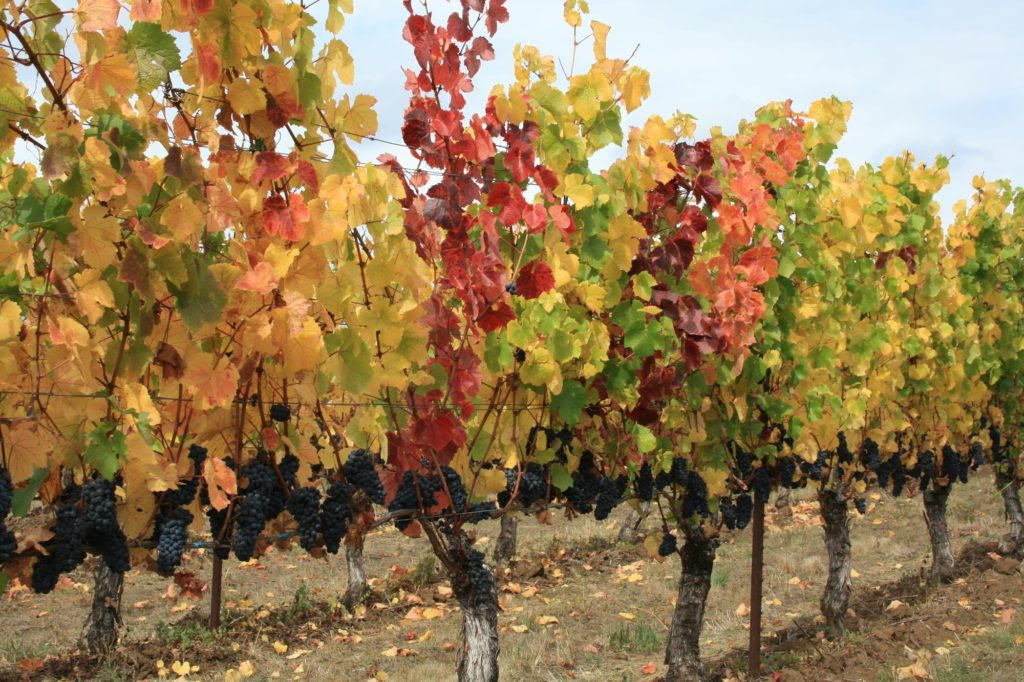
You know it’s harvest season when the winemakers emerge from their cavernous abodes and start making appearances in the vineyard. It’s a magical time, I mean, sometimes they bring donuts! But they also bring with them some funny ideas about irrigation methods, mostly that you make better wine by curtailing water in the weeks leading up to harvest. It’s a silly one-size-fits-all approach. Here’s why. Thou shalt not irrigate after veraison…why is this wrong? I’m not sure the logic here, but I think this comes from some idea about “concentrating flavors” and not letting them get diluted by irrigation. It’s ironic given how much watering-back is done in California wineries. More than that though, it’s physiologically erroneous. At the start of sugar accumulation, the grape berry partially severs contact with the xylem almost exclusively allowing the influx of sucrose-laden sap from the phloem. Excess water is not going to blim
00