
Filter Post Type
NewsVideoProductEventLink
Sort:
Most Recent
1–10 of 54

#WineCareers - Wilridge Vineyard, Winery, & Distillery is seeking an Assistant Winemaker & Distiller
September 17, 2025

Assistant Winemaker and Distiller at Wilridge Vineyard, Winery & Distillery
00

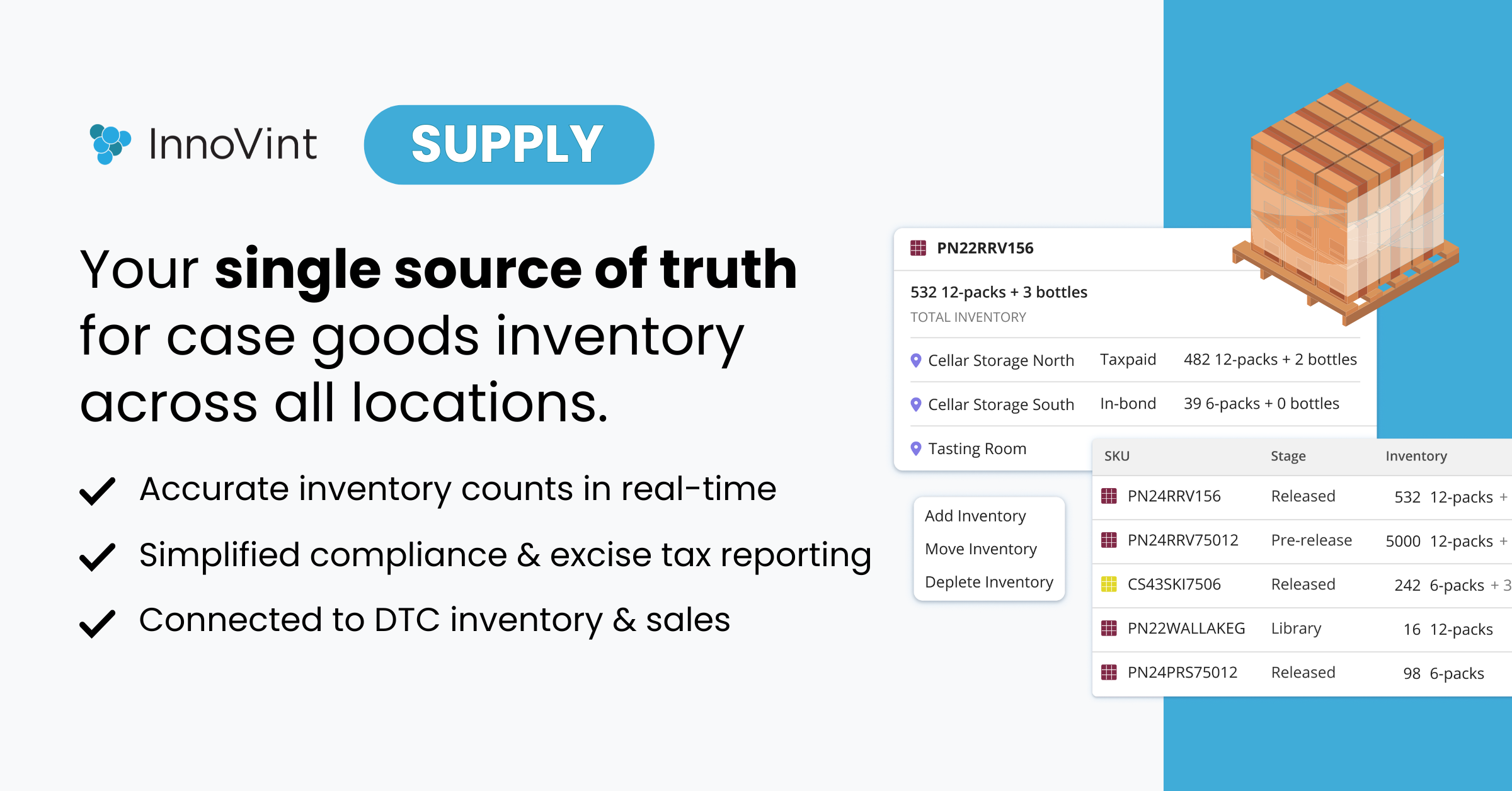
The Missing Link Between Production and Sales When you’re involved with wine inventory and sales, a few nagging questions can keep you up at night… "Did we get our excise tax payment right this month?" or "Was that library wine really still available?" or "Did we ship enough wine to our warehouse for wine club processing?" These are tough questions to answer if your case goods inventory isn’t reliable. It's not uncommon for a few cases of wine to fall through the cracks. In a warehouse with dozens of SKUs, dark corners can hide inventory from the team—leading to missed sales, overpaid taxes, or incorrect wine club shipments when outdated spreadsheets are the only source of truth. “What's unique about the wine industry is the diversity of its sales channels,” explains Ashley Leonard, CEO and Co-Founder of InnoVint. "You're selling direct to the consumer a few different ways, occasionally direct to t
00

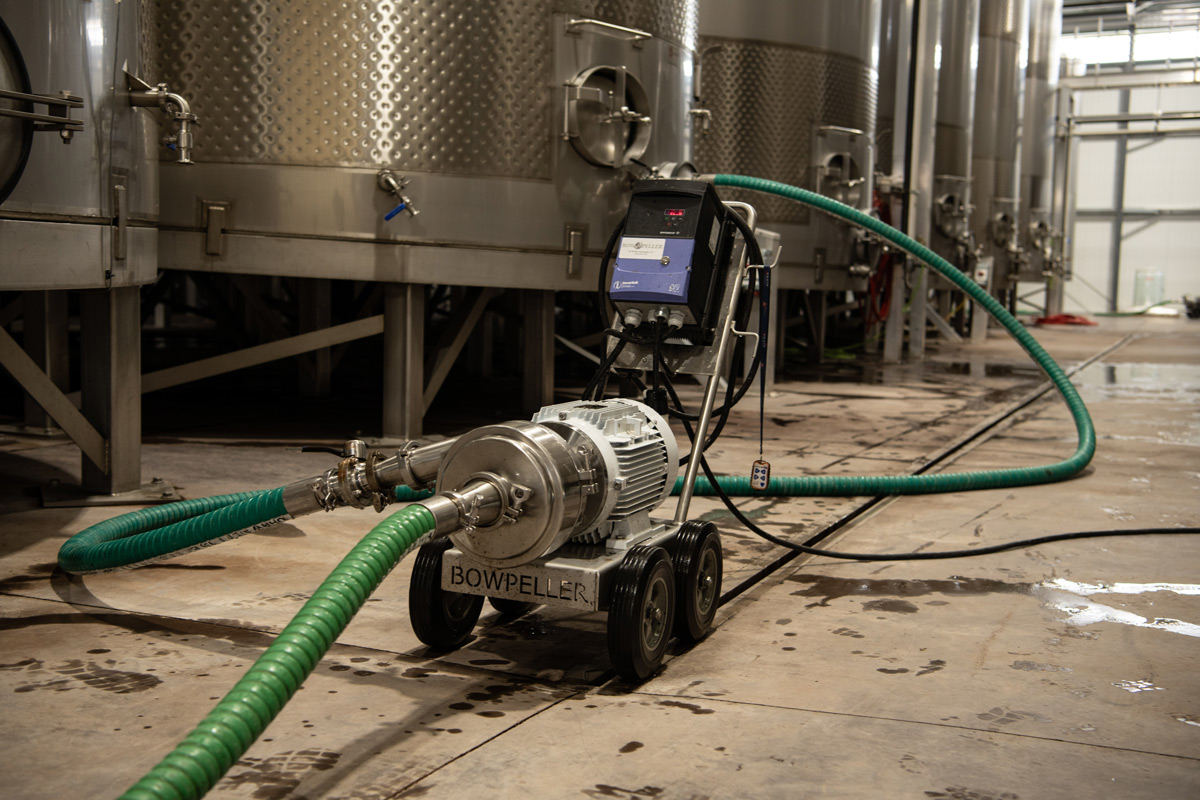
The right tools can make a winemaker's job easier and craft a better product. But staying abreast of technological advancements takes time, and testing alternative tools requires repetition to build confidence in the results. Perhaps that’s why so many winemakers rely on the winemaking community for recommendations on new ways to process grapes and create wines. McFinn Technologies’ Bowpeller pump has earned a reputation as a superior choice for gently moving juices, especially during pump overs. Its modern design delivers low-shear, non-disruptive juice handling that minimizes damage to skins and seeds, helping to avoid harsh tannin extraction or oxidation and improving wine quality. Bowpeller pump at Duckhorn's Goldeneye winery “A standard centrifugal pump has blades that slap the liquid and make it change direction by 90 degrees and a casing that allows damaging re-circulation,” says John McGinn, co-owner of McFinn Technologies. “The design
10
May 20, 2025
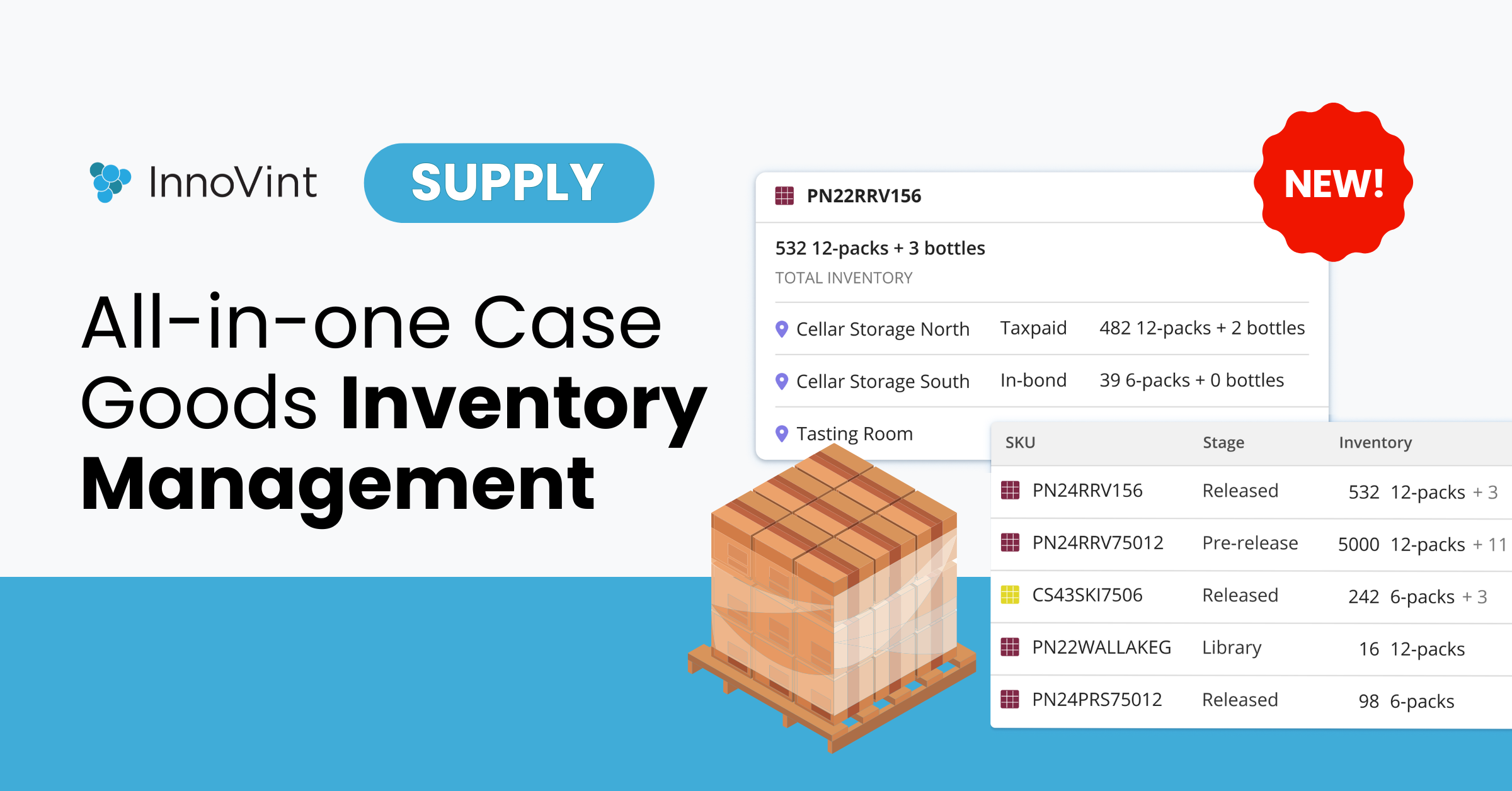
InnoVint’s new inventory management product, SUPPLY, is now available to all wineries, bringing real-time visibility, compliance confidence, and operational clarity to case goods management. Wineries Deserve Better Than Spreadsheets Inventory shouldn’t be a guessing game. But for many wineries, that’s exactly what it is. There is no reliable, shared, real-time view. Spreadsheets live in different places and are populated by teams chasing down numbers over email, text, or cellar conversations. Tracking bonded vs. taxpaid inventory is messy. Manual logs and delayed data make it easy to miss a movement, overpay taxes, or introduce errors into TTB filings. At the end of the day, no one has a clear answer to the most important question: “What do we actually have available to sell?” InnoVint SUPPLY replaces all of that with one intuitive system designed specifically for wineries. It brings clarity, control, and confidence to inventory management. What InnoVint
00


We're thrilled to announce that Blended has raised a $2.5 million Seed round to transform how wineries manage production, from vineyard to bottle. The round was led by Bienville Capital Management, whose support affirms our vision: to build the next generation of winery operations software. With Blended, teams spend less time buried in data entry and more time making informed decisions in real time, ultimately running smarter, more efficient businesses. Since launching in 2022, we’ve been on a mission to reimagine production management for modern wineries. Blended is designed to be the most flexible, intuitive platform on the market—adapting to how you make wine, not the other way around. By combining thoughtful design with the latest technologies like AI, we help teams replace spreadsheets, notebooks, and legacy software once and for all. From work orders and lab analysis to costing and case goods, Blended keeps everyone aligned and moving forward. With this fu
10


Modern winemaking demands storage solutions that blend innovation with practical results. Both Flextanks and concrete eggs offer excellent fermentation dynamics and temperature control, yet Flextanks provide clear advantages in cost, flexibility, and maintenance. Here’s a closer look at why Flextanks are the smarter choice. Cost Efficiency When storing 450 gallons, Flextanks come in at around $1870, whereas concrete eggs typically exceed $10,000. This significant difference makes Flextanks the clear choice for winemakers looking to maximize efficiency without sacrificing quality. By opting for a Flextank, you can free up resources for other critical areas of your winery. Fermentation and Temperature Control Both options support robust yeast circulation and natural internal convection, ensuring a consistent fermentation. However, Flextanks provide the same benefits without the hefty price tag or the permanence of concrete eggs. Additionally, their seamless construction makes prec
00
Ever wished work orders could create themselves? You know exactly what needs to be done, but turning that clear plan into a detailed work order takes digging through notes, typing it all out, and far too much of your time. Meet Barry, Blended’s artificial intelligence designed specifically for wine production, and the newest member of your team. Barry is a digital assistant built to streamline your winery’s operations. In seconds, Barry can answer questions, record data, and write work orders for your team. The goal? To make you more efficient, so you can spend more time focused on crafting exquisite wines. Barry lives within your instance of the Blended platform and is fully attuned to your winery’s unique processes. Think of it as your go-to expert, always ready to: Answer Questions Barry makes information retrieval a breeze. Simply ask, “Show me my chardonnays,” and Barry will display your current chardonnay lots along with relevant details. Simplify
00

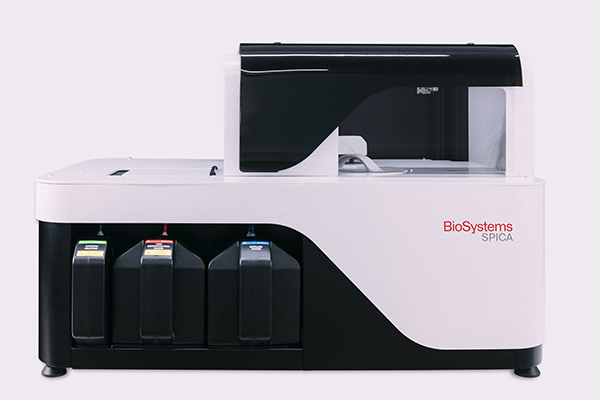
One of the joys of winemaking is mastering the process itself — gaining enough knowledge to tweak it to create signature wines. It takes years to reach this level of expertise, and those years are filled with experimentation. Many winemakers prefer to use precise measurements to guide their decision-making process. Winemakers monitor sulfite levels following fermentation, typically every 4‒8 weeks, to ensure sulfite levels remain constant until the wine is bottled. Unfortunately, taking measurements like these can be tedious when done manually, often taking 12‒15 minutes per sample. For a winery with 50‒70 lots, these checks could require an entire week of dedicated lab work each month. Visual assessment of the meniscus in a burette means that the resulting data can lean toward subjectivity. Most winemakers wouldn't dream of skipping these important measurements. Yet, the time needed to do them manually and the risk of inaccurate results are impediments to a streamlined pro
00

🍇 How much do we appreciate feedback from our clients? A ton! 🍇 It was a joy to hear Sara Jablow's experiences with Admeo, SPICA ⭐ and how it has shaped QC at Far Ninete: "SPICA, whom we call Wall-E, has been a lifesaver! SPICA has saved me a lot of time and stress in the lab; I have time to focus on the numbers instead of generating the numbers. SPICA is made for wine making with winemaker in mind, the customer service has been fantastic and they're always continuing to develop the machine. A company that understands the real-world needs of a winemaker is second to none. I never feel like we're second fiddle and in addition to being an easy product, the enzymes are reliable. It's really easy to work with the people at Admeo. Customer support is phenomenal, you always go above and beyond. The training was thorough, and support is prompt and everyone at Admeo is so friendly and accommodating. With a week to go before harvest, we
00

August 13, 2024

Phifer Pavitt Winery Celebrates 20th Harvest with New Winemaker Ashley Hepworth, Assistant Winemaker Nicole Givovich, and Launch of New Website
Calistoga, CA (August 13, 2024) -Phifer Pavitt Winery is proud to celebrate its 20th harvest, marking two decades of crafting exceptional
00