


March 1, 2026
Cultivating Connection – How to Capture the Hearts and Minds of Your CustomersHow much do you know about your customers? Are you one of those wineries marketing solely based on club and non-club members? Or have you taken the next step and are marketing to your customers based on whether or not they are club members, multiple buyers, first time buyers or prospects? When was the last time you did a deep dive into your database?
Did you know 76% of customers expect brands to understand their individual needs? And, customer-centric companies are 60% more profitable than companies that don’t focus on customers according to Deloitte & Touche?
In this webinar we’ll outline why it is more important than ever to know and understand your customers – their needs, wants and expectations, and apply a customer-centric model to your marketing and sales efforts. We will give you practical examples of how you can uncover the information needed to craft your marketing messaging to closely defined segments, even individuals.
Customer expectations are rapidly moving from standardized personalization (first name on an email) to individualization (product recommendations based on their interests and purchasing history) and everything in between. Don’t get left behind.
Speaker Panel
 Susan DeMatei, President/Founder WineGlass Marketing
 Gaynor Strachan-Chun, Head of Strategic Planning / WineGlass Marketing
Sponsored by WineGlass Marketing

March 1, 2026
Integrated Marketing – Why You’re Leaving Money on the TableMarch 1, 2026
Is Your Website Delivering Cash, or Trash?March 1, 2026
New Data on Wine Consumption Trends: Exploring Generational Shift from Boomers to Millennials & GenXMarch 1, 2026
2019 Email Benchmarks Now AvailableIn January 2018, we started a project that entailed recording every email we sent for our clients: 3,089,124 emails across 1,697 campaigns for 43 clients over 21 months, to be exact. We removed administrative and club emails and checked for statistical significance and can confirm this is a large enough sample to be confident about the findings. Our goal was to compare our clients’ results to the posted industry benchmarks to see if they were a good judge of success.
What we uncovered was interesting...

March 1, 2026
Marketing During a Crisis – Tips to Pivot Your Marketing MessagesRecession Marketing Pro Tip: Understanding consumer psychology and the underlying emotions is critical when advertising during a recession.
In the wine industry, we don’t typically analyze consumers’ psyches or emotions. We tend to think of our customers demographically – mid 40’s – 60’s, lives in New York, Texas, and Florida, HHI over $150k, and the like. But in times of stress, demographic segmentations may be less relevant than psychographic segmentations that take into consideration consumers’ behavioral reactions and the underlying emotions.
The coronavirus sanctions have created an undercurrent of fear, worry, and stress. People are looking for stress relief and a temporary distraction. By understanding and appealing to their emotional needs you have a better chance of connecting with and engaging them. This is not a novel approach. Research shows that ad campaigns that focus on emotional engagement tend to have a higher ROI than ad campaigns focusing on rational messages (such as low prices or special offers) even when times are not tough.
But how do you know what your consumers need to hear right now? To guide us, I found an insightful study in the Harvard Business Review that looked at marketing successes and failures of dozens of companies during recessions from the 1970s – 2010. HBR identified patterns in consumers’ behavior and resulting company strategies that either helped or undermined performance. Additionally, they strongly encourage companies to understand the evolving consumption patterns and fine-tune their strategies accordingly.
For example, did you know that baking yeast is flying off the shelves? An NPR article on March 27th listed the products consumers are buying beyond the necessary cleaning products and everyday groceries. Baking yeast is high on the list – people are baking bread because it is comforting to make, smell, and eat. Two other items on the list are boxed hair dye and dress tops, which speak to the psychology of “keeping up appearances.” With the increase in video conferencing, these make complete sense.
So, how should we in the wine industry alter our strategies to fit the current climate? First, we need to understand the psychology of our customers. The HBR article suggests there are four key psychological segments. Your strategic opportunities will strongly depend on which of the four segments your core customers belong to, and how they categorize your products.
- Slam-On-The-Brakes: These are the people who feel most vulnerable and/or are hardest hit, financially. This group cuts all their spending to the necessities. Although lower-income consumers typically fall into this segment, it also includes those anxious higher-income consumers who fear health or income changes.
- Pained-But-Patient: This group is the largest of the four segments and represents a broad income swath. While they are more resilient, pained-but-patient consumers are less confident about recovery, and their ability to maintain their current standard of living. So, they economize, but less aggressively. For these consumers, time is their enemy. As the current situation drags on many will migrate down to the slamming-on-the-brakes segment.
- Comfortably Well-Off: These are the consumers who feel secure about their ability to ride out the current and future changes in the economy. Their consumption patterns don’t change that much with one exception; they tend to be a little more selective (and less conspicuous) about the brands/companies purchased.
- Live-For-Today Segment: This segment carries on as usual. Typically, urban and younger, they are more likely to rent than own, and they spend on experiences rather than stuff (except for consumer electronics.) They’re unlikely to change their everyday consumption behavior unless they become unemployed.
In addition to the customer segmentation, the HBR article gives us some guidance with emotional product prioritization:
- Essentials: Necessary for survival or perceived as central to well-being.
- Treats: Indulgences whose immediate purchase is considered justifiable.
- Postponables: Wanted or needed items whose purchase can be put off.
- Expendables: Perceived as unnecessary or unjustifiable.

Wine is a luxury item no matter which way you slice it. But your price point and your target will fall into one of these four segments, and your product into one of these four prioritizations. Are you a high-priced allocation wine that mostly sells to the comfortably well-off that are comfortable spending money online? Or are you a strong on-premise brand for the pained-but-patients that would benefit from positioning yourself as an affordable treat in these uncertain times?
Wine over $20 is best targeted at the Comfortably Well-Off (our traditional wine club target audience), and the Live-For-Today-Segment (our emerging target, and typically our tasting room traffic) and should be positioned squarely in the treat/affordable luxury category.
So, how do we sort through all of this to create marketing and advertising campaigns and programs that recognize your customers psychological and emotional state? Here are my recommendations:
#1 Support your brand by staying true to yourself.
Look at your current plans through the lens of “would my winery do this if it wasn’t a crisis?” Tweak your messaging to dovetail with the psychological and emotional pressures your group is feeling. When sales start to decline, the worst thing companies do is alter their brand’s fundamental proposition. If you have a high-priced and valuable wine, you may be tempted to decrease your price. This may confuse and alienate loyal customers, and to what end? Drifting away from your established base may attract some new customers in the near term, but you will find yourself in a weaker position when the recession ends. Your best course is to stabilize your brand.
#2 Move budgets toward measurable channels that fit with customers’ digital lifestyles.
In the recession of 2008, marketers spent +14% more on online ads than they did over the same time frame in the previous year. Even before most of us were asked to “shelter in place,” our purchasing behavior had shifted significantly to digital platforms, driven by technology advances, access, and convenience. For marketers, the shift allows us to surgically target, show results, and pivot quickly. Even without a recession environment, marketing departments are under pressure to do more with less and demonstrate high returns on investment. Digital advertising is targeted and relatively cheap, its performance is easily measured, and it is where our customers live.
#3 All businesses will increasingly compete on price.
You may think that discounting is in opposition of #1 – but we didn’t say don’t offer discounts, we said don’t discount outside of what your brand would typically offer. Also, watch the frequency as you will likely feel pressured to increase the frequency of temporary price promotions. Three tips here:
- Research shows discounts that require little effort from consumers and give cash back at time of sale are more effective than delayed value, or “buy more” promotions. Look for the quick benefit, keep it easy, and keep the barriers low. Know your average order value. If your customers are used to buying 4 bottles an order, a case offer might be pushing it.
- Make sure you sign up for lots of mailing lists and carefully monitor consumers’ perceptions of “normal” price levels. As an industry, we need to watch over ourselves and not create “a new normal” that we can’t sustain. Excessive promotions lead consumers to revise their expectations about prices and this threatens profitability in the recovery period. People will resist the steep increases as prices return to “normal,” and extreme price deals only lead to costly price wars.
- Focus on giving extra value to consumers. As much as it may pain us, this is about them, not you. While it is tempting to ask for help from your most loyal customers, this is not of value to them in their current state of mind. In addition to offering temporary price promotions or list-price changes, improve perceived affordability by reducing the thresholds for volume-based, club member, or allocation discounts. Expand loyalty programs to reward not just big-time spenders, but also people who purchase small amounts frequently.
#4: Bolster trust:
Last, but not least, worried consumers—even the comfortably well-off and live-for-today segments—see familiar, trusted brands and their products as a safe and comforting choice in trying times. Reassuring messages that reinforce an emotional connection with the brand and demonstrate empathy, “we’re going to get through this together,” are vital. Empathetic messages must be backed up by actions demonstrating the brand is on their customers’ side.
The HBR article concludes after 40 years of research, those brands that come out the other side of economic crisis will be stronger. First, the discipline around marketing strategy and research we develop during this time, and the ability to respond nimbly to changes in demand will continue to serve us when the economy recovers. And second, we should prepare now for a possible long-term shift in consumers’ values and attitudes, and a certain shift in where and how they shop.
March 1, 2026
Create Compelling Stories with a Brand Narrative
In our last two blog posts, we discussed the importance of staying true to your brand in uncertain times. Your brand is your compass to keep you on course. It is your scale to weigh options, and programs, to make determinations on what to do. Your brand is also what makes a connection with your customers and sets their expectations of you. A strong well-defined brand will also span across channels. For instance, you could make the jump from an on-premise brand to an online brand and your customers will follow.
But there is another reason everyone is focusing on brands as of late. There is an entirely new generation reshaping how we think about our communications. Millennials have smart marketers looking at their brands in a different way. They are pivoting the marketing pitch from a focus on the product to the story behind the product.
That might not even be enough. Millennials are, as Rebecca Vogels points out in a recent Forbes article, “Living and prioritizing their lives around experiences, not material possessions. They don’t only want to be told stories they want to live them as well.” This means that without a basic foundation to ground and filter the stories you put out online, the stories will be fleeting, and their value is forgotten in the next tweet.
This foundation is called a Brand Narrative, and research tells us a successful brand narrative can increase the value of a brand 20x in the eyes of the target audience. (Significant Objects)
What is a Narrative?
To be useful as that strong foundation, a narrative must be timeless. It must offer a promise and an expression of purpose to the target audience, and create and express a distinct emotional impact. The goal is for your target to self-identify with the narrative – to feel “I am one of you” or “you get me.”
This may have nothing to do with the product itself. Warby Parker’s narrative is accessibility, in a category that was traditionally too expensive for many people. Mailchimp’s narrative is mischief, in a category that is traditionally boring. And, Martha Stewart’s narrative is empowerment, proving that anyone can have a creative and beautiful space that they make themselves. The narrative provides the filter, not only for the stories the company tells every day but for everything the company does -- new products, new sales channels, copy and design, customer service, the company’s culture. It is the narrative that describes the experience your customers will have with your brand. The role of the stories and the actions of the brand/company is illustrative of the narrative.
Brands are no longer what we tell people we are, but what our community says about us. Social media is just a platform for brands to expose their narratives, and the stories that support them, to attract people to their community.
Identifying Your Brand Narrative
People buy into brands that feed their individual narrative. For example, I think of myself as an explorer. I love discovering new things, traveling, not being confined by rules, and being in tune with cultural narratives. If I were to change careers I would become a cultural anthropologist. The brands I am loyal to are those that feed my need for freedom and discovery – for example, Land Rover, Cost Plus, Coursera (courses on Art and Culture,) Sephora, and Anthropologie. These brands speak my language, fit my personality, and add value.

The easiest way to define your brand narrative is to reference Carl Jung’s Personality Archetypes. He defined 12 archetypes that define the over-arching personalities that drive human behavior. (See Image above.) Of course, the over-arching archetypes are only the tip of the iceberg. To correctly identify your brand narrative, you will need to dig into the detail, the sub-groups, the motivations, and expectations. But once you have decided where your brand lives the archetype and its narrative is a powerful tool that focuses all communication – look, feel, and tone (internal and external.)
Your Brand Narrative is a Compass in Difficult Times
Why are we bringing this up now? Because brands who are true to who they are will survive this pandemic. They will adapt in ways that are consistent within the brand experience and their customers will stay with them because they are behaving the way they always have and are familiar and comfortable. And, they will come out on the other side stronger for it.
Remember:
- Your brand narrative provides a consistent and cohesive brand look, feel voice and tone, across everything your brand does.
- A brand narrative gives your brand a human identity and personality which helps customers understand the type of experience your brand will deliver.
- A brand narrative defines the through-line for all the stories your brand tells – marketing, advertising, sales, customer support…it doesn’t care about the channel or platform.
- All successful brands possess a strong and uniquely identifiable archetype. A personality, that reflects the aspirations and hopes of the core audience.
We live in turbulent times. Everyday life has changed dramatically. We are looking for stability, comfort, hope, joy. Now, more than ever, we turn to the brands with a clear narrative and point of view on where they fit in our lives.
So, get out there and talk to your customers. And, you be you.
March 1, 2026
Increase Visibility and Revenue with Google Ads | |||||
Your tasting rooms may be closed but online sales are up 300%. Don’t miss out. We have made it easy for you to advertise on Google with our turnkey packages that will get you in front of your customers quickly and effectively. New Turnkey Google Ad Packages from WGM will get your brand seen today.
Click below to watch a short tutorial:
Need more information? Email Us |




March 1, 2026
What to do after a virtual trade show
Chances are you’ve attended a virtual conference by now. Perhaps it was your first, or maybe you’re a seasoned pro. In either case, thanks to the ongoing pandemic and the reoccurring “Stay at Home” directives, virtual events are likely going to be here for a while. And why not?
PGI.com reports that through video meetings, businesses can reduce travel costs by 30%. According to the Bizzabo Post Covid-19 Event Outlook Report, an overwhelming 93% of organizers plan to invest in virtual events moving forward.
Unlike in-person conferences, you have to work a bit harder to get the most value out of this time when they’re online. Here are some tips for things you can do after the conference to maximize your efforts.
Contact People You Met
68% of B2B marketers use in-person events for lead generation initiatives. This data point is especially noteworthy considering that AdStage reports 73% of marketers prioritized lead quality. Meaning, one of the vital elements of any conference is the chance to connect, make new friends, engage with old colleagues, and form new relationships that will help you both personally and professionally.
Networking is more natural in person. And typically, when you go to a conference, you leave with a stack of business cards that sit on your desk as a reminder to follow up on these connections.
But, this printed reminder doesn’t exist with a virtual conference. It is up to you to take notes and forward contact information to continue the conversation.
Hopefully, you kept a list of people you spoke to or exchanged chat messages with during the conference. Maybe you wanted to ask the keynote speaker a question, but you didn’t have time, or your kid’s virtual education crashed your network the morning of the breakout session you wanted to attend!
Either way, make a list of people with whom you would have connected and reach out to them.
Whova, the popular event software, has some suggestions to stay in front of your expanded network while the event is still fresh in everyone’s mind. They suggest doing the following in the first three days after an event:
Email your event contacts with thank-yous or requests for further conversation
- Search social media platforms for mention of the event or hashtags; connect to individuals talking about the event
- Cross-reference your new connections on LinkedIn referencing the event
- Double (and triple) check your notes from the event to make sure you organize and attend any post-event meetings/calls you planned during the event
- Send them a note and set up some time to connect, whether over the phone, a socially distanced coffee, or even with Facetime. If you wait and let ideas and memories fade, you’ll be cheating yourself out of a great opportunity.
Grow Your Database
How often do you look up a business contact only to find out they’ve changed positions or are at a new company? As you reflect and review your day(s) at the conference, you undoubtedly made some new contacts and reconnected with past ones. Take a few minutes to update both your personal as well as professional mailing list.
Make sure you’ve got updated phone numbers, email addresses, and current employers. When doing this, make sure to update contacts on your phone.
If you add or update people to your company database, make sure to use a tagging system or segmentation note. This can be something as simple as “XYZ Trade Show Mar_21”. As we all know, segmentation is a huge asset when it comes to recontacting someone. Having information could be critical if you want to send a follow-up email to people you met during a breakout session or event organizers. Spending an hour detailing notes of conversations and contact information will pay dividends for you in the future.
Knowledge Sharing
Maybe you went as a group or were the only one who had the privilege of attending the conference. Chances are, there are others in your organization that could benefit from what you heard.
Make sure to review your notes and any PDF’s distributed as part of the conference. Set some time to meet with your team and your supervisor to go over the highlights. Discuss new ideas that you want to try, new strategies on an old problem, or the conference in general. Also, give your team the floor to ask questions and probe what you heard.
In Case You Missed It
Bizzabo reports that over half (54%) of virtual event registrants convert to virtual attendees. Even when we attend, we can’t be in three breakout rooms at the same time. So almost all conferences supply links to the videos of the sessions.
Check the conference website to see if the sessions you missed are now available for viewing. Recordings of new portions of the conference originally live-streamed may have been added, giving you multiple opportunities to review what went on at the conference. Don’t forget to share the links with your team so they can view the information.
Get Involved
Now that you’ve attended the conference, updated your mailing list with new contacts and old friends, met with your team and shared your learnings, and watched the videos of sessions missed and discussions you wanted to remember, there’s just one more thing left to do. Offer feedback via social media or thank the organization, and look for opportunities with future conferences.
If the conference sent out a survey to attendees, take it and give honest feedback and suggestions. Virtual meetings are relatively new for everyone, so any insight or tips we’re sure would go a long way. Also, consider getting involved. If you or someone on your team wants to plan next year’s event, reach out to the organizers.
As with most things, the more engaged and thoughtful you are before, during, and after the conference, the more rewards you will see.

March 1, 2026
The Importance of Review SitesWe all have a love/hate relationship with online reviews. We get angry when someone points out our flaws on Yelp, but we look for multiple reviews when considering something on Amazon.
Four Reasons You Should Care About Online Reviews
Let's start with your consumer. Chances are, if you're a winery and you're selling mid-priced wine, your consumers fall into the Baby Boomer and Generation X demographics. (The 2021 Silicon Valley Bank reported that Boomers and Gen Xers account for 71% of wine consumption.)
However, this won't be the case for long. If you consider the SIZE of each generation, Baby Boomers are aging out, and GenXers aren't that big of a group of individuals. The oldest Millennials turn 40 this year. So very soon – as in the next five years – our targets will be Millennials.
The shift is significant because of the vast difference in values between Boomers and Millennials. Boomers are the responsible generation and did what they could to justify purchases with tangible data like scores. They also liked outward recognition and status to validate that they made the right decisions. Millennials, on the other hand, tend to look for a purpose or meaning behind their products. Ideally, they search for companies and products with detailed backstories that offer intrinsic value to make them feel good about themselves and the purchase. And they care about what their cohorts think.
So, over the next 5-10 years, we will witness a massive shift in marketing, and one of the major transformations will be in the area of influence. While today's wine consumers are widely influenced by the established press or reviews, the consumers of tomorrow care about what peers say – even if they're anonymous peers.
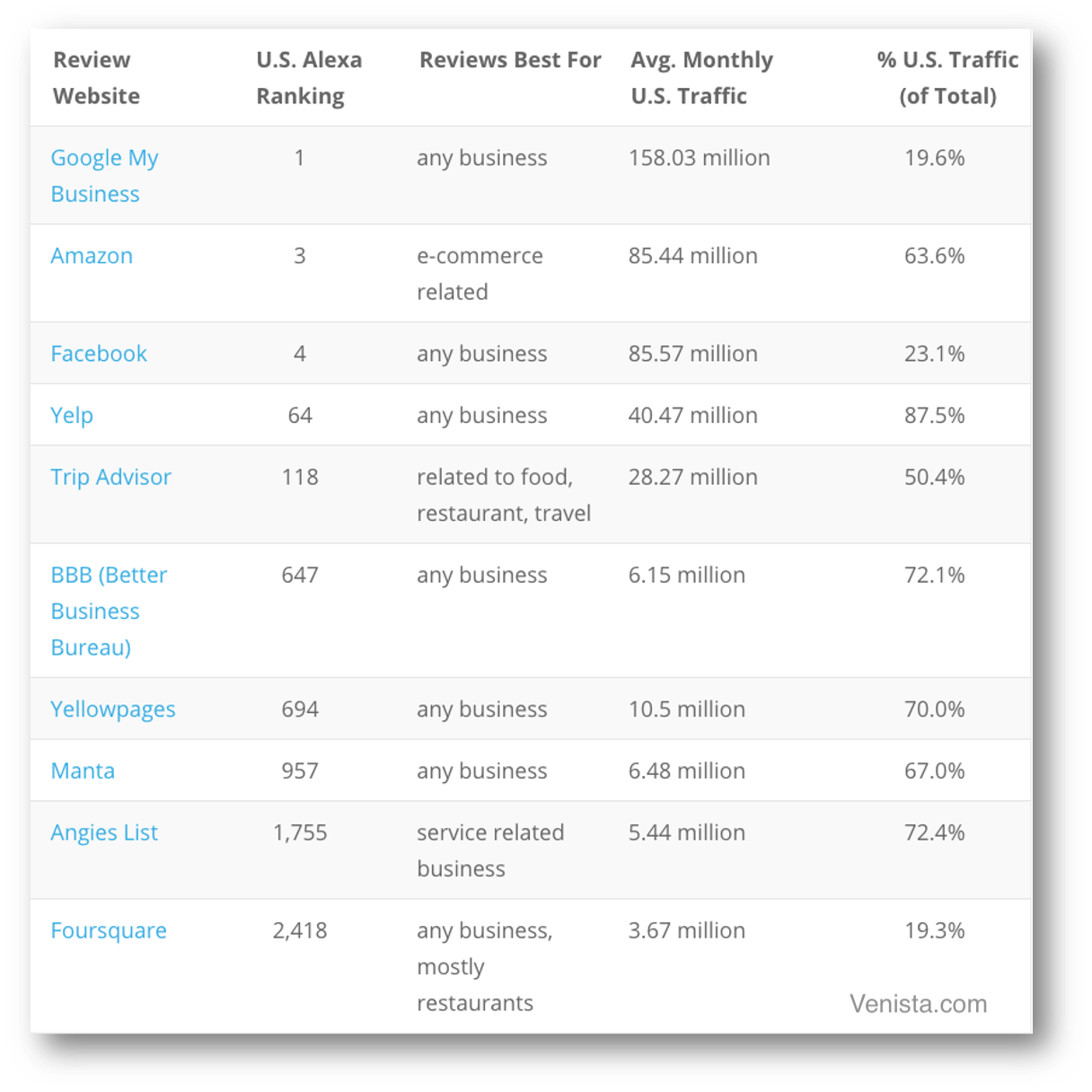
The second compelling reason is the sheer number of review sites and our reliance on them for purchase validation. It's already evident that we're groomed to look for ratings and reviews before we buy. Here is a brand-new ranking of the top 10 review sites based on searches. You can see here that these sites get millions of views a month.
 A third reason to care about online reviews is Google. Reviews appear in, and help Google search ranking. And incidentally, they also appear in search results by Alexa in voice-search. The number and quality of your reviews directly contribute to or inhibit, people's ability to find you and your products.
The best strategy here is to harvest Google reviews. Google supports Google. Google wants you to use its tools. So, it makes sense that Google cares if you have your Google My Business Page set up and that you're collecting reviews. In addition to nepotism, it's good business because Google will see that you're a valid business and will have more credibility returning your company and product in search results.
The fourth reason you should care about review sites is that your customers care about review sites. 92% to 97% of customers look for or read a review before doing business with a company. 80% of us trust reviews by strangers just as highly as a reference from our friends. 72% of us look for only positive reviews, and 86% will not do business with those with negative reviews. (Clutch.co)
And it is surprising how quickly comfort levels fall when you go from five to one-star ratings. 94% of us will use a business with a four-star rating, but only 14% will consider a two-star rated business.
My advice is to be familiar with what people say about you. Search your brand. Know where you and your wine show up and what feedback you're receiving.
Tools to Help
Ok, but how can you efficiently monitor all those online review channels. Especially when you already have your hands full trying to run your business's day-to-day without scouring Yelp and Google for new posts. Fortunately, there are some reputation management tools you can use to help out.
The easiest tool for tracking any mention of your company or product online is Google Alerts. This is a free search that lets you create daily alerts for any mentions of your brand online. Enter the name of your brand or product in the search bar to see who is talking about you. Then you can create a constant alert to get results emailed to you. The downside is it can be tough to filter the information out in an intelligent way. For instance, when I worked with Opus One, I was reminded daily how many products and companies contained "Opus." That said, it's a free, easy tool. If you're a small winery on a time crunch with a limited budget, Google Alerts is worth your time.
ReviewPush is an excellent tool if you do have a small budget and want to take it one step further. With this service, for $89 a month, you can create alerts for over 20 different review sites and have them sent to your inbox. Even more timesaving is a feature that allows you to respond directly to reviews from within those email alerts. This alone might be worth the cost. You can also involve an extended team with distributed reports and access to dashboards. So if you have multiple players in your tasting room or wine club, this might be an efficient way to have the entire team monitor and respond quickly.
There are many other tools in this space that also fall into reputation management. So in addition to looking at reviews, they can monitor what anyone is saying about you on social media platforms like Facebook and Twitter. These are pricier options and typically involved working out your needs with a sales rep.
So hopefully this gave you some incentive to include reputation management as part of your marketing strategy, and some tools to help. In the next article, we'll talk about how to work with your tasting rooms to request reviews - it’s not as scary as it sounds. But until then, start to pay attention to where your customers are trying to communicate about you. Start thanking and replying to them if you aren't already and take the view that feedback is a gift to help you improve and delight future customers.
March 1, 2026
Insights from Overseas: Five DTC Trends from Europe
After navigating our client’s business and company growth during the last two roller-coaster years, I was ready for a significant break. Armed with credits from two canceled vacations and many pent-up credit card miles, I cashed in for an extended European visit in July. While there, my husband and I traveled to and stayed in four major wine-tasting regions: Alsace, Champagne, Burgundy, and the Rhine/Mosel.
While there are countless and apparent differences between how France, Germany, and the US promote tourism and sell wine directly to customers, there are equal similarities if you look hard enough. As a native of Napa, wine tourism and marketing wash over me. But, on this trip, I found myself in the rare role of a focused tourist. So, I became aware of the marketing cues and delivery vehicles and noted what worked, and what didn’t.
HERE’S SOME OF WHAT I LEARNED:
1. YOU CAN’T JUDGE A BAGUETTE BY ITS CRUST.
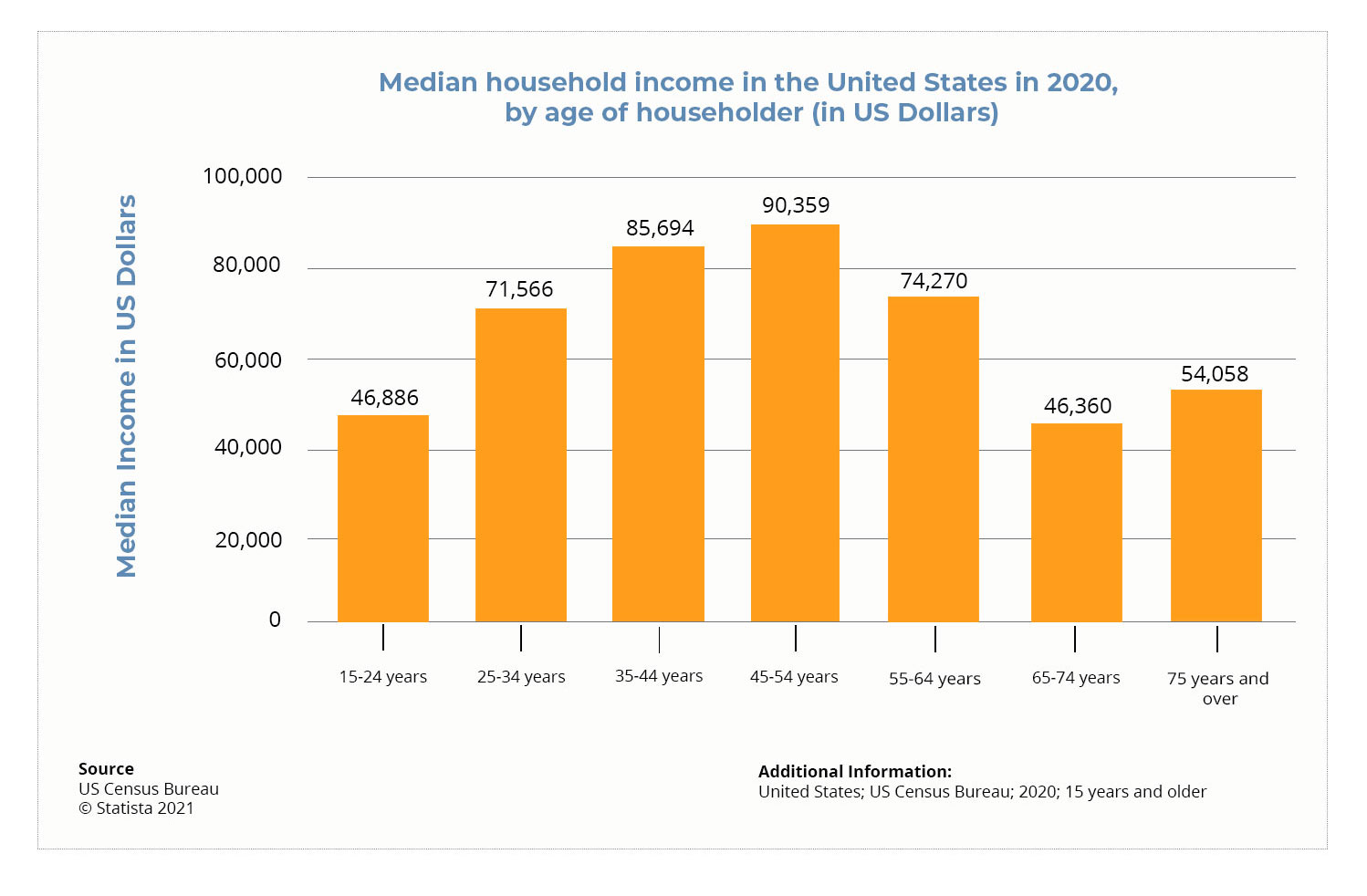
If I were to ask you to paint a picture of your ideal customer, who would you envision? Most have that gray-haired, tanned, 65-year-old couple on a sailboat in their mind. What if I told you that the average 25-55 year old was equal to or wealthier than most over 55?
And it goes beyond gray hair to the overall presentation. The casualness of today’s affluent consumers was apparent on day one in the premium airline lounge. Remember I mentioned the points? Well, I splurged all our points on an upgrade to Business Class for our 11-hour flight to and from Zurich, complete with the little fold-down bed and access to the private lounge at the airport. (I can’t recommend this enough, btw). I expected to see businessmen in suits and mature couples dressed in Sax Fifth Avenue or European power couples with effortless, crisp, linen summer button-downs and a nanny in tow with the two gorgeous well-behaved children. This was not what I saw. I saw 30-year-olds with backpacks and complete families with grandmothers in a wheelchair and many young children.
This observation continued at wineries. What struck me the most was the dress code. I know this isn’t the 60’s where you dressed up to go traveling, and we were in a heat wave, but even in Reims, where an average tasting can be 70€ and a bottle in the thousands, the standard was casual, very casual. Like pajama bottoms, gym shorts, flip flops, unbrushed hair, and ripped jeans casual.
TAKEAWAY:
The days of the winery controlling the “exclusivity” of a visit have passed. Customers now decide where they think they fit in and boldly go there. Visually, the current wealthy consumer is indistinguishable from a person on minimum wage. How would you determine who “belongs” even if you could? It would be best to assume anyone walking through your door is self-selected to be at your winery and a potential buyer. Your control exists with a straightforward website with your story and brand, where you list your offerings and are clear about your pricing. If you execute traffic-driving initiatives, ensure your income and geography target is correct so you don’t get someone looking for a Toyota strolling into a Range Rover dealer. (If you need help targeting traffic to your winery, we can help.)
2. THERE IS NO EXCUSE FOR A CRAPPY WEBSITE.
Wanting to be a part of the global wine community, for years my husband and I have offered up a room at our house for visiting harvest workers during the fall. This practice has allowed us to meet fellow wine enthusiasts worldwide and significantly improved our understanding of different cultures and agricultural practices.
We were lucky enough to have dinner with one of these friends in Burgundy with the CEO of Louis Latour. We had a lively discussion about sales and marketing about six bottles in. Our host worked for a prestigious Côte-d’Or winery with great wine and a horrible website. Latour is one of the best marketers in the business. I couldn’t help but tease our host that I couldn’t read or find anything on their website on my phone, and the wine we were drinking had no information online. He sliced another piece of cheese and got ready for a long, very French rant about how they didn’t need to sell wine as demand exceeded supply. I cut him off at midpoint and asked why he had jumped immediately to a sales counterpoint. He paused and thought about it and then said that websites were for sales, and if you didn’t need to sell, why did you care about your website?
He had spent the beginning of the evening telling us about his essential client dinners in Zurich, Paris, and London (what we’d do for a Wine Club.) So, I asked if he’d go to those events wearing shorts and flip-flops. “Absolument Pas,” he replied. “Why not?” I said. “You don’t need to sell wine at these events, so why does it matter?” He then smiled as he followed my analogy as I took it one step further. “You care about how you appear to those 20 people because you care about your brand. But now imagine how many people will see your website. Then, add customers who purchased wine from a negotiant or in a retail setting looking for information about the vintage. That is why you care about your website.
TAKEAWAY:
You would think we wouldn’t have this discussion in the US, but we have it every day. Your website is your brand and your face to the world. It doesn’t matter if eCommerce is not a significant channel for your business or not; you need to care about the messaging, imagery, and general business confidence it says about you as a winery. And, since 81% of shoppers conduct online research before buying (Adweek), your website is a crucial step to purchasing at retail or in a restaurant. Still don’t believe me, check out Chanel, Maserati, or Rolex. They all have gorgeous websites, and I bet they don’t sell much online. (If you want a gorgeous website, we can help.)
3. NAPOLEON’S HAT IS COOL BUT NOT WHAT I WAS LOOKING FOR.
My husband and I have seen vineyards and done our share of winery tours, but I was not going to miss the chance to tour the ancient and legendary cellars of the one-and-only Moët & Chandon. I have always been a Dom Pérignon fan, and as the parent company, Moët is the only place you can find it as a tourist. I was prepared to spare no expense for a high-end experience at this boutique and called ahead but was dismayed that they only had two options for visitors. I explained I was a Sommelier from Napa and that I was interested in the higher echelon wines I couldn’t easily find in the US, but there was no flexibility with options. Hoping for the best, I purchased the more expensive of the two tours/tastings.
Éperna is very similar to Napa. Small and hyper-focused on luxury winery tourism and visited by many tourists with various ranges of knowledge and spending power. Moët & Chandon didn’t disappoint with a grand entrance and seating area displaying several historical artifacts, including Napoleon Bonaparte’s hat.
But that was as interesting as it got. For the next 75 minutes, we were led through an introductory tour of the champenoise method-not, even very much history or specific information about Moët. It was the same script someone from Schramsberg could have used. A woman from Oregon wanted to ask questions, but at each juncture, she apologized and seemed embarrassed that she was interrupting the tour guide’s script with wanting to know more.
At the completion, we were rewarded with two glasses of vintage champing (the base level tour offered a single tasting of the current NV Brut as the only deviation). In the garden with our group, I listened to our group chatter as an Australian wine collector boasted about his cellar full of Penfolds Grange to a mother from the Netherlands with her son, who was celebrating his birthday (he had just turned 18). Then we were all ushered through the gift shop before exiting.
TAKEAWAY:
What a tragic missed opportunity! With some foresight and flexibility, the Grange buyer and ourselves could have easily been delighted with an abbreviated tour and tasting of their high-end offerings. I’m sure we would have purchased 3x as much in half the time. Then the woman with the questions and the mother and son would have been within a smaller group of people who all could have learned about dosage or riddling while feeling more comfortable and heard.
Never underestimate the power of customized experiences or knowing your audience to maximize sales opportunities.
4. A LITTLE NERD GOES A LONG WAY.
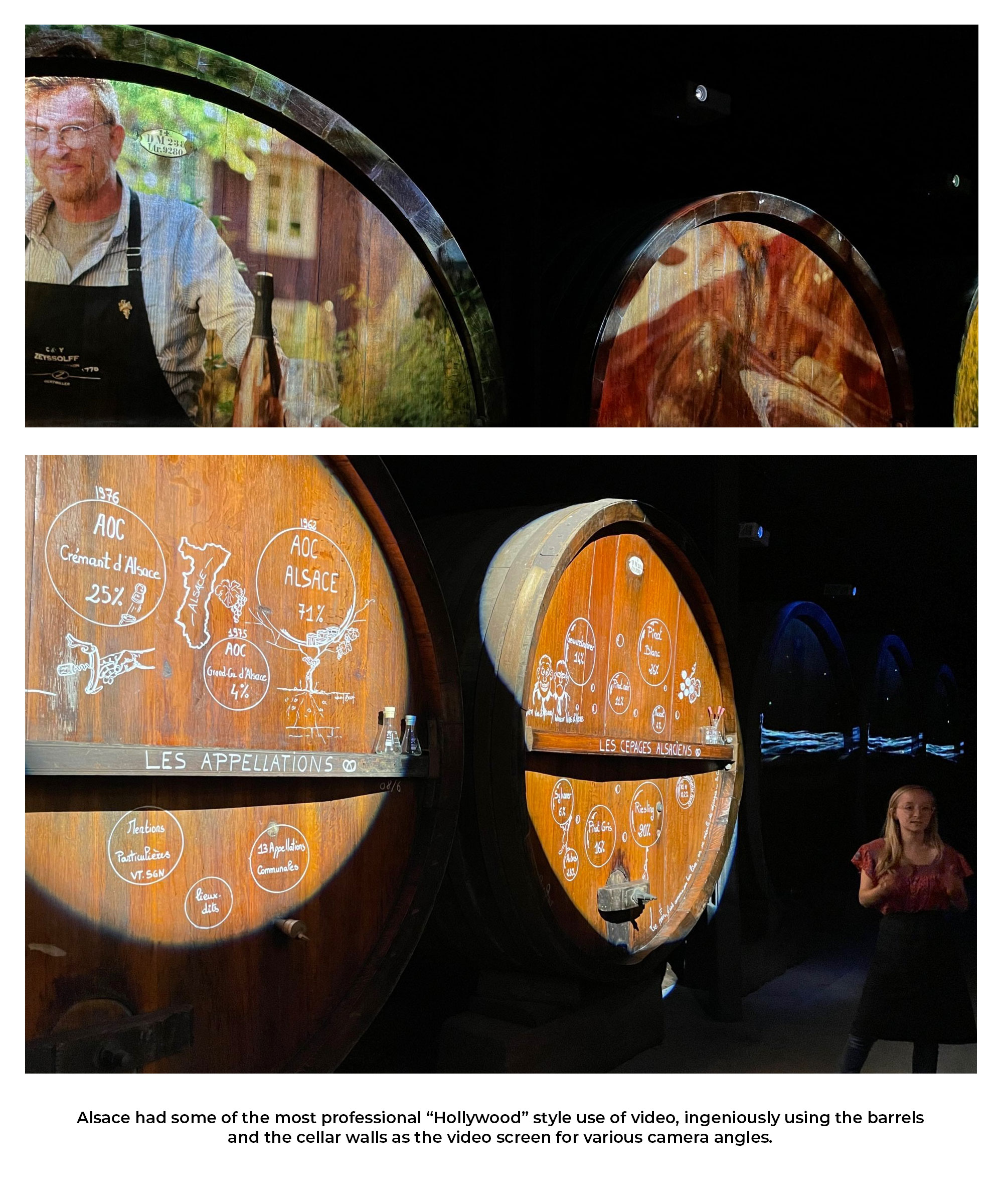
The tools and technology used were as varied as the regions we visited. Alsace had some of the most professional “Hollywood” style use of video, ingeniously using the barrels and the cellar walls as the video screen for various camera angles. Mercier in Épernay has a full-size laser-guided train that tours their cellars and a video that interacts with its elevator. Dr. Loosen, in Germany, chose low-tech but equally effective blown-up laminated images of the vineyards and soils to accompany and explain their elaborate and complex Riesling tasting.
I can report an intelligent use of technology for a Wine Club experience. We belong to the Domaine Serene Wine Club in Oregon, and their sister winery is Château de la Crée in Santenay, Burgundy. I appreciated they were sufficiently connected worldwide to have my Wine Club information (even though I noticed la Crée wasn’t on WineDirect as Serene is). The customer service was seamless; they knew what wines we’d purchased and our entire history. But with language barriers, I respected that they also asked us to fill out a customer form to confirm they had information in their system correctly, and nothing needed updating.
A not-so-great but funny example of a technology miss is that thanks to COVID-19, most cafes and some European restaurants have removed menus entirely in favor of QR code stickers on the tables. This reduces waste and time, lowers germs, and is easier to update, so it seems like a great idea all the way around. That is until your phone runs out of juice (which happened), or your sticker is ripped or faded (which happened), and you’re left awkwardly sneaking to another table or flagging down an annoyed waiter to find a menu. And sometimes, the user experience isn’t thought out, as when I found a restaurant on my phone via Google and wanted to see the menu. Hence, a click took me to a page on the restaurant site with a QR code to take a picture of to take me to the menu (which, of course, I couldn’t do as I was already on my phone.).
TAKEAWAY:
We can use technology to enhance or confuse our customers. It can improve creativity, help communicate a message, make the visit memorable, reduce waste and germs, and help your customer and employee experience. Just ensure you know why you’re using it and employ it with intent and purpose.
Also, always have a low-tech backup for when tech fails or you need to communicate with a neophyte. (If you want nerds on call, we’ve got you.)
5. YOUR MOM WAS RIGHT; THE CROWD YOU HANG WITH DOES MATTER
Probably because the traditional French put so little emphasis on their websites, it is standard practice to shuttle website visitors off to partner sites to complete reservation transactions. As with the US, there are several competing reservation engines and apps claiming to offer the best deals and most comprehensive choices. And, as with the US, many of these have poor UX practices forcing complete signup and registration before you can search your desired booking time. I spent a very long car ride signing up for no less than four apps before finally finding one with the English-speaking tour I wanted (Even then, I never got a confirmation). Plus, I now have a membership to two European restaurant reservation apps. These six were the ones I trusted enough to register. Half a dozen others didn’t look legit enough for me to want to give them my email, phone number, and credit card information.
TAKEAWAY:
Partners matter, especially if you’re asking your customers to put their trust in someone else to complete a transaction. Vet these partners carefully. Sign up on their sites and review their presentation, checkout, and confirmation. Look at where and how they employ your branding. Typically, wineries evaluate such partners on how easy it is for their staff to use them or the fees but overlook the end-user experience. Please make sure you’re satisfied with how they treat your customers.
C’EST LA VIE!
It’s been several years since I’ve been to another wine region to compare “cellar door” marketing and programs and I can say Europe has come a long way toward our new world DTC practices here in the US. I am encouraged that as younger consumers become more educated, affluent, and demanding, the pace of evolution will continue to increase. There will likely be additional channels and tools that we are just beginning to explore in another few years.
Susan DeMatei is the founder of WineGlass Marketing, a full-service direct marketing firm working within the wine industry in Napa, California. Now in its 10th year, the agency offers domestic and international clients assistance with strategy and execution.
For two consecutive years, Inc. Magazine recognized WineGlass Marketing as the only Napa company listed in the top 250 hyper-growth tier of the “5000 Series California’s Top Companies”. WineGlass Marketing has also been recognized by the community winning the North Bay Bohemian “Best Digital Creative Services” spot for both 2021 and 2022, as well as being honored by her clients in the North Bay Business Journal as Napa’s “Best Company to Do Business With in 2021.” In addition, the firm has taken top honors in the 2021 Web Awards for Best Beverage Website and 2021 Internet Advertising Competition for Best Integrated Ad Campaign in the Beverage Category and the 2022 Internet Advertising Competition for Best Wine Website. The agency is also a Webby Honoree in Website and Mobile Sites at the 2022 Webby Awards.
WineGlass Marketing is located in Napa, California at 707-927-3334 or wineglassmarketing.com >
March 1, 2026
Is Your Wine Club Keeping Up With Modern Subscription Models?
If COVID taught us anything, reoccurring sales are crucial to survival, and customers are surprisingly resilient and creative with changes in channel or delivery methods. The post-COVID conversations around alcohol distribution include the so-called “fourth tier” of instantaneous delivery (Instacart) and online options like buying online now and picking up in-store later (BOPUIS).
At the same time as these channels evolve, the elasticity of the traditional Wine Club is stretched as well. It is now estimated that the average person is a member of two re-occurring subscriptions, and 35% belong to three or more.
Why are we moving so swiftly into a subscription economy? For wine, it’s a perfect storm of three factors.
1. OUR CULTURE OF CONSUMERISM IS CHANGING.
The mindless and haphazard consumerism of old gives way to thoughtful and curated purchases where the brand and its products add value to our lives. This significant change in consumer thinking and behavior has fueled, among other things, the rocketing growth of subscription models. Subscriptions meet the needs of concerns such as waste reduction and finding quality time with family. And wine clubs must catch up to remain relevant, resonant, and competitive.
2. WE’RE CURIOUS.
The primary consumers for subscriptions are young urbanites, 25-44 years old. What they have in common is a sense of discovery. They want to try new things and like being presented with options. Most subscriptions offer monthly mystery boxes, surprises, or trial sizes, giving customers a new product to try. This brings additional excitement to the unboxing experience and gets consumers to expand their product knowledge and preferences.
3. WE DON’T VALUE “SAVING” LIKE OUR PARENTS DID.
Our parents wanted the lowest price to show off the best quality brand they could afford. The new consumer is interested in saving time. The financial incentive is there, but you can’t just give a small discount to this group and expect to call it a day on your benefits alone.
Only a few years ago, the model was simple. You joined a club to gain exclusive access to products and VIP perks. These membership clubs were in luxury apparel, food, and wine categories.
However, with the onslaught of COVID, the dramatic increase in E-commerce, digitally native brands, and the growing influence of the Millennial mindset and their expectations as consumers, the world of “clubs” has evolved.
The consumer has moved on. Have you?
3 SUBSCRIPTION MODELS HAVE EMERGED
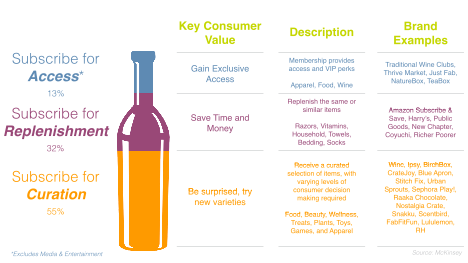
A McKinsey Report lays out the current state of subscription models very clearly. What jumps out is that the traditional model of Subscribe for Access has been usurped by the newer models of Subscribe for Replenishment and Subscribe for Curation. And, while Subscribe for Replenishment accounts for a healthy one-third of subscriptions, it is not a relevant category for wine clubs, given its focus on essential household, wellness, and grooming products. This leaves the wine industry needing to evolve the traditional wine club model beyond offering a choice here or there to compete within Subscribe for Curation.
What does this mean? Successful Subscribe for Curation offerings have the following imperatives as the foundation of the subscription offered:
- Move from a focus on transactions to long-term relationships
- Shift from acquisition focus to retention
- Shift from selling products to selling experiences
- High levels of personalization, flexibility, and surprises
- A highly anticipated unboxing experience
Impeccable customer service
In other words, focusing on delivering a great experience that puts the consumer in charge of what they order and keeps them coming back for more by including gifts, exclusive content, and other surprises.
ATTRACTING NEW SUBSCRIBERS AND KEEPING THEM
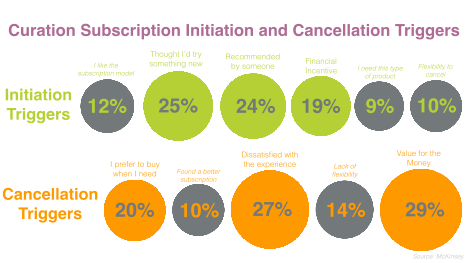
Wineries traditionally relied on converting their tasting room visitors into club members. However, attracting members who will never visit your tasting room is an increasingly important consideration in any conversation around future revenue growth. We all know a subscription model is good for business – it delivers increased and predictable revenue, contributes to savings in customer acquisition spending, increases loyalty and lifetime value, and can reduce operational costs due to predictable demand. Therefore, understanding the triggers that cause a potential subscriber to sign up and those that cause them to cancel is critical when evolving your current club model to a subscribe for curation model.
The initiation triggers point to consumers’ desire to discover new things and especially new things someone else recommends. A strong social media presence and refer-a-friend incentives are critical to this discovery process. Cancellation triggers hinge on the experience – either the overall experience or the perceived value for money vis-à-vis the experience. Given the need to elongate subscription lifetime values, every step of the experience offered needs to be executed at the highest level. Consumers not only expect it, but they also know what a great experience feels like. After all, the average consumer now has between 3 and 10 subscriptions (excluding media and entertainment.
LESS IS MORE
There is a reason most companies only offer 3 levels of subscription. Our brains think in threes. More choices are not better. They can cause confusion, delay the decision, or result in the potential member walking away.
Rather than thinking about the subscription levels from your product line-up perspective, structure the levels from the consumer’s perspective – I want you to curate this for me. I want the option to add from a defined list. I want to make all the choices for myself. This will help reduce the number of levels and increase conversion.
LOOKING AHEAD
“The measure of intelligence is the ability to change”
-Albert Einstein
There’s never been a more significant time than now to be open to evolving our business models. Changes in demographics and consumer trends have been coming for years, and wineries that aren’t willing to look at adapting their Wine Club programs leave themselves open to becoming less relevant with consumers as the attitudes and behaviors continue to evolve.
Gaynor Strachan Chun is the Director of Strategy at WineGlass Marketing, the leading full-service and award-winning marketing agency for the adult beverage industry. The firm, now in its tenth year, is based in downtown Napa and supports domestic and international wine and spirits clients with B2B and DTC marketing in digital and traditional channels.
WineGlass Marketing is located at 531 Jefferson Street in Napa and can be reached online at www.wineglassmarketing.com or by calling 707-927-3334.
March 1, 2026
Database Getting Scary? Tricks and Tips for Data Hygiene.What do you think of when you hear “data hygiene”?
Most people either have no idea what the term means or believe it involves tedious hours mired in excel. But like a tune-up on your car, it should translate to increased performance and sales for marketing programs.
Why? Because just like that tune-up, our engine, or in this case our database, needs periodic maintenance to clear out the “gunk” and refresh the connections. Even if we’re growing our list and sending out great emails, our work isn’t done on behalf of the database — we need to keep it healthy.
How do we keep a database healthy?
If the reason to have a database is for sales, then the ultimate indicator of health should be strong sales, right?
So, what are the predetermining steps for sales?
Database Size:
Your database must be the size to reasonably expect that the sales needed to sustain your business can be derived from it.
Size is not a function of data hygiene but instead is tied to your lead generation efforts. Whether this is done through a tasting room or event table, accumulating names, or advertising on Facebook, a continual flow of new prospects is like oxygen to your database. Databases decay at a rate of about 2% a month – so every year, you can count on losing 25% of your database. Target growth over 2% a month to not slip backward.
Best collection practices say to review all signup forms for typos, fake names, or duplicates before uploading. Talk to your tasting room staff if you routinely see false addresses like “noemail@gmail.com” to find out why they feel pressured to make up data. There is likely some process that needs revision or a technical barrier that requires an address to continue. A conversation can identify various data collection challenges while impressing a usable database’s importance to your company.
A second hygiene practice at this stage is to attach a source to your new prospects so that you can continually monitor them to judge their quality. Ask yourself how many leads you got from each activity, how many of them ended up buying, and how long it took them to buy. Next year, this will be invaluable information when planning out activities to ensure you move forward with the activities that yield the best quality leads.
Database Validity:
The individuals in your database need to receive your emails without flags or filtering.
You can instantly see the validity of your database when you send a mass email by looking at the bounces and invalid addresses.
Bounces are typically categorized into soft or hard bounces. A soft bounce is temporary and, in most cases, a setting. The most typical one is an “out of the office” message. The email address is valid; they’re just not getting this email delivered at this time. Most Email Service Providers (ESPs) will attempt to redeliver to an address marked as a soft bounce multiple times over the subsequent campaigns before flagging it as a severe deliverability problem.
A hard bounce is a server error and means the address is no longer on that domain. Servers do go down temporarily for reasons like scheduled maintenance, so most ESPs will still try a bounce two or three times before marking it permanently undeliverable.
There is a third category. Let’s call these Unmailables. Unmailables are junk and so obnoxious that the ESP doesn’t even try to send them. They are blank or data in the wrong field (e.g., the phone number in the email space). They can be made-up domains that don’t exist (like noemail@noemail.com). But sometimes there is an obvious typo you can fix, like yahoo or Gmail is spelled wrong. And sometimes, that email address is in the phone number field, so these are worth investigating.
Customer Trust:
Upon seeing the email in their email box, the recipient must believe that the source is trustworthy and relevant enough content to open the email.
You must know how your ESP defines an “open” email. There are differences in how mail apps track this data point. Most notably, Apple’s Privacy updates for iOS 15 that preload data create a false “open” to make tracking less reliable. (And this isn’t minor. In 2021, Apple devices accounted for approximately 52 percent of all email opens, according to Litmus.)
In addition, gain agreement from your management if you are reporting on total or unique opens (because someone can open up the same email several times.) At WGM, we report on uniques because it best indicates how many individuals responded, and the same goes for clicks.
Customer Interest:
The content of the email must be compelling enough to provoke further action like a click to a website.
Clicks are also not as straightforward as one might think. Some Email Service Providers count unsubscribes as links, for instance. Here is where coordination with Google Analytics is critical to overlay the bounce rate of your email traffic on the landing page (because a qualified visitor will stay and read and purchase.)
Note: Conversion, or sales, is ultimately up to the landing page. An email can deliver a target somewhere, but it can’t close the deal.

A Simple But Critical Hygiene Exercise
Pull your entire database with open, click and bounce information from your last email campaign.
Dedupe. And do this based on name, address, and email address.
Sort all the bounces and put them on a different sheet. Review these for typos or duplicates and clean up what you can.
If you are lucky enough to have sales data, divide the group into purchasers and those who have never purchased. Pull out Wine Club members or multiple buyers and consider calling them on the phone for an updated address. You may also want to add an ongoing postcard program where you drop a card in the mail asking customers to update their email. For the others, if they have purchased, leave them be for a record of purchase history. But if they’ve never bought from you and bounced, you should be able to delete them.
Sort the undeliverables and do the same as above:
- Fix issues.
- Divide into sales and no sales.
- Reach out to valuable contacts and delete empty records.
Do the same with unsubscribes as the first two above. The only difference here is that you should pull viable email addresses and upload them to Facebook to target your next campaign. (Just because they didn’t want an email doesn’t mean they never want to hear from you again.)
You should be left with only customer records with sales attached to them that you cannot email. You will want to keep them for a historical sales record, but you don’t want them muddying up your data. For this group, you can tag them as non-viable, so you don’t keep pulling them for each email.
It’s good to do this clean-up periodically. But how often and how deep you go down the rabbit hole depends on the value of this potential customer to you and how much time you have on your hands.
Most experts recommend some type of database clean-up quarterly. If you work in a busy tasting room, you may want to perform them monthly. But with all the evidence that “cleanliness is next to responsiveness”, there is a compelling argument for making data hygiene part of your routine marketing schedule.
March 1, 2026
Universal Templates: Winery Websites with Seamless E-Commerce Built InE-commerce soared from less than one percent of retail sales at the turn of the century to 16 percent two decades later. COVID-19 lockdowns alone drove online purchasing up six points, from 10 percent in 2019. Wine sales in the healthy $284 billion retail e-commerce market doubled from pre-COVID levels to $3.5 billion, and forecasts show wine revenue increasing by almost 25 percent by 2027.
With direct-to-consumer wine sales accounting for nearly 70 percent of an average winery’s sales, taking advantage of this growing channel is critical. Premium wineries have already increased their online sales from two percent in 2019 to nine percent in 2022. However, the online sales opportunity is significant to small to medium-sized wineries feeling pinched between falling consumption and rising costs ― especially given declining sales in other channels.
That means having a modern, up-to-date website with a smooth transition from general winery pages to online retail stores without the digital friction that causes consumers to abandon 70 percent of their carts.
 All the Universal Templates come with pre-configured features that wineries would need, like clubs and events.
Simplifying wine e-commerce
Twenty years ago, all websites were custom-made, which required hiring a designer to create a Photoshop mock-up and a programmer to write the code that brought it to life. A winery seeking to maintain or make changes to its website had to learn how to program in HTML, JavaScript and CSS.
Today, 40 percent of the 810 million websites use WordPress, and one-third rely on page builders like WP Bakery and Elementor, with most using templates with drag-and-drop tools. However, these solutions need to be tailored to the wine industry’s unique needs, like compliance with complex state-by-state regulations and wine club management.
So wineries have inserted e-commerce platforms like Commerce7, CompleteDTC by Vinoshipper and WineDirect within their WordPress websites to handle these industry-specific issues. Integrating these e-commerce platforms adds cost and complexity to a winery website ― even when using a pre-made WordPress theme.
Plug-and-play wine templates
Now, wineries have another option. WineGlass Marketing has torn a virtual page from the WordPress playbook and designed a series of pre-built templates in WordPress specifically for the wine industry. These templates include content areas that typical wineries would need such as recipe engines, wine club pages, team pages, photo galleries, wine release features and events. These content pages are available in several different themes as standard WordPress pages and use Elementor to allow wineries to customize them using easy drag and drop tools.
Most importantly, these templates will connect to a e-commerce store on Commerce7, CompleteDTC by Vinoshipper and WineDirect with the click of a button – and all the color and font changes can be customized to match the WordPress pages. It’s now as easy to select or change an e-commerce platform as it is to change a photo.
 Once in the Universal Template, users simply choose their platform and enter in a key to connect to their eCommerce platform of choice.
These turn-key, professional-looking templates save time and money, and every page, including the shopping cart and retail store, can be customized and branded inside the WordPress platform. WineGlass marketing has five template designs available now and will release seven more at a rate of one per month.
- Austin’s traditional scrolling design is the most popular.
- Bruno’s organic waterfall effect makes images and text flow down the page.
- Buddha is clean, square blocks like Instagram.
- Vanessa is a rich site with huge images and angles and screened-back photos.
- Windsor is luxurious, with text superimposed over dark images.
- Chester is specifically set up for mobile first viewing and uses large checkerboard designs
WineGlass Marketing has committed to launching a new template a month until twelve different layouts are available.
 Every design decision in all the Universal Templates are customizable.
Nuts and bolts
Templates cost $349 annually, including access to WordPress. Wineries can have WineGlass Marketing’s ITS team host its website on leading host provider WP Engine, ensuring seamless ecommerce store connection for $99 per month. Setup and maintenance packages are available to provide oversight for speed, minimal downtime and functioning links. The team manages software updates, including plug-ins that can open a website to hackers if not updated, and can also automate website backups either locally or on Google Drive or Dropbox. Wineries can take over hosting and maintenance anytime without hidden fees.
Capturing growth opportunities
Why invest time and resources reinventing the wheel or hiring a design agency for a custom website when streamlined and affordable solution are available? Ideal for wineries whose websites are outdated or in need of a redesign, these templates are also perfect for those waiting for the all-new WineDirect or ready to change ecommerce platforms. WineGlass Marketing templates make the connection seamless with a click of a button.
The main reason, however, is to capture the growth opportunities inherent in a modern, high-functioning website with fully integrated e-commerce. It will help boost exposure to new consumers and those who are too far away to visit the tasting room, eliminate most of the digital friction that causes abandoned carts and attract new consumers to the wine club.
Reach out to WineGlass Marketing at www.WineGlassmarketing.com/wgits/universal-templates.
 There are currently six exciting templates available, with more being added each month.
March 1, 2026
Unlocking Customer Potential: The Power of Data Appends
In today’s competitive market, knowing your customers is not just an advantage—it’s essential. Data appends offer businesses a way to enrich their customer data, providing deeper insights that can transform marketing strategies, improve customer experiences, and drive revenue.
What Are Data Appends?
Data appends involve adding new information to your existing customer database. This could include demographic details, email addresses, phone numbers, or behavioral data. The goal is to build a more comprehensive profile of your customers. Think of your friends or coworkers. If you knew one thing about them – Joe likes Cabernet Sauvignon – it would be tough to carry on a conversation with Joe for very long. You’d run out of things to say. But if you also know that Joe likes reading historical fiction and woodworking, is taking adult education classes in painting and art appreciation, and has traveled to Asia several times, you could converse all evening!
Why Knowing Your Customers Matters:
This is where appending what you know about your customers is helpful. It allows you to create a full 360 view of your customer with several benefits:
- Personalized Marketing:
Understanding who your customers are allows for more personalized and targeted marketing campaigns. With data appends, you can segment your audience more effectively and tailor your messages to resonate with different customer groups. - Enhanced Customer Experience:
A well-rounded customer profile enables you to provide a better experience. Knowing their preferences, purchase history, and interests means you can anticipate their needs and offer products or services that are truly relevant. - Improved Decision Making:
Data-driven insights are invaluable for strategic decision-making. By appending data, businesses can identify trends, spot opportunities, and make informed choices about product development, marketing strategies, and more.
At WGM we use data appends for two very specific marketing purposes. First, we use it to craft relevant messages on email and on social media. If we know what consumers are into outside of wine, we have a better chance of connecting with them on content. We group similar consumers together into groups called Personas, and we tag them. Then we create different content for different types of people.
For this winery, we are running different ads to different personas that we’ve identified with different characteristics. The first ad is for the “Flavor Explorer” audience who is looking to experience new tastes, the middle is for the “DIY” audience looking for details, and the ad on the right is for the “Adventurer” audience looking for experiences,


Second, we use it to target new customers on platforms like Meta, LinkedIn, and Google. By now, everyone should know about look-alike audiences, where you upload a database to an ad platform and say, “Find more people like these people.” Well, the more data you have on someone, the more accurate the look-alike audiences can be.
This practice is not new. A recent study revealed that 95% of marketers who employed consumer insights saw enhanced results, particularly by tailoring their strategies to meet customer expectations. This approach allowed them to stay ahead in a rapidly changing market environment, underscoring the power of data-driven marketing (quantizin) (AMA).
The Process of Data Appending:
- Data Collection:
Start by gathering your current data. This could be from transactions, customer inquiries, or other touchpoints. Depending on your set up this could be a nightmare, or as simple as exporting your data from a platform like Commerce7, WineDirect, Orderport or Vinoshipper. - Matching and Appending:
Use a reliable data provider to match your existing records with their database. This step is crucial for ensuring accuracy and avoiding duplicates. Some data companies like Experian are well respected but extremely expensive and work with companies on a subscription basis. Look for someone who will price per project based on the size of the database and has a good reputation online. You’ll want to know how many customers you have in your database with full contact information. Without addresses, phone numbers, or emails, the likelihood that they can find a match is lessened. - Verification and Update:
Once data is appended, verifying its accuracy and updating your database regularly is important. Outdated or incorrect information can lead to ineffective marketing and lost opportunities. Often, the new data will have updated email addresses or phone numbers, so take the time to update records in your POS/eCommerce system.
Best Practices for Data Appends:
- Choose Reputable Data Providers:
Ensure your chosen provider has a track record of delivering accurate and up-to-date information. They should have some statement that they cannot use or keep your data. Many will provide a certificate of destruction, proving they deleted your database after they complete the append. - Comply with Data Privacy Regulations:
Ensure your data appending practices comply with GDPR, CCPA, and other privacy laws. - Regularly Review and Cleanse Your Data:
To maximize the effectiveness of your data appends, keep your database clean and free from duplicates or outdated information.
How much does all this cost? Assume a data company won’t be able to append all your contacts, and for those they can append, you’ll probably pay $.02 – $.07 per name, depending on your database’s size. You’ve heard the adage that keeping a customer is cheaper than getting a new one? A few hundred or thousand dollars is a small price to connect better with your customers.
But data appends are more than just a tool for updating customer records—they’re a way to deepen your understanding of who your customers are and what they want. In a time when marketing must bring people into tasting rooms and get buyers and club memberships, you need all the tools. By leveraging your database’s full potential, businesses can build stronger relationships, deliver more value, and stay ahead in the competitive market.
Ready to unlock the full potential of your customer data? Start your data append journey today and see the difference it can make in your marketing and customer engagement strategies.
March 1, 2026
Why Less Visitation to Wine Country is Everyone's Problem
Why Less Visitation to Wine Country is Everyone's Problem
Wineries with tasting rooms know all too well that foot traffic is shrinking. But it was our clients without a hospitality arm who got us thinking: how important is the on-site channel to the wine industry as a whole?
Maybe we’re just evolving. After all, people buy everything—from cars to carrots—online these days. Isn’t it natural for wine to follow suit?
We pulled on that thread, and it turns out the decline in wine country tourism is a bigger issue than it first appears.
What is the problem?
When we look at why wine sales are down, we can break it into three core factors:
- Frequency
- Volume
- Abstinence
And one of those clearly dominates.
Frequency—how often someone chooses wine—is the elephant in the room. It accounts for a whopping 65% of the volume decline. Simply put, fewer people are reaching for wine in their daily lives.
Next up is volume, responsible for about 19% of the drop. These consumers still drink wine, but they’re drinking less per occasion.
Finally, abstinence represents only 7% of the decline. These folks have exited the wine category altogether, often favoring spirits, RTDs, or non-alcoholic options.
This breakdown gives us a clear direction: focus on increasing frequency, encourage responsible volume, and work to keep existing wine drinkers from drifting away.
Who is the problem?
Demographic data shows us where the decline hits hardest—and where there’s still potential.
Let’s start with age. Younger drinkers (ages 21–24) are actually increasing their wine consumption—by 73% more than any other age group. Meanwhile, drinkers aged 65+ are leading the retreat, with an index of 121 for drinking less and just 48 for drinking more. This could be due to health concerns, lifestyle shifts, or simply changing preferences.
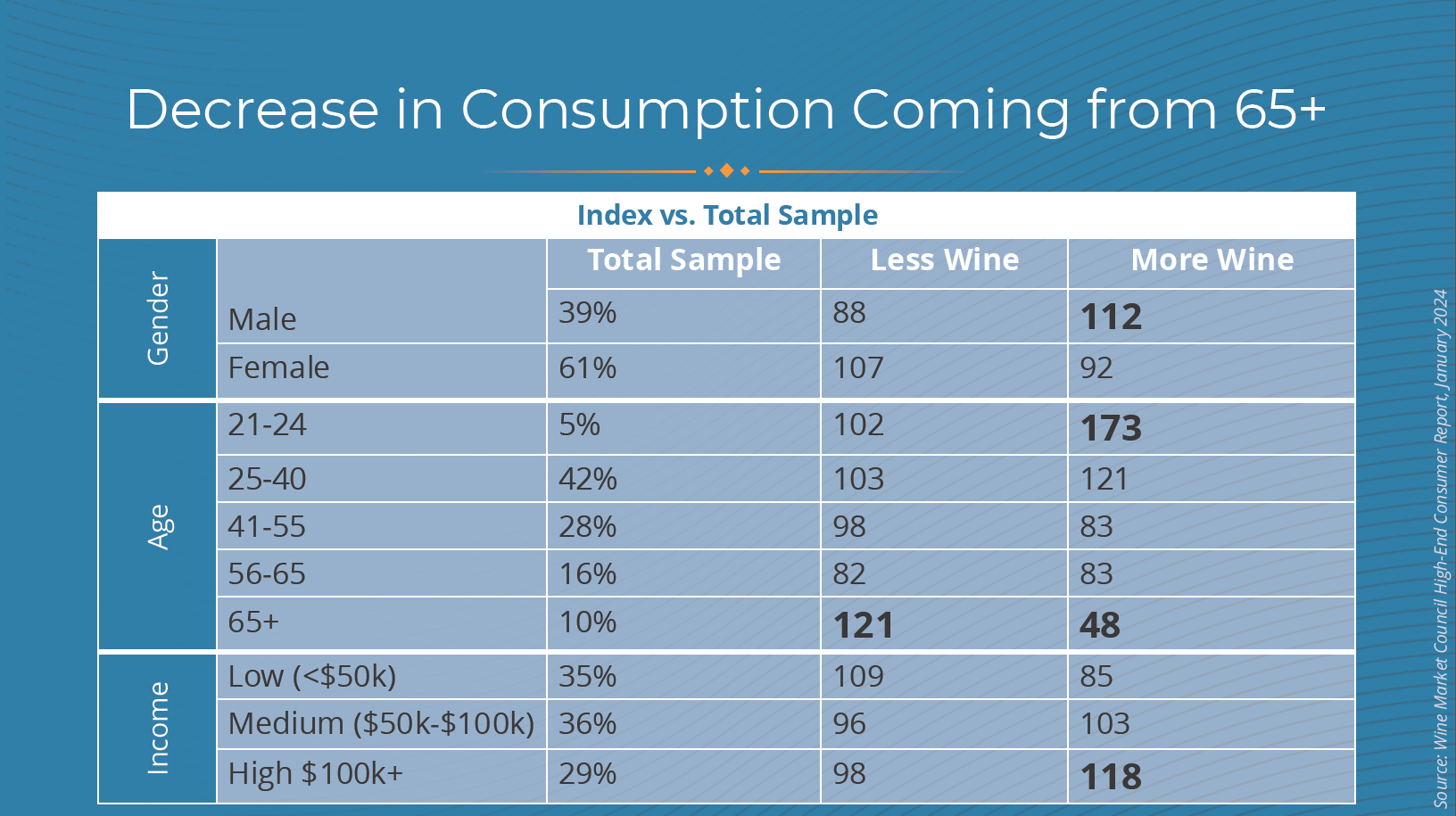
Income tells a similar story.
Low-income consumers (<$50k) are more likely to be drinking less wine. On the other hand, higher-income consumers are still spending—often on premium bottles—indicating the luxury wine segment remains strong.
So if we’re looking for growth, it’s clear: the opportunity lies with younger, affluent consumers who are curious and still forming their wine habits.
How do we encourage premium wine purchase?
Across the board, consumers who begin buying wine over $20 didn’t just wake up one day and change their habits. They were introduced to a gateway wine—a bottle that surprised and impressed them, often in a memorable setting.
That single bottle becomes a turning point. From there, consumers often start exploring more expensive options, seeking wine education, and becoming more involved in wine culture.
Creating that moment is the key. The industry’s challenge is to get more consumers to cross that threshold.
Where do these gateway moments happen?
According to the Wine Market Council, the most common place consumers discover wines over $20?
Wine country.
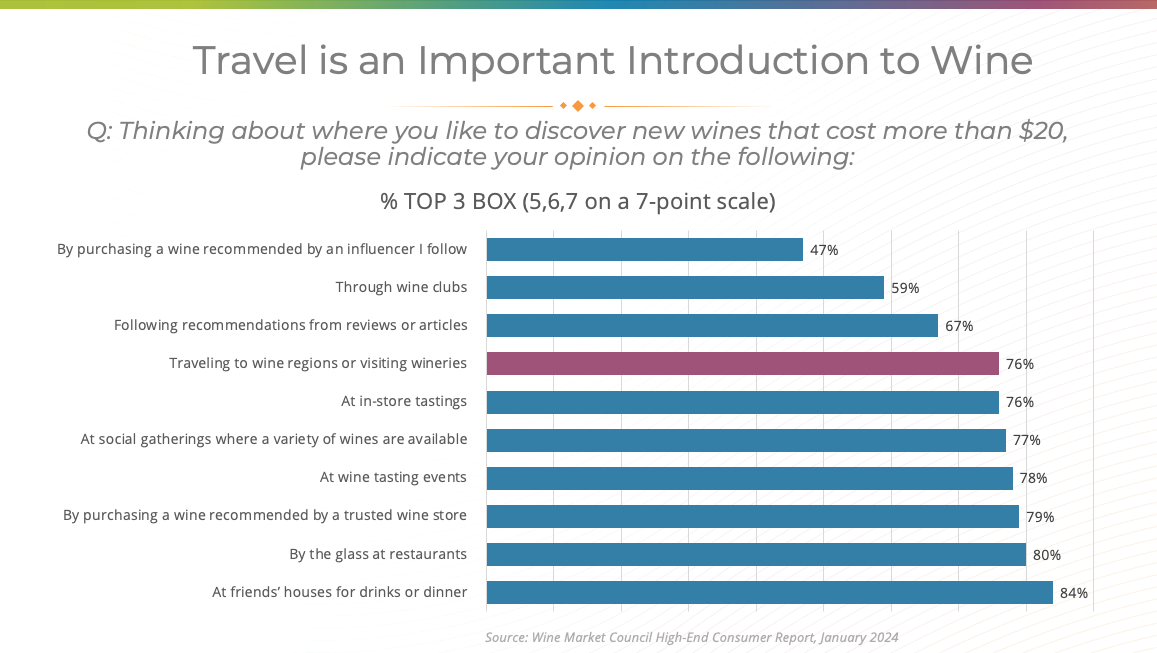
A full 76% of consumers say visiting a winery or wine region plays a role in their discovery of premium wines. The physical, sensory, and emotional experience of being on-site is nearly impossible to replicate online.
Social gatherings, tastings, and trusted retailers also matter—but in-person, immersive experiences lead the charge. More passive methods like influencer content or wine club shipments don’t seem to have the same effect.
The takeaway? Wine isn’t just a product. It’s an experience—and wine country is still the best showroom we have.
Why this matters
Our biggest opportunity lies with converting curious, affluent younger consumers into wine lovers—and eventually, loyal buyers. To do that, we need to get them into wine country.
Research consistently shows that visiting wineries increases consumers’ exposure to higher-end wines and reinforces a lifestyle that includes wine. And that lifestyle leads to stronger engagement, deeper knowledge, and more frequent purchases.
But here's the catch
Only 16% of consumers visit a wine region monthly or more—and most of them are already wine lovers.
Another 53% visit once to three times a year.
And 31% of consumers visit less than once a year or never.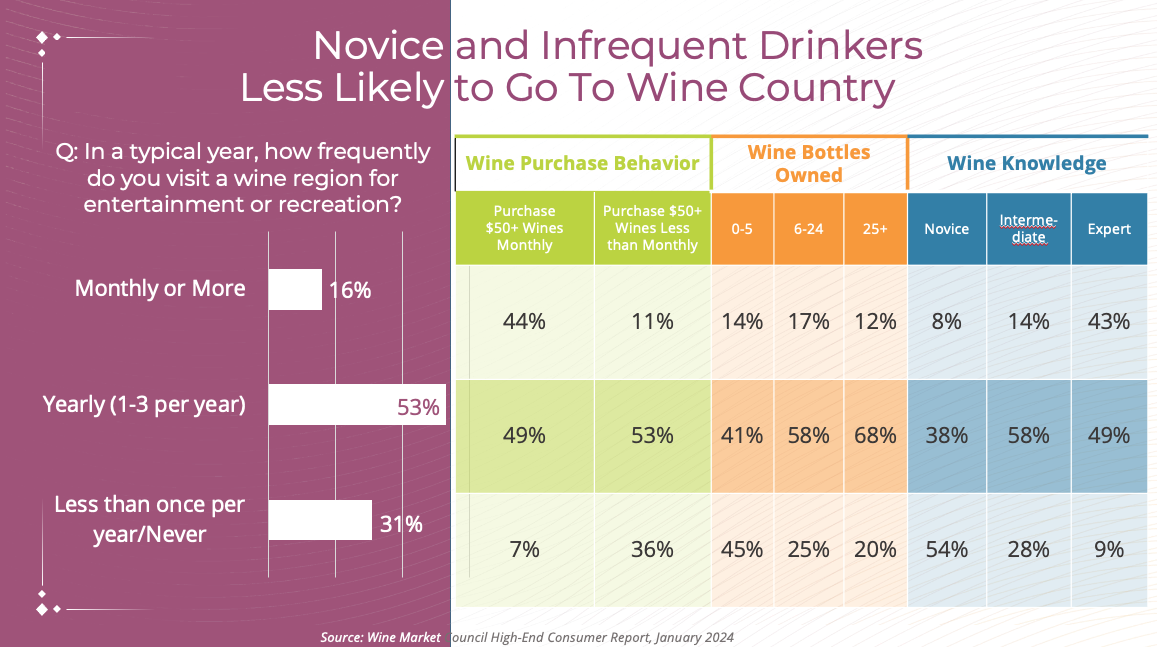
That last group is where the biggest opportunity lies—and also our biggest challenge.
Novice wine drinkers make up 54% of those who rarely or never visit wine country. These are exactly the people we need to reach if we want to grow the category long-term.
The most engaged wine tourists?
- People who buy $50+ wines
- Those who own 25+ bottles
- Wine experts
The least engaged? Newcomers.
This leaves us with a critical challenge: How do we attract novice drinkers and infrequent buyers to wine country in the first place?
WHAT NOW?
To grow our consumer base, wineries must take this data seriously. That means:
- Lowering the barriers to entry with more accessible, welcoming, and inclusive experiences
- Designing immersive, unforgettable visits that educate and inspire
- Investing in storytelling, hospitality, and connection—the things that can’t be bottled, boxed, or shipped
In Summary
The decline in wine country visitation isn’t just a hospitality problem—it’s a brand engagement crisis. If fewer people are stepping into our world, fewer people are falling in love with wine. And that affects the entire industry, from DTC to wholesale.
We need to rethink the winery experience, not as a bonus channel, but as the first step in a consumer’s lifelong journey with wine. The more gateways we build, the more drinkers we gain—and the better chance we have at making wine culture thrive for generations to come.
March 1, 2026
October Isn't Over - There's Still Time to Support Wine
LAST-MINUTE WAYS TO SUPPORT WINE AND JOIN COME OVER OCTOBER
Come Over October launched in 2023 with a simple but powerful premise: wine has connected people for 8,000 years, and October is the month to honor that. The campaign invites us to slow down, gather with friends or family, and make wine the centerpiece of togetherness.
In just one year, it’s grown from a spark to a movement. Thousands have embraced the idea, from consumers hosting casual dinners to wineries, retailers, and restaurants using the campaign to remind people that wine isn’t just a beverage—it’s a culture, a history, and a human connection poured into a glass. For the industry, it’s a chance to reframe wine as essential, not optional, in modern life.
The wine industry needs this now more than ever. The pressures are piling up. Research from Stanford and other institutions is eroding the belief that “wine is good for your heart”, and the U.S. Surgeon General has recommended warning labels on alcohol products about cancer. Meanwhile, consumption overall is slipping: in the U.S., only 54 % of adults now report drinking—a record low—while a majority believe moderate drinking is harmful to health. (Gallup) Younger generations are drinking less, turning to non-alcoholic or low-alcohol alternatives, or rejecting wine’s image as stuffy or irrelevant. Combined, these trends pose a threat to demand, consumer trust, and long-term growth. Come Over October is a counterweight, a chance to reframe wine as part of living, not just a drink under fire.

HOW WINERIES CAN STILL JUMP IN
Even if your calendar isn’t full of October activations, there are plenty of nimble ways to get involved. The beauty of Come Over October is that it doesn’t require elaborate planning—it’s about sparking connection and making wine the centerpiece. Here are some fast, high-impact ways to weave the campaign into what you’re already doing:
-
- Ship the Story
Every box you send out this month can carry the Come Over October message. Add a simple postcard to club shipments or DTC orders, encouraging customers to invite friends over, open your wine, and create a shared moment. Include a QR code to a downloadable “host invite” or pairing guide so they can make their gathering feel special.
- Taste with a Twist
Bring the campaign to life in your tasting room. Table tents or signage highlighting Come Over October invite visitors to see your wines not just as tasting pours, but as conversation starters. Take it one step further by creating an October-only “host pack”—a curated 3- or 6-bottle bundle positioned as perfect for sharing with friends this month.
- Turn Social into Socializing
Encourage user-generated content with a simple incentive. Ask visitors and club members to post their Come Over October gatherings, tag your winery, and use the campaign hashtag. Sweeten the deal with a raffle—whether it’s a winery hat, a set of branded glasses, or even a complimentary tasting. The more photos in the feed, the stronger the movement feels.
- Events in a Box
Suppose you don’t have time to organize a gathering, equip your customers to host their own. Share a downloadable “Host Kit” with a suggested playlist, easy recipes, and conversation prompts. A little effort on your part helps make their evenings feel curated and memorable.
- Keep the Language Alive
Simple touches, such as in emails, tasting notes, or signage, can amplify the message. A line like, “Wine has always been the excuse—the reason is being together,” keeps your brand aligned with the heart of the campaign without overcomplicating things.
- Partner for Amplification
October is the perfect time to align with restaurants, shops, or local artisans. Provide campaign language and assets they can use on menus, shelf talkers, or displays. Every shared touchpoint amplifies the collective message.
- Ship the Story
AND THE BEST PART – THE MATERIALS ARE ALREADY BUILT FOR YOU – AND FREE! DOWNLOAD HERE

WHY IT MATTERS
Come Over October isn’t just another campaign window—it’s an industry-wide reminder of why wine matters. At a time when headlines are shouting about health risks, younger generations are hesitant to adopt wine, and consumption is slipping, we need to double down on the story wine has told for 8,000 years: it brings people together.
The good news? October isn’t over. You can still get your winery into the conversation, whether it’s with a simple email, a bundle, a table tent, or a social post. Every touchpoint helps anchor wine as culture, not just product.
So don’t sit this one out. Raise a glass, invite people in, and make sure your customers do the same. Because Come Over October isn’t about a single winery or a single bottle—it’s about all of us, keeping wine relevant, shared, and alive.
March 1, 2026
Meta Ads, Miracle Results: Targeting Holiday Gifting Intenders Without Wasting BudgetMeta Ads, Miracle Results

If your holiday Meta ads felt like lighting money on fire in a festive candle, that’s not because social is dead. It’s because your targeting and flighting were built for wishful thinking, not gifting intent. The fix isn’t magic. It’s method. You can absolutely turn Meta into a gift-selling machine between Thanksgiving and New Year—if you understand what actually drives intent and how to spend wisely when every other brand on earth is screaming for attention.
What follows is a ruthless, winery-specific playbook for the six-week window between Thanksgiving and New Year that prioritizes intent, protects margin, and leans on real benchmarks instead of folklore.
First, reality: volume is there, but it clusters
Holiday ecommerce keeps breaking records, with online spend hitting roughly $241.4B from Nov 1 to Dec 31 and mobile responsible for the majority of transactions. (Adobe Newsroom) Translation: your customers are buying on their phones while pretending to watch Hallmark movies. Cyber Week was massive, and Christmas Day was peak-mobile. Plan for that.
Meta pricing pressure in Q4 has stabilized compared to the ugly swings of prior years. CPMs were roughly flat to up low-single digits year over year in Q4 2024, with pricing pressure strongest in December. (MediaBeast) Plan for a bump as shipping cutoffs approach.
Benchmarks are not commandments, but they’re useful guardrails. Recent aggregator data places median Meta CTR around the high-1% range, with food and drink conversion rates among the better performers (roughly low-to-mid 2% reported in some datasets). (AI CMO) Treat these as directional, not destiny. Your creative, offer, and audience quality will move the needle more than “industry average.”
The targeting stack that doesn’t waste budget
1. Your Audience Isn’t “Everyone”
Meta’s algorithm can predict a lot of things—but it can’t read your winery’s wishful thinking. “People who like wine” is not a target audience; it’s a population segment roughly the size of Europe.
Start small and sharp:
- 7–14 Day Website Visitors: People who actually looked at your gift sets or sparkling wine pages.
- Cart and Checkout Abandoners: Those are sales that slipped through your fingers; go get them back.
- Past Buyers Who Sent Gifts or Shipped to Multiple Addresses: They already self-identified as your December heroes.
These are high-intent audiences. Then, clone them—literally. Use Meta’s Lookalike Audiences to find similar users. A 1–2% lookalike of gift purchasers tends to deliver the best results before the algorithm gets lazy with scale.
Holiday campaigns are about efficiency, not reach. You’re buying precision, not fame.
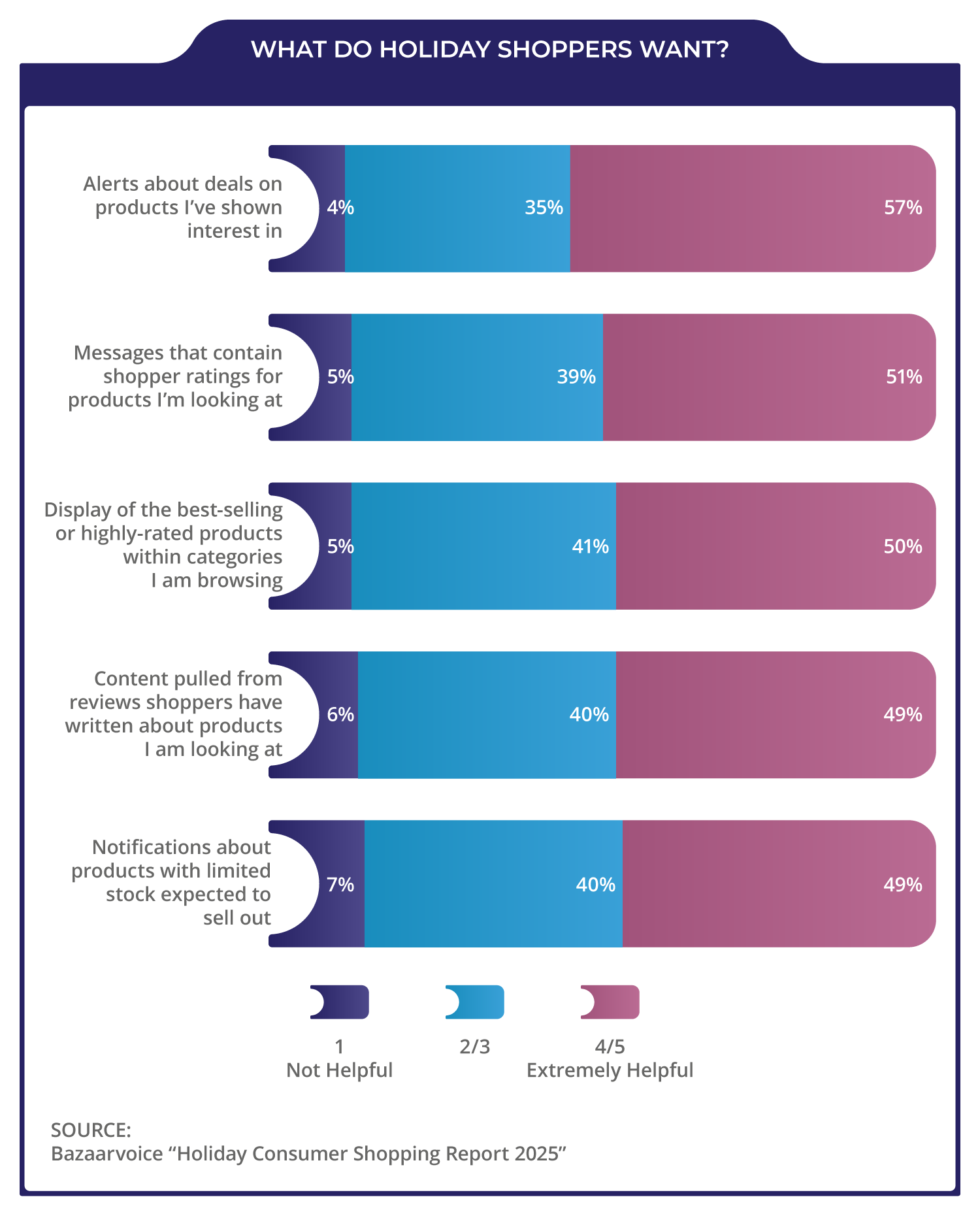
2. Retarget Like You Mean It
This is where the real ROI hides. During the holidays, buyers don’t act linear—they browse, compare, forget, and then panic-buy after seeing a reminder at 11:37 p.m.
Set retargeting windows that match that behavior:
- 1-Day: Cart abandoners get an immediate “Still need that gift?” message.
- 7-Day: Broader site visitors see urgency copy—“Ships by Dec 18!” or “Limited sets left.”
- 14-Day: Warm audiences get reintroduced to bundles, shipping perks, or local pickup options.
Meta reports that retargeting campaigns regularly outperform cold traffic by 2–3x in return on ad spend. The catch? They only work when your creative reminds people why they almost purchased. If your ad feels like déjà vu, it’s wasted spend.
3. Advantage+ Shopping, with adult supervision
Advantage+ is Meta’s polite way of saying, “Let us drive, you just pay for the gas.”
It’s Meta’s automated ad system—specifically Advantage+ Shopping Campaigns (ASC) for ecommerce—that uses machine learning to handle what used to require human finesse: audience targeting, placement, and creative testing. You load in your catalog, set your budget and objectives, and Meta’s algorithm dynamically decides who sees what, where, and when.
Advantage+ Shopping (A+) can simplify the mess in Q4 if you give it a sane product set and let it learn for at least 7 days. Use it to blend prospecting and remarketing, but guard your merch with exclusions:
- Exclude extreme low-margin SKUs.
- Pin holiday bundles, sparkling, and “giftable red” sets as your featured catalog items.
- Watch audience overlap with your manual retargeting; if A+ steals too much last-click credit from your surgical retargeting, cap or separate it.
Meta’s own case studies show cost-per-purchase improvements during holiday promos using A+ Shopping. Anecdotal, yes, but consistent with the platform’s AI favoring dynamic creatives and broader signals in peak season.
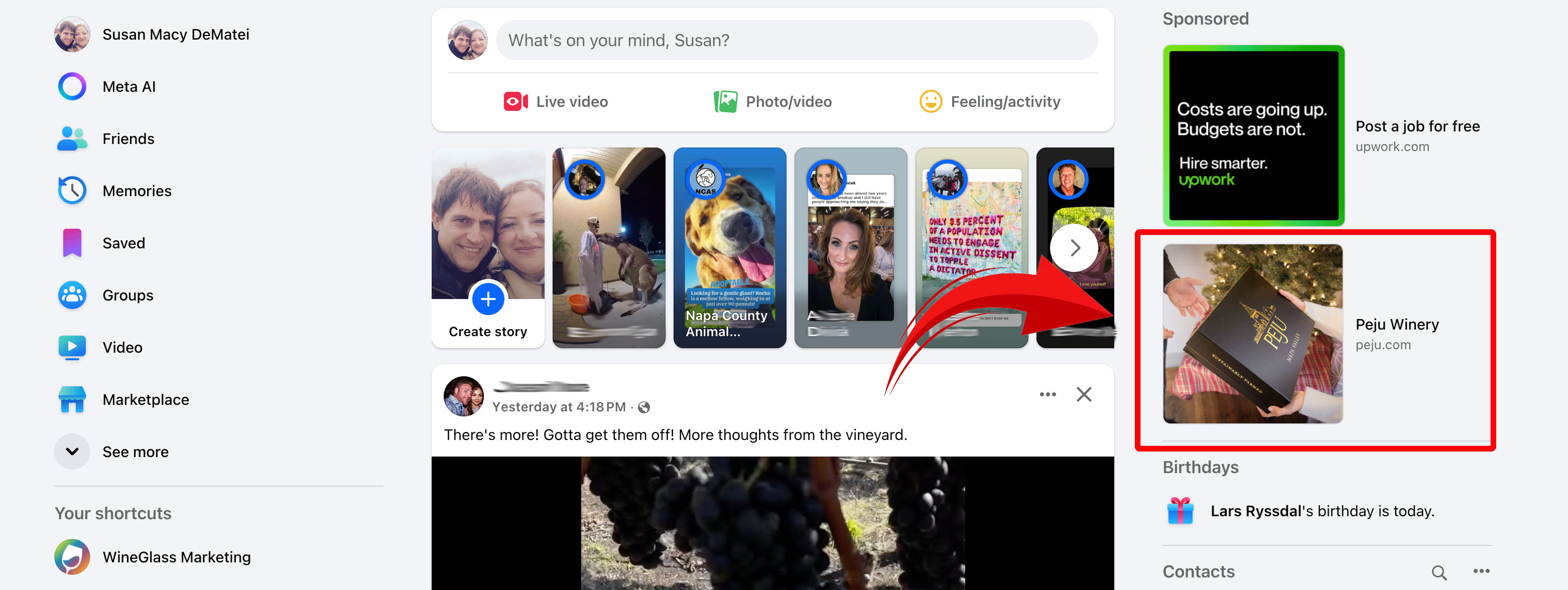
4. Creative that signals “gift” in one second
People scroll fast. You have a second to say, “this is a gift, and it will arrive on time.”
- Visuals: boxes, ribbons, card enclosures, multi-bottle sets, a “ship by Dec X” badge.
- Copy: “Arrives by Dec 20 in most states,” “Send to their door,” “Gift wrap available.”
- Formats: Reels/Stories for thumb-stopping motion; image carousels for bundles and price tiers; catalog ads for breadth.
Meta ads that signal “gifting” in the first frame see click-through rates nearly double the generic lifestyle versions (WordStream, 2024). Because no one wants to decode your brand aesthetic while panic-shopping on a phone.
5. Offers that lift AOV without wrecking margin
Everyone loves a good deal—until it eats your profit and trains your audience to wait for the next one. The trick is value stacking instead of discount stacking.
Try these:
- Free shipping thresholds: “Orders over $150 ship free.”
- Gift wrap add-ons: A small cost for big perceived value.
- Tiered perks: “Spend $200, get a magnum upgrade.”
Your average order value (AOV) will rise, and you’ll preserve your brand’s dignity. Remember: you’re not Amazon. You’re selling emotion—wine that feels thoughtful, not discounted.
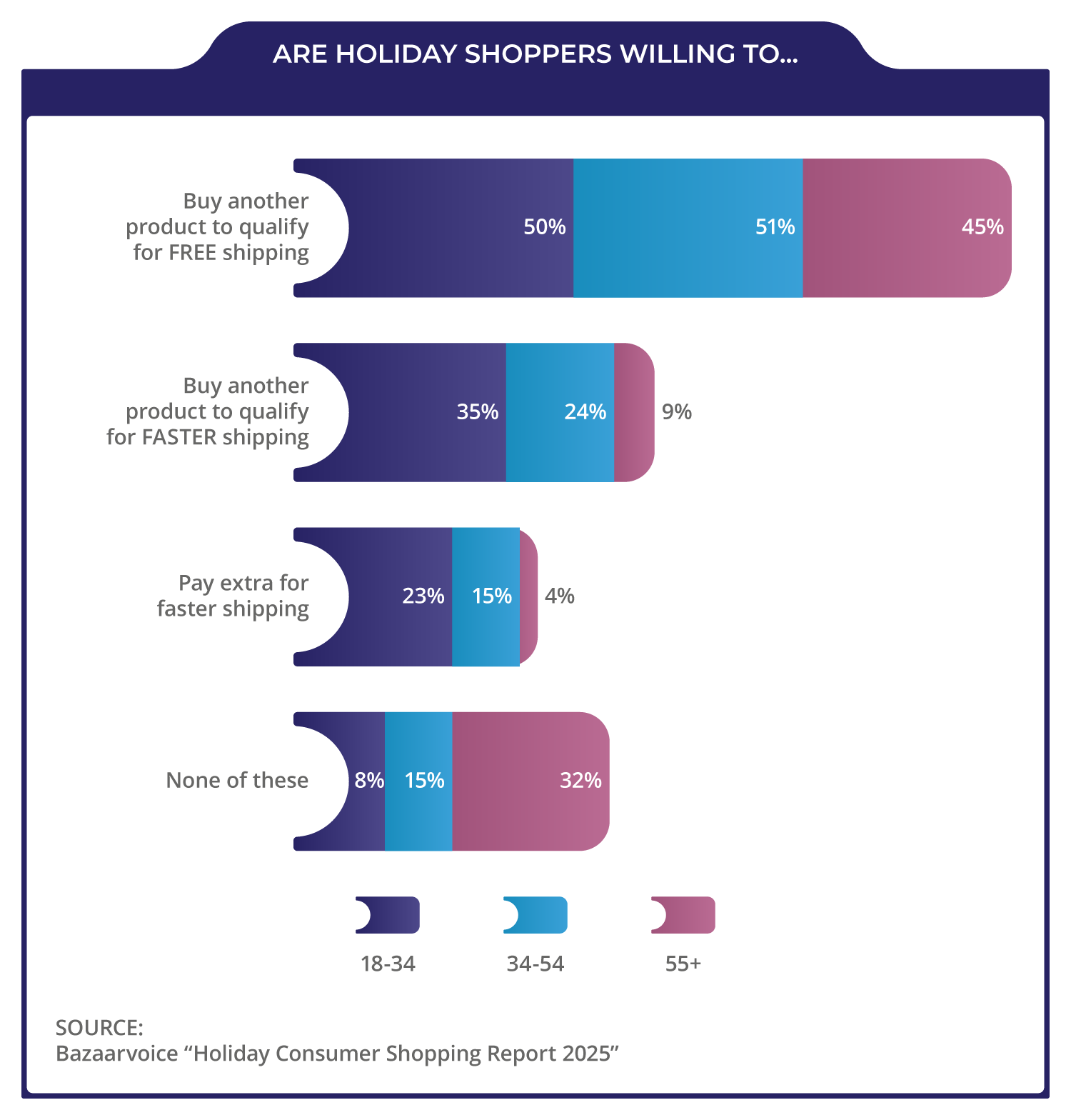
6. Follow the Holiday Rhythm
If you treat December like one long ad push, you’ll burn through budget faster than a candle at a tasting room party. Consumer intent spikes and drops in waves.
- Wave 1 – Thanksgiving to Cyber Monday:
The awareness phase. Hit gift sets, sparkling bundles, and early-bird perks. CPMs are high, but shoppers are primed. - Wave 2 – December 5–15:
The conversion zone. Push shipping cutoffs, urgency, and limited editions. Focus 60% of your budget here; Meta ad costs are high, but intent is peaking. - Wave 3 – December 16–24:
Gift card and local pickup season. Retarget like mad. CPMs rise but ROAS holds because urgency is through the roof. - Wave 4 – December 26–New Year’s:
Don’t go dark. “Treat yourself” campaigns and New Year’s sparkling ads turn recipients into new customers.
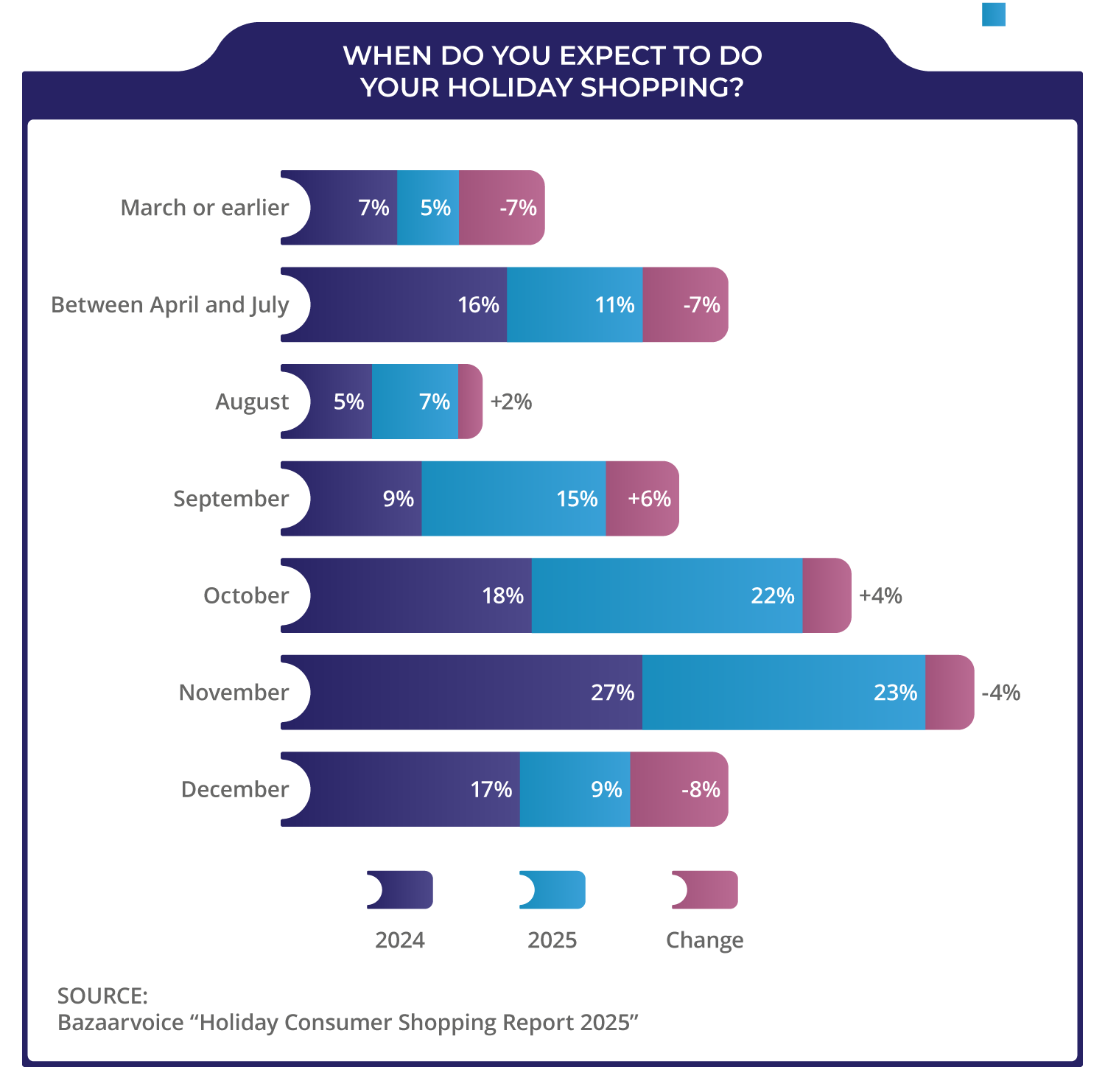
7. Budgets, guardrails, and when to step off the gas
- Budget elasticity: plan +30% surge funds for 72 hours around Cyber Monday and for the 4 days before your last ship cutoff. If ROAS holds and inventory is healthy, deploy. If it doesn’t appear to be working, pivot to gift cards/pickup.
- Frequency sanity: in small geographic market or with remarketing, cap ad frequency to avoid burning your list. If frequency > 5 and CTR < 0.8% on a retargeting set, rotate creative or shrink the window. Benchmarks vary, but sub-1% CTR on warm audiences usually signals fatigue.
- Attribution hygiene: tag everything with UTMs by offer and audience. Don’t celebrate Meta-reported ROAS if Google Analytics and Commerce7 tell a different story. The point is cash, not dashboards.
8. Track Like a Cynic, Adjust Like a Scientist
If you’re still measuring “success” by likes or comments, it’s time to graduate. The benchmarks are straightforward:
- CTR: Aim for 1–2%. Under 1% means your creative is boring.
- Conversion rate: 2–3% is solid for food and beverage.
- ROAS: $3–$4 for every dollar spent is realistic; anything above that deserves champagne.
Tag everything. UTM every link. And decide what your single source of truth is when you receive different results from Google, Meta and your eCommerce. When the data looks weird, take the time to investigate.
9. Your Best Customers Aren’t Done Buying
Wine club members are your easiest upsell. Yet most wineries ignore them in December, assuming their holiday shopping is done. Big mistake.
Create member-only bundles, early access, or packaging perks that make them feel special. If your club list isn’t buying gifts from you, they’re buying from someone else.
Some ideas:
- Club-adjacent gifting: Upload a list of members who historically buy gifts or ship to multiple addresses. Show them exclusive giftable sets with member-only packaging upgrades.
- Sparkling as the spear: Use sparkling to acquire, then retarget into still bundles. It’s the category shoppers already associate with gatherings and New Year’s.
- Recipient retargeting: Drop a card in every shipped gift with a QR to a “Thanks for the gift” landing page + welcome offer. Build a recipient custom audience to retarget during Dec 26–Jan 15.
- Content that earns the click: Short videos of unboxing, bottle close-ups with gifting context, and “ships by Friday” overlays. No vineyards at sunset. It’s December. Show the gift.
10. Keep the Conversation Going After Christmas
The party doesn’t stop at shipping cutoffs. The people who received your wine as gifts are now your next audience. Include a QR code or card that says, “Loved your gift? Here’s where to get more.”
Run a light retargeting ad in early January—call it the “New Year, New Favorite Winery” campaign.
The Smart Winery Holiday Playbook (In Case You Skimmed Everything Above)
- Build lookalike audiences now.
- Remarketing is always your best ROAS
- Use the tools provided – try Advantage+
- Include creative that’s unmistakably giftable.
- Offer value, not desperation discounts.
- Time your budget around intent waves.
- Plan your spend around key buying times.
- Measure what matters, not what flatters.
- Don’t forget your loyal list.
- Don’t vanish after December 25
Holiday Meta ads aren’t about luck. They’re about timing, targeting, and empathy for the frazzled human holding a credit card at 11 p.m.
If you treat your campaigns like a strategy instead of a sprint, you’ll stop hoping for miracles—and start creating them.
March 1, 2026
Napa Wine Marketing Agency Listed in Inc Magazine’s “Hyper Growth” List
WineGlass Marketing noted as being in the top 5% of the
fastest-growing private companies in the state
NAPA, CA - WINEGLASS MARKETING, LLC. was called out as the only Napa company listed as one of the top 250 – a hyper-growth company – in the Inc. 5000 Series: California’s Top Companies. The list, published on February 19th, ranks the fastest-growing private companies in the state and represents cities from San Diego to Sacramento. The industries are diverse and range from healthcare to construction, but Inc. reports their combined total revenues grew a collective $5.5 billion between 2016 and 2018, adding 26,000 jobs to California payrolls in the process.
When told of the recognition, Susan DeMatei, WineGlass Marketing’s President and Founder said: “We are extremely proud of our growth because it is a direct correlation to the commitment of our clients and employees.” She continued, “Growth can only be achieved if the foundation is solid so you can build upon it. We’ve been blessed with dynamic and intelligent clients that have trusted us for years and a talented and high-performing team who display a continual drive to provide excellent support to those clients.”
WGM was the only firm mentioned associated with the wine industry. The marketing agency started in 2012 with one employee and three clients, but now employs 18 people and supports half a dozen subcontractors to service 50-60 clients a month. WGM is focused on wineries and wine-industry clients almost entirely in the North Bay, so the inclusion of a wine industry company in the Inc. 5000 Series California list is a refreshing contrast to the recent waterfall of news stories about tourist traffic falling off and a wine surplus driving down prices.
There were five North Bay companies on the top 250 list: Two in Marin, two in Sonoma and WineGlass Marketing in Napa. WGM faced tough competition for this achievement as the advertising and marketing category was not only the biggest revenue-generating industry tracked in Inc.’s report, with a net growth of $1.1B, but also had the most on the list with 39 companies. The next most crowded industry was software with 33 and then healthcare companies with 22. Most companies on the list were located within Los Angeles (116) with the next populous area listing 60 companies in San Francisco. More information about the Inc. 5000 Series: California’s Top Companies can be found at https://www.inc.com/inc5000-series-california-2020.html
Based in Napa, WineGlass Marketing is the largest full-service direct marketing agency for the wine, beer, and spirits industry and can be located at 531 Jefferson Street, Napa, CA 94559 or call (707) 927-3334 online at www.wineglassmarketing.com.
March 1, 2026
Come Over To The Dark Side…Implications for Dark Mode on your Email Campaigns.
Dark Mode is becoming surprisingly popular and it can have serious implications on your email effectiveness, resulting in adjustments needed in not only how you format your emails, but also how you use images. This article will explain what Dark Mode is, why more and more are using it, and why we all need to be ready for it, like, yesterday.
What is Dark Mode?
Dark Mode was introduced with macOS Mojave (10.14) released in the fall of 2018 and was quickly followed by a similar feature in the Windows 10 release last May. It’s an accessibility setting that changes the interface to display content with dark backgrounds and light color text. While it’s ideal for people with light sensitivity and minimizes blue light, it also enhances readability and reduces eye strain. When you switch a service, such as an email client to Dark Mode, it will automatically turn basic black text white and basic dark hyperlinked text to a brighter color. An IFL Science article indicates that Dark Mode on your iPhone could possibly save battery life by up to 30%.
How many people use it?
It has been a hit with consumers ever since release and is only gaining momentum. According to this Medium article, a surprising majority of 82.7% polled preferred Dark Mode. A huge amount of these users said Dark Mode was easier on their eyes, elegant, nice to look at, and consumes less battery life on their devices. With Dark Mode, most operating systems allow you to toggle from Dark Mode to Light Mode depending on your environment or time of day, however, 74.6% of 201 users polled, kept their system on Dark Mode all the time.


Why does this matter?
Dark Mode is available on many popular platforms, including Microsoft Outlook, Gmail for Android, Facebook Messenger, Twitter, YouTube, Slack, and the most popular web browsers. But Dark Mode can also negatively impact your emails if they aren’t formatted correctly, to the point that your marketing efforts to existing consumers and potential new business can become nearly illegible.
What should I do to support Dark Mode?
There are things you can do to help ensure that you get a good email experience and be prepared for Dark Mode. Below, we cover the important areas to be aware of adjusting.
Logo:
This concept is simple, a few years ago, many brands got accustomed to the idea of using png images for logos rather than jpegs because this allowed for a transparent background behind the logo, removing that white box effect if your email had a differently colored background. But now we need to think a little differently with Dark Mode in the mix.

Add a white border around your logo. For those familiar with Adobe Photoshop or Illustrator, you can add a white stroke to your png logo to give it an added border and make your logo more legible in Dark Mode. In standard Light Mode, no one is going to notice the white border around the logo anyway.

Backgrounds:
Try to avoid using colored backgrounds whenever you can as this can make your email appear dated especially when your consumers read the email on mobile devices. For example, using a gradient with white in it as a background can cause a greatly illegible email when one of your consumers is using Dark Mode and it automatically converts black text to white!

Text formatting:
Be careful when controlling your font colors. Forcing your fonts to be black can make them stay black in Dark Mode, making them almost unreadable and customers will not likely switch to Light Mode just to read an email.

Adoption of Dark Mode Will Only Increase
As time progresses, more and more people around the world will either toggle to Dark Mode at night or start using Dark Mode continuously, so now is the time to be prepared for this additional facet of ever-evolving technology. In the past, we’ve said to test your emails on multiple email clients by sending tests to Gmail, Outlook, Yahoo, and to test how the email looks on browsers and standalone email apps themselves.
Now is the time to be prepared and to get a jump on this. Even marketing leaders aren’t prepared for this, see the example below that we recently received in our inbox:

We suggest toggling between Dark Mode and Light Mode when testing your emails to see how these look. Right now Outlook is one of the most widely used platforms that supported Dark Mode early on. Gmail on Android is also supporting Dark Mode, and you can bet that more clients will continue to add this functionality.
If you’d like help from us to get your emails ready for Dark Mode, just let us know.
