


March 1, 2026
R&D Position with VA FiltrationVA Filtration is seeing a full time/part time employee to fill an R&D position for a 6-12 month period. The successful candidate should preferably have chemistry experience and should show an aptitude and passion for engineering research and development in cutting edge technologies. Daily tasks will include, but not be limited to, operation, testing, reporting and recording of data related to R&D projects currently under development. The position might include field work wherein the successful candidate will move equipment to customer facilities and set up equipment trials. It is recommended that the successful candidate have at least 3 years of laboratory experience or a background in chemistry/chemical engineering or process control related businesses.
- Pay rate will be based on experience
- Matching 401k, health insurance and other benefits provided
Please do not call. Send all resumes to bryan@vafiltration.com
Best Regards,
Bryan Tudhope
CEO
March 1, 2026
New Precision Carbonation System from VA FiltrationVA Filtration has just introduced its new precision carbonation system at the Unified Symposium. The PreCarb system, called the Carbonator, is a diffusion-based CO2 addition system that allows the winemaker precise control over the level of CO2 in wine, cider, or beer.
“The biggest difference this machine offers is the precise level of CO2 you desire without beating up the wine,” says Bryan Tudhope, President and CEO of VA Filtration. “You don’t lose the unique aromatics of the wine by rolling or sparging tanks and no oxidation occurs in the closed system.”

The system measures the amount of CO2 in the wine as it exits the machine using infrared technology, based on a level that is set on the control panel by the winemaker. The Carbonator can also be used to remove CO2 and dissolved oxygen from the wine when operated in a vacuum phase.
It is completely automated, so no sparging or frequently checking numbers is required. The machine also operates in a closed system so no loss of aromatics or outside oxidation occurs during the process.
The Carbonator is an addition to VA Filtration’s multitude of services to directly add quality and value by gentling removing undesirable components or taints from your wine on site. Operating mobile services in most of the best wine regions in the world including USA, Australia, Europe, and South America; VA Filtration not only brings the service to you but promises to do so in a fast, efficient, and quality-focused method.
 VA Filtration is a global leader in the design and manufacture of membrane-based wine processing equipment. With more than 16 mobile and rental machines available and more than 8 service offerings, VA Filtration has the largest and most diverse fleet of mobile wine processing equipment.
For more information, contact bryan@vafiltration.com or visit www.vafiltration.com/usa/.

March 1, 2026
One Man’s Idea Becomes Leading Filtration and Remediation Solution for Wine IndustryBy Elizabeth Hans McCrone
VA Filtration USA, a 2018 WINnovation Award Winner
For Bryan Tudhope, the CEO and founder of VA Filtration USA, solving problems through chemistry has always been second nature.
It started back in 1998 when he was a chemical engineer for water purification systems in South Africa. An engineering colleague asked him if he knew how to remove vinegar from wine and he decided to give it a try.
The method Tudhope developed worked so well, he started VA Filtration South Africa in 1999 to focus on vinegar removal for wineries in the Western Cape.
Two years later, he and his two partners decided to expand the business to the USA.
In 2002, VA Filtration USA was officially born and it has evolved into the leading provider of filtration and remediation services for the North American wine industry.
“I started with just one machine, running around California and couldn’t keep up with demand,” Tudhope recalls. “I hired a tech to help me, and the business just grew. It turns out a lot of the hardware used to remove vinegar can also be used to address other problems.”

The ’other problems‘ Tudhope refers to include VA/EA reduction, Brett character reduction, green character reduction, cork taint removal, smoke taint reduction, alcohol reduction, and CO2 addition/O2 removal.
Tudhope’s mobile system also provides wineries with crossflow filtration, lees filtration, and a system known as Sweetspotter, a rental unit developed specifically to address problems in small lot wine production.
“Our systems are capable of handling a lot of different operating procedures,” Tudhope explains. “We have different membranes and other elements that we load into the systems for high level filtration, as well as to the handle the critical, second stage processes that capture exactly what it is that you want to eliminate from the wine.”
The benefits of Tudhope’s technology are numerous. Among them, he lists:
- Zero oxygen pickup
- Filtration to .2 microns, resulting in complete removal of bacteria
- No DE needed in the newest Dynamic crossflow system
- No heat pickup
“Everything is mobile, mounted on trailers so that we can take it from facility to facility,” Tudhope adds. “We’ll take it to wherever you want, for whatever it is you’re trying to remove.”
VA Filtration USA is one of the winners of the 2018 WINnovation awards. Introduced by the Wine Industry Network (WIN) in 2013, the WINnovation awards were set up to honor companies that have developed groundbreaking products or practices contributing to the advancement of the North American wine industry.
VA Filtration USA was selected this year because of its commitment to designing, manufacturing and operating all products in-house, in the U.S. The company was also lauded for its outstanding technological achievements and its overall positive impact on the quality of winemaking.
 When asked to describe the philosophy behind what he and his company have done to receive recognition as a leading wine industry innovator, Tudhope is very clear that it comes down to two basic principles.
“Number one is that we pride ourselves in offering excellent service in terms of the processes we deliver,” Tudhope affirms. “A good wine is a winemaker’s pride and joy. If it’s (filtration, remediation) not done correctly, you can really mess that up. But done correctly, the full effect of the wine comes back out.”
“The second thing,” he continues, “is really listening to what winemakers need, and even figuring it out before they need it … that’s what drives the innovation.”
Tudhope, who has been working with filtration and remediation for 18 years, did not know that VA Filtration USA was under consideration as a WINnovation Award winner.
“It’s exciting, I had no idea. This is quite a surprise,” he admits. “It’s nice for the staff too, being able to share this with them. For us, seeing what you’re able to achieve just by removing a compound – and being able to offer that service and repeat it day after day – it’s really important.”
March 1, 2026
pH REDUCTION SYSTEMS FOR WINE OR JUICEVA Filtration designs, sells, rents and offers for service pH reduction systems for wine or juice. Using a combo membrane/ion exchange process or direct ion-exchange, there is a system to suit every budget. The ion exchange systems are offered as a single column manual system or fully automated dual resin column skids capable of treating up to 1,000 gallons per hour on a continuous basis. Note that the flow rates and run times shown below assume a potassium loading of 2200 mg/l and a 99% removal rate.
MODELS OFFERED
Ion exchange systems offered are as follows:
- pHC200S (Single 200 liter column manual regen) - 500 gph and up to 2,000 gallons treated per regen
- pHC400S (Single 400 liter column manual regen) - 500 gph and up to 4,000 gallons treated per regen
- pHC400D (Dual 400 liter manual columns in duty/stand-by configuration) - 1,000 gph and up to 4,000 gallons treated per regen
- pHC800S (Single 800 liter column with manual regen) - 1,000 gph and up to 8,000 gallons treated per regen
- pHC800D (Dual 800 liter manual regen columns in duty/stand-by configuration) - 2,000 gph and up to 8,000 gallons treated per regen
Automation Options for dual versions of above system
- On skid pump
- pH indication
- Conductivity indication
- Electronic flow meter
- Batch control
- Automated purge/regen and service cycle
Regeneration Requirements
Columns can be regenerated using hydrochloric acid or sulphuric acid. Hydrochloic acid regeneration will require a PVC manifold whereas sulphuric acid regeneration allows 316 S/S pipe manifolds.
SERVICE OPTIONS
Note that a prefered way of pH Reduction makes use of nanofiltration followed by ion exchange onthe permeate. This service is offered using our expert trained technicians.
March 1, 2026
No D.E. Lees Filtration - Dynamic Crossflow FiltrationVA Filtration is now offering ZERO D.E. lees filtration using dynamic crossflow. Benefits of the process are as follows:
- No D.E. required
- Little to no oxygen pick-up
- Flow rates from 50 to 150 gph recovered product, depending on solids to liquid ratio
- Up to 70% recovery of product from juice (depending on starting solids content)
- Removal of ALL yeast and bacteria (stops fermentation)
- Product typically shows NTU of less than 0.3 NTU
- Rates as low as $1.50 per gallon of recovered product
Before and after images of recovered wine and juice from the DCF.
 Juice lees recovery
 Red Wine Lees Recovery
March 1, 2026
Filtration Technology Focused on Wine QualityFor more than 18 years, VA Filtration has distinguished itself as a leader in providing rapid, effective, unobtrusive and energy efficient filtration solutions to wine industry professionals around the globe.
Specializing in crossflow systems since 2005, VA Filtration has mastered the art of utilizing spiral wound elements to deliver an extremely gentle filtration process designed to protect the integrity and quality of wine.
“Our systems have always focused on quality,” confirms VA Filtration CEO Bryan Tudhope. “Wine tastes better after crossflow than before.”

Consistently on the cutting edge of new technologies, VA Filtration now also offers silicon fiber, a hard, porous material used in the construction of the filtration membrane itself, to enhance the rate of filtration per square meter of surface area.
“Traditional spiral wound membranes filter about 15-20 liters per square meter an hour,” explains Tudhope. “With silicon fiber, it increases to 45-60 liters per square meter an hour. That’s more than three times the flow rate per m2 of membrane surface area.”

Tudhope points out that the increased flow rate from silicon fiber is a huge benefit to wineries filtering bulk wines at high volume. He notes that the material has superior thermodynamic properties, a membrane life that is three to five times longer than polymer systems and reduces overall water and chemical use for system cleaning.
VA Filtration offers multiple service options with maximum flexibility to accommodate all winery filtration needs, including:
- Mobile service – a full range of crossflow machines are available for onsite filtration, offering guaranteed service with expert technicians.
- Medium and long term rental – VA Filtration offers all of its crossflow equipment on one to three month or one to five year rental terms. System stays on site at winery on a pay-by-use basis.
- Daily rental – ideal, cost-effective solution for small lot winemaking. Two options for rental available in 110V single-phase configurations.
- Machines for purchase – VA Filtration designs and manufactures systems of any size and configuration to address specific winery site and process requirements. All models have been extensively tested in the field.
VA Filtration systems are proudly designed, manufactured and operated in American Canyon, USA.
For more information contact bryan@vafiltration.com to schedule a discussion on how VA Filtration can help with your filtration needs or visit www.vafiltration.com.

March 1, 2026
Budget Cross Flow Filtration is Here!- Are you tired of using pad filtration to get your wine bottle ready?
- Do you need a filter for small lots as low as 1 barrel?
- Would you like a robust system that is easy to use?
- Would you like a system that is made in America?
- Would you like a reasonably priced system for only $22 500.00?
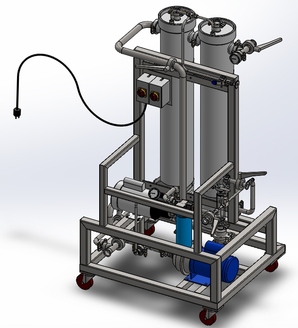
- On-board self-priming feed pump.
- One step filtration down to 0.45 microns
- No oxygen pickup.
- 200 gal/hr Flow Rate
- Losses as low as 2 gallons per 500 gallons wine filtered.
- 110V Power requirement
- Very easy to use - no pads to load.
- Minimal operator intervention required while system is filtering.
- Nothing to throw away - membranes are chemically cleaned.
- Can not over pressurize the system.
- Extremely robust - all stainless steel construction
March 1, 2026
SMOKE TAINT AND RENTAL CROSSFLOWSMOKE TAINT?
Due to some enormous wildfires this year, the lingering smoke might have left its mark on the grapes. How will you know if you have smoke taint? If there are some smokey aromas present in your wine after fermentation then a simple test showing the levels of Guaicaol present in the juice/wine BEFORE oak addition will indicate the level of smoke taint present.
Is there anything you can do? Well yes - VA Filtration can help. We offer the ONLY mobile service in the USA based on our patented nanofiltration process designed for the optimum reduction of smoke taint compounds from wine.
Will the taint come back? Well that depends on a number of factors. In some cases yes, and in some cases no. We learnt a great deal on dealing with smoke taint from the 2008 harvest and that knowledge has been transferred into our process.
RENTAL CROSSFLOW
VA Filtration has developed a 180 gal/hr crossflow filter that can be rented for the filtration of small lots of wine. This is THE ONLY RENTAL CROSSFLOW available on the market today capable of operating off 110V single phase power. It is extremely simple to operate and very robust. Give it a try today!
March 1, 2026
amaea – Additive Free Molecular Imprinted Polymer for PVPP Replacement, Polyphenol Adjustment; Smoke Remediation and Pyrazine Adjustment
Let me introduce amaea, the latest addition to VA Filtration’s suite of services. amaea is an award-winning, molecular filtration technology known for its unrivalled selectivity - allowing winemakers to enhance product quality while preserving the integrity of their wines.
Using molecularly imprinted polymers (MIP), amaea targets and removes undesired molecules, without the need for fining agents, masking or excessive stripping. The result? Refined and more balanced wines.
Why winemakers are choosing amaea:
- Precise removal of unwanted compounds – from balancing bitterness to remediating smoke impacts and pyrazines
- Preserves varietal character and body
- Reduces waste by replacing single-use fining agents
- Saves time with rapid, real-time results
- Tailored solutions to achieve desired sensory outcomes
We are currently offering in-house bench trials, where my team is available to demonstrate how this breakthrough technology can benefit your winery.
Contact our team to book your trial today.
Regards,
Bryan Tudhope
Owner and Founder of VA Filtration

amaea’s alternative to PVPP for reducing bitterness
Take a deep dive into one of US’ leading winery’s assessment for using amaea’s molecular filtration technology over PVPP to reduce bitterness in hard-pressed white wines.

Giesen ushers in a new era of palate fining for their award-winning Merlot
To conduct palate fining of their category-leading 0% Merlot, NZ wine producer, Giesen replaced their use of gelatin with amaea's MIP technology, resulting in an additive-free, vegan friendly solution that provided tangible, operational gains.

Why winemakers are central to successful MIP applications
With the ability to tailor treatments with artisanal intent, winemakers are empowered to bring out the best in every wine using amaea’s highly selective technology. Discover how amaea’s MIPs work and the important role of winemakers to achieve ideal outcomes.
When would you use amaea’s technology?
amaea’s technology can be applied to balance or remediate wine sensory. Example applications include:
| Application | Target compound |
|---|---|
| Balancing astringency, bitterness & tannic characters | Polyphenols |
| Brettanomyces remediation | 4-ethylphenol (4-EP) 4-ethylguaiacol (4-EG) |
| Frost impact remediation | α-Terpeneol |
| Hard press palate fining | Polyphenols |
| Insect impact (herbaceous) remediation | trans-2-decenal |
| Pyrazine (green / vegetal) remediation | methoxypyrazines including 3-Isobutyl-2-methoxypyrazine (IBMP) |
| Smoke impact remediation | Smoke marker compounds including: Guaiacol 4-methyl guaiacol Syringol ortho-, meta- & para-cresol, methylsyringol thiophenols |
February 11, 2026
Huge Fermentation SavingsMultiply yeast & bacteria on-site with a cost effective Bioreactor
Yeast and lactic acid bacteria multiplication, lysate production, and multiplication of microorganisms for vineyard use (biocontrol, biofertilisation and biostimulation).
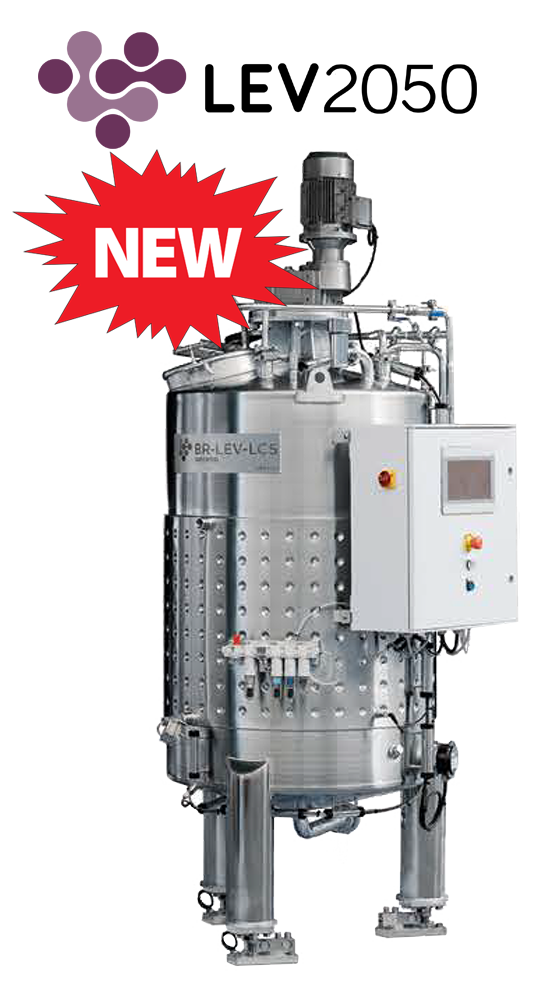 Choose from a complete range of sizes designed to support your production needs. The entire product line is available for delivery across North America..
- Reduce reliance on purchased yeast by 90%
- Reduce bacteria purchases by 75%
- Generate yeast nutrients on-site
- Fully automated cycles
- Eliminate yeast activators
- Biomass provides greater vitality and viability
- Strong fermentations
- Wild or native yeast multiplication process
- No juice required
- Sales and service supported in USA
Email us or give us a call to set up and demo and walk you through the potential savings and control you can have with this machine.
January 6, 2026
VA Filtration – Services and Machinery Celebrates 25 Years of Excellence: 2001–2026 Napa, CA, 01012026 — VA Filtration is proud to announce its 25th anniversary, marking a quarter-century of innovation, dedication, and service since its founding in 2001. Over the past 25 years, the company has grown from a visionary startup into a trusted leader in the filtration industry, serving clients across the globe.
From its humble beginnings, VA Filtration has remained committed to delivering high-quality filtration services and advanced technologies to support the wine and spirits communities – serving more than 4,000+ wine brands in North America. Key milestones include:
- VA Filtration opened its first office in American Canyon in 2001. Founder Bryan Tudhope engineered and launched the first successful nanofiltration machines for the US wine industry.
- By 2004, the company had developed industry-standard machines and processes to remove 4EP from wine.
- VA Filtration designed and introduced a low-energy crossflow machine and launched the first two-column Crossflow and Sweetspotter for smaller wineries, available through its sister company d’Vine Intervention in 2005.
- The company was awarded US Patent #7828977 for nanofiltration in the removal of wine-solute impurities and received the WINovation award in 2018.
- Services expanded over the years to include alcohol reduction, lees removal, pH adjustment, and local fabrication for all machines. Local fabrication ensures customers receive direct support for products sold through VA Filtration.
- The team of field technicians has expanded VA Filtrations’ reach, and coupled with the in-house cellar staff, brings over 20 years of industry experience. Each tech is thoroughly trained and holds a “filtration specialist” certification.
- In 2021, VA Filtration constructed a new 32,000-square-foot warehouse with in-house service capabilities at 125 Gateway Road, Napa, California.
- Continuing its commitment to innovation, VA Filtration partnered with amaea in 2024 to introduce molecular imprinted polymers for advanced taint (Smoke/Pyrazine) removal.
- In December 2025, VA Filtration announced a collaboration with LEV2050 to bring new and innovative bioreactor technology to the US wine industry.
“We are deeply grateful to our employees, customers, and partners who have been part of our journey,” said CEO Bryan Tudhope. “This anniversary is a testament to our shared values and relentless pursuit of excellence.”
As VA Filtration looks to the future, the company remains focused on innovation and continued growth. Plans for the coming months include BioReactors, Rapid Cold Stabilization, and advances in Filtering Technologies.
For more information, please visit http://www.vafiltration.com.
About VA Filtration
For 25 years, VA Filtration USA has been helping wineries improve their wines through membrane-based filtration. We offer a range of services and systems to help with common wine issues and support you in making the best product possible. Our filtration machines can be found around the world, but they are designed and assembled right here in Napa, California.
In addition to our top-tier services, we offer a range of low-impact wine filtration solutions, including: machine rental and lease programs; custom fabrication expertise; preventative maintenance (PM) supplies for filtration products; filtration skids; food-grade membrane elements; ion exchange resins; adsorption resins; Solventum™ sterile filter cartridges; sterile cartridge housings; grape-based high-proof spirits; amaea™ molecular filtration products; and LEV2050 bioreactors systems.
December 10, 2025
LEV2050 Bioreactor Will Revolutionize How You Deal with FermentationsNovember 26, 2025
Addressing Pyrazine in Wine NAPA, Calif., (Nov. 26, 2025) – VA Filtration Services’ Scientific Approach, Innovative Solutions from Napa Valley
At VA Filtration Services, our mission is to empower winemakers to produce wines of the highest sensory quality. One of the challenges in modern winemaking is managing undesirable levels of pyrazines, particularly methoxypyrazines, which can impart green, herbaceous aromas that mask fruit character and complexity. Winemakers are left with two options: cover up the pyrazine (and potentially other attributes) or remove it through advances in pyrazine remediation practices.
The Problem: Pyrazines in Wine
Methoxypyrazines are naturally occurring compounds in certain grape varieties, such as Cabernet Sauvignon and Sauvignon Blanc. While subtle concentrations can add a sought-after freshness, excessive amounts lead to pronounced bell pepper and grassy notes, often perceived as faults—especially in premium reds. Often pyrazines present in wine due to environmental challenges winemakers are unable to prevent.
VA Filtration’s Solution
Recognizing the limitations of traditional practices in mitigation or additive solutions, VA Filtration Services has partnered with amaea™ to provide targeted molecular filtration to remove these isobutyl-methoxypyrazines (IBMP) with their RMx process. Rather than attempt to mask these characteristics, as you would using tannin additions, VAF looks to remove the select compounds that contribute to the negative sensory impact on your wine. Why add more, with varied results, when it’s easier even to remove the cause in the first place?
Impact and Results
 Our clients report significant improvements in wine aroma and market appeal after using our filtration service. The reduction of green, vegetal notes allows fruit and oak characters to shine, resulting in wines that are both balanced and commercially successful. By harnessing the power of targeted molecular filtration from amaea™, VA Filtration Services provides a scientific solution to a longstanding winemaking challenge.
Case Study
Topic: Pyrazine remediation using amaea RMx
Organization: Sonoma Bespoke
Contact: Joe Uhr – Winemaker
Status: Complete
Case Study - Selective Pyrazine Remediation Advances Napa Valley Cabernet Sauvignon Up a Tier
When Sonoma Bespoke purchased a premium Napa Valley Cabernet Sauvignon, winemaker, Joe Uhr was tasked with improving the pyrazine-impacted wine to make it more approachable and attractive for sale.
Where many would have turned to traditional masking techniques, Uhr chose to trial amaea RMx – a new, highly selective pyrazine remediation technology delivered by the region’s leading wine filtration service provider, VA Filtration, located in Napa, California. The innovation successfully reduced the unwanted green characters, allowing the hallmark, fruit-forward descriptors Napa Valley Cabernet Sauvignons are renown for to shine. The resulting quality improvement advanced the wine into a higher price tier, positioning it as a profitable addition to Sonoma Bespoke’s portfolio.
Challenge
“The Oakville Cab came from a relatively cool site in the valley. It was a good wine, but for our wines, our style of winemaking and our market, we were looking for something that was a little more open, fruit forward, a little less obviously in that green spectrum of what Cabernet Sauvignons can be,” explains Uhr.
Pyrazines are a class of compounds that give wine green, vegetal aromas. In small amounts, they can serve as a distinctive regional or varietal hallmark. However, when present in higher concentrations, they can overshadow fruit expression and create sensory challenges.
Winemakers traditionally manage pyrazines through fining agents or additions that mask the green notes. For Uhr, the challenge was compounded by logistics as the wine was stored at a third-party facility.
Seeking a more selective and flexible solution, Uhr turned to VA Filtrations’ mobile molecular filtration system – which uses amaea’s advanced molecularly imprinted polymer (MIP) technology – with the aim to target the root cause of the green character and help realise his stylistic vision for the wine.
Solution
amaea RMx is a breakthrough molecular filtration technology designed for precision wine remediation. Using amaea’s custom-engineered molecularly imprinted polymers (MIPs), it selectively captures compounds, such as pyrazines, through a single-pass, low-pressure filtration system.
VA Filtration began with a bench trial, working closely with Uhr to fine-tune the dose, flow and recirculation rate, and target duration. For the full-scale treatment, the mobile system was deployed on-site, allowing Uhr to taste the wine in real time and stop the process exactly when the desired sensory outcome was reached.
“The process was super smooth and the team were really great to work with. The trial provided an approximation and when it came to the treatment, we could taste as we go. The technicians gave me a heads up as we were getting closer and then it worked,” describes Uhr. “With control, I was really able to dial in the quality.”
Results
Margin Uplift for Greater ROI
With amaea RMx, Uhr exceeded his expectations, transforming the wine into a higher-value product.
“[amaea RMx] definitely premiumized the wine, advancing it up a tier,” shares Uhr. “All in all, it made a much better wine that I think will over deliver on the price point that we are going to end up selling it for.”
Winemaker-Controlled Sensory Enhancement
Rather than masking the issue, amaea RMx targeted removing the offending pyrazines helping reveal the wine’s inherent fruit character. “The fruit really came through. All those wonderful, riper Napa Valley Cab descriptors that you can think of were brought to the forefront,” says Uhr.
The ability to taste and adjust in real-time ensured the wine met Uhr’s sensory goals. “I would absolutely recommend [amaea RMx], especially if the wine isn’t where it’s desired or part of the stylistic goals,” he adds. “It can replace any masking additions or additives and that’s where it is really valuable.”
Ease of Operation
Despite the wine being stored at a third-party facility, VA Filtration mobilised their amaea RMx MIP system and completed treatment on-site in less than two days. The combination of rapid processing and skilled technicians made the experience seamless. “They're the best, I’ve worked with VA Filtration a lot over the years, and the team are awesome - that’s why I keep coming back,” says Uhr.
Summary
The selectivity and winemaker control offered by amaea RMx enabled Uhr to remove pyrazines to elevate Sonoma Bespoke’s 2023 Oakville Cabernet Sauvignon into a higher price-tier, unlocking healthier profit margins.
Beyond the sensory gains, the treatment also overcame logistical constraints. With the wine stored at a third-party facility, VA Filtration mobilised their amaea RMx system on-site and completed the job in under two days, delivering a fast and seamless process.
“I'm really excited to have a seat, because that wine, up until we purchased it, just sat in-tank with no real winemaking, it was looking for a home behind it. So now that I've got it down to the base of what we want it to be, it's going to be really fun to watch that move through the process,” shares Uhr.
He also points to broader benefits: “PVPP substitutes and fining addition substitutes have always been very judicious and with [amaea’s technology], it provides different ways to explore non-allergen and non-animal protein finings. The options are quite a bit more. When you have USDA organic labeling rules to follow, technology like this can be extremely powerful, and that's what really matters to begin with.”
About Joe Uhr – Winemaker, Sonoma Bespoke
A fourth-generation Sonoma County native with over 14 years of experience in the wine industry, Joe Uhr has worked across a diverse range of winery settings — from a leading sparkling wine house to a super-premium Napa Valley institution, to a historic family-owned estate with one of California’s most storied legacies. Now a winemaker for Sonoma Bespoke, Uhr brings a breadth and depth of expertise that fuels his deep appreciation for the complexity of vineyards, sense of place, and art of winemaking.
About Sonoma Bespoke
Sonoma Bespoke provides state-of-the-art, all-in-one wine négociant services, supported by an award-winning winemaking team. Combining experience, tradition, and innovation, Sonoma Bespoke crafts wines of the highest quality, placing them among the leading wine producers in the U.S.
Treatment Summary
- Wine Varietal: 2023 Oakville Cabernet Sauvignon
- Volume of Wine Processed: 28,000 gallons
- Treatment Duration: 1 – 2 days
- Date of Treatment: July 2025
- Applied Dose Rate: 4 g/L
- Applied Flow Rate: 75 CV/hr
- Tank Recirculation: 80%
- Who Conducted the Treatment: VA Filtration USA
- amaea Solution: amaea RMx
November 20, 2025
VA Filtration and LEV2050 Exclusive North American Distribution AgreementNapa, California - VA Filtration and LEV2050 have established an exclusive North American distribution agreement.
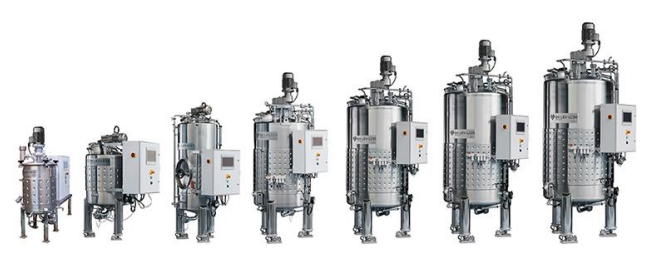
VA Filtration and LEV2050 have established an exclusive distribution agreement for North America and Chile. This partnership allows VA Filtration, based in Napa, California, to be the sole distributor of LEV2050’s bioreactors and related fermentation technology. The agreement leverages VA Filtration’s established presence and expertise in wine and beverage filtration, combined with LEV2050’s innovative bioreactor systems for yeast and bacteria propagation. Through this collaboration, wineries and food producers in North America and Chile gain direct access to LEV2050’s advanced microbiology solutions, streamlining imports and support. Recent import records confirm shipments of LEV2050 bioreactors to VA Filtration, highlighting the active implementation of this exclusive distribution arrangement. “We have always been known for our innovations and support of important wine industry technologies,” says Bryan Tudhope, CEO of VA Filtration USA. “This relationship furthers our interest in bringing quality and value to wine production.”
David Garcia Yoldi, CEO of LEV2050, said: “We’re proud to partner with VA Filtration to bring LEV2050’s bioreactor technology directly to winemakers and operations teams across North America and Chile. This collaboration is a major step forward in making advanced microbiology practical and accessible for those seeking greater precision, quality, and sustainability in their fermentation processes.” LEV2050’s bioreactors, notably the BR-LEV-LC and BR-CV ranges, are automated systems that enable controlled multiplication of microorganisms – notably yeast and bacteria used in wine fermentations. These devices offer significant advantages, such as reducing yeast and bacteria purchase costs by up to 90%, improving the vitality and performance of inoculants, and enhancing the aromatic and structural quality of wines. The bioreactors use biomass-growth media instead of must/juice and feature real-time process control, traceability, and mobile device integration, making them user-friendly and efficient for modern wineries and food producers. Their patented technology supports not only yeast and bacterial multiplication but also specialized processes such as mannoprotein production and automated Tirage yeast multiplication for sparkling wine and other fermentation-based products.
About VA Filtration
For 24 years, VA Filtration USA has been helping wineries improve their wines through membrane-based filtration. We offer a range of services and systems to help with common wine issues and support you in making the best product possible. Our filtration machines can be found around the world, but they are designed and assembled right here in Napa, California. In addition to our top-tier services, we offer a range of low-impact wine filtration solutions, specifically: filtration skids, food-grade membrane elements, ion exchange resins, adsorption resins, Solventum™ sterile filter cartridges, sterile cartridge housings, grape-based high-proof spirits, and amaea™ molecular filtration products.
About LEV2050
LEV2050 is a Spanish biotechnology company specializing in industrial microbiology, particularly for the wine and agri-food sectors. Founded in 2011, LEV2050 develops and manufactures patented bioreactors designed to optimize the growth and vitality of microorganisms such as yeasts and lactic acid bacteria. Their bioreactors, including the BR-LEV-LC and BR-CV models, automate and control the multiplication of these microorganisms, offering significant cost savings and improved fermentation quality for producers. The systems feature real-time monitoring, traceability, and mobile integration, making them efficient and userfriendly for wineries and food manufacturers. LEV2050’s technology supports not only yeast and bacteria production but also specialized fermentation processes, contributing to enhanced aroma, structure, and consistency in products like wine, bakery goods, and dairy. The company serves over 170 wineries worldwide and is expanding into other food sectors, backed by a strong R&D team and multiple patents.
November 19, 2025
VA Filtration Is Unveiling Something Revolutionary at the WIN Expo - Come by!New partnership to be announced this year at WIN. Come by for a sneak peak.
“We’re proud to partner with VA Filtration to bring _(secret)_ technology directly to winemakers and operations teams across North America and Chile. This collaboration is a major step forward in making advanced _(secret)_ practical and accessible for those seeking greater precision, quality, and sustainability in their fermentation processes.”
“We have always been known for our innovations and support of important wine industry technologies,” says Bryan Tudhope, CEO of VA Filtration USA. “This relationship furthers our interest in bringing quality and value to wine production.”

October 27, 2025
It's Time to Order Your High Proof!Beyond sanitation, our top-tier processes provide for exceptional quality at two different percentage levels.
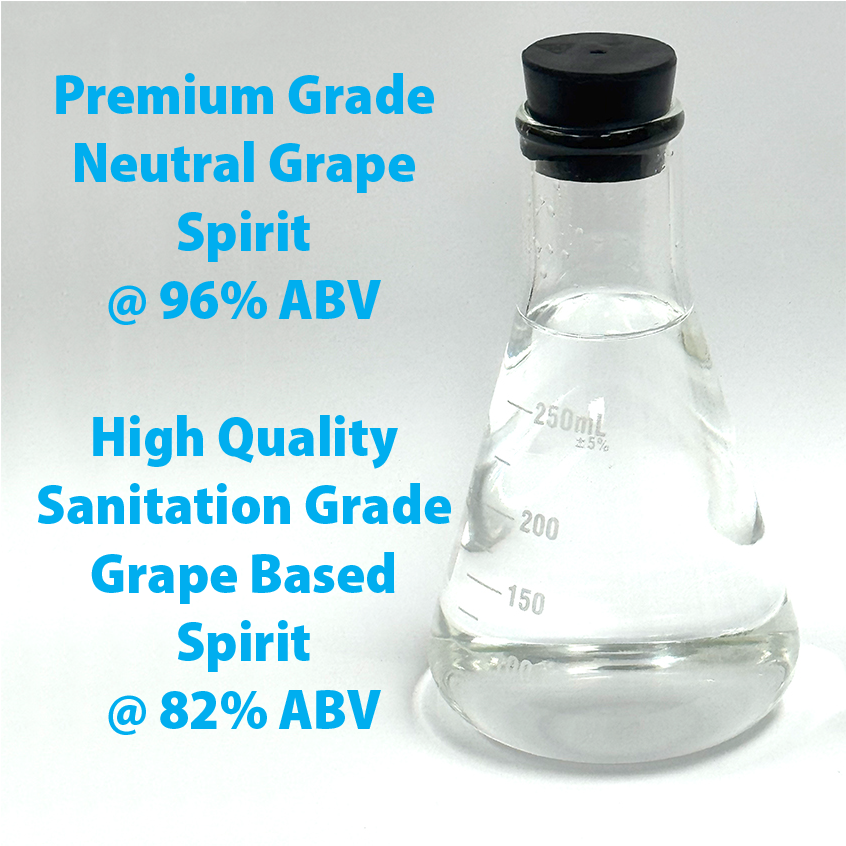
Ready for fortification or sanitation!
Pick from either our Premium Neutral Grape Spirit at 96% ABV or our High Quality Sanitation Grade 82% ABV Grape Spirit.
Both are sold in our ready 5-gal or 55-gal containers, or bring your own container/transport and we’ll fill it.
These are exceptionally clean spirits derived from our state-of-the-art alcohol adjustment processes.
Exceptionally clean aromatic profile as a result of “low-temp” membrane separation ahead of distillation.
Samples are available for pick-up at our facility in Napa, CA.
Discounted pricing is available for larger volumes!
September 15, 2025
Safeguards and Analysis of Potential Smoke-tainted Grapes In recent years, the increasing frequency and intensity of wildfires have posed significant challenges for winemakers and grape growers. One of the most pressing issues is the impact of smoke exposure on grapes, which can lead to undesirable flavors and aromas in the resulting wines. This document aims to provide winemakers and grape growers with a general understanding of their options for evaluating smoke-tainted grapes. “With localized testing now available at ETS, a winemaker can make more informed decisions on whether to harvest the grapes or write them off,” says General Manager Kyle Crowley of VA Filtration USA.
By exploring various assessment methods and mitigation strategies, the industry can make informed decisions to ensure the quality and marketability of their wines despite the challenges posed by smoke exposure.
Pre-Harvest:
- Pull grape (berries) samples to test before harvesting all your grapes for fermentation production.
- ETS offers an excellent smoke panel that is extremely informative in showing the extent of the smoke impact in the fruit. Follow these protocols where possible.
- Collect as few as 200-250 grapes (60mL - berries) of each sample you provide to ETS. Make sure you choose berries across the vineyard area being tested.
- Run the full smoke panel.
- ETS also offers a very nice process protocol for gathering grapes post-harvest.
- Review the test results
- The full smoke panel will indicate the extent of the smoke impact in the form of the most relevant glycosidated markers. Relying on just guaiacol is not advisable. Based on the full panel, VAF can give an excellent indication of what is treatable based on previous experience.
- Depending on the level of smoke impact, the price for treatment will vary between $0.50/gallon (light smoke) to $2.50/gallon (heavy smoke).
- Armed with an understanding of how your grapes can be treated, you may decide not to harvest the grapes for production.
- If you have decided that your grapes are worth saving, consider one more step - a micro-fermentation to test your grapes further through the alternative fermentation process – run the labs again.
- Protocol for a microferment should be different from your normal processes, making sure there is minimal skin contact.
- Send this fermented juice to ETS for testing.
- These test figures would then be sent to VA Filtration for a quote to fix and or repair the affected wine.
- With the microferments complete, choose your best method for fermenting the wine.
- We advise fermenting your wine with as little skin contact as possible.
- After primary and secondary fermentations are complete, store the wine in a neutral vessel (oak barrels are not advisable).
- For optimal results, store the wine for several months before treatment.
After primary and secondary fermentation:
- VA Filtration offers two methods for smoke-taint remediation, each with its own advantages.
- DARCProâ„ – VA Filtrations’ proprietary system is found to be most effective (cost and finished wine quality) at mid-to-lower levels of smoke-taint.
- The DARCProâ„ system can clean the wine with minimal stripping of the most essential phenolic components of the wine.
- amaea VPx – Also provided here at VA Filtration, uses MIPs or molecular filtration, to selectively remove volatile phenols as high as 30-50ppm.
- It is recommended that the wine be filtered through a 5-micron filter before using the MIPs process.
In Review:
- Test the grapes for viability.
- Run a trial microferment.
- Send the ETS analysis to VAF for treatment options and to determine if the wine is worth making and/or if it can be salvaged.
- Get a quote to determine if you want to harvest and process the grapes.
- Ferment your grapes with as little skin contact as possible.
- Be patient by waiting to treat your wine.
VA Filtration USA
125 Gateway Road E., Ste. D
Napa, CA 94558 – 707-552-2616 – www.VAFiltration.com
Mobile filtration services at your winery – Self-operated rental systems – Bring your wine to us.
Patented Wine Filtration Technologies – Replacement Filters – Custom Filtration Solutions
December 4, 2024
VA Filtration and amaea Set to Deliver Selective Technology Focused on Wine Sensory Quality
2 December 2024 – Californian wineries are set to gain access to an award-winning molecular filtration technology with industry specialists, VA Filtration announcing their latest partnership with amaea.
amaea’s technology has been uniquely designed to selectively capture target molecules from wine using a filtration process. This innovative method gives winemakers the ability to balance and remediate wine with newfound ease and precision.
Bryan Tudhope, Owner and Founder of VA Filtration said: “We are proud to partner with amaea to bring their ground-breaking technology to market. The selectivity and speed of the solution aligns with our focus to improve quality and add value. This makes it the perfect addition to our service portfolio.”
Jonathan Engle, Wine Industry Lead at amaea said: “amaea’s technology is powerful because of its unique, first-of-its-kind molecularly imprinted polymers (MIPs). Each MIP is a tiny, reusable bead imprinted with a specific target molecule. As wine flows through these beads, the target molecules are captured. With adjustable dose and flow rates, winemakers have the control to fine-tune the concentration of capture, allowing them to achieve their ideal sensory outcomes.”
“What makes amaea’s solution so compelling is its selectivity and tailorability. By targeting the removal of specific molecules—like the volatile phenols responsible for smoke impact or the phenols that cause excessive astringency—our approach reduces these unwanted markers while preserving the wine’s varietal character and body. This process allows the wines to soften, bringing forward fruit flavors and aromas, and ultimately enhances the quality of treated wines.”
Engle explains that amaea’s technology truly comes to life in the hands of winemakers: “The treatment rates are set by the winemakers themselves; they know best where the wine needs to be. VA Filtration has a strong, long-standing relationship with California’s winemakers, and through this partnership, we’re excited to bring this innovation directly to the experts.”
Since its launch in September 2023, amaea’s technology has been used to remediate over 1 million liters of smoke impacted wine. Their portfolio of applications has since expanded to include palate fining and the remediation of off-aromas presented by impacts such as pyrazines, frost and Brettanomyces.
About amaea Ltd.
amaea is leading the way as the world’s first innovator of molecularly imprinted polymer (MIP) technology for winemaking. Our reusable MIPs selectively capture target molecules from wine, empowering winemakers to tailor the sensory profile of their products with a low-impact solution. Available in Canada, the United States, and New Zealand, amaea’s applications are designed to remediate, enhance and balance wine’s sensory qualities.
August 7, 2024
Mobile Water Purification for Juice Addition Have you ever considered the quality of the water being used at your facility for addition to juice during harvest? It may well be dechlorinated, but well and city water contains various levels of sodium, calcium, magnesium and other trace compounds that are typically not present in grape juice. If you’re trying to make the best quality product you can, why not add the best quality water you can. The breweries do it, the soft drink industry does it. Why aren’t the wineries doing it?
For harvest 2024, VA Filtration is offering mobile water purification that makes use of activated carbon and high rejection reverse osmosis. The system generates high quality water on site using your existing winery water and reduces the mineral content to a combined total of under 10 mg/l (the total dissolved solids of well and city water typically ranges from 80 mg/l to 600 mg/l).
We can generate up to 2,000 gph of water if necessary and we have smaller machines that can generate smaller volumes depending on your needs.
Pricing is reasonable and we are just a phone call away!
October 9, 2023
Low Brix, High Stakes: Cool Growing Season SolutionsWhat’s a winemaker to do when cool weather persists and Brix levels aren’t rising?
Spring rains delayed the grape harvest by nearly a month, jeopardizing grape maturity as summer closed and temperatures cooled. Many vineyards are seeing persistently low Brix levels, causing worries among winemakers that temperatures won’t rise enough for grapes to reach optimal sugar levels before harvest.
“Last year at this time, I was getting calls that juice had high VA [volatile acidity] levels,” says Bryan Tudhope, Founder and CEO of VA Filtration. “This year, they’re asking, ‘What are my options for fixing juice with low Brix levels? What can I do with high levels of Methoxypyrazines?’ These early calls are canaries in the coal mine. I expect the challenge for winemakers will be far-reaching unless we see sustained warmth through October.”

Calling the right moment to harvest is difficult, even in a typical year. In 2023, the deluge of spring rain followed by a wave of high heat and then early autumn rains in some areas resulted in a dilemma for winemakers. Should they harvest physiologically unripe grapes and risk methoxypyrazines’ green character dominating the wine? Should they wait a little longer and risk sugar levels going backward or early rains resulting in the fruit rotting?
Growers have been constantly adjusting their predictions for every vineyard microclimate as to whether the sugar levels will go up another 2 or 3 Brix or if it’s time to call for harvesting.
Winemaking Options for Low Sugar Levels.
“This year reminds me of 2011,” Tudhope notes. “It was also very cool, and the grapes would not hit the Brix level.” These conditions delayed harvest, but sunny days and high temperatures arrived in mid-September to speed up maturation and allow growers to begin harvesting. 2023 hasn’t been as kind so far this autumn in most areas.
Tudhope explains that there are two options for winemakers when the harvest comes in with low Brix levels.

The first is to concentrate the juice before starting fermentation. Concentration increases sugar levels through the removal of water via reverses osmosis (RO), but winemakers would have to pre-filter. This approach works well for white juice, which is easier to pre-filter to allow RO to work.
Unfortunately, filtration is very difficult for red wines because they ferment on the skin. Winemakers could take a portion of the juice, filter it and try to concentrate that to a much, much higher Brix level. But the pressure and equipment required to accomplish this is very specialized, and it becomes so slow that it’s almost not worth it.
Instead, Tudhope recommends option two: Wait until the wine finishes fermentation. VA Filtration can then bring in its specialized equipment when it's dry and concentrate the wine using an ultra-filtration (UF) process. Although using RO would be ideal, this process and nanofiltration are not legal. UF is the only concentration technique that the TTB recognizes as a process to concentrate color in wine.
The UF process separates the wine into high-color and low-color fractions using membranes that separate the higher molecular weight at a 500 cut-off. Winemakers can then use the high-color fraction to achieve some of the flavors that may have been lacking in the thinner juice. Winemakers can run a bench test to predetermine the fractions needed to attain the desired alcohol level. The 5%–15% lost to the low-color fraction can run with the lees or into a separate program.
Addressing Alcohol Content and Green Taint
While winemakers can manage the flavor and mouth feel with concentration trials, they may also need to make adjustments to the alcohol content by adding high-proof spirits. Tudhope advises using a neutral distillate instead of adding a high-sugar grape juice concentrate on the front end for higher end wines. VA Filtration offers high-proof grape spirits for wineries.
A possible challenge is the presence of methoxypyrazine-type aromas that originate from the underripe fruit and can overpower the other flavors. VA Filtration can effectively eliminate these aromas as well as other undesirable compounds without affecting the positive attributes of the wine, usually in one or two cycles.
Tudhope adds, “A year like this brings out the best in winemakers! The quality needs to match other vintages, even though you have year to year weather variances. Winemakers need to dig deep into their toolbox to make the best wine they can. We can provide some of those tools.”
Younger winemakers may be facing these complex decisions for the first time, and even experienced winemakers may need expert help. Tudhope and VA Filtration are there to provide that expertise. You can reach him at bryan@vafiltration.com or visit VA Filtration at WIN Expo booth 513.
| Send Me Info |