.jpg)

March 1, 2026
Happy National Publicist Day 2017Today is apparently National Publicist Day. It seems you can choose any day of the week and there’ll be some reason to celebrate but for me I really DO want to celebrate this day.
I’ve been working in media relations for 20 years this year, and it has been a very interesting and wild ride so far. With a saturated market for content, and shrinking media outlets it’s more important than ever to have someone there to help you find your voice and then to have that voice be shared to the right audiences. That’s where we PR people come in.
We are thoughtful in finding ways to get your stories into the news, we're creative with budgets, and we're great connectors of people. It’s a unique skill set that makes a good PR person, and I am proud to employ a talented few, and know many more.
I never set out to be a PR person. I went to business school and studied marketing, but then when I landed my first marketing job with the BC Wine Institute, doing media relations and PR and sending press releases became part of what I had to do in my daily scope of work. (So I went back to school and got my PR certificate on evenings and weekends while I was working, and made sure that my education could meet the skill set for actual work I was doing.) Two decades later, I am so proud of the body of work I have produced.
Thanks to PR I have made numerous relationships across North America - some that I’ve turned into long-lasting friendships; and I have found myself among the cohort of other publicists in Vancouver that we love to collaborate with on an almost weekly basis. Here at Town Hall Brands I am lucky to have killer personalities working on our PR team: Amy Chen, Genevieve Dufresne, Maddie Clerides, and Mr. Sujinder Juneja, who each continually advocate on behalf of our clients to make sure their stories get told across different mediums each and every day.
To all my fellow PR people, and to my own team - Happy National Publicist Day; #gogetit!
March 1, 2026
HOW DO I COMMUNICATE FOR MY WINERY DURING THE COVID-19 PANDEMIC?Leeann Froese offers thoughts on communicating during this pandemic.
The rapidly evolving situation around COVID-19 is unique, and we will be in this experience for some time to come.
For the past two weeks, as we work mainly from home, our team has been assisting clients in their difficult communications to their employees, customers, industry, and friends.
What many business owners are stuck with is just how to communicate at this time, and what to say. On one hand, with everyone at home and online, there has never been a better time to capture eyeballs, and on the other, people are filled with anxiety and stress and no one wants to be insensitive.
So what is OK right now?
It’s OK to share good news.
Companies may be worried that their lighter news is going to be washed over by the wave of coronavirus stories. That’s a legitimate PR concern (more on this below), in the sense that you don’t want to announce soft news stories when the hard news of the day dominates.
BUT
You want your employees, customers and anyone else involved with your business to know that you are open for business, safe and secure, and ready to make it to the other side of the adverse events the pandemic is causing. And positive stories, if shared tastefully, are a welcome break to the challenging headlines that are bombarding everyone. We need some good news.
Be Sensitive
With that said, our overall PR recommendation for this time is to pause all extraneous outreach. Limit press releases and other media/influencer engagement to announcements related to the pandemic. Example topics are closures, changes to the way you are doing business, event cancellations, promotion postponements, and community initiatives meant to support those impacted by COVID-19. Otherwise, it’s very likely that your outreach will be ignored and result in no earned coverage or brand mentions.
In times of crisis, a prudent first step is to pause all scheduled communications. Carefully review your emails and social posts. If your business is a winery, consider pausing advertising or any posts about events, tours, and tastings. You could you come off as out of touch, and your content won’t get the attention it deserves when everyone is focused on the latest updates in the news. This doesn’t mean you shouldn’t communicate at all, but be conscious of the type of messages you put out, and constantly re-evaluate before you press send, based on what is currently trending and in the news.
The biggest thing is to create your communications with empathy in mind. Everyone on earth is being touched by this pandemic in one way or another. Try to create your communication through the lens of the audience you will reach, and consider: how will they react with what I am about to present?
Getting Through the Reaction Hurdle
Over the past two weeks, we’ve helped a number of our small business clients navigate their way through this extremely challenging time. We would like to thank everyone for continuing to support our clients in the food, sports, and beverage alcohol spaces. These industries are deeply impacted.
These are the kinds of reactionary services we have provided just this week at Town Hall Brands:
- Advise on business tactics including the shift to delivery services, e-commerce, and other changes to business operations
- Assist with employee communications
- Write FAQ documents
- Create messaging around safety and business closures
- Write blog posts
- Oversee social media content
- Adjust dates on graphics materials to be printed
- Create graphics for social media
Can we help you here #withtownhall? Let us know.
This situation is changing by the day, and as communicators we too have to adapt our strategies and response just as swiftly. What was suitable today may not be suitable tomorrow. And we are here for it.
Even if we thought we’d be ready, no one was ready for what this pandemic is doing to our world. One thing is certain: we are in this together, and we will get through it. And when we do, and when our clients reopen with new energy, we will shout it from the rooftops.
March 1, 2026
Make the Most of Media Coverage for Your Winery - A Case StudyAt Town Hall Brands we do media relations and trade relations in the beverage alcohol and food space for wineries and wine regions.
We share a case study on some media exposure brought to life: our PR team worked with a news publication to curate a fun story on pairing Easter candies to our wine clients’ products. This story was very well received and was shared many times across sister outlets.

Blue Grouse Winery Quill Pinot Noir & chocolate eggs
As we do, our PR team shared the link to the coverage with our clients, but we also went one step further and did a mini photo shoot, taking a photo of each of the different wines & candy pairing suggestions that were featured.
We sent both the link to coverage plus a photo to the client (as a value add to our PR service), in case they want to use the link and picture together on their own social channels. As we recommended, the clients then shared the photo of their wine and its candy pairing and the link to the story on their social media.
Great. This gives thanks and value to the outlet and 3rd party credibility to the winery.
But one winery client went one step further. The wine shop manager purchased the candy that was mentioned in the article and also had it in the wine shop. When customers visited the winery, staff prompted ‘why don’t you try the pairing suggestion that was in the paper?’
This is a great example of how media coverage can be leveraged to be made the most of.
The winery is not only having the exposure of the people who come across the article on their own, buy the staff took the article and re-shared it through their own channels, and then also exposed it to walk-up traffic. This lent the suggestion of candy and wine some legitimacy (as it is not so common and seen as silly) by showing them this third-party exposure.
This is one very seasonal example, but how are YOU making the most of your mentions in the press?
Need help navigating that space? We can help.
Hit us up on social @townhallbrands or email us as below.
Town Hall Brands, based in Vancouver BC, works with wineries and wine regions to build and promote their brands. With more than 22 years of experience (and in Canadian dollars), their team is a great choice for any US brands who need a refresh, or to start from scratch. Learn more on how your brand can be brought to life when you email Leeann Froese leeann@townhallbrands.com or visit www.townhallbrands.com
March 1, 2026
What do you want to know about for building a strong wine brand?In this special series for WIN readers we explore ways to maximize your branding efforts.

(Read back to previous posts as they are written in consecutive order.)
For the past year, we have been sharing tips and best practices for WIN readers to help build a winery brand.
As May is upon us and the buds are breaking, we are taking a moment to pause and ask: what do you want to read about?
What is helpful to you?
We are very proud to work with wineries and wine regions, and we want to make the most of our experience with content that works for you.
What do you wish someone in marketing would share? Let us know, and we will gather and plan our next post.
Send us a tweet @townhallbrands or email us as below.
Town Hall Brands, based in Vancouver BC, works with wineries to build and promote their brands. With more than 22 years of experience (and in Canadian dollars), their team is a great choice for any US brands who need a refresh, or to start from scratch. Learn more on how your brand can be brought to life when you email Leeann Froese leeann@townhallbrands.com or visit www.townhallbrands.com
March 1, 2026
What it Takes to Build a Strong Wine Brand: Creating Your Brand Story 3A WIN Series by Town Hall Brands
Happy NEW YEAR – we took a big break and now we are back to share this special WIN series with you.

In past articles in 2018 we’ve outlined that your brand story will talk about your values, what you stand for, as well as your value to your customers.
As the story is told, you need to also focus on making your story clear, consistent and compelling.
Make your story clear
Make sure your story is understandable, lucid, straightforward, and, as much as possible, distinctive when compared to your competition. Try not to make your story vague or complicated.
Be Consistent
Once you’ve got your clear message, you need to ensure you tell that story consistently across all channels. Your brand won’t tell an effective story if you’re continually changing your tune.
This is not to say that you need to say the exact same thing to every possible customer type, but you want to ensure there’s harmony among the various components of your story.
Compel me to care
You want your story to be compelling. If your brand story does not reveal something personal and unknown about the person or brand, it’s going to be boring. Don’t bore people or you will lose them before you have them. You might think “We’re not interesting; we are just making wine. Pretty simple.”
Well you do have interesting things to share in your story, and you can share thing that tap in to emotion: why did you start a winery? What was your inspiration and vision? How did you come to where you are now? Tell us about your failures, about your successes. Why should your customers care about you? Answer those questions and you’re on your way to creating a compelling story. Take us on your journey. Is there a transformation? When your story takes people on a journey where there is a transformation between the beginning, middle, and the end, it’s a true story. And please, please make sure your story is true.
Building a brand story takes effort. But focus on developing a clear, consistent and compelling narrative that helps customers understand your values and your value to them.
Customer loyalty comes from brand authenticity and user experience. When you have a true, relatable story and offer both a great product and customer experience, you will have loyal fans.
Town Hall Brands, based in Vancouver BC, works with wineries to build and promote their brands. With more than 20 years of experience (and in Canadian dollars), their team is a great choice for any US brands who need a refresh, or to start from scratch. Learn more on how your brand can be brought to life when you email Leeann Froese leeann@townhallbrands.com or visit www.townhallbrands.com
March 1, 2026
What It Takes to Build a Strong Wine Brand: Finding Your Company’s DifferenceA WIN Series by Town Hall Brands
In this special WIN series we are providing tactics and tips to build a strong winery brand.
Before you can write your brand story to build your brand, you need to uncover what make you unlike the rest of your competitors.
As we’ve shared, get your team together and get each person to contribute. What makes you so special?
In this process, it is recommended that you try to find the one thing that will differentiate you, but wineries can actually identify numerous differentiators that can be used separately, or together, to attract and connect with new customers for its wines.
You may discover that there are a few unique things that your team can do, or something about the way you make wine that has never been explained before, that you can seek inspiration from. Once you take a thorough look at yourself and unearth what you have, that your competition doesn’t, you will have aspects of your brand that that you can call unique and celebrate.
Once you have defined your point of difference, in order to gain interest in our winery and its wines, you can use this differentiation to develop your winery’s brand story.
Whatever differentiation is you choose, it will go on to be an integral part of your business and marketing strategy, and therefore it must be genuine and honest. Today’s consumers demand transparency and honesty, so false passions and differentiators will be exposed quickly and could result in a negative backlash. Best to start fresh with the real deal.
We challenge you to take a look at your business and see if you are uncovering and celebrating your point of difference. Customers have an idea of romance when it comes to making wine, so make sure that you give them a unique, and real story that they can love.
Town Hall Brands, based in Vancouver BC, works with wineries to build and promote their brands. With more than 20 years of experience (and in Canadian dollars), their team is a great choice for any US brands who need a refresh, or to start from scratch. Learn more on how your brand can be brought to life when you email Leeann Froese leeann@townhallbrands.com or visit www.townhallbrands.com
March 1, 2026
7 Signs It’s Time for a Brand RefreshWHAT IS A BRAND REFRESH?
The short answer is that it is a makeover for your company. The long answer is that it is a visual update to your brand identity that maintains cohesion and keeps you relevant.
In an ever-changing industry with an increasingly discerning consumer base, a brand refresh can be a key component to successful growth.
Your brand identity is an important part of a sound marketing strategy and should be addressed with insight and experience. Make sure to get help from experts who can direct your steps towards success without compromising your brand, whether that means updating logos or creating consistency across all channels and packaging.
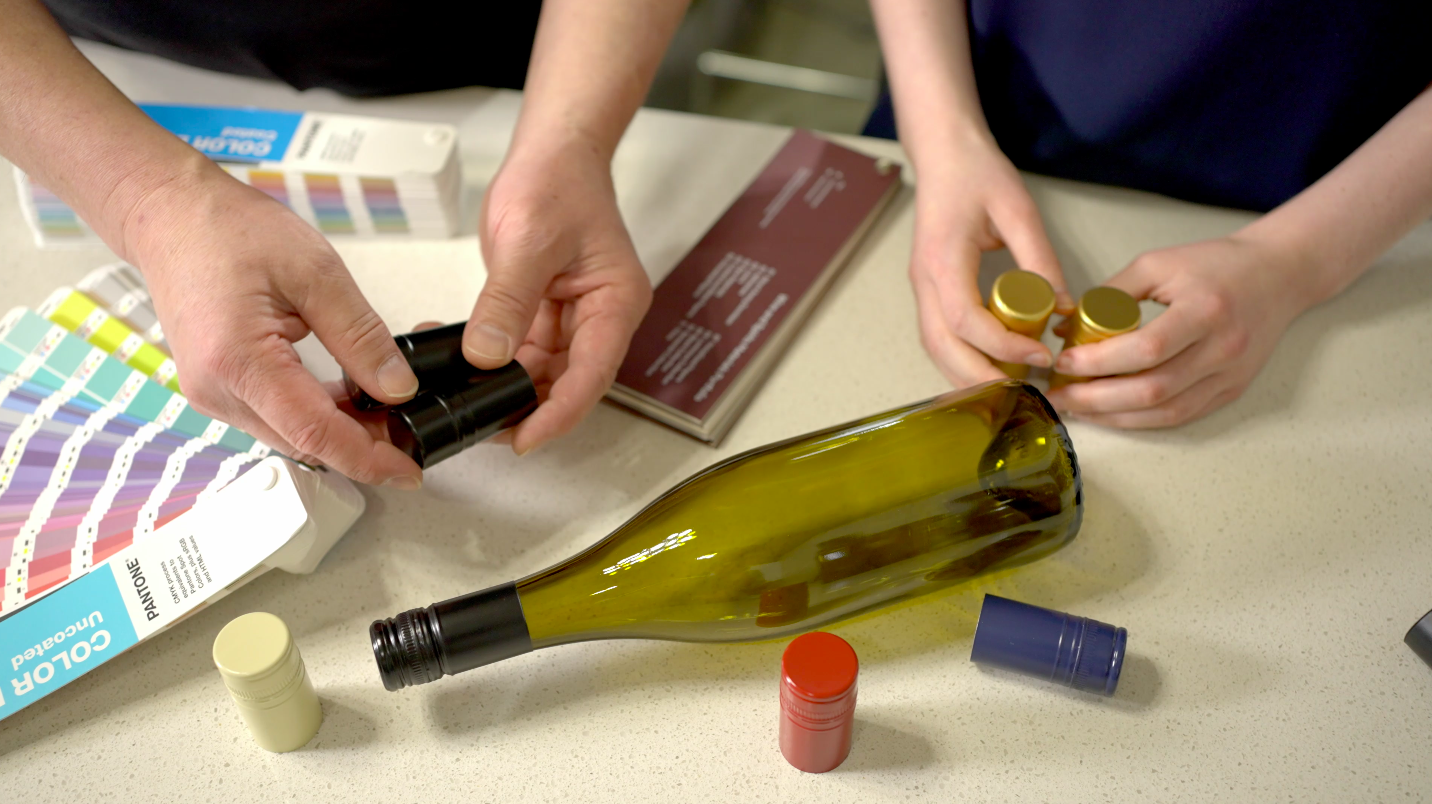 Town Hall Brands Team Wine Label & Packaging Design
DO YOU NEED A BRAND REFRESH?
Ask yourself if any of the following statements resonate with you:
- My overall look is dated, and it doesn’t reflect my core values.
- I am repositioning or changing my portfolio.
- Other brands are grabbing more of the market share and look better than me.
- I am expanding into new markets (and facing new competition.)
- My look is inconsistent across my marketing channels.
- My brand story no longer compels current and potential customers.
- My sales are declining.
If you find yourself nodding your head to any of these statements, you may need a brand refresh. If so, take action to get clear so your customer has no doubt about who you are and what you stand for. Be fresh, attractive, and memorable!
#
Town Hall Brands is a marketing and graphic design agency that specializes in branding and promoting in the areas of agriculture, beverage alcohol, food, and hospitality. Learn more at townhallbrands.com or on social @townhallbrands.
March 1, 2026
The big picture – why winery photos are importantSoon communication tactics will need to return to what they were last year, and still keep the current climate of the pandemic in mind.
You need to work twice as hard to keep your customer base connected to you; if they cannot visit you in person, you need to do your best to show them what is happening. Your social media channels, website, and email lists should all take precedent.
On social media, you need to over communicate about what is happening at your winery. If you cannot see people in person to give them a visit and tour of your facility, you need to show them. Depending on the channel that you use, video and photography is as important as ever.
Okanagan-based photographer Lionel Trudel says “Tasting rooms are the connection point between the art of winemaking and your clients. Are your photos inviting?”
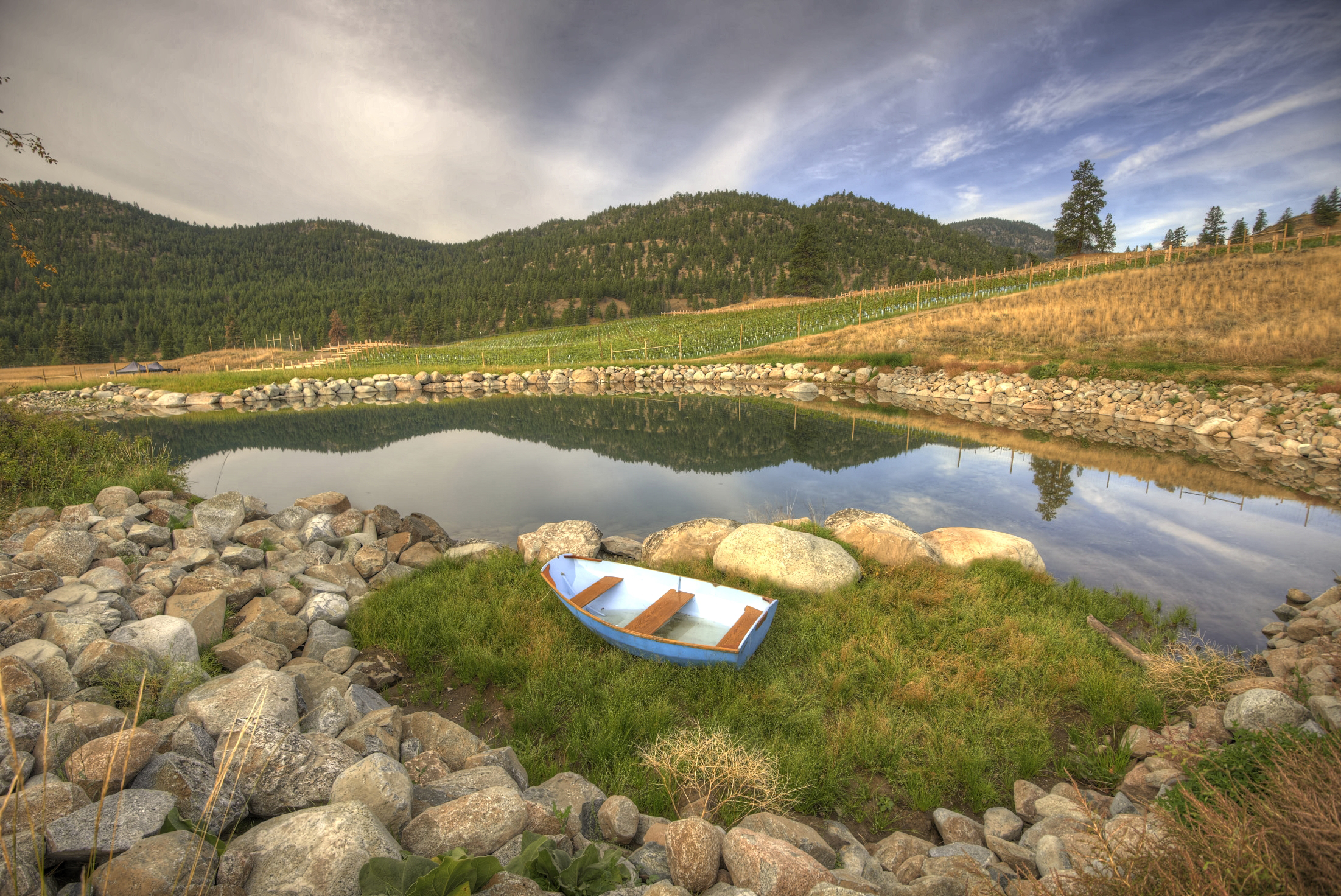 It is worthwhile to invest in quality photography for your winery. [Okanagan Crush Pad vineyard photo by Lionel Trudel]
Your business and brand have a narrative that can be told with photography and videos, and it’s this authentic storytelling that ingratiates your audience to you. We all know that feeling we get when a good photo draws us in. You want that for your business.
So how is your photo library? Is it up to date? Do you have recent and relevant pictures? Stock photos can be an option, but even if you are starting from scratch, I suggest you avoid using stock pictures if possible. Also, if you can, keep things mixed up and avoid using pictures from shoots that you've already posted multiple times (these are easy to spot as the people shot are in the same clothing and settings). People prefer a more personal approach versus something that looks like an ad.â
If you are building your photo library, consider your shot list, and consider how you will achieve that list.
For a shot list with the clients we work with, we carve their photo libraries into the following categories:
- Tasting Room
- Winery/production/ harvest
- Vineyards/orchards (aerial photos)
- People
- Events
- Product shots (bottle shots here)
Images should be captured in varying seasons to reflect the growing year and visitor experience. Be aware of what season each photo was captured in, as you don’t want to confuse your audience on what is going on at your business. For example, to promote your winery in the summer, avoid using photos that look like they were taken in the fall.
Many people think that they can take the photos they need themselves, on their smartphones. And it’s possible: while professionals and photo enthusiasts will always get better results using ‘proper’ cameras and lenses, modern smartphones take pictures that may suffice some business needs.
A downside to photos captured on phones is that they don’t normally have high enough resolution for anything other than some digital use. Photo resolution and file size are very important, and vary depending on whether you will be printing, enlarging, using on the web, or posting on Instagram and social media.
It is well worth it for a winery to invest in the services or a professional photographer to build a multi-purpose photo gallery.
It is no secret that the wineries that invest in good quality photos with a photographer are the ones whose images get chosen when the media come calling. If you are flipping pages in a favourite magazine and notice that the same winery is getting coverage again and again, many times it is because they have a good quality high-resolution photo library.
When you work with a photographer, here are a few tips to consider:
Be sure to get the images delivered digitally in three formats and sizes: print, website and social media. For print, you want to obtain the original high-resolution image files in a .TIFF format, and .PNG and .JPEG for websites and social media.
Also, it is important to have the rights to your own photos, so attribution goes to your winery instead of to the photographer. It is also a lot safer to own your own library than to risk duplication of these images in the market and see them used by someone else.
Once you have a photo library you will be well positioned to give customers a clear understanding of the beauty of your location, whether the photo need be for email newsletters, social media posts, event listings, advertising, print collateral, and more.
#
Town Hall Brands is a marketing and graphic design agency that specializes in branding and promoting in the areas of agriculture, beverage alcohol, food, and hospitality. See more at townhallbrands.com or on social @townhallbrands.
March 1, 2026
How to Turn Your Winery’s Award Wins into Marketing GoldSip, sip, hooray! Congratulations on winning an accolade for your winery - now it’s time to announce this to the rest of the world, humbly and strategically of course.
Why Awards Can Be Marketing Gold
Whether it’s the renowned National Wine Awards or British Columbia Lieutenant Governor's Wine Awards, industry achievements are powerful marketing tools your winery can leverage. They help solidify your winery’s reputation and credibility as the cream of the crop, and set you apart from competitors. Not only can you use this news to generate positive media coverage, it also reminds tasting room visitors of your product’s quality and commitment to excellence.
Most importantly, awards recognize the efforts of your staff, instilling pride, boosting morale, and spotlighting your team’s talent and overall “awesome-ness.”
8 Ways to Make the Most of An Award
We don’t suggest you win an award , have an internal “huzzah”, and then tuck the award away. Use the external accolade to your advantage. Here’s how:
Update Product Description on Web Store & Add to Tech Sheets
Use this industry achievement as a “badge” on your winery’s online store and sell sheets. These additions act as visual reminders and credibility enhancers for anyone who visits your site in the future.
Display Award in Your Shop
In addition to digital mediums, showcase the award in your wine shop. If you get a physical medal, hang it from the wine that won the award. Makes a great talking point in the wine shop.
Enhance Your Retail Listing
An extension of the award in your own shop is to make a shelf talker, or neck tag or even a sticker for the bottle that can get applied to the bottle in the retail locations where the awarded wine is sold. Note that you or your sales team might be the ones to apply.
 Blue Grouse Necktag & Harper's Trail Shelf Talk
Post on Social Media
The fastest way to share any news is through social media. When crafting posts for Instagram or Facebook, be sure to include thank-yous to the organizers and judges, tag accounts appropriately, utilize related hashtags, and end with a call-to-action directing followers to your website to drive traffic. If your team is on LinkedIn, repurpose content for your professional connections and add the award under your “Accomplishments,” or as a mention in the “About” section on all your winery’s social profiles. Get creative with the latest and greatest social media features, such as extended 60 to 90 second Instagram Reels, or go LIVE.
Distribute a Press Release
An official press release is a great way to announce the news, generate publicity and garner attention, but make sure that the award is significant and newsworthy in order to gain traction via media outlets. Leverage your press contacts to help spread the word. Create interest among regional and national wine affiliates actively subscribed to press feeds. Remember to include outbound links to your winery’s website to boost SEO!
Send Out an E-newsletter
Share the announcement with your curated list of subscribers through an email newsletter. Current, past, and future customers may miss the update on your website or social channels, so send the news directly to their inboxes informing them of your team’s accomplishment, what it means for your winery, and add a call-to-action encouraging them to explore more.
Encourage Team to Share the News
Speaking of your team, also send out internal communication celebrating this success to drum up excitement. Make this email personal, such as with a special message and genuine thank-you from the founders. Go the extra mile and host a celebration to thank them, and make them feel proud of what you've all accomplished. Your staff are your best brand advocates and ambassadors, as well as the people who contributed to winning the award for your winery, and will gladly help spread the news.
Onto the Next
Keep in mind that not all award competitions are created equal, or in other words, not always the right fit for your winery’s goals or aligns with how you hope to position your brand. Oftentimes, wine competition awards are not meaningful to the public, and all they become is an additional talking point for tasting room staff. Think strategically when researching and deciding which awards to submit for and choose ones that will resonate with your target audience. For example, if all of your winery’s tasting room visitors are from the United States, the Los Angeles County Fair Awards may be worth considering, but they might not know anything about the All Canadian Wine Awards.
Another strategy is to enter competitions where you want the judges to take notice of your brand. Getting your wines tasted by some of the award’s global, prestigious judging panels and bringing home an award is not only the cherry on top, it is also a relationship-building opportunity. Many judges are also wine reviewers, so think long-term and privately send a note to each judge to thank them after the competition.
#
Town Hall Brands is a marketing and graphic design agency that specializes in branding and promoting in the areas of agriculture, beverage alcohol, food, and hospitality. Learn more at townhallbrands.com or on social @townhallbrands.
March 1, 2026
Tips to Level Up Your Winery & Cidery’s Next Marketing CampaignOn the lookout for creative inspiration to elevate your winery or cidery’s next marketing campaign? From collaborating with like-minded industry leaders to generating interactive content, read on to learn how:
TIP #1: Collaborative Limited Editions
Team up with other wineries or cideries to create collaborative limited-edition products. This can involve joint production, blending, or aging processes, resulting in unique and exclusive offerings that are only available for a limited time. Collaborations not only attract attention, but also foster a sense of community among wine and cider enthusiasts.
 Blasted Church limited edition wines in celebration of 20th anniversary
TIP #2: Interactive Social Media Campaigns
Go beyond standard social media posts by creating interactive campaigns that encourage user participation. Launch contests or challenges that prompt your audience to share their wine or cider stories, recipes, or pairing suggestions. Incorporate user-generated content into your marketing strategy, showcasing the creativity and enthusiasm of your customers.

Ready to give these tips a try for yourself? Check out our other blogs for more winery and cidery marketing trends:
#
Town Hall Brands is a marketing and graphic design agency that specializes in branding and promoting in the areas of agriculture, beverage alcohol, food, and hospitality. Learn more at townhallbrands.com or on social @townhallbrands.
March 1, 2026
Holidays in July – How to Stay on Top of Design TimelinesIt’s hot outside, summer is in full swing, and the fruit is growing. The farthest thing from many minds is the holiday season but planning now will make sure that you are not panicking in the fall.
Now is the time to prepare for stock and inventory requirements, secure in-store stacks and displays with retailers, and prepare to have adequate merchandise and marketing materials on hand for the heavy sales push of October, November and December (OND).
Will you be making a special offer? If so, what kind of materials will you need? Do you need long lead ads created, or a campaign developed? Or do you need special packaging? Maybe you want to create a library release, or a box set? Starting the design process now allows time for new materials and campaigns to be fully created and ready to go when consumers turn their focus to holiday shopping in the fall.
Feel like you are always scrambling to get design assets done? Town Hall Brands has created a guide, so you won’t miss another design deadline.
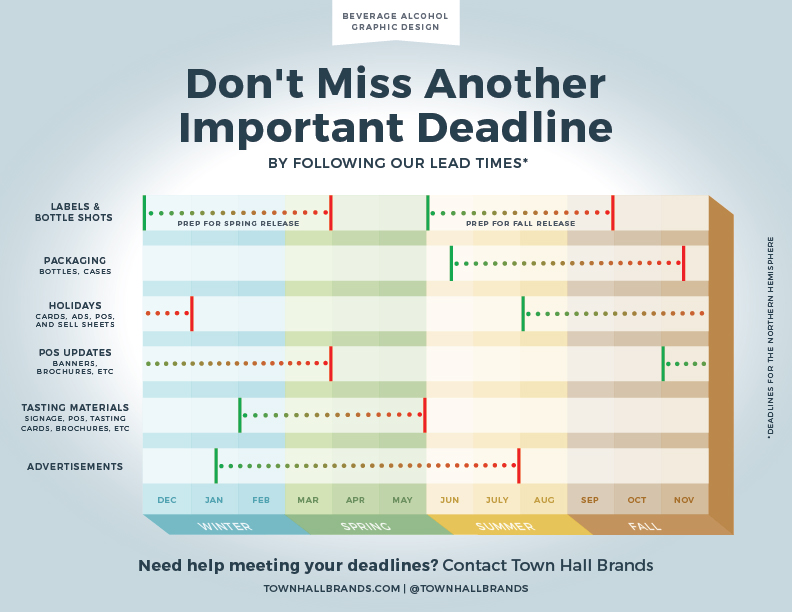
WINTER (DECEMBER, JANUARY, FEBRUARY)
- Advertisements: You should have your advertisement budget planned for the year. Now’s the time to get those campaigns and ads created. Keep in mind print, broadcast, digital, and influencer collaborations.
- Labels & Bottle Shot Images: Whether you are refreshing your labels, updating the vintages and back labels, or designing a whole new label – it’s time to start this process to prepare for your spring release.
- Prepare updated press materials for media queries.
- Tasting materials: Below are some materials you may need for your tasting room opening:
o Highway signage for visitors
o Shelf talkers
o Portfolio list
o Signage for winery (tasting fees, etc)
o Tasting cards
o Neck tags
o Shelf tags
SPRING (MARCH, APRIL, MAY)
- This is the time to make sure all your labels are done in time for your spring bottling and release.
- Bottle Shot Images: With the labels finalized, this is the time to get bottle shot images done. They can be used in your sell sheets, online store, advertisements, or to fulfill media requests.
- Is your press information kit up to date?
- With the tasting season coming up, is your retail shop ready for visitors?
SUMMER (JUNE, JULY, AUGUST)
- Wine & Cider Labels & Bottle Shot Images: Whether you are refreshing your labels, updating the vintages and back labels, or designing a whole new label – it’s time to start this process to prepare for your fall release.
- Packaging: Wine cases, bottle cap enclosures, prep for bottling
- Holidays: It’s not too early to think about your holiday offerings, and this is actually the best time to do it! Below are some materials you may need, for your clients and for your sales team.
o Shelf talkers
o Technical sheets
o Portfolio booklets
o Holiday offerings sell sheets
o Wine club offers sell sheets
o Advertisements
o Holiday cards – printed or ecards
o Tasting cards
FALL (SEPTEMBER, OCTOBER, NOVEMBER)
- Holidays: Finalize your holiday pieces to make the most of your year-end sales
- Point-of-sale materials: Need updates to your current marketing materials?
o Business cards
o Rack cards
o Brochures
o Banners
NEED HELP WITH THIS?
The Town Hall Brands team is here for your graphic design, branding and marketing needs. Shoot us an email info@townhallbrands.com and we will create a custom plan for you to make sure your deadlines are met.
March 1, 2026
You Built Your Brand – Now Protect It and Don’t F*ck It UpYou spent time, money, and energy building a brand that people recognize. It looks good. It sounds right. People are finally starting to get it. So why are you letting it fall apart?
Your brand is a reputation, not just a logo. Inconsistent fonts, weird colors, off-brand photos, and tone-deaf captions are the start of a slow slide into brand chaos.
Here’s how brands get muddled:
- No rules, just vibes: You hand your logo to a sign maker or a friend who “knows Photoshop” and hope for the best. Without a brand standard, they’re guessing. And that guess might be Comic Sans.
- Template traps: Canva and AI tools are great. While these programs open a new set of opportunities it is important to use them in a way that honors your brand identity. When using pre-made templates take the time to change the fonts and colors to the ones that match your brand and use your original photos when possible, to preserve brand recognition. If you're using pre-made templates without updating fonts, colors, and imagery to match your brand, congratulations—you just became generic.
- Death by a thousand tweaks: Adding a new font here, changing a color there, updating a label “just this once.” It all adds up. You’re too close to notice, but your audience isn’t. They can feel when something’s off.
Everyone has a different aesthetic and having strong brand standards ensures that your brand look is consistent regardless of who is working on it.
The Fix: A Brand Standard
What are ‘brand standards’? A brand standards document provides a ‘how-to’ to implement your brand consistently and uniformly in design and communications. Sometimes called a ‘brand usage guide’, the document becomes a tool for you to share with those who are going to bring your brand to life after it has been created.

It’s the “how-to” guide for using your logo, colors, fonts, and voice—so your brand always shows up looking sharp and sounding like itself. Whether it's a one-sheet or a 40-page book, it keeps everyone (including your future self) on the same page.
The basics of a brand guide covers the brand’s visual identity, the logo, color palette and typography. This can be expanded to include a photography guide and sample design layouts.
At its simplest, a brand guide covers:
- Your logo (and how not to stretch it)
- Colors (with the right codes, not just “blue-ish”)
- Fonts (consistency is sexier than creativity here)
- Visual guidelines (like photography style and sample layouts)
- Voice and tone (what your brand says and how it says it)
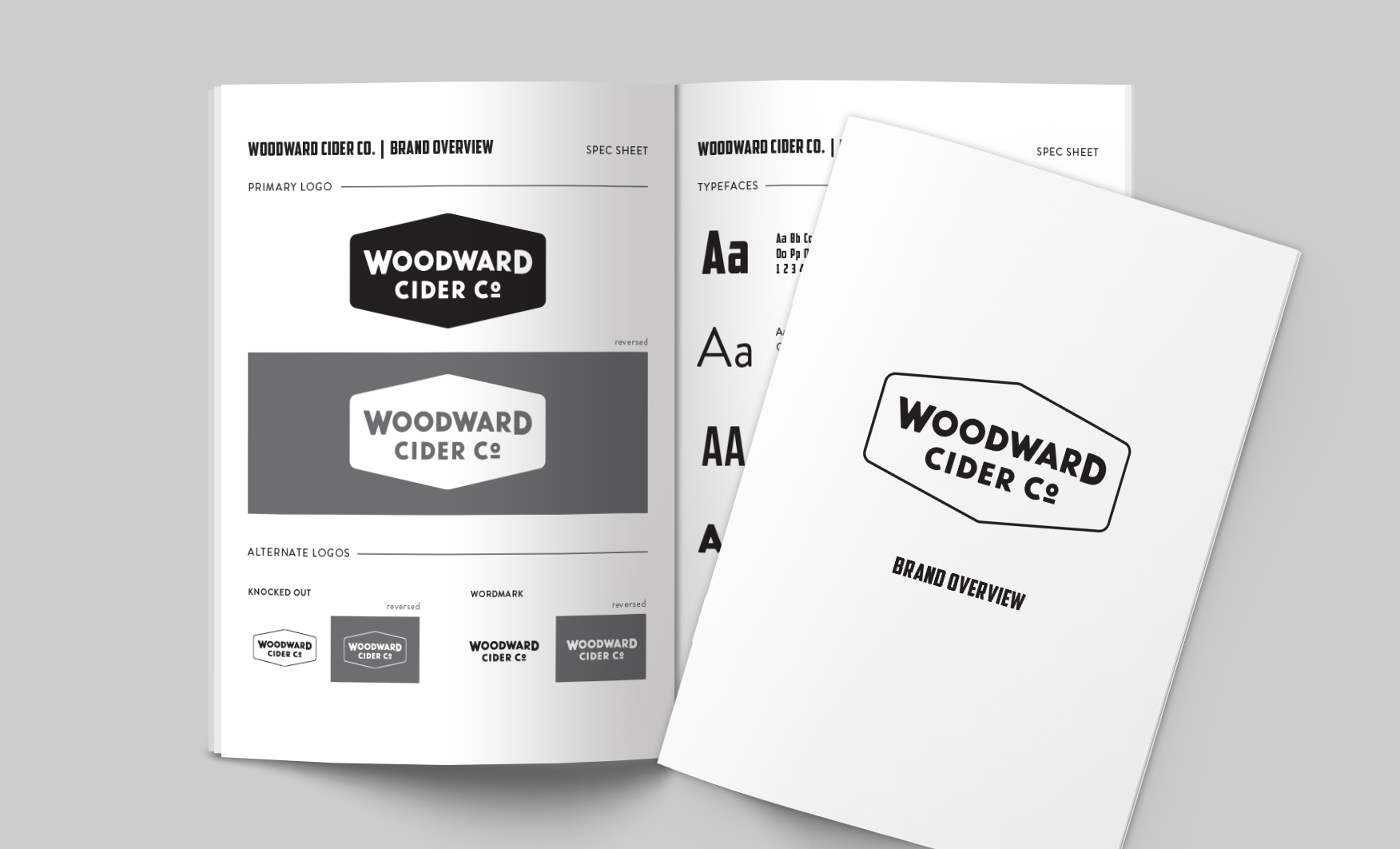
Want to go deeper? A more comprehensive brand package can be developed to include the corporate mission statement, brand promise and personality. These can set the tone for your brand’s editorial voice, including examples of the appropriate tone of voice and language to use when talking about your brand. These help anyone writing, designing, or promoting your brand to nail it every time.
At Town Hall Brands, we don’t just create brands—we protect them. As a full-service agency, our company has a design team that creates brands, logos and packaging from scratch. However, our design team is also responsible for taking a brand we didn’t create and making promotional materials from it. This includes items like a restaurant promotion or an ad that needs to fit within an existing brand.
With or without a standards guide, we’ve seen what happens when there are no guardrails. Spoiler: it’s not pretty.
Bottom Line
If you’ve gone through the effort of building a brand, do yourself a favor: protect it. Create a brand standard. Use it. Share it. Enforce it. Your brand is only as strong as its weakest execution.
Don’t f*ck it up.
March 1, 2026
Looking Back at 2023…Experiential Marketing, Virtual Reality, Emerging Trends & Everything In-Between*Insert cheesy quote about how fast time flies…*
In all seriousness, 2023 has been a blur and full of exciting challenges and opportunities in the world of marketing for the wine and beverage industry.
Here is a look back at all the expert tips we’ve shared throughout the year to help wineries and wine brands elevate their marketing and branding that remain relevant as we enter the New Year:
Branding & PR
Press Kit vs Media Kit - Make sure you have the right information for the intended audience.
What is a brand refresh? - The short answer is that it’s a makeover for your company.
Experiential Marketing & Emerging Trends
Elevating Wineries with Virtual Reality (VR) - The Ultimate Guide - Transport your customers into the enchanting world of winemaking and cider production through immersive virtual reality experiences.
Experiences that Your Winery Audience are sure to LOVE! - Two ways to create engaging, memorable experiences for your winery or cidery audience that will make a lasting impression.
Top Two Emerging Trends in Winery Marketing - By embracing emerging trends, you can captivate your audience and leave a lasting impression.
Marketing Tips & Strategies
Tips to Level Up Your Winery’s Next Marketing Campaign - From collaborating with like-minded industry leaders to generating interactive content.
Low-Budget Marketing Ideas to Grow Your Wine Brand - Three budget-friendly ideas to get you started on your winery’s marketing journey.
3 Tips to Market Your Winery without Breaking the Bank! - Marketing tips that can help you breathe some life into your wine brand, while on a budget.
Budget-Friendly Marketing Strategies for Your Winery - Cost-effective marketing strategies that can help rejuvenate your wine brand.
Happy Holidays! We look forward to bringing even more solutions and creativity to your winery’s next marketing campaign in 2024.
#
Town Hall Brands is a marketing and graphic design agency that specializes in branding and promoting in the areas of agriculture, beverage alcohol, food, and hospitality. Learn more at townhallbrands.com or on social @townhallbrands.
March 1, 2026
Marketing Lessons… from Tractors?When you think of a tractor, do you picture the sturdy, hardworking machine of the past or today’s powerful, modern marvel? For wineries, cideries, and fruit farmers, tractors symbolize the bridge between nature and craft. But how does this relate to marketing?
Tractor symbolism can be marketing gold. Let’s explore this through two brands our team has worked on, illustrating how the old and new of the tractor world can inspire marketing.

Built to Last: The Legacy of Road 13
In 2008, Pam & Mick Luckhurst sought to rebrand their winery, originally named Golden Mile Cellars. Our team discovered that “It’s All About The Dirt” was a core value, which became the foundation for a new brand. The heart of this brand was the tractor Mick drove through the vineyard, accompanied by his dogs. This rebrand transformed the winery into a standout on shelves and a household name for wine lovers in BC. The enduring presence of the tractor reflects its timeless appeal. Even after the winery was sold in 2018 and the new owners have had packaging refreshed, the core tractor remains on the label. This longevity underscores the importance of grounding your brand in authentic stories that resonate deeply with your audience.
Childhood Nostalgia Meets Packaging: Woodward Cider Co.
Woodward Cider Co. in Kamloops is another client for whom we handle packaging. Their Modern Dry Cider, Blue Tractor, pays homage to the founders’ childhood, where the blue tractor was an icon on the farm. More than a machine, it sparked memories and adventures. Now, it’s commemorated as part of the brand, inviting people to see the tractor at the cidery. This nod to nostalgia makes the tractor relatable and memorable, creating an emotional connection with customers. It highlights the importance of connecting your product to moments and memories that customers can relate to or aspire to.

Lessons from Modern Tractors
For Road 13 and Woodward Cider, the tractor became a visual and emotional anchor, connecting them with their communities on a deeper level. Contrast these sentimental stories with today’s super-modern tractors: sleek machines equipped with GPS, autonomous capabilities, and precision farming tools. They represent innovation, efficiency, and a forward-thinking approach to agriculture.
For brands in the wine, cider, or fruit farming industries, this evolution offers inspiration. Are you showcasing how your business embraces innovation to deliver quality and sustainability? Whether it’s adopting regenerative agriculture, refining production techniques, or leading in environmental practices, these modern approaches deserve a spotlight in your marketing. Today’s customers value transparency and innovation. By sharing how you’re leveraging technology or evolving your craft, you position your brand as a leader—not just rooted in tradition but committed to progress.
Blending the Old and the New
Just as Road 13 and Woodward Cider Co. balance timeless authenticity and nostalgia, your brand can find a sweet spot between heritage and innovation. Consider how to tell a story that highlights both the enduring values of your craft and the modern practices that set you apart. The tractor, whether vintage or cutting-edge, can be your storyteller, symbolizing determination and growth. By weaving these themes into your brand story, you can create a narrative as enduring and impactful as the tractor itself—one that resonates with customers, connects them to your craft, and positions your brand as both timeless and forward-thinking.
Town Hall Brands has created and promoted dozens of brand identities. Let us know how we can help you create packaging with impact.
January 13, 2026
Why Facebook Is Quietly Limiting Winery Page Discovery, and What to Do Next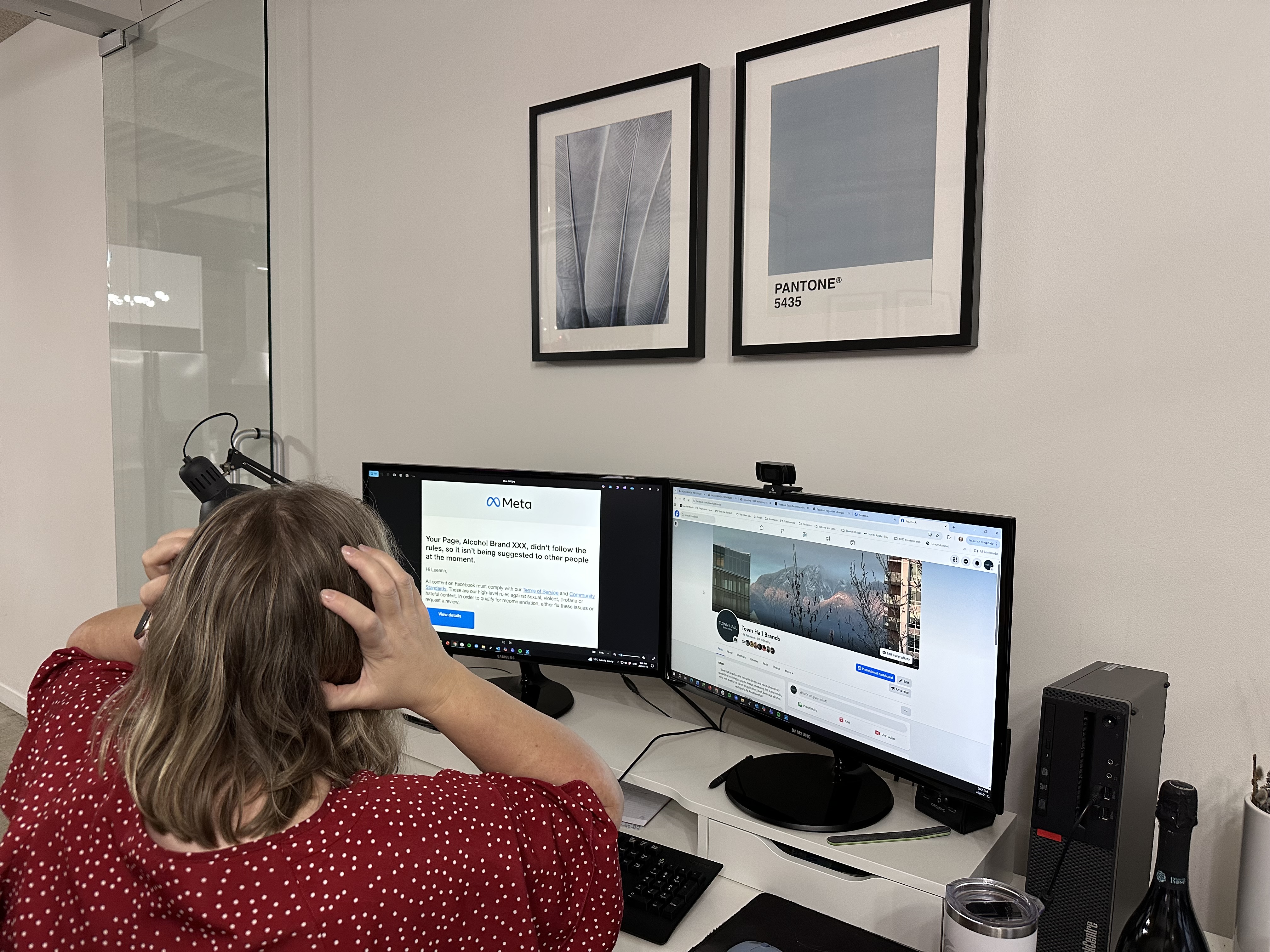
By Leeann Froese, Town Hall Brands
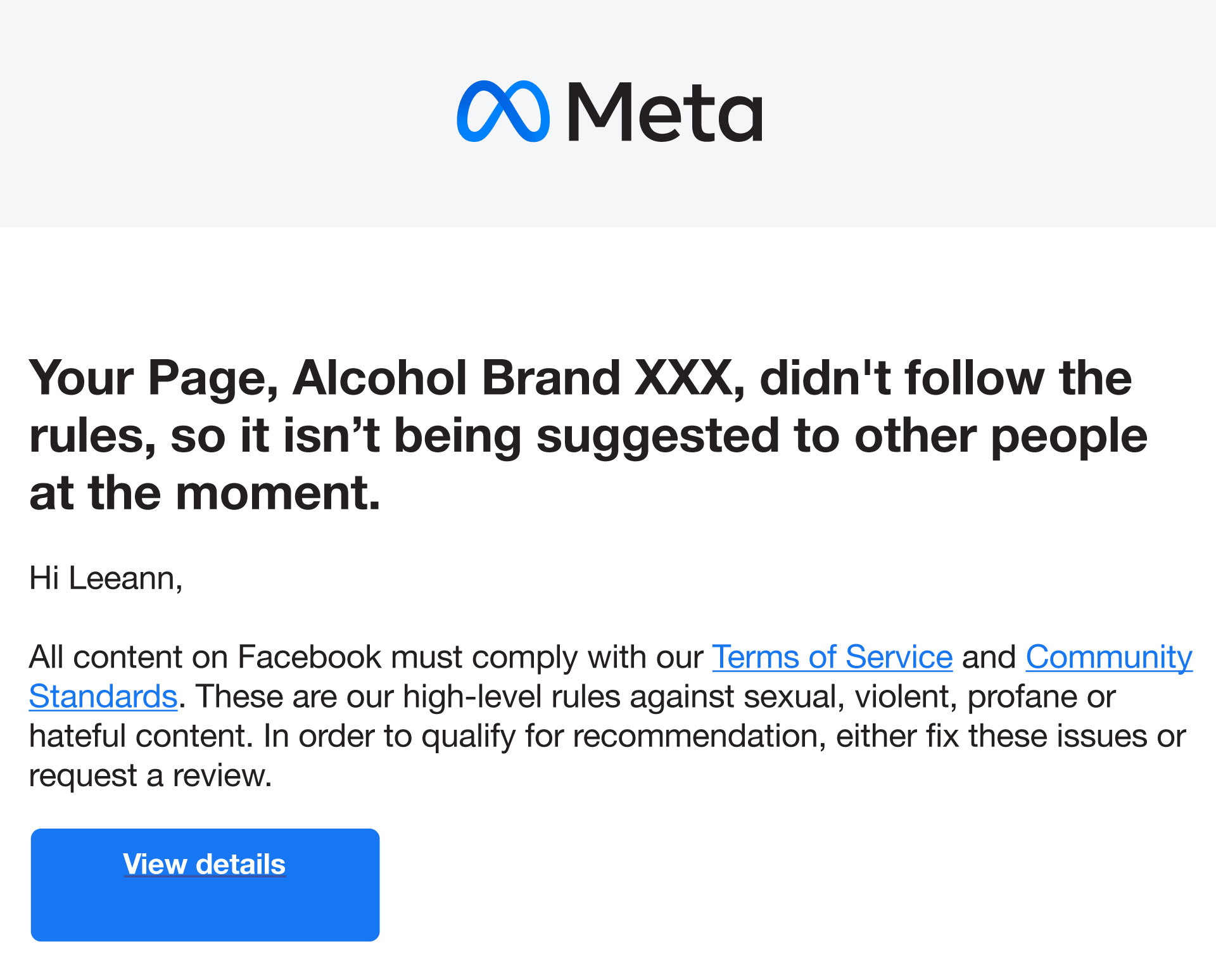
Over the past few months, wineries across North America have begun receiving a vague but unsettling notification from Facebook stating that their Page is “not being suggested to other people at the moment.” In many cases, there are no visible violations, no content removals, and no clear explanation.
Pages remain live. Accounts remain in good standing. But organic discovery has narrowed.
This is not a glitch, and it is not necessarily a punishment. It is a platform decision, and it has real implications for how wineries should approach marketing in 2026.
This is not a compliance failure
Most wineries encountering this issue are fully compliant with Facebook’s Community Standards. Their content is allowed to exist on the platform. What has changed is recommendation and amplification, which Facebook controls separately under its Terms of Service.
In other words, a Page can follow every rule and still be excluded from algorithmic discovery.
This distinction is important because it explains why Facebook’s notice feels so vague. Recommendation eligibility is driven largely by automated systems, pattern recognition, and risk management — not by a single identifiable post that can easily be “fixed.”
Why Facebook doesn’t tell you what’s wrong
For regulated categories like alcohol, Facebook applies a more conservative approach to amplification. Signals that can affect recommendation eligibility include:
- Language that implies overconsumption or partying
- Imagery that suggests excessive drinking or unclear age context
- Sexualized or suggestive copy, even if subtle or humorous
- Historical content patterns, not just recent posts
- Unmoderated comments from followers
In many cases, there is no single violation to point to. This is intentional. Platforms do not disclose exact triggers because doing so would allow the system to be gamed.
What wineries can do if they receive this notice
While there is no guaranteed fix, wineries should take a measured and practical approach:
- Audit both recent and historical posts for borderline language or imagery
- Archive or remove content that relies on innuendo, party framing, or exaggerated consumption cues
- Review Facebook Page category, business description, and age restrictions for accuracy
- Moderate comments more actively, as user comments count as Facebook Page content
Only request a review once anything questionable has been cleaned up
Even after review, recommendation may not be restored. That outcome is increasingly common and does not indicate wrongdoing.
The bigger issue: you do not own social media
At Town Hall Brands, we have long advised that the most important assets a winery can build are its website and its email list.
Social platforms are powerful tools, but they are “rented” spaces and in the case of Facebook, Meta is the landlord. Algorithms change. Policies tighten. Categories like alcohol are treated conservatively. Pages can lose visibility overnight with little explanation and limited recourse.
If a Meta account were to disappear tomorrow, a winery with a strong website, a healthy email list, and an established media footprint would still be standing. A winery that built its entire audience inside a platform would not.
That reality has not changed. What has changed is how clearly it is now being demonstrated.
What this means for winery marketing in 2026
These platform changes intersect with broader shifts already underway across the wine industry:
Storytelling must move forward.
Audiences are fatigued by narratives of struggle. The messaging that cuts through now is confident, optimistic, and focused on quality, place, and momentum. These stories travel better through media, newsletters, and owned channels than through algorithms.
Digital presence means conversion, not aesthetics.
A strong website that captures email, hosts earned media, and converts interest into action matters more than a perfectly curated feed. Social should drive traffic off platform, not act as the destination.
Smaller experiences travel further.
Micro experiences, seasonal offerings, and flexible add-ons are easier to share, easier to pitch, and easier to repeat than large-format events. They also perform better in PR and partnerships.
Collaboration is a growth strategy.
As individual Page discovery weakens, regional and collective storytelling strengthens. Media, tourism platforms, and consumers respond to cohesion.
Planning cannot be reactive.
The wineries best positioned for 2026 are using this planning window to rebalance their channel mix, strengthen owned assets, and reduce dependence on any single platform.
The renewed role of PR and earned media
One of the clearest implications of Meta’s shift is the renewed importance of earned media.
PR is not subject to algorithmic throttling. Coverage is searchable, permanent, and compounding. It supports SEO, feeds generative AI discovery, and builds credibility in ways platforms cannot suppress.
As social discovery becomes less predictable for alcohol brands, earned media once again becomes a primary visibility channel, not a secondary one.
A strategic reset, not a setback
This is not a signal to abandon social media. It is a signal to stop building businesses as if social media were guaranteed.
Platforms will continue to change. Policies will continue to tighten. Wineries that invest in owned channels, earned media, and intentional planning will be the ones that remain visible, resilient, and competitive in 2026 and beyond.
Does reading this give you anxiety and overwhelm? We are here to help. We have been marketing in beverage alcohol for more than two decades, and we have a team that can help you navigate all levels of media needs.
November 20, 2025
Right-Sized Wine: Meeting Consumers Where They AreConsumers are drinking differently. Smart wineries are packaging differently.
The wine industry is entering a moment where packaging innovation is no longer a nice-to-have.
It is becoming essential. As consumer habits shift, wineries need to look seriously at how they will integrate new formats and sizes into their production plans. Smaller formats, single-serves, multi-packs, pouches, and other alternative packaging have all seen steady, quiet growth. This is not a fad. It is a response to how people actually want to drink wine today.
Consumers are exploring more, committing less, and looking for ways to enjoy wine that fit their real lives. They want options that support moderation, convenience, sustainability, and trial.
A four-pack of 250 mL cans allows someone to try a winery without buying a full bottle. A lightweight pouch is ideal for hiking or concerts. A half-bottle makes a midweek glass feel approachable rather than indulgent.
When wineries resist these changes, they risk missing a growing audience that is actively seeking them out.
The producers who move quickly will be the ones who capture demand first.
Integrating alternative formats takes planning, capital, and openness to change. But the payoff is meaningful: better alignment with today’s wine drinker, more points of entry for a brand, and new opportunities to drive loyalty through flexibility and choice.
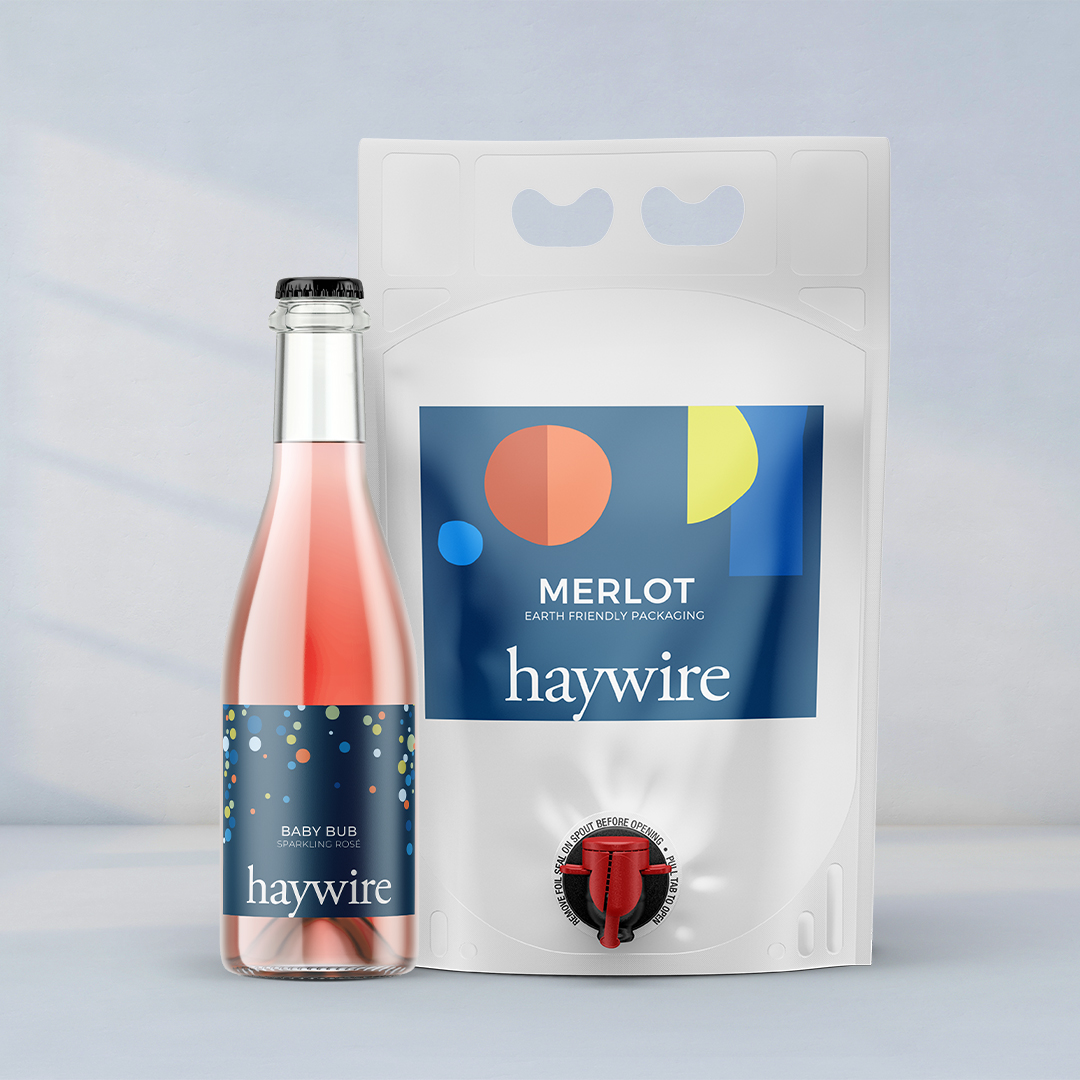 Haywire Winery's 375ml and 1.5L packages
Town Hall Brands helps wineries evolve, differentiate, and grow through brand strategy, design, packaging, and communications.
October 23, 2025
Taste Tuscany Without Leaving Canada Savour Quality from Europe: Tuscany’s Wine and Olive Oil Icons Find New Fans in Canada
October 2025 [Vancouver, BC] Canadians are falling in love with the real taste of Tuscany as testimonial of the European quality. This year, two of the most respected European producer groups, the Consorzio Vino Nobile di Montepulciano and the Associazione Produttori Olivicoli Toscani (APOT), are sharing their story through the European Union–funded campaign Savor Quality from Europe.
The campaign celebrates craftsmanship, authenticity, and sustainability by connecting Canadians with the winemakers and olive growers who represent the heart of European culture.
Why Canada’s Falling for European Products
Canada is becoming one of the most exciting destinations for premium European food and wine. Consumers here want products that tell a story: where they come from, who makes them, and why they matter. The Consorzio Vino Nobile di Montepulciano and APOT see that as a perfect match for the way they’ve always worked: with respect for land, tradition, and craftsmanship.
Earlier this year, the two organizations hosted seminars and walk-around tastings in Toronto and Montreal, giving Canadian trade and media an up-close look at what makes these products special.
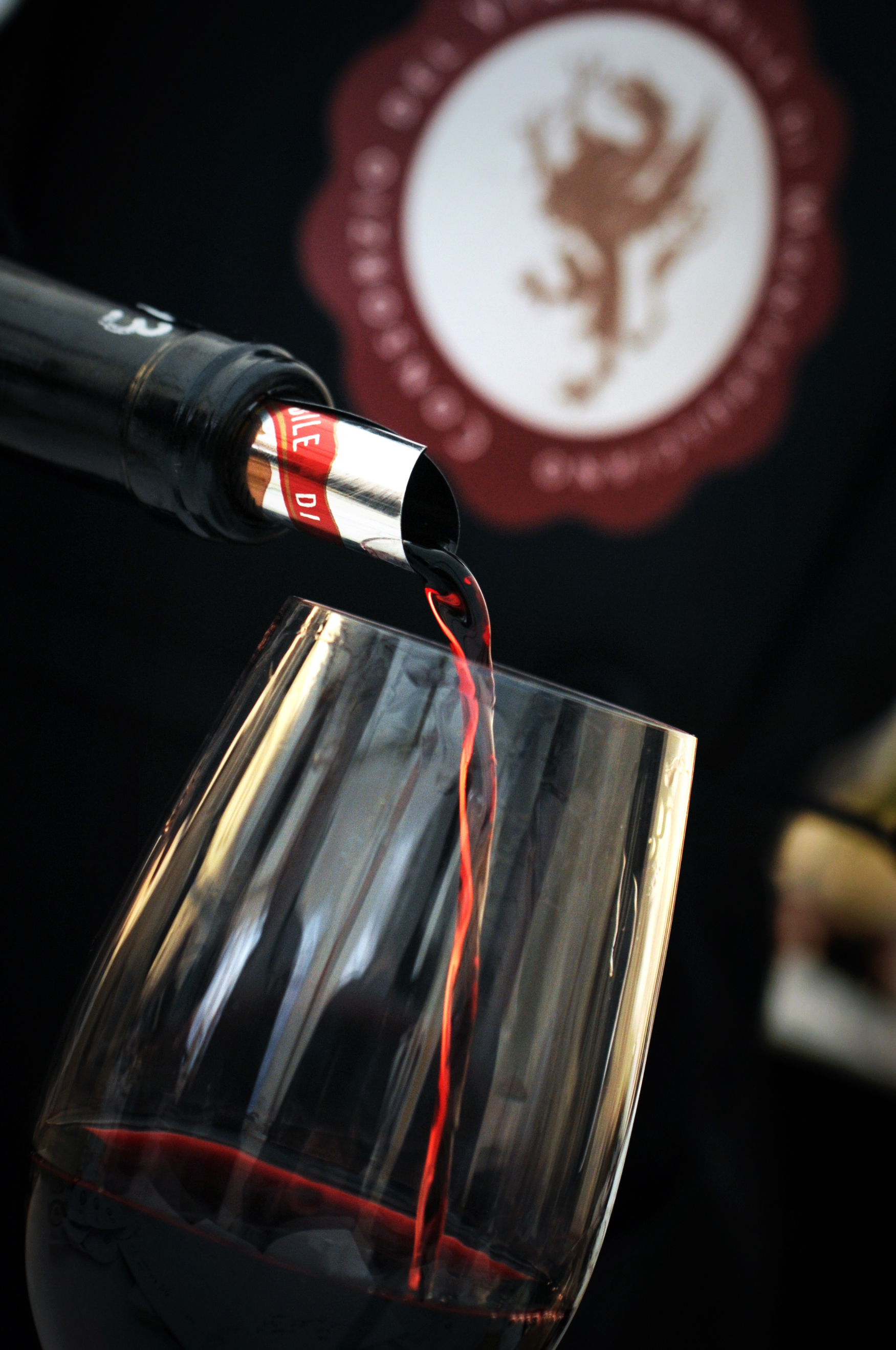
Meet Tuscany’s Noble Wine Collective
Few wines express place and history like Vino Nobile di Montepulciano. The Consorzio Vino Nobile di Montepulciano was founded in 1965 and represents producers of Vino Nobile di Montepulciano DOCG, Rosso di Montepulciano DOC, and Vin Santo di Montepulciano DOC.
Vino Nobile is made mostly from the Sangiovese grape (known locally as Prugnolo Gentile), grown on the sun-kissed hills of Montepulciano in southern Tuscany. The vineyards sit between 250 and 600 metres above sea level, where sandy and clay soils help create wines known for depth, balance, and longevity.
In 1980, Vino Nobile became the first Italian wine to earn DOCG status, Italy’s top quality designation. Today, the Consorzio continues to lead the way in sustainability. The entire Montepulciano denomination is certified under Equalitas, an internationally recognized standard that measures environmental and social responsibility across the region.
The newest chapter in the Vino Nobile story is the Pieve classification, officially recognized in 2025. The first vintage, from the 2021 harvest, marks a new level of quality that celebrates the diversity of Montepulciano’s vineyards. The classification highlights twelve historical zones, each linked to an ancient parish area. To qualify, vines must be at least 15 years old and wines must contain at least 85 per cent Sangiovese. Each Pieve bottling reflects the unique soils, exposure, and heritage of its parish, giving wine lovers a true taste of place.
The Keepers of Tuscany’s Liquid Gold
The Associazione Produttori Olivicoli Toscani (APOT) unites Tuscan producers who craft some of the world’s most sought-after extra virgin olive oils. Its members grow and press olives under European Union protections such as PGI Toscano and PDO Terre di Siena, Lucca, Seggiano, and Chianti Classico.
These designations guarantee more than just geography. They ensure that every bottle meets strict production and tasting standards, offering consumers traceability and confidence. APOT’s producers focus on early harvesting, gentle milling, and full transparency, preserving the bright, peppery character that defines authentic Tuscan oil.
For Canadians, these certifications help separate true extra virgin olive oil from generic imports, and they reinforce the connection between quality and origin.
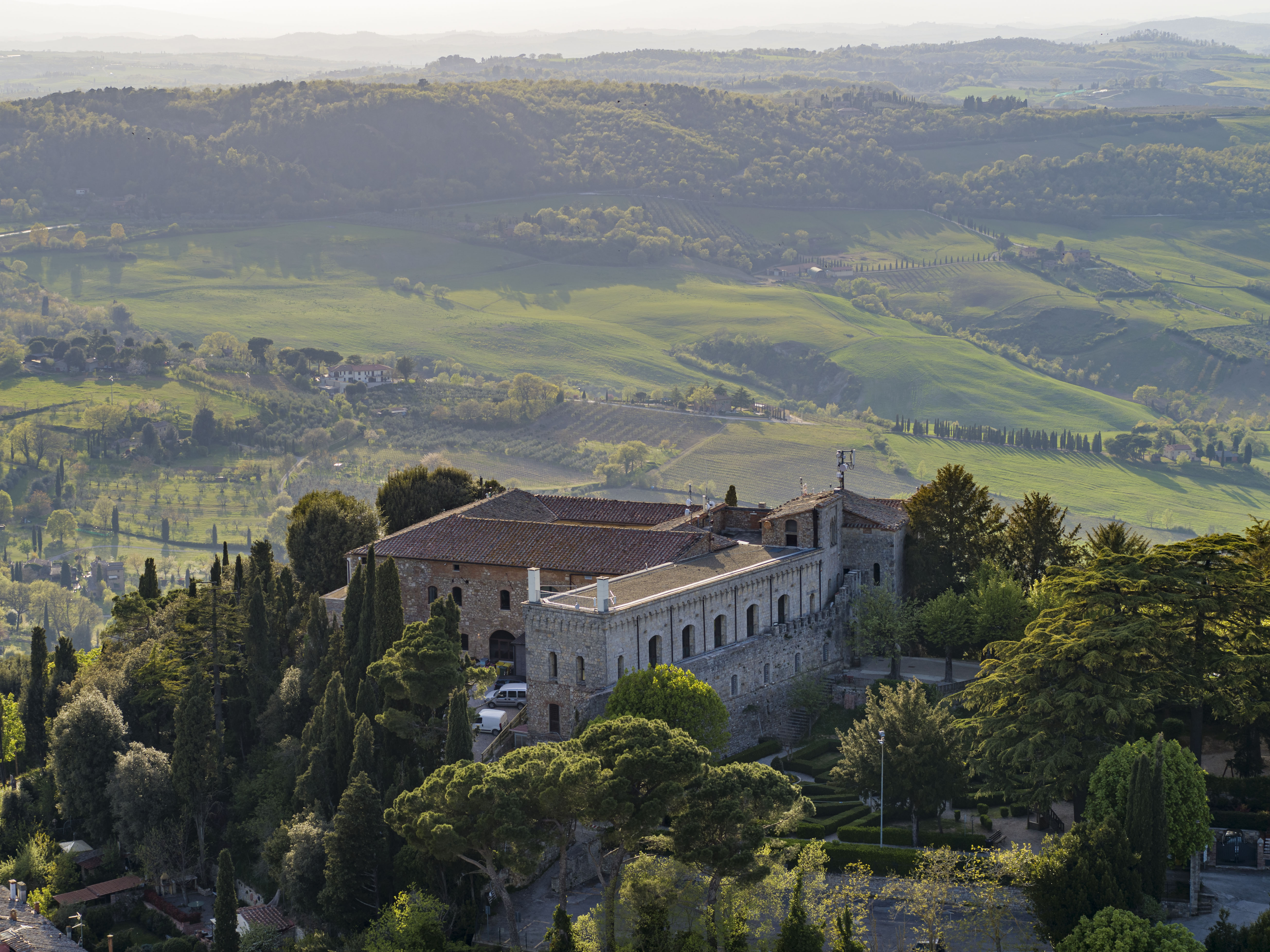
Pour, Drizzle, Repeat: Bringing Europe Home
The “Savor Quality from Europe” campaign is about more than introducing products. It is about celebrating the values that Canadians and Europeans share, such as sustainability, craftsmanship, and curiosity about the world.
As autumn unfolds across the country, Canadians are invited to bring a taste of Europe to their tables. A glass of Vino Nobile di Montepulciano and a drizzle of Tuscan olive oil can transform any meal into something memorable.
About the Campaign
Savor Quality from Europe is an educational and promotional program co-funded by the European Union to highlight the excellence of European agri-food products. The campaign focuses on origin, quality, and sustainability while encouraging consumers to connect with authentic European flavours.
For more information about the project, visit www.savorqualityfromeurope.eu/

August 28, 2025
Logo Best PracticesLogos are a visual symbol used to represent your brand, often a relatively simple graphic but don’t underestimate its importance. We are sharing our best practices for logo usage to preserve this important piece of brand recognition.
LOGO FILE TYPES
There are multiple file types used for logos, each with their own benefits and ideal uses. Selecting the file type that best matches the application will ensure your logo is looking its best.
At Town Hall Brands we work with logos in three formats: JPEG, PNG and Vector
JPEG is the image file extension that you may be most familiar with as it is commonly used for photographs. The benefits of this file type are compressed files that load quickly with web applications. The drawback when using a JPEG logo is the solid background, when placed over a photo or colorful background a JPEG logo will have a white background preventing the logo from integrating with the larger design.
When to use: website and digital formats where small or compressed files sizes are needed.
PNG is ideal for logos as they can have transparent backgrounds, this allows your logo to be placed into a design or over a photo without a background or border around the logo.
When to use: websites, social media icons, small scale print jobs
Vector unlike the previous two formats is a category rather than a file extension. A vector file is comprised of mathematical points rather than pixels, this allows vector files to be scaled indefinitely without any loss of quality. Types of vector files can include EPS, SVG and Ai (Adobe Illustrator).
When to use: printing, branded products and large-scale applications such as signage
LOGO RULES AND GUIDELINES
Consistency is key when it comes to logos as this is how consumers will identify your brand. Limit the number of logo variations and avoid making alterations to keep your logo easily recognizable. See our logo dos and don’ts:
DO
- Have full color and black and white versions of your logo for different purposes
- Use the full color version of your logo whenever possible
- Use the best file type for each logo application
- Include a safe space around your logo so it stands out and doesn’t get lost among other elements in a design
DON'T
- Rotate the logo
- Stretch the logo
- Change the font in the logo
- Change the color of the logo
- Change the scale of certain elements
- Place the logo on a busy background
- Make the logo so small that details are lost or the text is no longer legible
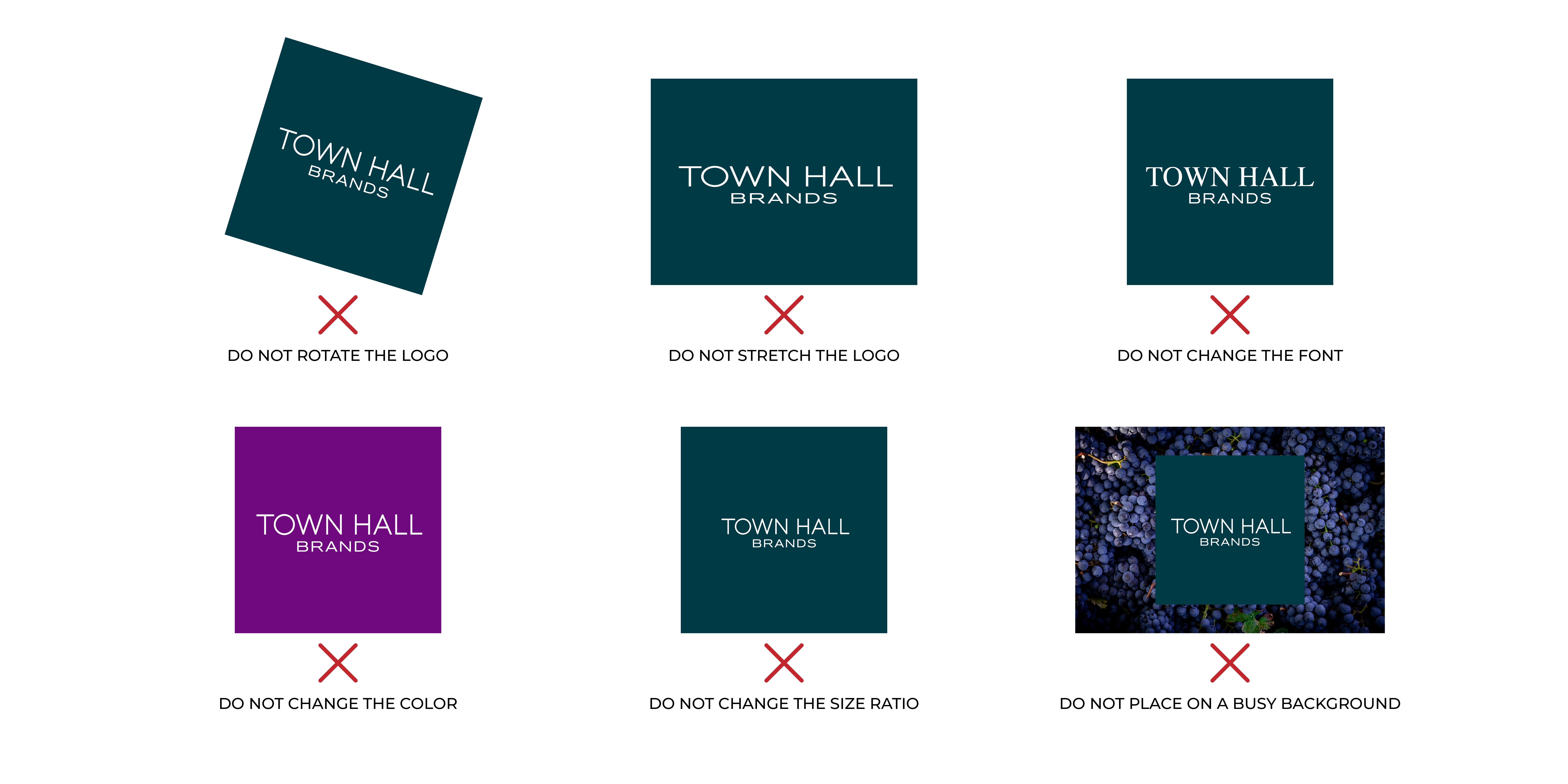
When sharing your logo with third parties ensure that you provide high quality files that are compatible with how they will be using your logo and share your logo rules.
Your logo is a valuable piece of your brand, don’t overlook the importance of logo usage in putting your best foot forward.
Have logo questions or need help designing your logo, email info@townhallbrands.com
June 18, 2025
Help your sales team sell more wine with a sales tool kitAre you and your importer/distributor both eager to tell your story in a way that translates into sales? Consider equipping your sales team with consistent and professional materials (a sales tool kit) that tell your authentic story.
A sales tool kit is a toolbox, containing the items that make it easier for your customer to understand your wine, and make room for it on their shelves.
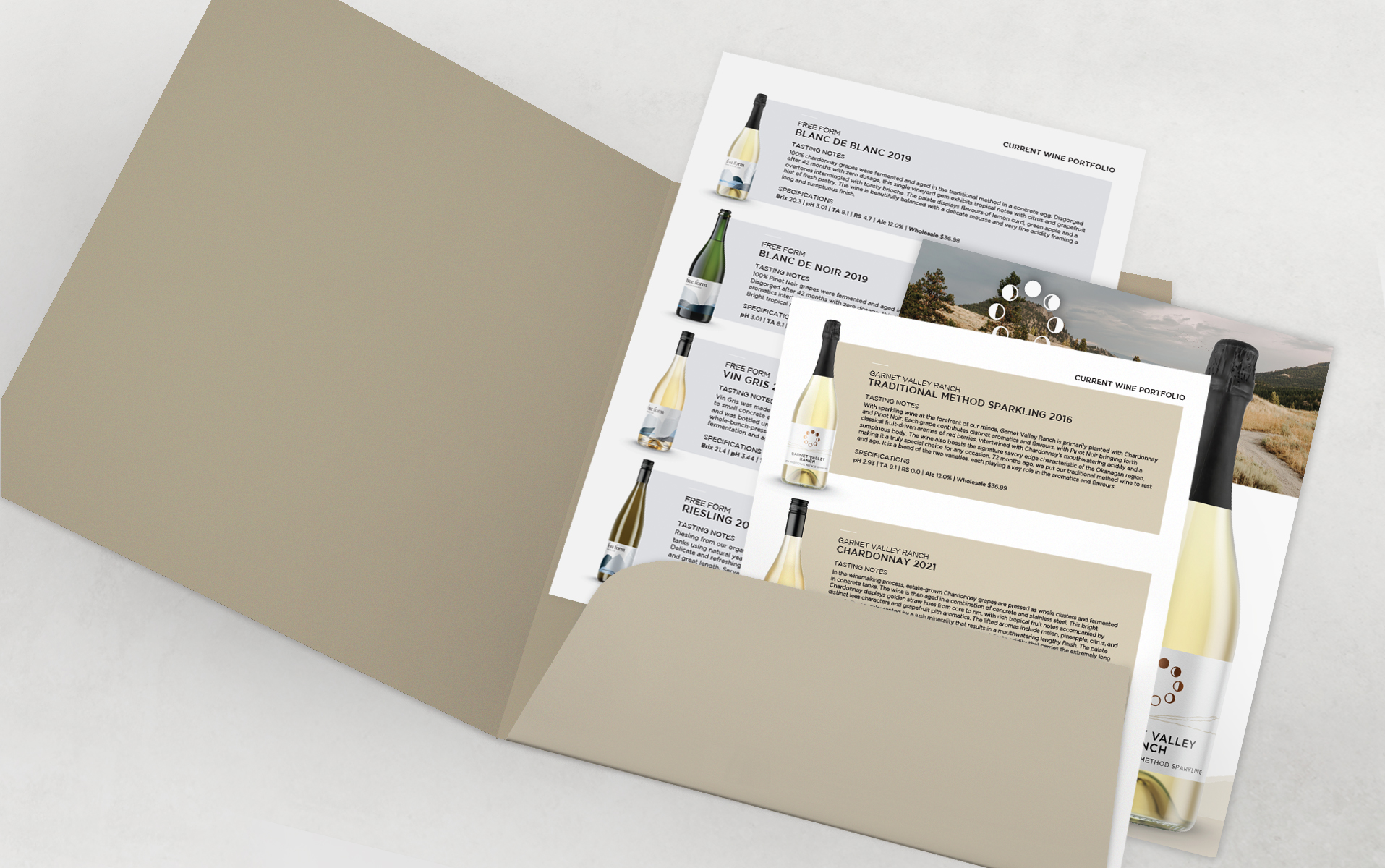
What’s in a sales tool kit? At the minimum it should include a portfolio sheet listing all of your wines, but a great sales tool kit will include several items that make it easier for the buyer to sell your wine to consumers.
Sales Tool Kit Checklist:
- Portfolio Sheet/Booklet
- Technical Information Sheets
- Sell Sheets
- Shelf Talkers
- Neck Tags
- Business Cards
- Tasting Cards
So, how can you create a sales tool kit? Here’s the process we go through to create one:
Strategy
The first step is to have a strategy and determine which pieces of information will be used where (such as what accolades or reviews you’ll want to use and if you want them on shelf talkers or neck tags). This will help inform which items you will need to make.
Gather
The next step is to gather the content you’ll need to create the tools: your brand story, wine technical info (pH, RS, TA, alc%), harvesting information, awards/reviews, and product photos (bottle shots).
Create
The last step is to create the materials. Portfolio sheets, tech sheets, and sell sheets, shelf talkers, business cards, and tasting cards.
Creating these materials in a professional, consistent and compelling way will help your brand stand out and make it easier on your sales reps and retailers to sell your wine.
Are you stuck in the steps to create your own kit? Maybe you don’t have all the content you need, like a compelling brand story, or you lack professional bottle shots. Or maybe you need help creating professional looking tech sheets and shelf talkers. Let us help un-stick you, and help you create a really successful sales tool kit.
May 20, 2025
News from Town Hall Brands
We are proud to share that, as of June 1, 2025, Town Hall Brands has been appointed to represent Wines of Argentina in Western Canada.
This opportunity follows nearly two decades of outstanding stewardship by Dana Lee Consulting Ltd. We extend our sincere thanks to Dana and her team for the strong foundation they built for Argentine wines in this market.
We are honoured to continue this legacy with renewed energy and focus. Judith Arcand, who has worked closely with us on wine industry projects since 2020, will lead the program across BC, Alberta, Saskatchewan, and Manitoba.
Town Hall Brands will be responsible for projects involving trade marketing, media relations, and promotional initiatives to support Wines of Argentina in Western Canada. With deep experience in wine communications and industry engagement, we look forward to elevating awareness and appreciation for Argentina’s incredible wine regions and producers.
For inquiries, please reach out to Leeann Froese at leeann@townhallbrands.com.