
Most wineries don’t have a promotion volume problem.
They have a promotion design problem.
When you look closely at wineries delivering strong margins alongside steady consumer sales growth, patterns start to appear. Not because those promotions are trendy or copied from competitors, but because they are intentionally designed to drive revenue while protecting long-term customer behavior and brand value.
Modern promotion strategy is not about running more campaigns.
It is about structuring incentives that influence how, when, and why customers buy.
Across the strongest performing wineries, promotions are increasingly treated as part of the revenue model rather than just part of the marketing calendar. They shape demand, influence order composition, and support long-term customer value.
Why Promotion Strategy Is Really Revenue Strategy
Promotions are no longer just marketing tactics.
They are one of the most controllable levers inside a winery’s DTC P&L.
For most wineries, shipping is one of the largest controllable cost centers in direct-to-consumer. When shipping is treated purely as a marketing incentive instead of a financial lever, margin erosion often happens quietly and incrementally.
In budget planning conversations, teams often focus on discount depth, debating whether an offer should be 15% or 20%. Meanwhile, shipping cost structure, fulfillment efficiency, and order composition are often having a much larger impact on profitability.
The wineries outperforming today are designing promotions to change customer behavior, not simply to increase short-term transaction volume.
That shift from campaign thinking to revenue engineering is becoming one of the defining characteristics of modern winery DTC strategy.
The Promotion That Shows Up Everywhere: Case Discount + Free Shipping Threshold
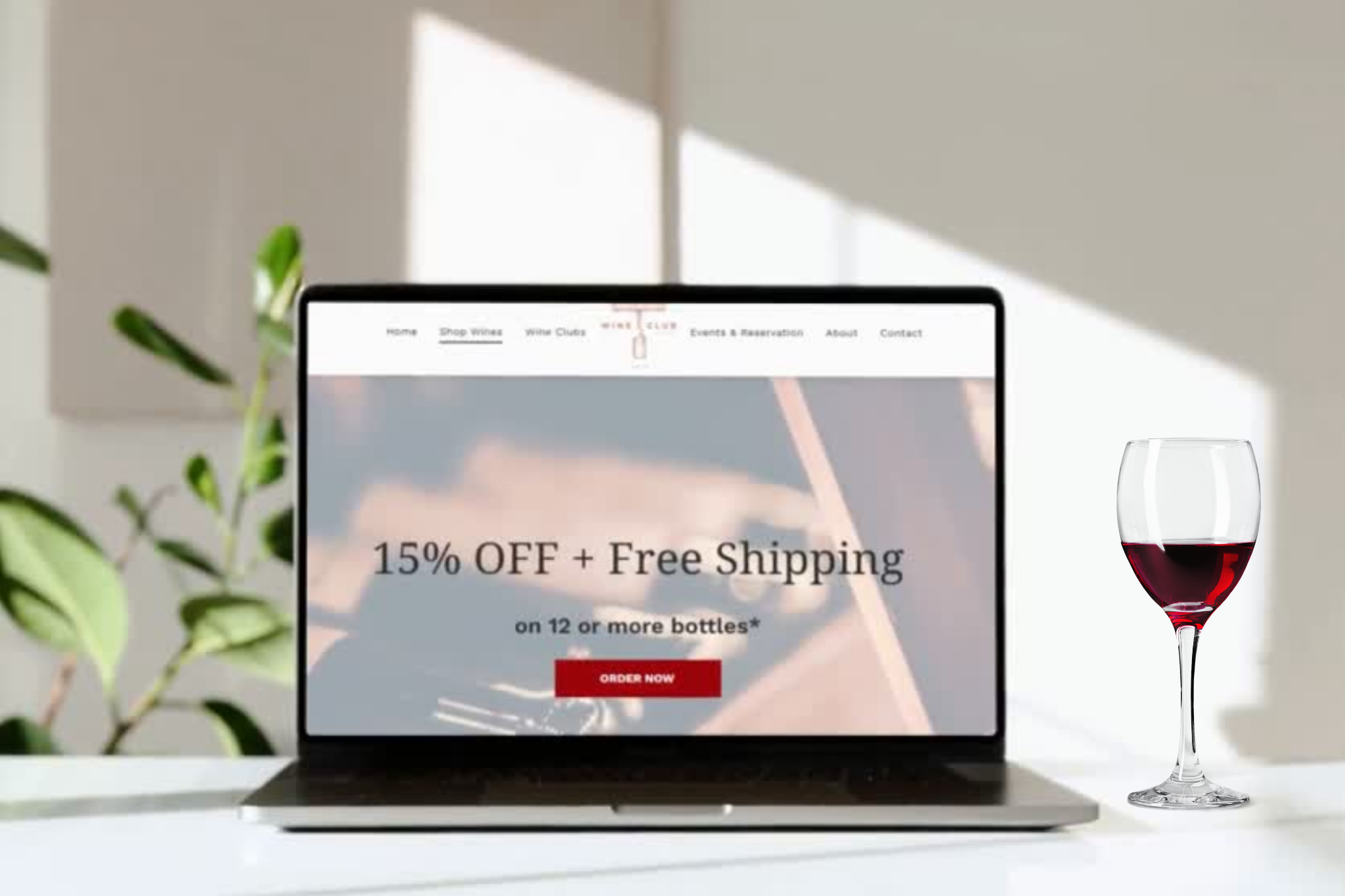
If there is one promotional structure that consistently performs across winery DTC, it is the combination of case incentives paired with a free shipping threshold.
Not because it is exciting.
Because it aligns with how consumers naturally prefer to purchase wine.
When structured correctly, this model typically drives:
- Higher average order value
- Increased case-building behavior
- Shipping positioned as a reward rather than a penalty
- Improved fulfillment efficiency
From a customer psychology standpoint, shipping often functions less like a cost and more like a trigger point. When customers feel they have “unlocked” free shipping, the purchase feels optimized, even if total spend increases.
The critical mistake many wineries make is trying to copy another brand’s exact thresholds or discount percentages. Effective thresholds are always relative to your own economics — including average order value, true shipping cost per package, and channel mix.
The goal is not to maximize discount depth.
The goal is to move the order composition just enough to change buying behavior while protecting margin.
Corksy’s discount engine was built to support this type of real-world winery logic, allowing wineries to structure case incentives, shipping incentives, and qualifying product rules without stacking disconnected promo codes or building one-off exceptions.
Free Shipping Is Never Free
Customers don’t think shipping should cost money.
Wineries cannot afford to treat it that way.
Across ecommerce industries, research consistently shows that customers are significantly more likely to complete purchases when shipping feels included, even when total order value is similar. This is not unique to wine, but wine’s weight, packaging, and compliance requirements make shipping economics especially sensitive.
The most effective shipping incentives are designed to achieve at least one measurable business outcome:
- Increase order size
- Drive movement of specific SKUs
- Encourage case-building behavior
- Reward high-value or high-tenure customers
If shipping incentives are not tied to a specific behavioral or financial outcome, they often become silent margin erosion.
Customers do not necessarily require free shipping.
They require shipping to feel predictable, fair, and earned.
Shipping-Structured Promotions That Change Buying Behavior
Not every shipping incentive should be “free shipping over X.”
Some of the highest-performing DTC programs use shipping as a behavior lever instead of a blanket incentive.
Examples that consistently perform:
- Flat-rate shipping for case purchases
- Shipping incentives tied to specific SKUs
- Seasonal shipping thresholds based on real carrier cost windows
- Club shipping structures that reward tenure or spend
Shipping is one of the largest controllable cost centers in winery DTC.
Treating it like a strategy lever, not just a promo toggle, is where many wineries protect margin without hurting conversion.
Flash Windows That Create Urgency (Without Training Customers To Wait For Sales)
Many wineries fall into one of two promotion traps:
Promotions run too long
Promotions run so frequently that customers stop reacting to them
In both cases, urgency disappears.
Short promotional windows create real decision moments. Instead of giving customers time to delay a purchase, they create a clear “buy now or miss it” signal, which is where urgency-driven conversion actually happens.
Flash windows tend to perform best when they are tied to something customers already care about, such as:
- Release days
- Event weekends
- Weather-driven buying moments
- End-of-quarter or end-of-vintage inventory moves
They are far less effective when used as open-ended discounts, such as running a blanket percentage-off promotion across an entire month.
A Simple Testing Framework
Many wineries see success starting with small, controlled flash tests before expanding.
For example:
- 2–4 hour release or promotion window
- Early access groups receive the strongest incentive
- Later buyers receive a smaller incentive or access-only benefit
This structure allows wineries to protect margin while still rewarding urgency. More importantly, it tends to create concentrated demand spikes instead of slow, margin-eroding discount periods.
When Every Promo Is Sitewide, You’re Probably Paying More for Sales Than You Think
Sitewide promotions are operationally simple.
They are rarely economically efficient.
When first-time buyers, occasional purchasers, and top-tier loyal customers all receive the same incentive, wineries often end up subsidizing revenue that would have happened without a promotion at all. Over time, this compresses margin and trains high-value customers to wait for offers they likely didn’t need.
More effective promotion structures typically introduce variation across customer and buying context, such as:
- Different incentives by customer segment
- Different incentives by channel
- Different incentives by timing or access window
This allows wineries to reward behavior strategically instead of applying blanket discounts across their entire customer base.
This is often the point where promotion strategy evolves beyond campaign planning and starts to resemble revenue design, where incentives are structured to influence buying behavior, protect margin, and reinforce long-term customer value.
Value-Add Promotions That Protect Price Perception
One of the most effective ways to protect brand value while still influencing purchase behavior is through value-add promotions, often structured as Buy X → Get Y.
Rather than increasing discount depth, value-add promotions focus on enhancing the perceived value of the purchase. This allows wineries to create incentive without directly lowering price, which helps preserve long-term price integrity and brand positioning.
Across winery DTC programs, value-add offers that consistently perform well include:
• Buy 6 bottles → library or small-production sample
• Buy a case → branded merch, event access, or experience add-on
• Buy a specific SKU → unlock early access, allocation priority, or exclusive content
When executed well, these promotions maintain brand value while still shifting buying behavior, often increasing order size or driving movement of strategic inventory.
Wine is particularly well suited for value-add promotions because experience, story, and access often carry as much perceived value as price itself. For many customers, exclusivity and connection to the brand can be a stronger motivator than an additional percentage off.
The Quiet Revenue Driver: Channel-Specific Promotions
NNot every promotion should exist everywhere.
One of the most common, and often invisible, sources of margin erosion in winery DTC programs happens when incentives designed for one channel are automatically extended across all channels by default.
Different buying environments create different customer expectations, different cost structures, and different margin realities. Treating every channel the same often means over-incentivizing customers in places where a promotion wasn’t actually needed.
Some of the most effective winery promotion strategies intentionally separate incentives by channel. For example:
- Farmers market or event incentives that are not available online
- Event-only wine club join bonuses tied to in-person experiences
- Ecommerce shipping promotions that do not impact tasting room pricing or POS margins
When promotions are structured at the channel level, wineries gain significantly more control over margin while still creating strong customer incentives where they matter most.
This is where many wineries quietly lose profitability when every successful promotion gradually becomes sitewide by default instead of remaining tied to the channel or behavior it was originally designed to influence.
Discount Depth Is Usually the Wrong Lever
When teams evaluate promotions, the conversation often starts with discount depth:
Should this be 10%, 15%, or 20%?
A more strategic question is whether the promotion needs to be a percentage discount at all.
Across high-performing DTC programs, the strongest performance gains often come from structural incentives rather than deeper price cuts. In many cases, small changes to how an offer is framed or delivered can outperform simply increasing discount percentage.
Some of the most effective levers tend to include:
- Shipping structure and thresholds
- Early or tiered access timing
- Exclusivity or allocation-style incentives
- Bundling and curated purchase pathways
These approaches allow wineries to influence buying behavior while maintaining price integrity.
In practice, margin protection typically comes from a promotion structure, not from reducing the price further. The wineries maintaining the strongest long-term DTC performance are usually the ones designing promotions around behavior and purchase context, rather than relying on deeper and deeper discounting.
You Cannot Copy Another Winery’s Promotion Math
There is no universal free shipping threshold, case discount percentage, or club incentive structure that works across every winery.
Promotion math only works when it is grounded in your own economics, including bottle price, average order value, shipping cost structure, club penetration, and channel mix.
Two wineries can run what looks like the same promotion on the surface and see completely different financial outcomes.
That’s because effective promotion design is always relative to your underlying unit economics and customer behavior patterns.
If someone offers universal promotion benchmarks without understanding your cost structure and buying patterns, they are guessing, even if the numbers sound reasonable.
The Pattern Many Wineries Fall Into (Without Realizing It)
Many wineries unintentionally train customers into predictable purchasing cycles.
When customers expect that:
- Every holiday includes a promotion
- Sitewide discounts appear regularly
- Another offer will always arrive in the next email
Promotions stop creating urgency and start functioning as a predictable calendar event.
The healthiest DTC programs typically share several characteristics:
- Fewer total promotions
- Shorter, more intentional windows
- Incentives tied to specific behaviors
- Strong protection of perceived brand value
The result is not lower sales volume.
It is typically stronger margin stability and more predictable revenue pacing.
The Operational Reality Behind Modern Promotion Strategy
As promotion strategies become more behavior-driven, operational complexity increases quickly.
Once wineries begin layering:
- Customer segmentation
- Channel-specific rules
- Time-based access windows
- Product-level qualification logic
- Shipping-based incentives
- Stacking rules and exclusions
Promotion management can shift from marketing execution into systems architecture.
Historically, many wineries managed this complexity using spreadsheets, overlapping promo codes, and manual overrides. Increasingly, modern winery commerce platforms are shifting toward structured promotional logic, allowing promotions to be built around real buying behavior rather than static discount rules.
This shift is less about technical sophistication and more about enabling wineries to run fewer, more intentional promotions with measurable financial impact.
The Bottom Line
The goal of modern promotion strategy is not simply to reduce discounting.
It is to make discounting intentional, measurable, and behavior-driven.
The most effective winery promotions consistently aim to:
- Change how customers buy
- Increase order size and efficiency
- Reward loyalty and tenure
- Move strategic inventory
- Protect long-term brand value
Across the industry, DTC promotion strategy is moving toward precision over volume.
And increasingly, the wineries maintaining the strongest margins are the ones treating promotions as part of their revenue architecture, not just part of their campaign calendar.
If you are evaluating how your current promotion structure is impacting margin, contribution, or long term customer behavior, it is worth taking a step back and mapping promotions against real order and shipping data.
At Corksy, we regularly help wineries analyze promotion performance across channels, customer segments, and order behavior to identify where revenue is being created versus subsidized. If you are pressure testing your current promotion strategy, we would love to connect and share what we are seeing across the broader winery DTC landscape.