
Wildlife Challenges Don’t End at the Vineyard Edge
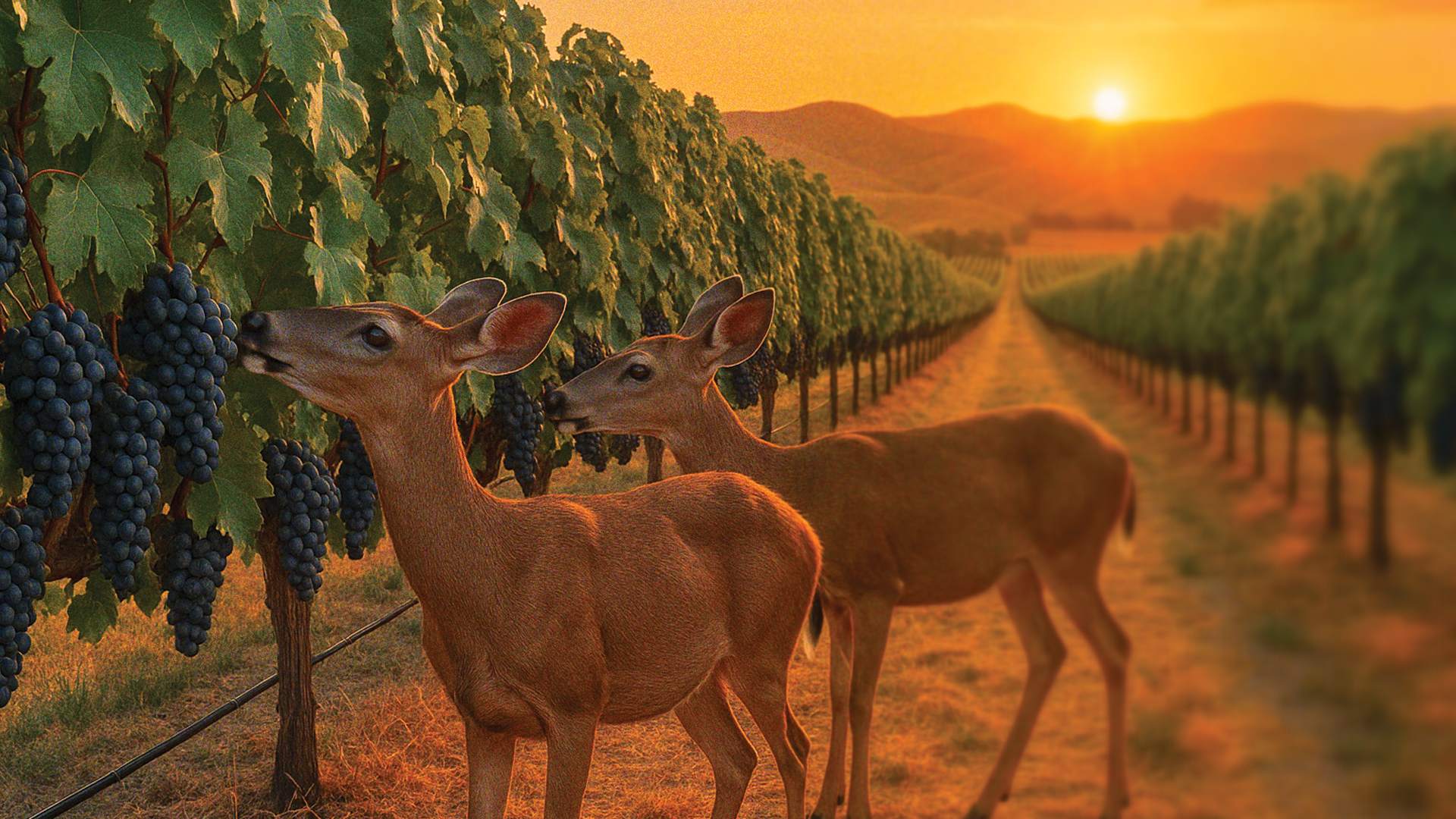
When vineyard managers think about wildlife threats, the focus is almost always on protecting grapes from browsing deer, hungry birds, or burrowing rabbits. But the reality is, animals can—and often do—cause problems well beyond the vines themselves.
From chewing cables to nesting in outbuildings, wildlife can interfere with harvest operations, damage valuable equipment, and even create food safety concerns in processing areas. As harvest season approaches and activity around the winery ramps up, the potential for these issues often increases.
“A lot of managers focus on exclusion fencing for the vineyard blocks, which is critical—but the work doesn’t stop there,” says George Horetsky, senior sales representative for Trident Fence. “If wildlife can access your equipment yard, storage areas, or crush pad, you’ve still got vulnerabilities that can cost time and money.”
The Hidden Risks Wildlife Pose to Winery Operations
1. Cable and Hose Damage—Rodents and small mammals are notorious for chewing through wiring, hoses, and insulation. This can disable harvesters, forklifts, or processing equipment right when they’re needed most.
2. Nesting in Structures—Birds and small animals will take advantage of open sheds, unused equipment, or gaps in storage facilities. Nesting can lead to contamination concerns and costly cleanup.
3. Crush Pad Contamination—Bird droppings or animal waste near processing areas pose both sanitation and regulatory risks. During the busiest weeks of harvest, these hazards can quickly escalate.
4. Stored Product Loss—Wildlife intrusion into storage buildings can damage packaging, supplies, and spare parts.
Why Harvest Season Heightens the Problem
- More open doors and access points during active harvest operations
- Increased food odors from grape processing attract pests from greater distances
- Higher activity at night as animals take advantage of quieter conditions after crews leave
- Seasonal wildlife behavior — deer and other mammals feed heavily in late summer and early fall to prepare for winter
Practical Solutions for Protecting Non-Vineyard Assets
1. Extend Exclusion Zones—Strategically extend fencing around critical equipment yards, storage areas, or processing facilities, not just vineyard rows.
2. Use Targeted Netting—Bird netting over open-sided storage areas or equipment can prevent roosting and nesting.
3. Seal and Secure—Inspect outbuildings, sheds, and storage areas for gaps, holes, or open vents, and install rodent guards or mesh covers.
4. Manage Attractants—Keep processing areas clean and store waste in closed containers to reduce wildlife interest.
5. Seasonal Reinforcements—During harvest, increase inspection frequency for fenced and netted areas.
Thinking Beyond the Grapes
Protecting fruit from wildlife is essential, but so is safeguarding the tools, spaces, and systems that make harvest possible. “Vineyards invest heavily in equipment and facilities,” Horetsky notes. “It’s worth protecting those assets with the same level of care as the crop itself.”
About Trident Fence
Trident Fence is a leading distributor of high-quality agricultural and exclusion fencing solutions, serving customers across North America for 40+ years. We work with vineyard managers to assess site-specific challenges and provide materials designed to protect crops, equipment, and facilities from wildlife pressure without compromising operational efficiency.
For more information:
Trident Fence
Attn: George Horetsky, Senior Sales Representative
866-290-0244
wholesale@tridentfence.com