

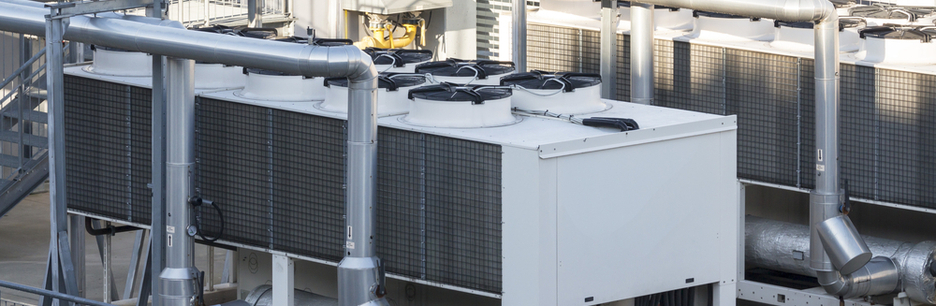
Chiller systems are essential for maintaining low temperatures required in a wide range of residential, commercial, and industrial applications. Consequently, these systems account for a significant amount of the total energy consumption in North America. In this article, the chiller experts at Cold Shot Chillers will explore the general working principle of a chiller system, some common categories, and critical tips for operating and maintaining them to ensure high-efficiency operations.
What is an Industrial Chiller?
Industrial chiller systems play an essential role in various heating, ventilation, and air conditioning (HVAC) systems. Therefore, they are frequently incorporated into a wide range of residential and commercial facilities, including sporting arenas, hotels, apartment blocks, restaurants, hospitals, industrial facilities, and manufacturing plants.
Two key functions of HVAC systems include building dehumidification and cooling. With chiller systems, engineers can meet industrial and commercial cooling requirements in various applications, including metal finishing, plastic processing, water cutting, medical manufacturing, food processing, residential, and welding. Generally, chillers meet these requirements by transferring heat from an internal environment to an external one with a heat transfer device and a refrigerant.
Due to their importance in HVAC systems, chillers account for over 50% of the total electricity consumption in seasonal periods, with an estimated 20% of the total electricity generated in North America.
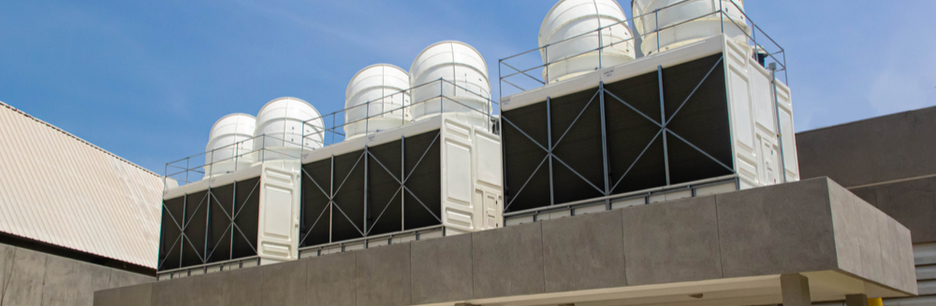
How Do Chiller Systems Work?
Chiller systems provide continuous coolant flow to the cool side of a process water system at a conventional temperature of 10°C by leveraging the principle of vapor compression and absorption. Moreover, chiller systems pump coolant through specific industrial processes, resulting in heat extraction from relevant areas of the facility. The coolant then flows back to the return side of the process water system.
Chiller systems also contain a vapor compression mechanical refrigeration system which connects the process water system through an evaporator. This refrigeration system-based refrigerant circulates through other components of the chiller, including the evaporator, compressor, condenser, and expansion device. Each of these components thermodynamically ensures process cooling.
The evaporator, which functions as a heat exchanger, transfers the captured heat to the refrigerant. During heat transfer, the refrigerant evaporates as it changes from a low-pressure liquid into vapor, reducing the process temperature. The compressor performs multiple functions, including removing the refrigerant from the evaporator and ensuring a constantly low evaporator pressure for heat absorption at an appropriate rate.
Additionally, the compressor also raises the outgoing refrigerant vapor pressure to achieve a suitably high temperature for heat release in the condenser. Lastly, the condenser changes the refrigerant back to a liquid state.