
This month: Soft seas, more questions, and a consumer that’s anxious and cautious about tomorrow.
October’s here, and the supply chain feels eerily quiet. Not calm exactly – just slow. There is movement, but it’s more drift than direction. Freight rates are down, not because we have gotten more efficient, but because demand is low. Fuel is holding steady, but only because the broader economy seems reluctant to surge. There are no logjams at the ports, yet there is not much urgency, either.
Glass remains tight. Lead times are still creeping. And while retail shelves are being reset for the holiday sprint, the pace feels tentative. Brands are pushing forward, but many are doing so with a wary eye on cost, conversion, and the uncertain mood of the American shopper.
The story of October is about the tension between the inertia of supply and the jitteriness of demand. Between short-term calm and long-term concern.
Market overview
Fuel costs rose imperceptibly from $3.744 per gallon in August to $3.748 in September – barely a twitch on the needle, but still directionally up. More importantly, they have held within a narrow $3.70-$3.75 band for nearly a quarter, offering rare predictability in an otherwise jumpy economic landscape.
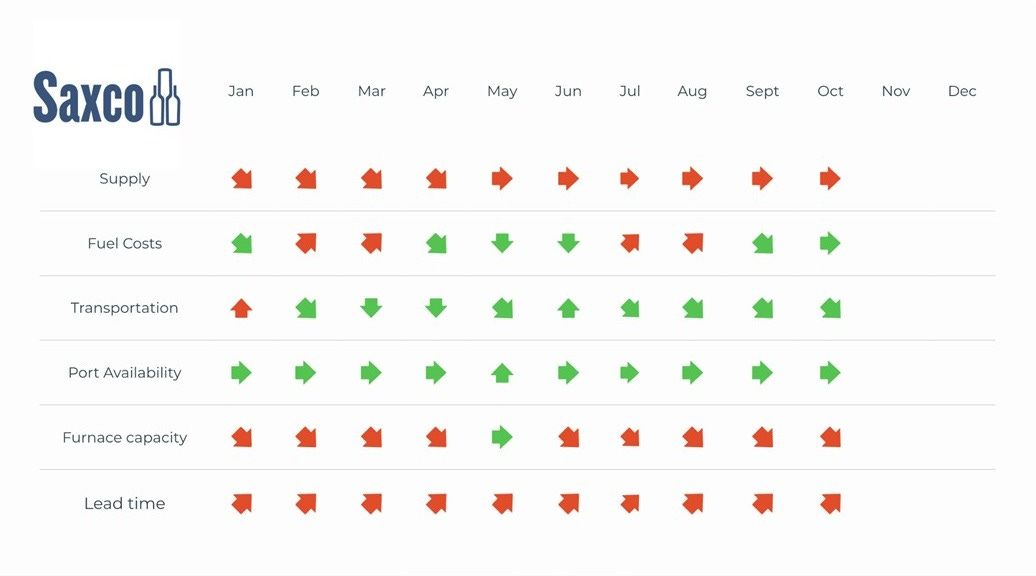
Ocean freight, on the other hand, continues to slide. Spot rates are now at their lowest level of the year, with demand falling below expectations from early summer. For some importers, this is a gift: Cheaper access, more expansive windows, fewer bottlenecks. But for others, especially those who bank on consistent movement, this softness is unsettling.
Port availability remains stable. No notable congestion. No major labor flare-ups. No climate shocks. It’s a rare pocket of neutrality in a system otherwise full of ifs and maybes.
Furnace capacity, however, remains a pressure point. The O-I Portland closure continues to cast a long shadow over domestic production. While the headlines have quieted, the knock-on effects persist – particularly for those relying on premium glass formats or just-in-time delivery windows.
Lead times are still stretched. Not wildly – but just enough to keep everyone on edge. There’s no slack in the system, no real room to play catch-up. Everything still takes more foresight than feels comfortable.
The consumer hesitates
Meanwhile, the consumer is still pulling back. Deloitte’s latest tracker has just landed, and the story remains unchanged. It’s not a precipitous drop, it’s just more erosion – a slow, quiet fade in confidence that keeps dragging on. Lower- and middle-income households are pulling back, especially in categories perceived as discretionary. Alcohol, specialty foods, and small indulgences are facing increased scrutiny, while essentials, promotions, and private-label goods are experiencing renewed strength.
There is also a psychological undercurrent: Shoppers aren’t just worried about now, but also uncertain about what’s next. Will tariffs drive prices up? Will Q1 bring layoffs or raises? Will a deal today look foolish tomorrow? These questions are not just background noise: They’re shaping cart sizes and channel choices in real time.
Retailers are responding by hedging their bets. Some are trimming holiday orders. Others are shifting toward value SKUs. Across the board, the expectation is that promotions will need to be both earlier and deeper to drive volume.
All of this is unfolding amid ongoing discussions about potential new tariffs on imported consumer goods and packaging materials. While the situation remains fluid, recent analyses suggest that the policy landscape could lead to some cost adjustments and operational pressures across retail and logistics. However, many industry leaders are already taking proactive steps to manage potential impacts through supply diversification, domestic sourcing, and strategic inventory planning. Whether or not the proposed measures move forward, the conversation is prompting thoughtful preparation rather than panic.