
A smooth, complete fermentation doesn’t happen by chance, it starts with balanced yeast nutrition. When yeast has access to the right nutrients at the right time, you avoid sluggish or stuck fermentations, reduce the risk of Hâ‚‚S and VA, and unlock the full aromatic potential of your grapes.
Why Yeast Nutrition Matters?
- Nitrogen is the main driver of yeast growth and fermentation activity. Saccharomyces can assimilate only ammonium ions (DAP), amino acids (organic nitrogen), and small peptides (organic nitrogen).
- Amino acids are strategic: they are taken up early, stored, and used gradually. Some of them also act as aroma precursors (thiols, esters, acetates).
- Vitamins & minerals (thiamine, Mg, Zn) act as cofactors in enzymatic reactions and have a role in cell growth, fermentation activity, and nitrogen metabolism.
- Sterols & long-chain fatty acids are essential for membrane structure, stress resistance, and survival.
Click here for all fermentation tips & guides
Keys to Successful Fermentation:
1. Start Strong: Boost Yeast Health from Day One with Oenostim
OENOSTIM® provides sterols, ergosterols, vitamins, and minerals that strengthen yeast membranes, improve alcohol tolerance, and support complete, efficient fermentation. By promoting a shorter lag phase and healthy yeast activity, it reduces contamination risks and ensures a smooth fermentation from day one.
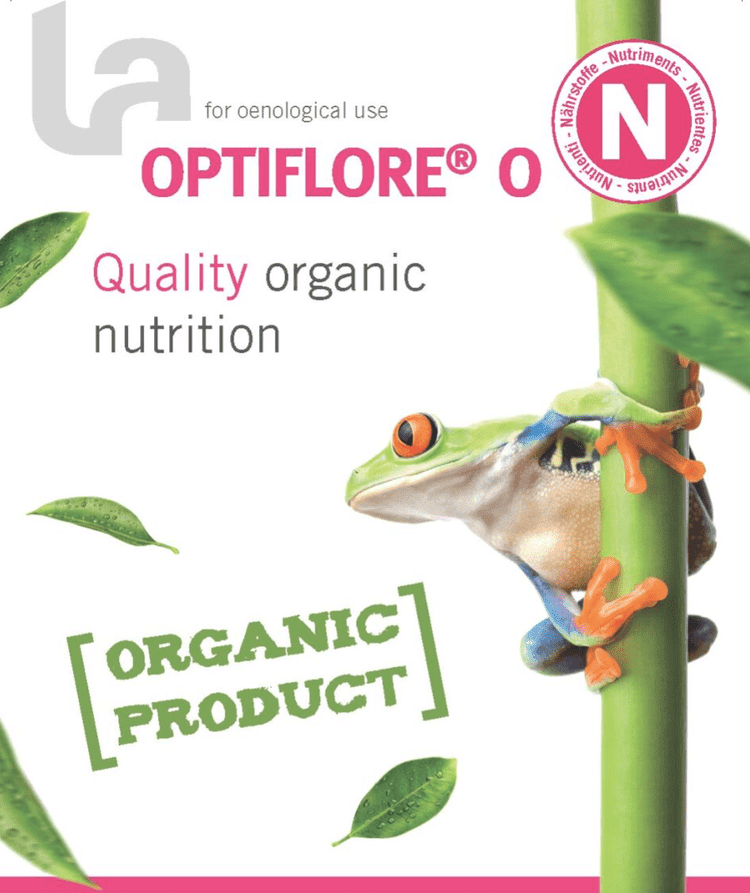 2. Fuel Fermentation: The Power of Organic Nitrogen
OPTIFLORE® O is a 100% organic nutrient (organic nitrogen is 2–4 times more effective than DAP). Derived from inactivated yeasts, it is rich in easily assimilable amino acids, vitamins, minerals, and micronutrients favoring cell multiplication. OPTIFLORE O supports regular and complete alcoholic fermentation, helps limit heat spikes, and is utilized by yeasts as needed. The use of OPTIFLORE O results in wines with enhanced aromatic profiles and reduced levels of undesirable compounds such as volatile acidity (VA) and hydrogen sulfide (Hâ‚‚S).
3. Overcome Low YAN: OPTIFERM for Extreme Deficiencies
In severe nitrogen deficiencies, pure organic nitrogen may not suffice to elevate YAN to adequate levels for proper fermentation. OPTIFERM® is recommended in such cases, as it is a complex nutrient comprising inactivated yeast, amino acids, sterols, long-chain unsaturated fatty acids, and inorganic ammonium salts (DAP).
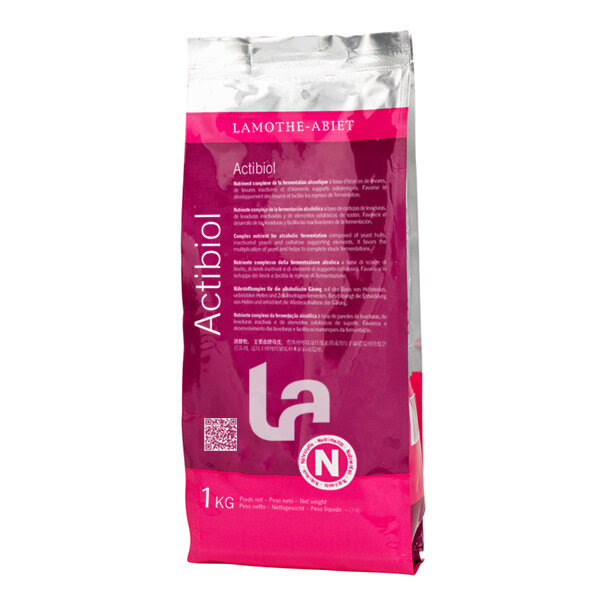 4. Rescue & Protect: Late-Stage Nutrition and Detox
ACTIBIOL® supports yeast health in sluggish or stuck fermentations by providing growth (vitamins, amino acids, peptides) and survival factors (sterols, fatty acids). Its yeast hulls bind inhibitory compounds, detoxifying the must and ensuring fermentation completion. Ideal for restarting or rescuing challenging ferments.
Special Tips for Challenging Fermentations:
- Low YAN (<100 mg/L): Use a mix of organic + inorganic nitrogen (OptiFerm); pure organic may be insufficient.
- High YAN (>250 mg/L): Monitor excessive biomass; add Optiflore O at â…“ fermentation to support yeast.
- Damaged fruit (Botrytis, mildew…): Early supplementation with higher doses of OenoStim and Optiflore O compensates for amino acid and vitamin deficiencies.
- Clarified juice (low turbidity): Add sterols and fatty acids via OenoStim to replace losses.
- Sluggish fermentation: Detoxify with Actibiol before restarting.
- Boost aromas: Use specialty nutrients like OPTITHIOLS (thiol precursors + antioxidant protection) or OPTIESTERS (ester precursors for fruity/floral notes).
Find all our technical resources online including winemaking guidelines, webinars, and more HERE.
We have equipment in stock, please contact your sales rep for pricing, or demo. We also sell certified BV used equipment, view HERE.
Shop everything you need in winemaking products, laboratory equipment, and spare parts on our website HERE.