
An exceptionally small 2025 grape harvest would help balance wine inventories and potentially stimulate grape demand next year
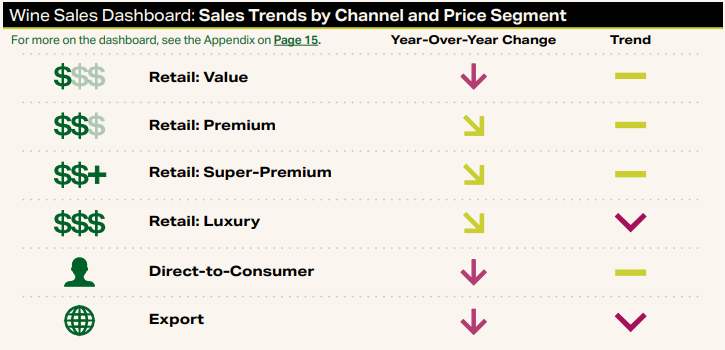
There wasn’t much change in the complexion of the wine market in the third quarter. Sales continued to decline across channels and price points, though at varying rates. Some segments improved while others worsened. Wine exports continued to flag because of provincial bans in Canada.
I continue to believe the slump is mainly structural, particularly at the lower end of the market (see Page 3). But I also believe economic factors such as inflation and depressed consumer sentiment have played a role, and I expect wine sales to firm up once the economic backdrop improves. Unfortunately, we aren’t expecting much change in the economy, for better or worse, in the months ahead, so the wine market isn’t likely to see much improvement either.
2025 was a painful year for California grape growers. Weather was an issue, but the grape market proved to be an even greater challenge. There simply wasn’t enough demand to absorb all the fruit due to slumping wine sales, excess inventory and gun-shy buyers. Hundreds of thousands of tons were thought to have been left hanging. Experts believe the crush will come in below 2.5 million tons, which would be the slightest of the 21st century.
I expect some improvement in the grape market in 2026 because of the ongoing supply-side correction (nearly 40,000 acres were removed between October 1, 2024, and August 1, 2025) and a potential reduction in wine inventory stemming from the small harvest, though this is far from certain.
This issue’s Trending Topic focuses on the wine inventory glut (see Page 9). The inventory overhang is difficult to measure now, let alone forecast, because of imperfect data and uncertainty regarding the 2025 crush size and trajectory of wine sales. If the harvest turns out to be as small as predicted, inventories should be more balanced heading into next year’s harvest. However, my analysis indicates that a wide range of outcomes are possible.
A material reduction in inventory would stimulate grape demand next year. Under my base-case scenario, I expect more grapes to be sold in 2026. This, coupled with lower grape production potential, should result in a better balance between supply and demand in the aggregate. No matter the scenario, the balance will continue to vary widely across appellations, varieties and quality tiers.
Wineries and growers should closely monitor the situation in the months ahead as fresh datapoints are released. I’ll provide an update in the spring edition of “Winescape.”
This issue:
- Assesses the nation’s wine inventory glut and how quickly it might be resolved
- Gives an update on the size of the California grape harvest and its potential impact on inventory
- Shares an early outlook for how the wine and grape markets will fare in 2026
Download the winter issue of Winescape