

More and more farms are standardizing their use of Lumo across their entire operation.
We’ve seen growers expand from a couple ranches to dozens. From 50 acres to over 2,000.
That kind of expansion is built on seeing significant returns on investment season after season.
But everyone needs to start somewhere, so it’s only natural to ask: "If I want to see the highest return on my investment in Lumo, which ranches should I start with?"
Here’s a couple ways to think about it:
1. Highest Value Crops
Many growers start with ranches where their crop values are the highest because that’s where irrigating with precision pays the most.
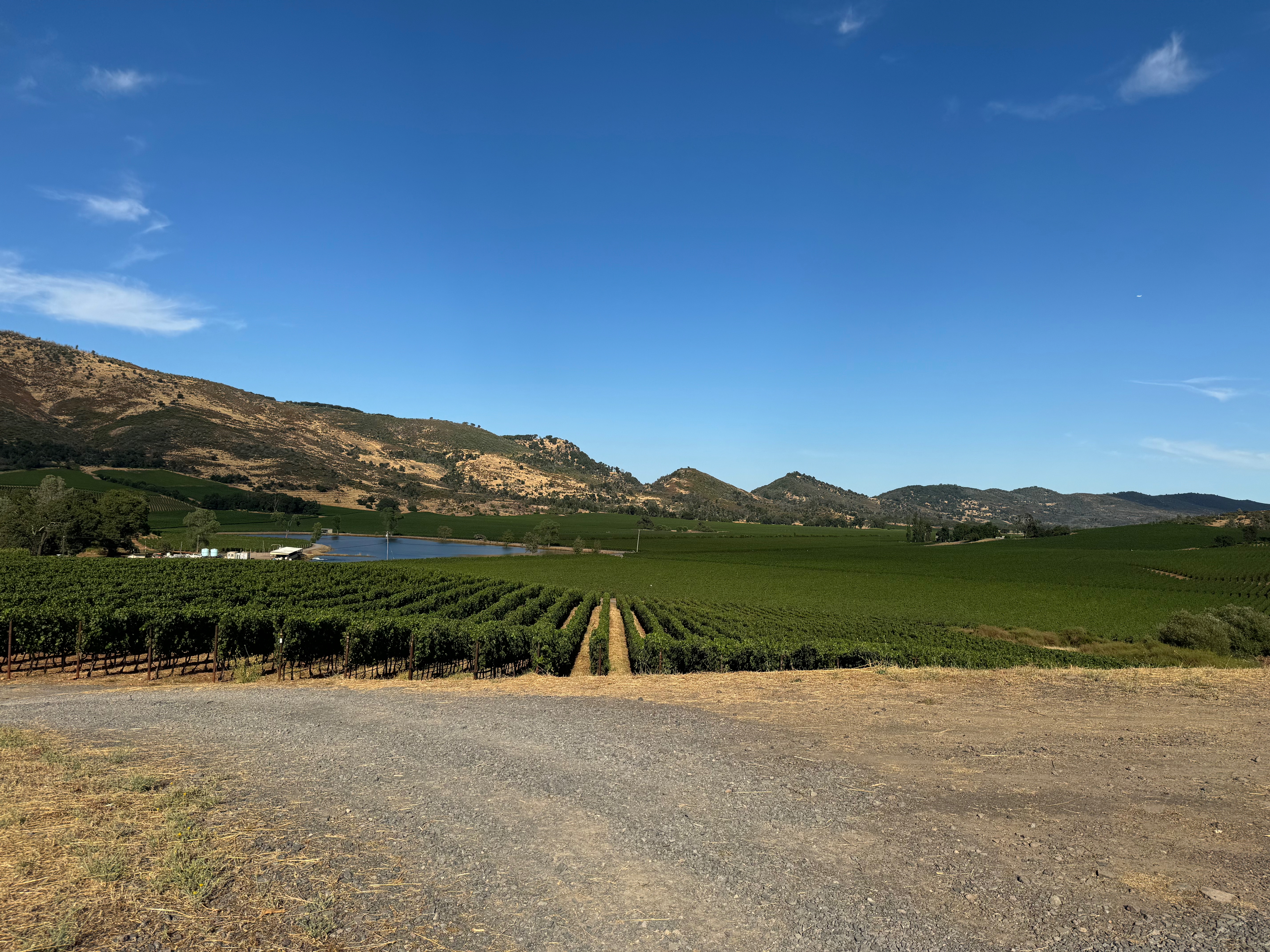
It’s part of the reason we’ve seen such good success in Napa and Sonoma with many of the best wine growers in the world, and it’s why we’re seeing increasing interest from berry growers on the Central Coast.
If dialing in your irrigation precision can have a modest impact on yield, uniformity, or fruit size or quality, the investment is going to pay for itself many times over in a very short time, often the very first season.
2. Remote Ranches
The farther you have to drive, the more automation makes sense from a labor-saving perspective.
When end-to-end automation is saving you a couple hours of drive time on every irrigation, it doesn’t take long to pencil out. Saving all that time, and money on fuel, makes the math work, even without any of the other benefits of greater precision, or reducing risk or pumping costs.
3. Ranches Where the Irrigation System is Underpowered
Another way folks see big returns is when their current pump and irrigation infrastructure is underpowered for the amount of acreage and the density of plants it’s intended to cover.
We see this a lot on the North Coast where vineyards have expanded over the years, or vines have been replanted at higher densities, and the irrigation system wasn’t upgraded. When you’re limited to irrigating only when you have labor available during the day, it can take a week or more to get water down across the ranch.
With Lumo, you can run the system around the clock, scheduling sets back to back, and can cut that time down considerably. Ahead of big heat events, that kind of speed matters. It can preserve yield and quality that you otherwise would’ve lost.
When you can lose 30% of your yield in a day, Lumo can make a huge difference to your topline revenue, which translates to a massive return on investment.
4. Ranches Running Super Frequent, Labor-Intensive Irrigations
This is another one where we’re seeing more interest from berry growers because they’re running a pulse irrigation strategy, or spoonfeeding their berries, with many short duration irrigations/fertigations.
And also where orchards are seeing great results when they need to run short, but frequent sprinkler schedules. If your irrigation team has to run around all day on ATVs constantly opening and closing valves, automation is going to make a ton of financial sense.
5. Ranches where you know there are issues and have had problematic blocks.
Finally, another area where growers see high ROI is when they’ve suspected their irrigation system hasn’t been performing as expected, but have had no way to quantify the problem.
There are lots of flavors of this.
- Pumps that are underperforming
- Situations where tanks have been regularly running dry during sets
- Instances where there’s a shared water resource and when everyone’s pumping at the same time there are huge dips in pressure
- Old infrastructure that’s declined further in performance than anyone realized, or where the irrigation system has been altered over time and no one really knows exactly what the baseline performance should be
Lumo brings all of these issues to light and makes it possible to quantify their impact. That typically leads to immediate changes in how long irrigations are running for and creates urgency around doing the necessary maintenance to the system to get performance where it needs to be.
There’s been lots of situations where growers have invested in Lumo and been able to avoid ripping out a block because they realized the problem was system performance, not the plants. They were just consistently putting on way too much or way too little water. And once they got the visibility they needed, they made adjustments and production improved.
In those situations, the system basically paid for itself on day one.
If you're interested in learning more about where to start with precision irrigation automation and how the potential financial returns, you should check out one of our upcoming irrigation workshops.