



March 1, 2026
The Three Ages of Wine Cork Production: A Visit to Corticeira Amorim
It is impossible to drive through the Alentejo region of Portugal without seeing the dark trees that dot the landscape. Pretty soon you notice the lines on the trunks where the bark has been harvested and then you know for sure that you are in a cork oak (Quercus suber) forest, the densest concentration of these trees in the world (see map above).
Cork’s Medieval Roots
Planting a cork oak tree is a statement of faith in the future. The first harvest must wait for 15 years and then the cork will be of low quality, unsuitable for natural cork closures. The second and better harvest that yields more usable cork comes 9 years later. Only 9 years after that (and every 9 years into the future) can the highest quality cork be taken. Few other things in the world of wine (producing 40-year old Tawny Port, for example) can compare to cork in terms of optimistic forward thinking.
Sue and I visited both Porto and Alentejo during our recent trip to Portugal and Antonio Amorim and Carlos de Jesus of Corticeira Amorim, the world leader in cork closures, invited us to visit their factories in these two regions to see first-hand what I am calling the Three Ages of cork.
Cork is an ancient product — the Greeks, Egyptians and Romans all sealed their wine jars with cork. The harvesting of it is laborious hand work since each tree has its own configuration. Photos of modern cork

harvests could easily be mistaken for medieval paintings.
Industrial Revolution
Stepping into the Amorim factory in Coruche, you get an initial sense of moving forward in time to the industrial revolution. There is still a lot of hand work here. Sorting the processed cork bark pieces, for example, still requires human judgement as they are inspected and graded for quality one at a time. The key to making a profit in cork is to waste nothing, so each cork piece must go to its best use and the waste at each step recycled into a lower-priced product.
Almost nothing is thrown away. One item that was headed for the power-supplying waste burner was a piece of cork that was badly infected with TCA, the source of cork taint. What a horrible smell! Until a machine can consistently detect all the potential problems with cork including TCA, cracking, insect damage and so on, these workers’ jobs are very secure.
The factory was loud with the clamber of industrial machinery as every task that could be mechanized was mechanized. It gave me a sense of what those 19th century British textile mills must have been like.
Interestingly, the finest corks closures made from the best quality raw material are hand-punched by skilled craftsmen (see photo above). These corks need to be as close to perfect as possible and so far nothing can replace the human eye for seeing just where the cork’s sweet spot is (and what parts should be recycled down the line for other products).
NDtech: Cork for the 21st Century
It would be easy to think of cork just this way — a medieval product made using industrial revolution technology — but this viewpoint misses a lot as we learned when we visited Amorim’s second factory near Porto.
Here we saw many of the same processes as in the south, but the focus was different because Carlos and Antonio wanted us to see the progress that has been made at improving cork closures and addressing the issues that allowed synthetic stoppers and screw cap technology to make dramatic inroads in this market.
Innovative new production processes and seriously obsessive attention to detail have now all but eliminated the incidence of detectable TCA contamination in Amorim corks throughout the product line, which is a big deal and came only after intense and expensive research and process innovation. But that was not good enough and so earlier this year Amorim unveiled its latest innovation, NDtech corks.
Amorim scientists guided us into the controlled environment that you see in the video above and we saw the NDtech (think non-detectible TCA levels) process at work. ndTech really does individually-inspect each and every cork that goes through the process and guarantees then all to be TCA-free at human sensory threshold levels.
Amorim is convinced that the process works and we saw persuasive data about these and other Amorim cork closures. Now the challenge is to scale up to meet the demand for these, the very best corks that can be made.
Three Ages in One Product
I find it interesting that cork is so many things at once. It is a natural product, of course, but one that is necessarily harvested and then processed by hand and manufactured using machines and processes from a variety of periods. It is also increasingly a technological product.
Making excellent cork closures is complicated as we saw at the Amorim factories and doing so profitably is even more complicated. We were impressed with the way that every scrap and bit of cork is put to use in closures and other cork products and every ounce of value realized. Environmental and economic sustainability go hand-in-hand.
Meeting the challenge of synthetic and screw-cap closures has not been easy for cork producers, who saw a some of their market share disappear. Hard work, expensive research and technical innovation has turned this around, however, and now many consumers and wineries who moved away from cork in the past are taking a new look.
Someone once accused the economist John Maynard Keynes of expressing a view that was inconsistent with his previous statements.” When the facts change,” Keynes replied, “I change my opinion. What do you do?” The facts about cork — especially the TCA situation — have changed in the past few years. No wonder many people in the industry have revised their views on cork.
>><<<
Many thanks to Antonio Amorim and Carlos de Jesus for he opportunity to see the three ages of cork with our own eyes and learn about the scientific progress from the experts. This concludes the short series of past-present-future stories from the Alentejo. Come back next week for a look at some unexpected wine tourism opportunities we found in Portugal.
To view more on this article visit The Wine Economist
March 1, 2026
Latest Study Confirms Negative Carbon Footprint for Amorim Cork StoppersSparkling wine stoppers with two natural cork discs have the highest CO2 retention in the whole closure industry
Napa, Calif.—A brand-new study, assessing the CO2 retention rates with a cradle-to-gate methodology that measures everything from forest floor to finished stopper, concludes that cork closures are a major ally in the wine industry’s battle for sustainability.
One single natural cork stopper is now proven to capture up to 309 grams of CO2, while a sparkling wine stopper can retain even more at 562 grams. This means that cork closures can offset the carbon footprint of glass bottles, a key packaging element of the all-important, profitable premium wine market.
To analyze the complete environmental footprint of both whole natural cork and two-disc sparkling wine stoppers, a study incorporating a life cycle assessment (LCA) was commissioned by Corticeira Amorim, and conducted by EY consultants during December 2019.*
This vital CO2 retention capability comes at no extra cost – it is embedded in the very nature of cork, and is a benefit to which every winery is entitled. Given the fact that more than 70% of the value created by cork overall comes from wine stoppers, without these products, the 5.4 million acres of native cork forests across seven countries in the Western Mediterranean basin – one of the world’s 36 biodiversity “hot spots” – would not exist as we know them now.
“Amorim’s commitment to research and development allows us to deliver concrete facts to support our sustainability messaging about cork and to develop new technologies to further cork’s sustainable credentials.” says Pedro Fernandes, General Manager of Amorim Cork America. “While the results of this latest study will enhance the reputation of our traditional cork closures in the eyes of environmentally-conscious wine consumers, we continue to innovate. Our Neutrocork stopper, for example, features a uniform-sized micro cork granule composition that retains up to 392g of CO2.”
Different life cycle stages under a cradle-to-gate approach were studied: forest management activities, cork treatment stages including transport from the forest, and natural cork stoppers production, finishing and packaging. For a fair comparison with previous studies, the distribution of the product from Portugal to the UK was also included, together with additional information regarding carbon sequestration from the cork oak forests.
Impacts relating to the production and consumption of raw materials, plus energy process emissions, water consumption, waste production and transport at each stage were assessed – all of which are considered categories typically used in cork products.
*The study was based on the ISO 14040/44 standards (ISO, 2006), together with guidelines from the International Reference Life Cycle Data System (ILCD) Handbook – General guide for Life Cycle Assessment – Detailed guidance (EC-JRC, 2010).
**The LCA methods used were aligned with the recommendation from Product Environmental Footprint Category Rules (PEFCR) for still and sparkling wine product environmental footprints (PEF) issued by the European Commission in 2018.
About Corticeira Amorim
Corticeira Amorim is the leading world producer of cork products, having been involved in the industry since 1870 and now producing 5.4 billion cork closures each year. The company’s product portfolio covers various sectors, including, among others, wine, construction, flooring, aeronautics, automotive and footwear. It has implemented an integrated production process that ensures that no cork is wasted, and it supports various initiatives for collecting and recycling cork stoppers across five continents.
About Amorim Cork America
Amorim Cork America is the North American sales and distribution center located in Napa, California. We provide top notch solutions that guarantee a customized approach tailored to each client’s needs. Amorim Cork America’s sales and management team provides expert knowledge to winemakers, technical support, quality assurance managers and wine marketers in all facets of wine cork closures.
March 1, 2026
Amorim reveals breakthrough technologies to eradicate detectable TCA
Amorim reveals breakthrough technologies to eradicate detectable TCA through the launch of Naturity and Xpür -- technologies designed to remove detectable TCA from natural corks and to create a new segment of micro-agglomerated stoppers, respectively. Naturity expands non-detectable TCA performance in the natural cork product segment, while further strengthening the operational deliverables of NDTech. And Xpür improves upon the conventional supercritical CO2 application developed several decades ago, reengineering and upgrading the concept with 21st-century technology.
Commenting on this important landmark, António Amorim, Chairman and CEO, noted that: “These technologies come as a result of robust financial investments, time, and dedication to R&D from our team. Despite the obstacles of 2020, we were able to fulfill the promise we made to have non-detectable TCA performance for all the cork stopper segments by the end of the year. This is our commitment to our 30,000 customers around the world – to guarantee the quality and consistency of their products and ensure that consumers’ preference for cork will only grow stronger.”
Follow the link to learn more about these breakthrough technologies that will undoubtedly make your packaging decisions easier: bit.ly/Amorim-eradicate-detectableTCA
March 1, 2026
State of the Art Wine Cork ProductionAmorim is the biggest world producer of cork products and one of the most international of all Portuguese companies, with operations in dozens of countries and all continents.
Amorim’s focus is to produce the finest quality natural corks available.
To do this the company has invested nearly $60 million U.S. dollars over the last six years on new plants, new processes and staff training. The results speak for themselves.
Click here for more information.
March 1, 2026
State of the Art Wine Cork ProductionAmorim is the biggest world producer of cork products and one of the most international of all Portuguese companies, with operations in dozens of countries and all continents.
Amorim’s focus is to produce the finest quality natural corks available.
To do this the company has invested nearly $60 million U.S. dollars over the last six years on new plants, new processes and staff training. The results speak for themselves.
Click here for more information.
March 1, 2026
North Americans Prefer Cork Stoppers Recent market research conducted in the USA and Canada provides further confirmation that cork is the preferred wine stopper for consumers, who are willing to pay a significant premium for cork-finished wines.
The preference for cork delivers a major difference in terms of the sales potential of wines.
According to recent data on the US market disclosed by Nielsen Scanning Statistics, for the Top 100 Premium Wine Brands during the 6-year period between June 2010 and June 2016, cork finished wines have enjoyed a 42% increase in sales compared to a 13% increase for wines using alternative closures.
Over the last six years brands finished with cork have enjoyed more robust sales growth than brands finished with alternatives closures and the number of top brands using cork closures is increasing.
Cork-finished wines retail at a significant price premium. Amongst the top 100 Premium Brands the median sales price for cork finished wines, was $13.56 – which is $3.80 (+39%) higher than the median price of wines sealed with alternative closures.
A separate study for the Canadian market, published in July, 2016 by the American Association of Wine Economists, “Importance of eco-logo and closure type on consumer expectations, price perception and willingness to purchase wines in Canada” indicated that cork finished wines are preferred by Canadian consumers, who are willing to pay CAN$1.69 and CAN$1.29 more for wines sealed with natural corks compared to those sealed with synthetic or screw cap closures, respectively.
The study highlights the fact that for consumers the type of stopper is perceived as a key indicator of both a wine’s quality and also influences perception of its eco-friendliness and thus has a major impact on purchase decisions.
Furthermore, the study revealed that eco- conscious consumers pay significantly greater attention to the use of natural cork stoppers than any other environmental friendly claims, including the presence of eco-logos on the wine label.
Further analysis on recent trends in the North American wine industry is provided in an article published in February, 2016 in The Atlantic magazine, entitled “How Millennials (Almost) Killed the Wine Cork”.
The article suggests that Millenials (i.e. persons born after the mid-1980s) were initially keen to try out alternative closures, as part of a wider attraction to try out new trends, but have now shifted strongly back in favour of cork, in particular due to its quality and sustainability credentials.
The article clarifies that key factors explaining the progressive appeal of cork amongst all wine consumers, including Millenials, are the rigorous quality control measures that have been adopted in the cork industry, delivering a 95 percent reduction in TCA since 2001 according to tests conducted by the Cork Quality Council, and growing awareness of cork’s multiple environmental benefits.
These findings for the North American market confirm recent market research that has consistently shown that over 85% of wine consumers in other key world markets - such as France, China, Italy and Spain – overwhelmingly prefer cork, which is valued as a guarantee of quality, a natural and environmentally friendly closure, and an integral part of the wine and spirits experience.
March 1, 2026
AMORIM: PORTUGUESE CORK EXPORTS TO HIT €1BN BY 2017Head of the world’s largest cork producer, Antonio Amorim, believes that Portuguese cork exports will reach €1 billion by 2017.
 “I believed that Portuguese cork exports would reach €1 billion in 2020, but now I think they will reach that in 2017,” he told the drinks business during a meeting in Portugal last month.
Continuing, he explained that reaching €1 billion in exports would require Portugal’s stopper business to increase by €100m from €900m today, and, in terms of volume, that would represent a growth of 1 billion corks.
Helping cork reach this target is both increasing wine sales in markets such as the US and China, growing fine wine sales, a surging sparkling wine business and, he hopes, a shift to cork from other types of closure.
“I want us to grow by another 1 billion cork stoppers and I want to get that back from plastics and screwcaps,” he said.
 However, he also said that other trends would help the cork business, with US and China both growth areas due to the expanding wine market in these countries, and the fact that both these nations have a preference for cork-sealed bottles.
He also mentioned the growth in sparkling wine demand worldwide, which are products almost entirely closed with cork, while stating Amorim’s dominance when it comes to sealing sparkling wines.
“We bought in 2007 and 2012 the two most important competitors we had in sparkling stoppers and now, without acquisitions, we are growing organically,” he said, referring to Amorim’s purchase of Spain’s Oller Group in 2007 and then, five years later, Trefinos, a holding company with six firms in Spain, France and Italy that produce sparkling wine stoppers.
Speaking about the top-end of the still wine business, he said that volumes were small but growing.
“Last year in Bordeaux they were bottling the 2013 vintage, and they had ...
Continue reading at The Drinks Business - http://www.thedrinksbusiness.com/2016/07/amorim-wants-to-grow-by-one-billion-corks/
March 1, 2026
Cork Stoppers Mean Quality WineConsumers believe that cork best preserves the natural properties of wines. They are willing to pay between R$ 13.00 (€4.05) and R$ 15.00 (€4.67) more for a wine sealed with a natural cork stopper Brazilian consumers consider that the type of stopper used in a wine bottle is an indicator of its quality, according to the latest study commissioned by APCOR – the Portuguese Cork Association, conducted by Ibope / Conecta in the Brazilian market. Cork is considered to be a premium raw material that adds value to wine.
According to the study, consumers are willing to pay between R$ 13.00 (€4.05) and R$ 15.00 (€4.67) more for a wine sealed with a natural cork stopper. This is a clear sign of the valorisation of a wine associated to a cork stopper, in comparison with wines sealed with other types of stoppers – such as plastic stoppers or aluminium screwcaps. This perception also extends to younger age groups. In this context, 80% of respondents associate natural cork stoppers to the upper tier of wines and consider that cork is the solution which best preserves the natural properties of wines. This factor is also directly linked to respondents’ social class. For example respondents from the social class A also identify opening a bottle sealed with a cork stopper as a moment of unique charm – provided by the characteristic “popping” sound that is one of the most recognizable sounds in the world. 50% of respondents also value cork’s sustainable credentials, the only option that constitutes a natural, clean and renewable stopper.
- USA 94% of consumers prefer natural cork stoppers (Tragon Corp.)
- Italy 85% of consumers consider that cork is the best stopper to ensure the quality of wine (AstraRicerche)
- France 89% of wine drinkers prefer cork stoppers and 89.8% state that cork stoppers preserve all the wine’s aromas (Ipsos)
- China 85% of consumers believe that wines sealed with cork are higher quality (CTR Market Research)
- Spain 92% of consumers prefer cork stoppers (Cork Project)
March 1, 2026
Amorim Delivers World's First Natural Corks With Non-Detectable TCA GuaranteeGlobal Leader in Cork Production Provides U.S. Wineries Innovative Wine Packaging Technology
Amorim (http://www.amorimcork.com/en/), the world’s leading cork producer, has achieved a major technological breakthrough to become the world’s first cork producer to produce and deliver natural cork stoppers to winemakers with a non-detectable TCA guarantee.*
Known as NDtech, the cutting-edge technology greatly enhances Amorim’s quality control measures by screening individual cork stoppers on the production line to eliminate the risk of corks contaminated with 2,4,6-trichloroanisole (TCA) reaching winemakers.
“Until now, no cork producer has been able to engage independent, scientific validation for a quality control system for natural cork stoppers that screens corks individually,” said Amorim’s research and development director Dr. Miguel Cabral.
“We have been working to achieve this goal for several years. Now we can examine an individual cork using sophisticated gas chromatography in just seconds, making the technology practical on a major industrial scale.”
Two of the world’s leading wine industry research facilities — Germany’s Hochschule Geisenheim and The Australian Wine Research Institute (AWRI) — are currently engaged in the validation of the performance of NDtech.
“The fact that Amorim’s NDtech is the only individual cork screening technology to engage in validation from both Geisenheim and the AWRI underlines the magnitude of this Amorim technological breakthrough,” said Cabral.
Previously, gas chromatography examination took up to 14 minutes, making it impossible to use on production lines. Instead, Amorim applied the technology in laboratory-controlled batch testing as part of its quality control measures for the 4.2 billion corks it produces each year — and at the same time worked to improve the technology so it could be used in production.
The development of the super-fast NDtech follows a five-year, approximately $10 million research and development investment by Amorim and a partnership with a British company specializing in gas chromatography.
With incredibly high precision, NDtech can detect any cork with more than 0.5 nanograms of TCA per liter (parts per trillion). These corks are removed from the production line automatically.
The level of precision necessary to meet this standard on an industrial scale for the individual corks examined is astounding, especially given that the detection threshold of 0.5 nanograms/liter can be the equivalent of one drop of water in 800 Olympic-size swimming pools.
NDtech is complemented by Amorim’s existing preventive, curative and quality control measures, including the patented ROSA Evolution treatment used during production.
As the world’s leading cork producer, Amorim has stood at the forefront of the fight against TCA — a naturally forming chemical compound that is a problem in the packaged food and beverage industries — through the application of rigorous production standards and certified quality control methods.
“Amorim has experienced phenomenal growth in demand for natural cork stoppers over the past five years with annual sales increasing from three billion cork stoppers to more than four billion,” said Amorim’s chairman and CEO António Amorim.
“This is due, in part, to increasing awareness of cork’s environmental and technical advantages and acknowledgement of the added value that a quality natural cork closure brings to bottled wine. Now, with NDtech, we have made the world’s best wine stopper even better.”
NDtech will initially be applied to Amorim’s top-end natural cork stoppers used on some of the world’s most valuable wine brands. U.S. wineries are among the first to utilize natural cork stoppers that have undergone NDtech screening.
“The initial response from U.S. winemakers has been as positive as we had anticipated, especially given the important role that premium wine packaging has in a market as sophisticated as the United States,” said Amorim Cork America’s general manager Pedro Fernandes.
This groundbreaking technology presents U.S. winemakers with an opportunity to harness the unique benefits of sustainable natural cork knowing that Amorim has examined and guarantees each individual stopper.
“The introduction of NDtech after several years of development again highlights Amorim’s tenacious commitment to continually building upon its well-established and industry-leading quality control measures.”
*A non-detectable TCA guarantee means that if any TCA remains in a cork it is below the detection threshold of 0.5 nanograms/litre.
About Amorim
Tracing its roots back to the 19th century, Amorim (http://www.amorimcork.com/en/) is the largest producer and supplier of cork stoppers worldwide with sales of more than $680 million (€605 million). Amorim sells to over 15,000 active clients in 82 countries, including some of the world’s most renowned wine, Champagne, and spirits producers. With an annual production of more than four billion cork stoppers, it is evident that Amorim is well-equipped to meet the high performance demands of the industry. Additionally, Amorim and its subsidiaries are an integral part of a conservationist effort to guarantee the survival of hundreds of thousands of cork trees throughout the Mediterranean Basin.
March 1, 2026
Amorim Towards Sustainable DevelopmentAmorim is recognized as a global leader in sustainable business practices. Founded in 1870 by the Amorim family, the company has grown to become the largest producer of natural cork wine cork closures in the world.

The emergence of a new paradigm – the viability of the activities carried out from a standpoint that simultaneously incorporates the economic, social and environmental aspects of these activities – has determined the growing importance of the contribution of every actor, whether a company or a consumer, to building a better world.
In this area, Amorim, in addition to benefiting from a gift of Nature – transforming a natural raw material, extracted cyclically from the trees without harming them, promoting the economic and social sustainability of areas at risk of desertification, making available high value added products that maintain the unique and intrinsic characteristics of cork, in an integrated transformation process that practically does not produce waste – has regulated its activity by adopting and strengthening sustainable development practices.
In 2007, the company became the first cork supplier in the world to receive FSC® (Forest Stewardship Councilâ„¢) certification from the Rainforest Alliance for its natural cork closures. These prestigious certifications are your guarantee that corks grown and manufactured under this accreditation meet the highest standards of sustainable, socially responsible forestry practices. Amorim and its subsidiaries are an integral part of a conservationist effort to guarantee the survival of hundreds of thousands of cork trees throughout the Mediterranean Basin, a natural and renewable resource that plays a key role in CO2 retention, in preserving biodiversity and in combating desertification.
Did You Know?
Cork Oaks (Quercus Suber) can and live to be over 200 years old.
March 1, 2026
A Little Bit of Cork HistoryThe cork stopper has unique innate qualities, which interact beneficially with wine. It contributes to developing its character, gives it authenticity and brings it value. Cork, which is just as natural and noble as wine, benefits from the production of wine and reciprocates with premium performance stoppers. Both industries have grown together over the centuries.

When Dom Pierre Pérignon decided to swap the wooden stoppers in use in the mid-17th century for cork stoppers, he caused an unprecedented change of events in the wine industry. The French monk, who would become famous for his champagne, sought an alternative to the stoppers used at the time, which were wrapped in hemp soaked in olive oil, failed to provide an effective seal, played a dubious role in the preservation of wine and were always popping out. The solution was cork.
Thousand of years before, the Egyptians had already used cork, followed by the Greeks and Romans, as amphorae discovered in Pompeii bear witness. It was, however, the driving force of Dom Pérignon that paved the way for the use of cork associated with the fast growth of the wine industry. In Portugal, during the following century, where today the centre of the cork and Port Wine industries is found, wine was allowed to age in glass cylindrical bottles for the first time. Thus, it was the simultaneous development of cork stoppers and wine bottles which made the modern wine industry possible.
March 1, 2026
Amorim Towards Sustainable DevelopmentAmorim is recognized as a global leader in sustainable business practices. Founded in 1870 by the Amorim family, the company has grown to become the largest producer of natural cork wine cork closures in the world.
The emergence of a new paradigm – the viability of the activities carried out from a standpoint that simultaneously incorporates the economic, social and environmental aspects of these activities – has determined the growing importance of the contribution of every actor, whether a company or a consumer, to building a better world.
In this area, Amorim, in addition to benefiting from a gift of Nature – transforming a natural raw material, extracted cyclically from the trees without harming them, promoting the economic and social sustainability of areas at risk of desertification, making available high value added products that maintain the unique and intrinsic characteristics of cork, in an integrated transformation process that practically does not produce waste – has regulated its activity by adopting and strengthening sustainable development practices.
In 2007, the company became the first cork supplier in the world to receive FSC® (Forest Stewardship Councilâ„¢) certification from the Rainforest Alliance for its natural cork closures. These prestigious certifications are your guarantee that corks grown and manufactured under this accreditation meet the highest standards of sustainable, socially responsible forestry practices. Amorim and its subsidiaries are an integral part of a conservationist effort to guarantee the survival of hundreds of thousands of cork trees throughout the Mediterranean Basin, a natural and renewable resource that plays a key role in CO2 retention, in preserving biodiversity and in combating desertification.
March 1, 2026
Inseparable by natureThe cork stopper has unique innate qualities, which interact beneficially with wine. It contributes to developing its character, gives it authenticity and brings it value. Cork, which is just as natural and noble as wine, benefits from the production of wine and reciprocates with premium performance stoppers. Both industries have grown together over the centuries.
When Dom Pierre Pérignon decided to swap the wooden stoppers in use in the mid-17th century for cork stoppers, he caused an unprecedented change of events in the wine industry. The French monk, who would become famous for his champagne, sought an alternative to the stoppers used at the time, which were wrapped in hemp soaked in olive oil, failed to provide an effective seal, played a dubious role in the preservation of wine and were always popping out. The solution was cork.
Thousand of years before, the Egyptians had already used cork, followed by the Greeks and Romans, as amphorae discovered in Pompeii bear witness. It was, however, the driving force of Dom Pérignon that paved the way for the use of cork associated with the fast growth of the wine industry. In Portugal, during the following century, where today the centre of the cork and Port Wine industries is found, wine was allowed to age in glass cylindrical bottles for the first time. Thus, it was the simultaneous development of cork stoppers and wine bottles which made the modern wine industry possible.
A SOPHISTICATED NATURAL VALVE
It is believed that just as sparkling wines favour the use of cork, it also played a decisive role in affirming this famous wine. Its natural characteristics - light, easy to compress, impermeable, resistant to moisture and rot, and its resilience - make it an inimitable stopper. It protects wine from variations in temperature and prevents it from deteriorating over time. The discovery of a collection of 168 bottles of champagne in perfect condition, shipwrecked in the Baltic Sea around two hundred years ago, bears witness to the cork stopper's unique ability to preserve wines and champagnes all over the world.
Research carried out by the University of Bordeaux suggests that cork contributes in a unique way to the development of wine. The secret is a complex structure, which technology is yet to replicate. Each cork stopper is a sophisticated natural valve, made up of around 800 million tiny cells of suberin (almost 40 million cells per cubic centimetre), filled with an air-like gas.
When compressed, they behave like a cushion and constantly try to return to their original shape and size, thus adapting to the bottleneck and maintaining a tight seal. It is the air cells that allow a tiny amount of oxygen to permeate the bottle after it has been sealed, which has a beneficial impact on the development of the wine.
«I am certain that cork is the perfect option to seal a bottle of wine. It is a noble and reliable gift from nature.»
ALFONSO LARRAIN
PRESIDENT, CONCHA Y TORO, CHILE
PREMIUM AND ASPIRATIONAL FACTOR
 The world's finest wines have always used cork stoppers. Even in the case of champagnes, prestigious wine producers such as Ruinart de Reims and Moët et Chandon, have used them since the 18th century. Currently, producers such as Amorim apply their know-how to the development of new and better solutions which allow the use of a premium product to be broadened to fast consumption wines and spirits, creating products geared towards specific segments. For example, the most expensive whisky in the world, the Dalmore Trinitas 64, and the oldest, the Mortlach 70 years old, by Gordon & MacPhail, are sealed with Amorim cork stoppers.
After a period where some losses in the market share for cork stoppers were seen, the increase in global wine consumption and the confidence of oenologists and consumers have contributed to further growth, particularly in the USA and in some emerging markets such as China, Russia and other non-cork producing countries. Among the reasons which motivate the choice of the cork stopper is the growing perception of the premium and aspirational factors - it is associated with good or excellent quality wines.
Several surveys and market research show that both consumers and wine producers increasingly elect cork also because it is a natural and environment friendly product. They value its traditional association with wine and the fact that it enables it to develop in all its splendour.
March 1, 2026
AMORIM OPENS NEW SALES AND DISTRIBUTION CENTER IN NAPANAPA, Calif., January 29, 2013 — Amorim Cork America, the U.S. sales and distribution arm of the world’s largest wine stopper producer, announced today the opening, on February 1, of its new North American sales and distribution center located in the heart of the Napa Valley.
Amorim Cork America’s General Manager, Pedro Fernandes, says the 3.3-acre, 50,000 square foot facility is the newest and most modern facility of its kind in the world. “Building this facility is part of a strategic investment in the future of both the US wine industry and the natural cork industry,” states Fernandes. “We have been working with Cushman & Wakefield Realtors for some time to find the perfect site to best serve our clients – and we found it! The decision to expand was based, in part, on our double digit growth over the past few years and, most certainly, due to the robust preference for natural cork as the closure of choice for the majority of American winemakers and millions of US consumers.”
In keeping with the company’s strong corporate-wide sustainability philosophy, Amorim’s new facility incorporates energy-efficient technology wherever possible. This includes the integration of vast amounts of natural lighting, the use of sustainable construction materials with enhanced building temperature-control features, wastepaper and packaging recycling, the use of recycled irrigation water for landscaping, and even a small planting of natural cork trees for education and beauty. In addition, electric vehicle-charging stations for four vehicles, and a rooftop solar system are being engineered for future use.
About CORTICEIRA AMORIM, SGPS, S.A.
While tracing its roots to the XIX Century, CORTICEIRA AMORIM SGPS has become the world’s largest cork company in the world, generating EUR 495 (666 USD) million in sales throughout 103 countries. CORTICEIRA AMORIM SGPS and its subsidiaries are an integral part of a conservationist effort to guarantee the survival of millions of cork trees throughout the Mediterranean Basin. We are proud of our contribution to the proper use of this important natural forest, which plays a fundamental role in CO2 fixing, preservation of biodiversity and the fight against desertification. We encourage you to learn more by visiting informative websites such as www.corkfacts.com. For additional information about Amorim Cork America, please visit www.amorimca.com. Amorim’s new distribution center is located at 360 Devlin Rd., Napa, CA 94558. 707-224-6000.
###
March 1, 2026
We're honored to see Amorim Cork America featured in Forbes! During contributor Dr. Liz Thach, MW's visit to our North American facility, we were proud to share the versatility and sustainability of natural cork—and remain committed to championing one of nature's most innovative and renewable resources.The Versatility Of Wine Corks-Insights From Amorim Cork America Executives

Corks have sealed wine for centuries, but their uses go far beyond bottles. In this conversation, Amorim Cork America CEO Pedro Fernandes and PJ Awe highlight the versatility of this natural product.
March 1, 2026
Life Cycle Analysis Confirms Environmental Superiority of Amorim Cork’s Natural Cork StoppersNegative carbon footprint of Naturity corks proves to be an important ally in the decarbonization of the wine sector.
PORTO, PORTUGAL (April 16, 2024): The environmental supremacy of natural cork stoppers produced by Amorim Cork is clear in the “Life Cycle Analysis" (LCA) prepared by PwC at the request of the world leader in wine stoppers. Analyzing three types of stoppers, the Naturity® cork stopper and two artificial seals (one made of aluminum and the other made of plastic), the study covers seven environmental indicators, was carried out in accordance with the guidelines of the ISO 14040 standard and subjected to a critical review by a committee of independent external experts.

Taking into account the changes that have been promoted in the cork stopper manufacturing process, it was considered relevant to update the quantification and comparison of the environmental impacts of natural cork stoppers versus the main aluminum and plastic closures on the market.
The study now published analyzes the environmental impact of each of the three stoppers throughout their entire life cycle and demonstrates that the environmental benefit associated with Naturity® cork stoppers is significantly superior to artificial closures in five of the seven indicators analyzed.
Carried out with a rigorous methodological approach that considers the worst-case scenario for natural cork stoppers, the study presents particularly relevant conclusions at a time when both the wine industry and society in general are increasingly aware of the importance of choosing ecologically responsible products. The comparison recorded in this study reinforces the credentials of Amorim Cork's cork stoppers as the most sustainable option, especially in their contribution to mitigating climate change, as cork stoppers are the only ones that have a negative carbon footprint throughout their entire life cycle.
For António Rios de Amorim, President and CEO of Amorim Cork, the study “consolidates, on the one hand, Amorim Cork's global leadership in the R&D area of the cork stopper segment and, on the other, cork's unbeatable environmental credentials. This study is the 15th Life Cycle Analysis developed by Amorim Cork for its products, which clearly reiterates our commitment to innovation and sustainability of the company and the sector.”
António Rios de Amorim also highlights that “being a leader means continuing to improve and show the way in an industry that already has such a beneficial environmental and social impact, but without forgetting that everything must be based on the superior performance of the product,” highlighting that “they are also excellent news for the wine sector, which increasingly sees sustainability as a crucial competitive advantage for its future growth.”
This study reiterates the commitment that Amorim Cork has made to providing the market with products that not only meet the quality and safety needs of wine producers, but that also contribute positively to the defense and protection of the environment, through continuous investment in innovation and technology to increase the performance of cork stoppers.
With a rich history and a tradition dating back several centuries, cork stoppers continue to be the preferred choice for sealing wine bottles, highlighting their sustainable credentials that are not comparable to synthetic alternatives whose environmental impact continues to be unfavorable in relation to natural cork stoppers.
ABOUT AMORIM CORK
Amorim Cork is the largest cork processing group in the world. Founded in 1870, the company today has dozens of business units spread across five continents, exports numerous products to more than 100 countries and has a diversified network of 30 thousand customers. Basing its operations on strong sustainability credentials, and developing an activity with a positive impact on climate regulation, Amorim Cork offers a set of solutions, materials and articles for some of the most technological, disruptive and demanding activities on the globe, like aerospace, automotive, construction, sports, energy, interior design, and wine, sparkling and spirits industries. Currently under the leadership of the fourth generation of the family, which cultivates the values of equanimity, ambition, initiative, pride and attitude—the same as always during its more than 150 years of successful history. The company invests millions of euros annually in R&D, and recorded, in 2023, 986 million euros in sales, which includes the approximately 6 billion cork stoppers sold annually, representing 75.9% of consolidated sales.
March 1, 2026
Did You Know a Cork’s Life Doesn’t End After a Bottle Is Opened?Every cork gets a new beginning at Amorim. Recycling, and the reuse of raw materials, enables the life cycle of cork stoppers to be extended, contributing to a better planet. At Amorim’s cork recycling unit, used cork stoppers are treated and ground into granules, opening a new cycle as a raw material. Although it shall never be used to make cork stoppers again, this recycled cork has a multitude of uses, from coverings to insulation, from sports surfaces to tennis balls, from shoes to aircraft components.
Check out Amorim Cork Composites to follow the life of cork after the bottle.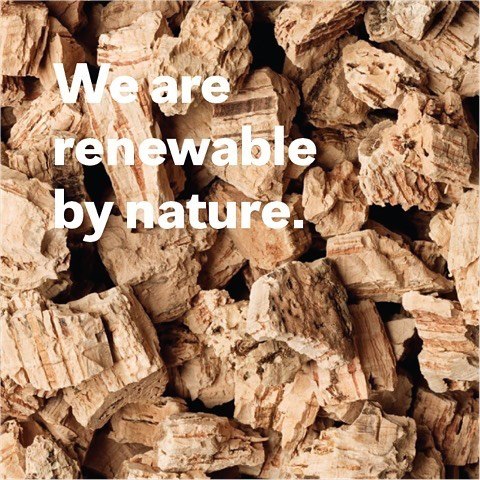
March 1, 2026
Why Are 70% of the World’s Wine Bottles Closed with the Bark of a Cork Oak Tree?Amorim Cork’s Director of Communications Carlos de Jesus answers that question in this episode of NPR Freakonomics Radio Network’s The Economics of Everyday Things with Zachary Crockett.
Listen to the full episode: https://freakonomics.com/podcast/wine-corks/
March 1, 2026
Steering the World’s Largest Cork Maker
As cork oak harvest ends and grape harvest begins, we're thrilled to revisit Wine Spectator senior editor Aaron Romano's conversation with our chairman and CEO António Amorim, featured in the August 31st print issue of Wine Spectator Magazine.
March 1, 2026
Remembering António Ferreira Amorim: 1928-2024We deeply mourn the passing of António Ferreira Amorim. He devoted his life to advancing the cork industry, distinguished by his fearless leadership, and profound commitment to our people and our planet. He leaves behind a lasting legacy of dedication and passion for cork.
